What Google has really contributed to technology, the United States and the world, and what it has cost.
Most companies sell products. Google’s bigger achievement is quieter: it turned finding things, going places, understanding other languages and even predicting how a protein folds into services that billions of people treat like running water. That is why a plain company history misses the point. The better question is what changed once these tools existed, for the American technology industry, for the global economy, and for the small daily routines most of us no longer think about.
Think about an ordinary morning. Someone searches for a skincare ingredient before buying a moisturizer. Another person watches a YouTube tutorial to understand how to use a beauty product. A small business checks its Google Business Profile to see whether customers have left reviews. A traveller uses Maps to find a shop in an unfamiliar city. These activities look unrelated, but they depend on the same digital ecosystem.
That is the less obvious story behind Google’s growth. Its technology has gradually moved from something people deliberately open to something they rely on throughout the day.
The idea that started it: information as a utility
Google began in 1998 as a Stanford research project by Larry Page and Sergey Brin. Its key idea, PageRank, ranked pages partly by who linked to them rather than by how often a keyword appeared. It sounds technical, but the effect was simple: results became useful enough that people stopped browsing directories and started asking questions.
The original problem was one of organisation. The internet was growing quickly, but finding useful information was becoming increasingly difficult. Google’s approach helped make the web easier to navigate by evaluating relationships between pages rather than treating every page as an isolated collection of words.
Twenty-eight years later, the question-asking habit is still evolving. At Google I/O in May 2026, Sundar Pichai said AI Mode had passed 1 billion monthly active users in about a year and AI Overviews had reached more than 2.5 billion monthly active users. These are Google’s own figures, so treat them as company-reported rather than independently audited.
Still, they show the direction of change. Search is moving from a list of links towards a more conversational experience. Instead of entering several separate searches, users can ask follow-up questions, explore complicated subjects and use AI-assisted features to complete certain tasks.
This changes the relationship between people and online information. A traditional search engine directs users towards websites. An AI-powered search experience increasingly attempts to interpret the question and provide an answer directly. That may save time, but it also raises questions about accuracy, transparency and the visibility of the original publishers.
What Google means for the United States
An economic engine, with an asterisk
Google’s 2025 US Economic Impact Report says its products supported $947 billion in economic activity, up from $850 billion the year before. Read that number carefully. It is Google’s estimate of activity associated with Search, Play, Cloud, YouTube and its advertising tools, not its revenue and not a direct slice of US GDP.
The methodology estimates the economic activity associated with businesses, publishers, nonprofits, creators and developers using Google’s services. It includes calculations related to advertising performance, payments to publishers and creators, and other economic activity. The company also explains its approach in its methodology documentation.
There is a limitation worth understanding. The figure is produced by Google using its own economic impact framework. It should therefore be treated as an estimate rather than an independently established measure of Google’s total contribution to the American economy. The report also excludes some wider effects, including consumer time savings and the economic impact of certain products such as Google Maps and Google Analytics.
The more concrete figures are easier to picture:
- More than 19.5 million American businesses used Google’s free tools to receive calls, bookings, reviews, requests for directions and other customer connections.
- Google counted more than 2.5 billion direct connections between customers and businesses every month in 2025.
- More than 100,000 people worked for Google full-time in the United States at the end of 2025.
- YouTube’s creative ecosystem supported more than 490,000 full-time-equivalent jobs in the United States, according to Google’s 2025 economic impact reporting, which cites Oxford Economics research.
These numbers describe different types of economic activity. The 490,000 figure, for example, represents estimated full-time-equivalent jobs supported by YouTube’s wider creative ecosystem. It does not mean that YouTube directly employs that many people.
For a corner salon, a one-person skincare brand or a family restaurant, the practical meaning is much simpler. A business can appear in local search results, display its opening hours, receive customer reviews and make it easier for people to find its location.
A small beauty business may never advertise on television or hire a marketing agency. A well-maintained online business profile can still help a potential customer discover its services. That is a real contribution, and also a real dependency. When businesses rely on a platform to reach customers, changes to that platform can affect their visibility.
The research that other companies built on
The US tech industry owes Google more than jobs. Some of its most important contributions have come through research that other developers, universities and technology companies can use.
In 2015, Google open-sourced TensorFlow, a machine-learning framework that lowered the barrier to building and training AI systems. Researchers and developers could use the framework without creating an entire machine-learning infrastructure from scratch.
Two years later, Google researchers published “Attention Is All You Need”, introducing the Transformer architecture. This research became a foundation for many modern language models and generative AI systems, including technologies developed by companies competing directly with Google.
That is an unusual part of Google’s influence. Research developed inside one company helped shape an entire industry, including products built by its competitors.
The contribution also illustrates why foundational research matters. A company may develop a technology for its own products, but when that technology becomes publicly available, its applications can extend into universities, startups, independent research laboratories and other commercial systems.
Few examples demonstrate Google’s influence beyond its own products as clearly as the development of TensorFlow and the Transformer architecture.
What Google means for the rest of the world
Tools that travel
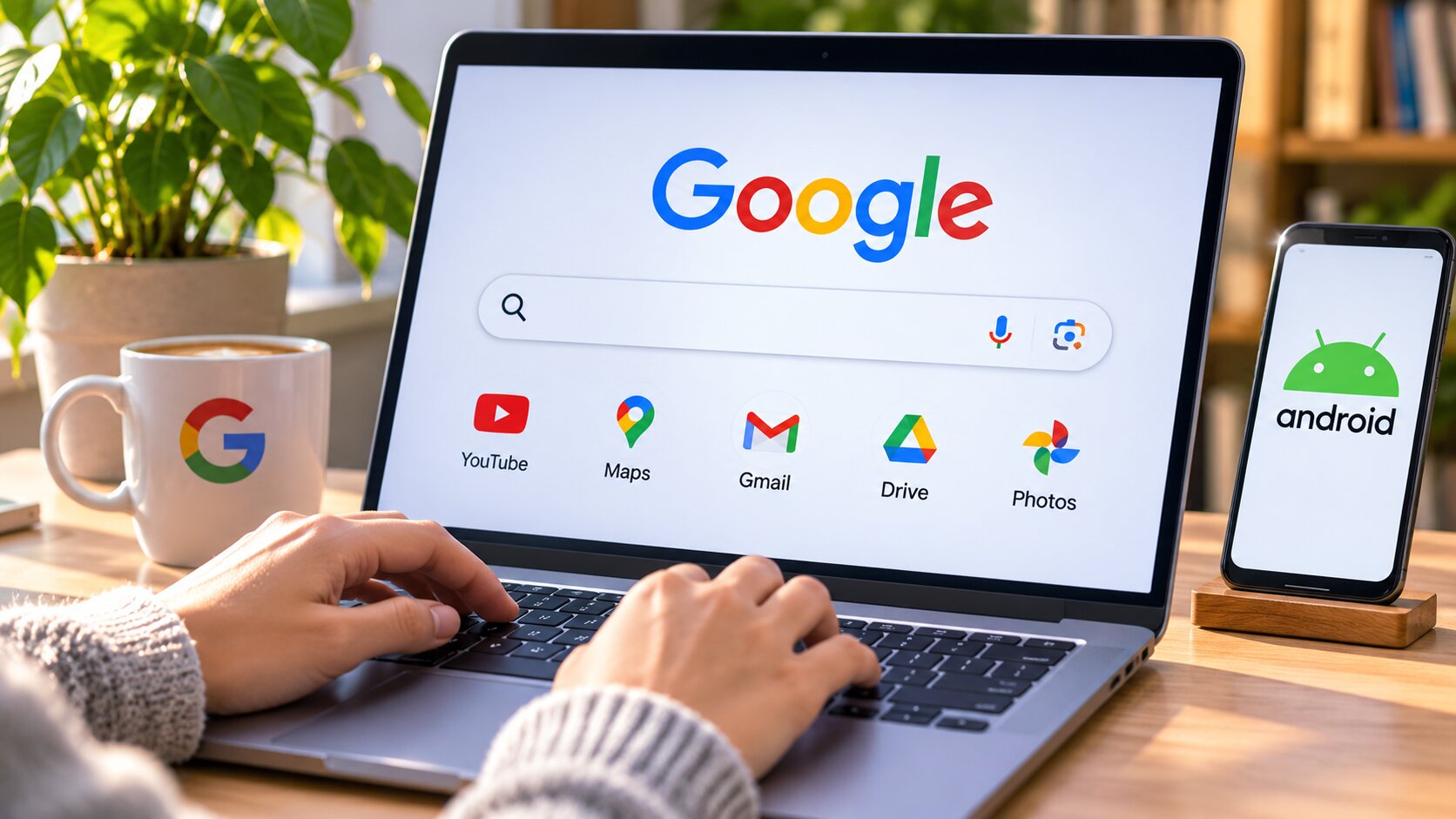
Android, which Google acquired in 2005 and brought to commercial smartphones in 2008, gave manufacturers a flexible platform for devices at many price points. In many countries, a smartphone is a person’s first and only computer, so the software on it matters.
This has particular importance in developing markets, where affordable smartphones provide access to services that previously required a desktop computer or more expensive equipment.
Google Maps, Translate and YouTube work across this ecosystem. Together, they turn a relatively inexpensive phone into a navigation tool, a language assistant, a learning resource and a gateway to international information.
Consider someone travelling abroad. They can use Maps to locate a hotel, Translate to understand a restaurant menu and YouTube to learn about a destination before visiting it. These services remove small barriers that once made travelling and communicating more difficult.
The same applies to international shopping. A consumer in Bangladesh can search for a skincare ingredient, read product information from an overseas website, watch a tutorial and use translation tools to understand instructions. The technology does not guarantee that every product or source is reliable, but it makes information easier to access.
Google’s own country studies attempt to put numbers on this, again with the same self-reporting caveat. Its Canada report claims $81 billion in economic activity in 2025, and its Ireland study estimates about €10 billion in economic activity and 18,600 jobs supported.
These are country-specific estimates produced using Google’s economic impact research. They should not be compared directly without considering differences in methodology, market size and the services included.
Different countries, different methods, one consistent message from the company: its products have become part of how businesses and consumers participate in the digital economy.
Science as a public good
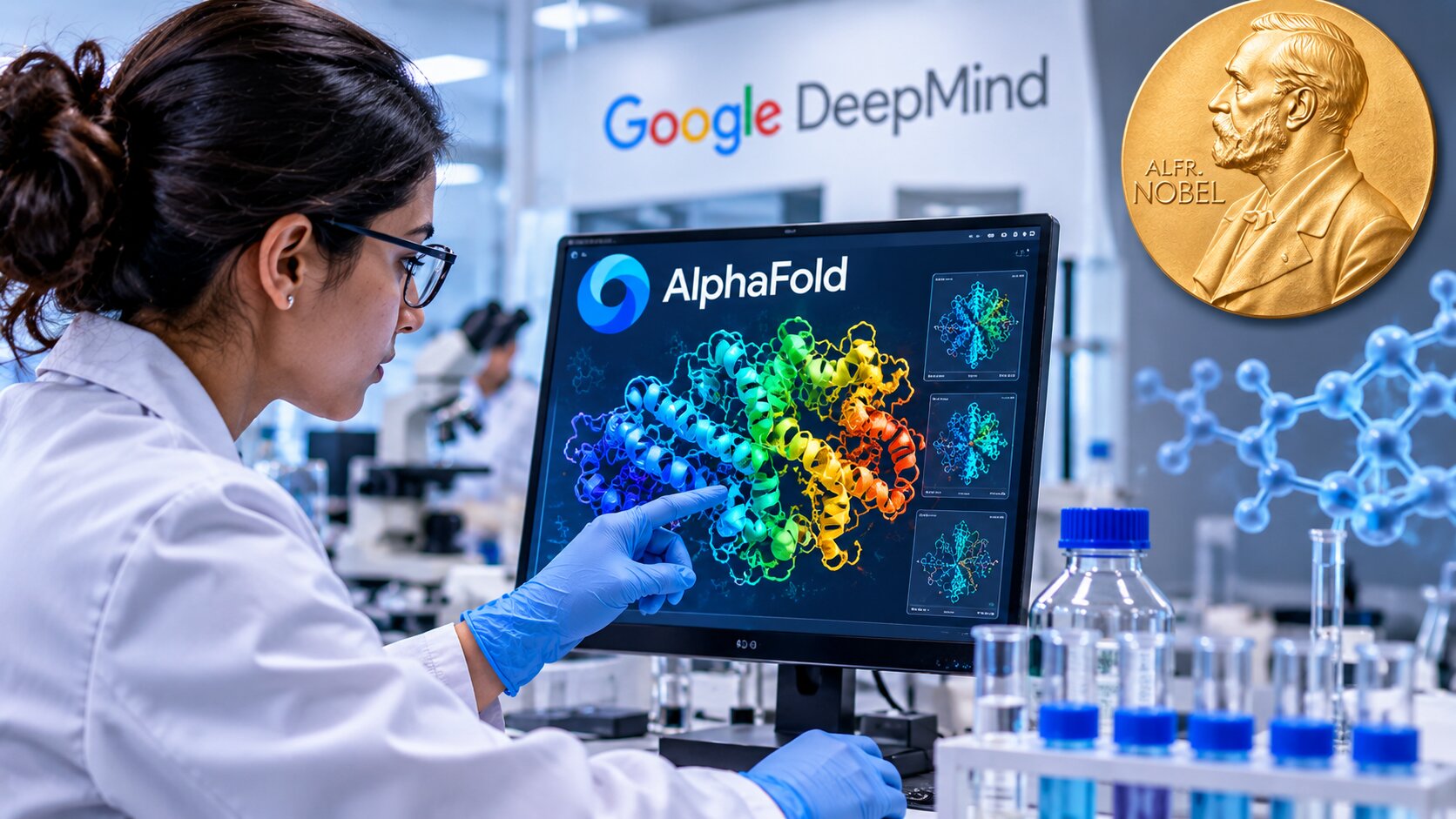
The strongest case for Google’s global value may be AlphaFold. DeepMind’s AI system predicts protein structures, and the work earned a 2024 Nobel Prize in Chemistry, awarded to Demis Hassabis and John Jumper for protein structure prediction.
Proteins perform many essential functions in living organisms. Their three-dimensional shapes help determine how they work, interact with other molecules and contribute to biological processes. Understanding these structures is important for studying diseases, developing medicines and investigating biological systems.
Before AlphaFold, determining many protein structures through experimental methods could take months or years. AlphaFold made it possible to predict large numbers of structures computationally, giving researchers a new resource for exploring biological questions.
The free AlphaFold Protein Structure Database, developed by Google DeepMind and EMBL-EBI, has more than 3.4 million users across 190 countries.
DeepMind also reports that more than one million users come from low- and middle-income countries. This matters because access to expensive research infrastructure is uneven around the world. A freely available database can give smaller research institutions access to information that would otherwise be difficult to obtain.
Independent research has also examined how AlphaFold has changed scientific work. A 2026 study by researchers Ryan Hill and Carolyn Stein, published as an NBER working paper, found that basic research on proteins without previously available structural information increased by approximately 15% to 40% relative to proteins that already had structural information. The researchers found that AlphaFold helped redirect attention towards less-studied proteins.
Another analysis published by the Innovation Growth Lab examined how researchers used AlphaFold 2 in experimental structural biology. It reported higher output of newly determined protein structures among researchers using the system. These findings suggest that AI predictions can complement laboratory experiments rather than simply replace them.
The applications are wide-ranging. Researchers can investigate disease-related proteins, study biological processes and explore potential targets for future treatments. The database has also been used in research connected to crop diseases and other biological challenges.
There is an important distinction here. AlphaFold does not independently discover a finished medicine or prove that a particular treatment will work. Its predictions help researchers form hypotheses and guide experiments. Scientific validation remains necessary.
This is technology that arrives in a laboratory, not an app store, and its underlying database is available without a subscription.
In the small moments
The biggest effect of all this is easy to miss because it is so ordinary.
Imagine someone considering a new skincare product. They may begin with Google Search to understand an ingredient such as niacinamide, retinol or hyaluronic acid. They might use Google Lens to identify a product from its packaging or find visually similar items. Then they open YouTube to watch an application tutorial before deciding whether the product suits their needs.
If the product comes from another country, Google Translate can help them understand the instructions, ingredient descriptions or product information. When they want to visit a beauty shop, Google Maps can help them locate the store, check directions and read customer reviews.
None of these activities requires the user to think about Google’s wider technology ecosystem. They simply use the available tools to make a decision.
The same pattern appears outside beauty and shopping. Students use Search to research a subject, workers use Docs to collaborate, travellers use Maps to navigate and small businesses use online profiles to reach customers.
There is a practical consequence here. Access to more information does not automatically mean better decisions. Search results can contain misleading claims, product reviews may be unreliable, and AI-generated answers can be incorrect. People still need to check sources, compare information and understand what they are buying.
But the underlying change is clear. Finding information, learning new skills and discovering products have become easier for people who have access to an internet connection.
None of these moments feels like “technology” anymore, and that is the achievement: when a tool becomes invisible, it has become infrastructure.
“When a tool becomes invisible, it has become infrastructure.”
The costs that come with that power
Infrastructure that everyone depends on attracts scrutiny, and Google has plenty.
Competition. In August 2024, a US federal judge found that Google had illegally maintained a monopoly in general search services and search text advertising. The ruling concerned Google’s distribution agreements and its position in the search market.
In September 2025, Judge Amit Mehta rejected the Justice Department’s request to force Google to sell Chrome. However, the court prohibited certain exclusive distribution agreements and ordered Google to provide specified search data to qualified competitors. Google was still allowed to pay partners for default search placement under certain conditions, provided the agreements complied with the court’s restrictions.
The decision avoided the immediate breakup of Google’s search business but introduced restrictions intended to improve competition.
The separate advertising technology case raised another set of concerns. In April 2025, Judge Leonie Brinkema found that Google had illegally monopolised parts of the publisher ad server and ad exchange markets. In September 2026, the court declined to order the sale of Google’s advertising technology business, but required changes to certain business practices and an internal antitrust compliance monitor.
The remedies include changes intended to give publishers greater flexibility when choosing advertising technology providers. The court also imposed a six-year period of oversight.
Critics argue that behavioural remedies may not go far enough to address Google’s market position. Google has disputed the allegations and has argued that competition, particularly from newer AI services, is changing the technology market.
These cases show why Google’s influence cannot be discussed only through its products. The way a company controls access to search, advertising and distribution can affect publishers, advertisers, competing technology firms and consumers.
Privacy and data collection. Google’s services rely on information to provide personalised experiences, improve products and support advertising. Search activity, location-related services and other forms of user interaction raise questions about how personal data is collected, processed and retained.
For users, convenience can come with trade-offs. A person may appreciate location recommendations from Maps while also wanting greater control over location history. Someone using personalised search may benefit from relevant results but still want to understand how their activity influences what they see.
Google provides privacy controls and account settings, but users need to understand them and make informed choices. Privacy remains an ongoing issue for large technology platforms.
Energy. Google’s 2026 Environmental Report says it matched 100% of its annual electricity consumption with renewable energy purchases for the ninth consecutive year. At the same time, its electricity demand grew by 37% in 2025, the largest annual increase reported by the company, while operational emissions fell by 2%.
Those figures need context. Matching annual electricity consumption with renewable purchases does not mean every data centre is powered by carbon-free electricity at every hour.
Google’s hourly carbon-free energy matching across its data centres and offices stood at 65% in 2025, compared with 66% in 2024. Its 2026 Environmental Report explains the difference between annual renewable-energy matching and hourly carbon-free electricity use.
Independent analysis by S&P Global also found that electricity demand across Google’s data centres increased substantially in 2025, driven in large part by expanding AI infrastructure.
This creates a difficult question for the technology industry. AI systems require computing power, and that computing power requires electricity, cooling systems and physical infrastructure. As AI tools become more widely used, data centre energy consumption becomes an increasingly important part of the environmental discussion.
Google is investing in clean energy, more efficient data centres and water stewardship. But the gap between annual renewable-energy purchases and the availability of carbon-free power at every hour remains an important issue.
Accuracy and trust. When AI answers sit above the links, mistakes can travel faster and publishers may lose some of the traffic that funds their work.
An AI-generated response can sound confident even when it contains an incorrect detail. This is particularly important when people search for health information, financial guidance, scientific explanations or product safety information.
Google has also been developing ways to help people understand the origins and editing history of digital content, including Content Credentials-related tools. These efforts can support transparency, but they do not solve every problem involving synthetic media, manipulated images or misleading information.
The challenge is larger than one company. Search engines, social platforms, publishers and AI developers all have a role in maintaining trustworthy information online.
The verdict
Google’s contribution is best understood as three layers: access (Search, Maps, Translate, Android), creation (YouTube, Workspace, small-business tools) and discovery (open research from TensorFlow to the Transformer to AlphaFold).
The United States gained a research and jobs engine and a platform other companies could build on. The wider world gained widely available tools for learning, communication, trade and science. Small businesses gained new ways to reach customers, while researchers gained access to scientific resources that can support work across national borders.
Its influence is also visible in the everyday decisions people make. A consumer comparing skincare ingredients, a student researching a subject, a traveller finding a local business and a researcher studying a protein may all depend on different parts of the same technology ecosystem.
The price is concentration. A handful of Google systems now sit between people and information, and the company’s own numbers cannot settle whether that balance is good. The economic benefits are real, but so are the questions about competition, privacy, environmental costs and the reliability of AI-generated information.
What to watch next is simple: whether AI Mode keeps sending traffic to the open web, whether data-sharing remedies actually help competitors, whether Google can meet its clean-energy ambitions as computing demand grows, and whether AI tools become more reliable when people use them for important decisions.
Google’s story is therefore about more than the history of a search engine. It is about how a collection of digital tools became part of everyday life, and how much of the modern world now depends on the systems behind them.
Sources and Further Reading
Google’s history, technology and economic impact
- Google Economic Impact Report 2025 – United States
- Google Economic Impact – Methodology
- Google Economic Impact – Frequently Asked Questions
- Sundar Pichai – Google I/O 2026
Global economic contribution
AI and scientific research
- Google DeepMind – AlphaFold
- EMBL-EBI – AlphaFold Database and Scientific Research
- NBER – How Artificial Intelligence Shapes Science: Evidence from AlphaFold
- 2024 Nobel Prize in Chemistry
Competition and regulation
- US Department of Justice – Google Search Remedies
- Reuters – Google Advertising Technology Remedies, September 2026
Environment and energy
- Google 2026 Environmental Report
- Google 2026 Environmental Report – Full PDF
- S&P Global – Google’s Data Centre Energy Demand and Sustainability
Independent research and analysis