
A smooth trip rarely happens by accident. Whether you are planning a weekend escape, a family holiday, a business journey, or an international adventure, a little preparation can prevent many of the problems that make travel stressful.
From checking your passport and visa requirements to preparing your medication, money, luggage, and emergency contacts, the most important travel tasks should be completed before you leave home. A practical pre-travel routine can help you avoid missed flights, unexpected expenses, health complications, and unnecessary confusion at your destination.
Here are 10 essential things you should do before every trip to make your journey safer, more organized, and more enjoyable.
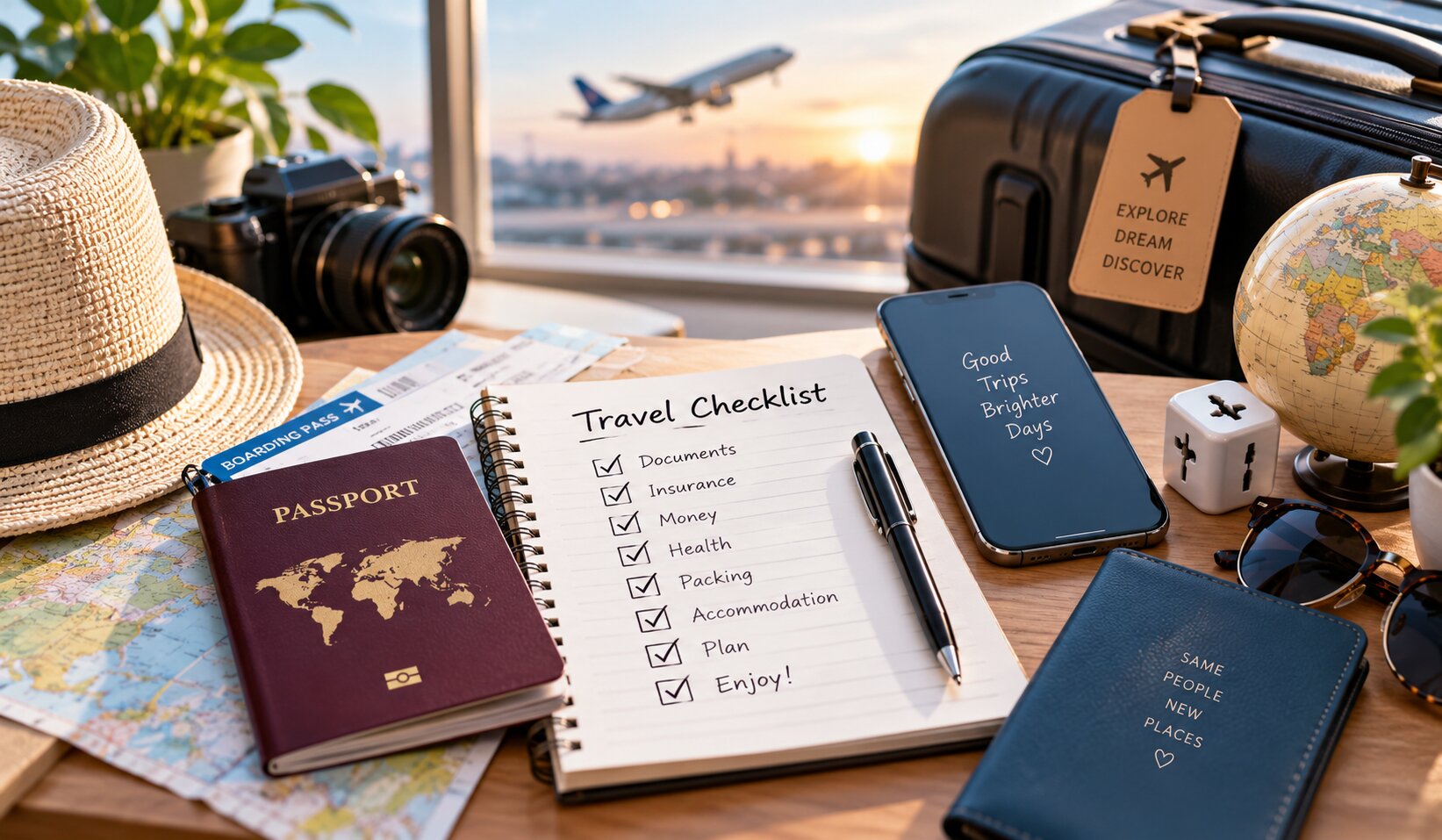
10 Things You Must Do Before Every Trip
Check Your Passport, Visa, and Entry Requirements
One of the most important steps before travelling is confirming that your documents are valid. If you are travelling internationally, check your passport’s expiry date well in advance. Some countries require passports to remain valid for several months beyond the date of arrival or departure. A passport that is technically valid may still be unacceptable if it does not meet the destination’s entry rules.
You should also confirm whether you need a visa, electronic travel authorization, transit visa, arrival card, vaccination certificate, or other supporting document. Do not assume that visa rules remain unchanged simply because you have visited the same country before. Entry requirements can change, and transit countries may have separate rules even if you do not leave the airport.
Research Your Destination Before You Go
A destination may look simple on a map, but local conditions can significantly affect your travel experience. Before departure, research the weather, local transport, currency, cultural expectations, public holidays, opening hours, and areas you plan to visit.
It is also wise to learn about local laws and customs. Clothing expectations, photography restrictions, alcohol rules, public behaviour, driving regulations, and rules concerning medication may differ from what you are used to at home. Understanding these details can help you avoid accidental offences or uncomfortable situations.
For international travel, review official travel advice for your destination. Look for information about political demonstrations, natural disasters, health risks, transport disruptions, crime, and emergency services. Research should not make you anxious; it should help you make informed decisions.

Buy Suitable Travel Insurance
Travel insurance is often treated as an optional extra, but it can be extremely valuable when something goes wrong. Depending on the policy, travel insurance may help cover medical treatment overseas, emergency evacuation, trip cancellation, lost baggage, stolen belongings, delays, or other unexpected costs.
Do not choose a policy based only on its price. Read the terms carefully and check whether it covers the activities you intend to do. Adventure sports, cruises, winter activities, motorbike travel, pre-existing medical conditions, and expensive electronics may require additional cover or specific conditions.
Make sure you understand exclusions, excess payments, claim procedures, and emergency assistance numbers. Keep your policy details accessible during the journey rather than storing them only in an email account you may not be able to access.
Review Your Health and Medication Needs
Your health should be part of your travel planning, especially if you are visiting a country with different climate conditions, infectious disease risks, limited medical facilities, or challenging terrain. If you have a medical condition, are pregnant, take prescription medication, or plan to participate in physically demanding activities, speak with a healthcare professional before travelling.
Some destinations may require or recommend specific vaccinations. Depending on the location, you may also need advice about insect-borne illnesses, food and water safety, altitude, heat exposure, or travel-related blood clots during long journeys.
Carry enough prescribed medication for the entire trip, and consider bringing extra supplies in case of delays. Keep medicines in their original packaging and carry a copy of your prescription. A doctor’s letter explaining your medication may be useful, particularly when travelling internationally.
- Check whether your medication is legal in the destination country.
- Carry medication in your hand luggage whenever possible.
- Bring prescriptions and relevant medical documents.
- Pack a small first-aid kit and essential personal-care items.
- Research nearby hospitals, clinics, or emergency services if necessary.
Organize Your Money and Payment Options
Financial preparation can prevent many common travel problems. Before leaving, notify your bank or card provider that you will be travelling, particularly if you are going overseas. Some banks may block unusual transactions as a security precaution if they are not aware of your travel plans.
Check whether your debit or credit cards work in the destination country and find out about foreign transaction fees, ATM charges, currency conversion costs, and daily withdrawal limits. It is sensible to carry more than one payment method in case a card is lost, damaged, blocked, or not accepted.
Carry a small amount of local currency for immediate expenses such as transport, food, tips, or emergency purchases. However, avoid keeping all your money in one place. Store cash, cards, and identification separately so that losing one item does not leave you completely without funds.
Confirm Flights, Accommodation, and Transfers
Recheck every important booking before departure. Confirm your flight date, departure time, airport, terminal, baggage allowance, seat selection, and connection details. If you have a connecting flight, make sure you understand whether you need to collect and recheck your luggage or pass through immigration during transit.
Accommodation details should also be reviewed carefully. Check the property’s address, check-in and check-out times, cancellation conditions, payment status, and any requirements for deposits or identification. If you are arriving late, contact the accommodation provider to confirm that late check-in is possible.
Plan how you will reach your accommodation from the airport, railway station, or bus terminal. Knowing your transport options in advance can save time and reduce the risk of being overcharged after a long journey.
Pack According to the Weather and Your Activities
Packing well does not mean taking everything you own. It means choosing items that match the destination, weather, length of stay, and activities you have planned. Check the forecast before leaving and consider how conditions may change during the day.
Comfortable shoes are essential if you expect to walk extensively. If you are visiting a religious or culturally conservative location, pack clothing that respects local expectations. For outdoor trips, consider sun protection, waterproof layers, insect repellent, a reusable water bottle, and suitable protective equipment.
Check your airline’s baggage rules before packing. Some items, including spare batteries and power banks, may need to be carried in hand luggage rather than checked baggage. Sharp objects, liquids, sports equipment, and medical supplies may also have specific restrictions.
- Passport, visa, wallet, and travel documents.
- Prescription medication and a basic first-aid kit.
- Chargers, adapters, power bank, and essential electronics.
- Weather-appropriate clothing and comfortable footwear.
- Toiletries, personal-care products, and hygiene supplies.
- Copies of important documents and emergency contacts.
Prepare Your Phone, Internet, and Digital Security
Your phone can be one of your most useful travel tools, but it needs preparation. Confirm that your mobile plan works at your destination or research local SIM and eSIM options. Check international roaming costs carefully, as unexpected data charges can become expensive.
Download maps, translation tools, airline applications, transport apps, and accommodation information before leaving. Save important addresses in an offline format, especially if you expect to travel through areas with unreliable internet service.
Digital security is equally important. Use strong passwords, enable two-factor authentication, and avoid accessing sensitive banking accounts through unsecured public Wi-Fi whenever possible. Keep your phone, laptop, and other devices updated before departure, and consider backing up important files.
Share Your Itinerary With Someone You Trust
Someone at home should know where you are going and how to contact you. Share your flight details, accommodation information, planned destinations, and approximate return date with a trusted friend or family member.
If you are planning an independent trip, hiking adventure, road journey, or visit to a remote area, provide more detailed information. Let someone know when you expect to arrive at important points and when you may be unavailable.
This does not mean you need to report every movement during your holiday. The purpose is to ensure that someone can respond appropriately if your plans change unexpectedly or you become unreachable during an emergency.
Complete a Final 24-Hour Travel Check
The final day before a trip is the right time to review everything calmly. Check your flight status, weather forecast, transport arrangements, luggage, documents, and phone battery. If you are flying, confirm the airport and terminal once more because schedules and terminal information can change.
Make sure your home is secure before leaving. Unplug unnecessary appliances, close windows, check taps, dispose of perishable food, and arrange care for pets or plants if needed. If you are leaving your vehicle at home, confirm where it will be parked and whether anyone needs access to it.
Try to get adequate sleep rather than staying awake all night to finish packing. Being rested can make airport procedures, long flights, driving, and the first day at your destination much easier.
- Check flight or transport status.
- Charge your phone, laptop, camera, and power bank.
- Keep travel documents in your personal bag.
- Confirm airport transfer or parking arrangements.
- Review weather conditions and make final packing adjustments.
- Lock your home and arrange pet, plant, or property care.
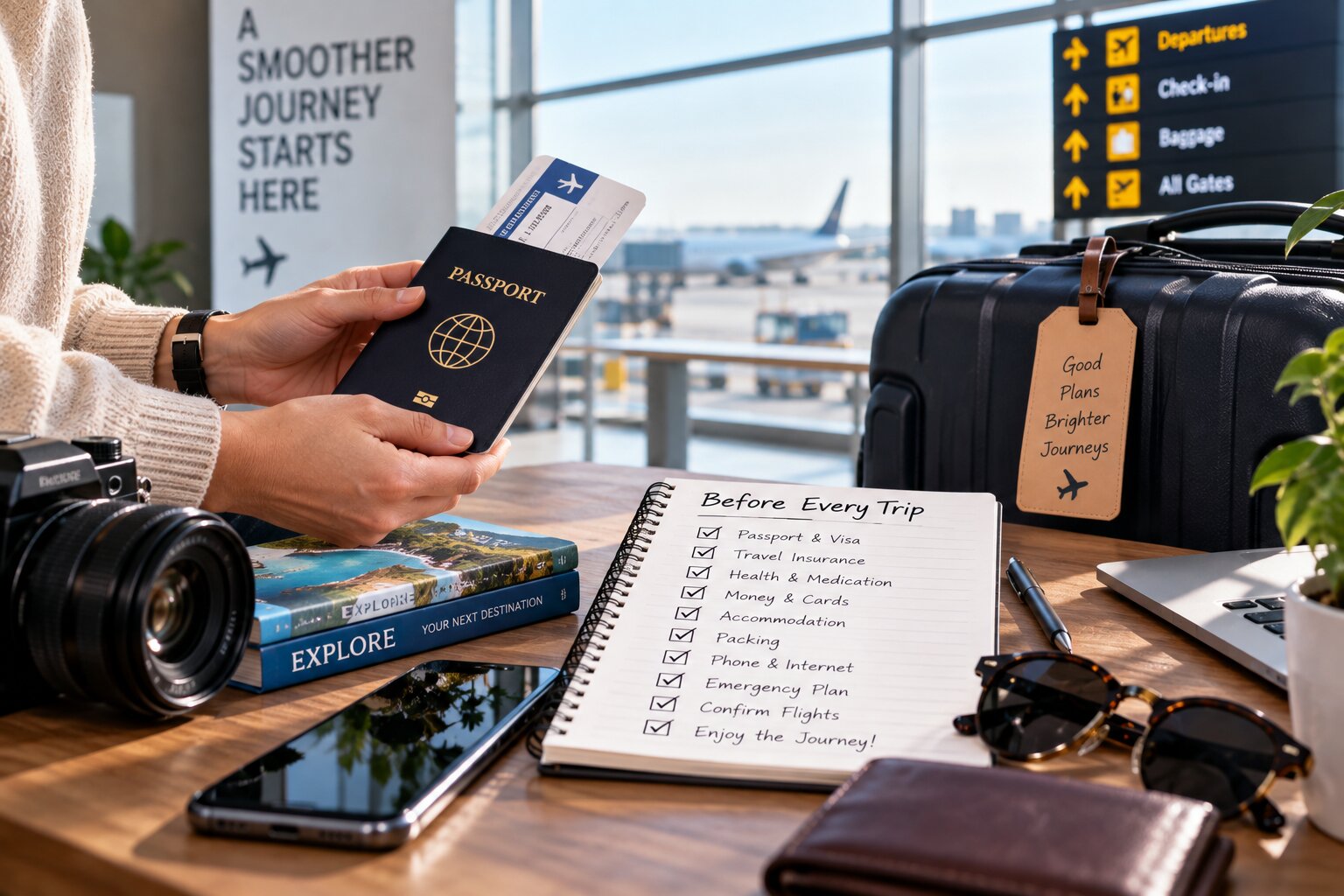
Final Thoughts
Travel preparation is not about creating a rigid schedule or worrying about every possible problem. It is about handling the important details before they become urgent. Checking documents, researching your destination, arranging insurance, preparing medication, organizing money, confirming bookings, packing carefully, securing your devices, sharing your itinerary, and completing a final check can make a major difference.
The best travel checklist is one that fits your destination and personal circumstances. A short domestic trip may require only a few preparations, while an international journey may involve visas, vaccinations, insurance, transit rules, and additional documentation. The more complex the trip, the earlier you should begin.
With the essentials taken care of, you can leave home with greater confidence and enjoy the journey ahead.
Frequently Asked Questions
How early should I start preparing for a trip?
Ideally, begin preparing several weeks before departure. International trips may require more time because visas, passports, vaccinations, travel insurance, and medical appointments can take time to arrange.
What documents should I carry while travelling?
Carry your passport or identification, visa or travel authorization if required, flight and accommodation confirmations, travel insurance details, prescriptions, emergency contacts, and any destination-specific documents. Keep both digital and printed copies where practical.
Should I buy travel insurance for a short trip?
Travel insurance can be useful even for short journeys. A brief trip can still involve medical emergencies, cancellations, delays, lost luggage, or other unexpected expenses. Choose cover based on your destination and planned activities.
Should prescription medication go in checked luggage?
Essential prescription medication is generally best carried in your hand luggage so it remains accessible if checked baggage is delayed or lost. Keep it in its original packaging and carry supporting prescriptions or medical documentation.
How can I avoid problems with money while travelling?
Notify your bank, check card fees, carry more than one payment method, keep a small amount of local currency, and store emergency funds separately. Avoid keeping all your cards and cash in one wallet or bag.
Travel Preparation Source
This article was prepared using established travel-preparation guidance, including the official Smartraveller essentials checklist. Travellers should also check the official government and embassy websites relevant to their destination before departure.
Disclaimer: Travel requirements, visa rules, health advice, airline policies, and entry conditions can change. Always confirm the latest information through official government, embassy, airline, healthcare, and insurance sources before travelling.