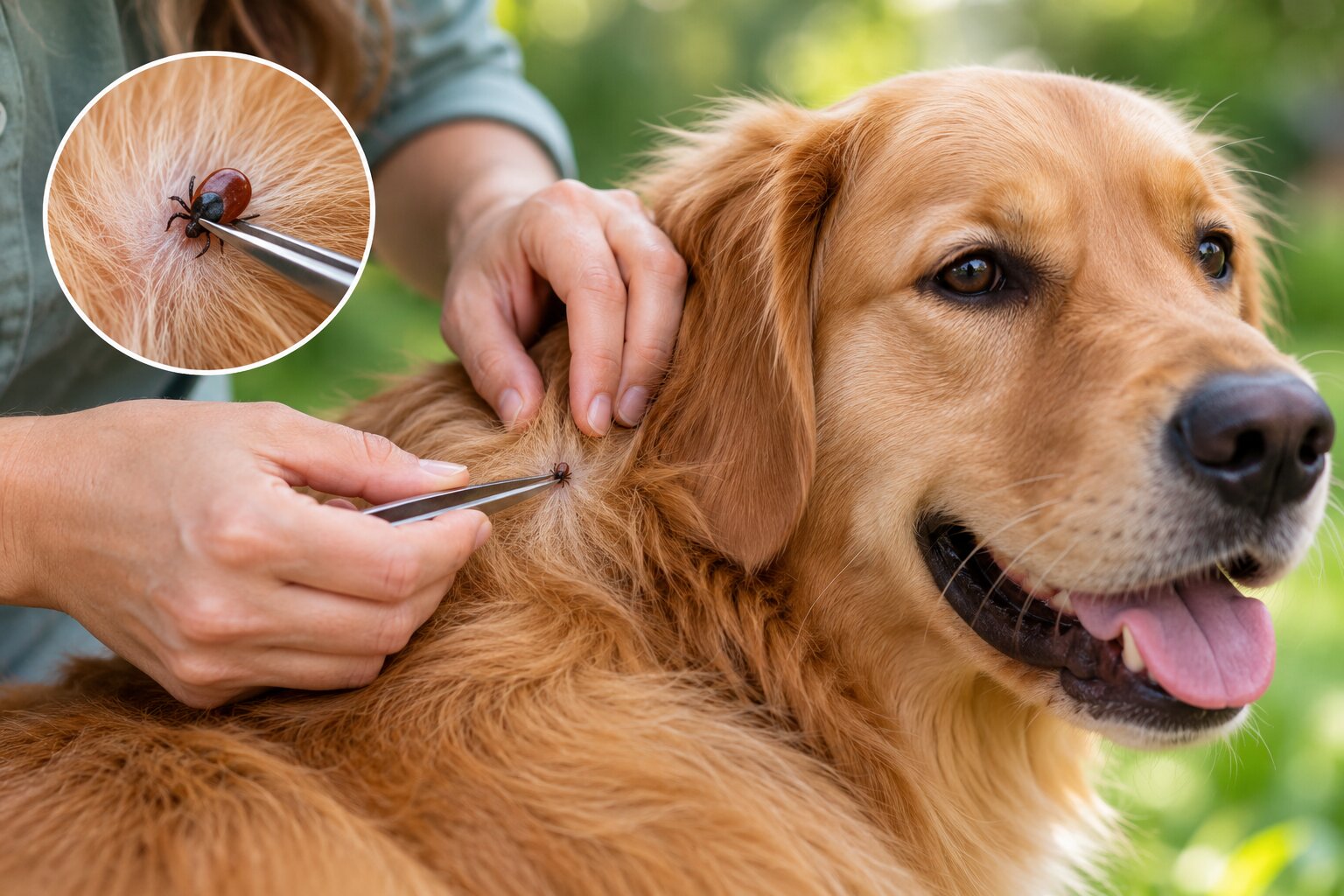
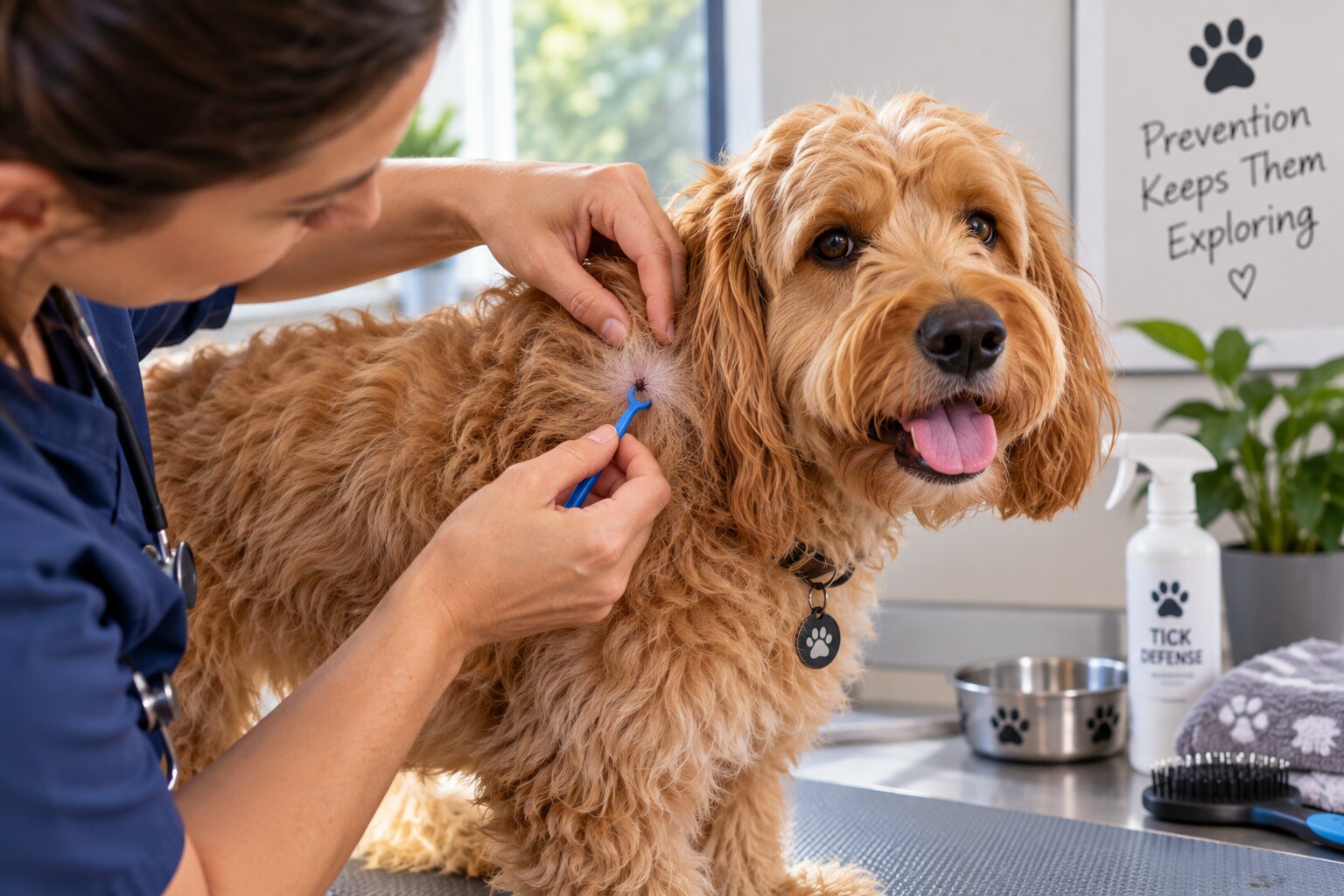
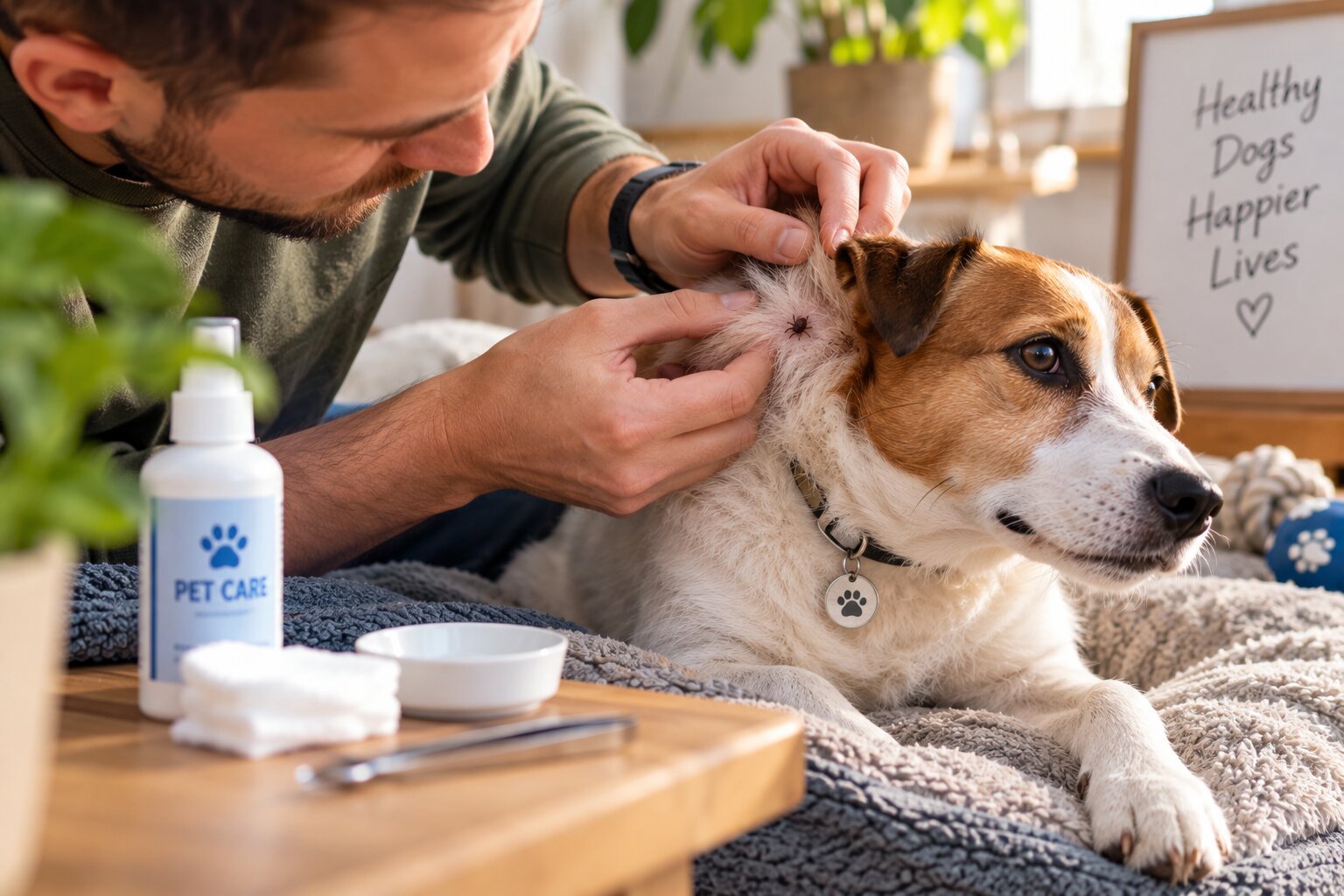
 Regular skin checks can help dog owners find ticks before they become a bigger concern.
Why Ticks Are a Concern for Dogs
Ticks are found in many outdoor environments, including grass, woodland, gardens, brush, and areas frequented by wildlife. Dogs can pick them up during walks, outdoor play, hiking, or even while spending time in a garden.
A tick bite does not automatically mean that a dog will develop a disease. However, certain ticks can carry organisms responsible for serious infections, including Lyme disease, ehrlichiosis, anaplasmosis, and babesiosis. The diseases that pose a risk vary depending on the country, region, and tick species.
Dogs may also carry ticks into the home. A tick that has not yet attached can potentially move from a pet to another animal or person. The Centers for Disease Control and Prevention recommends checking pets regularly and removing ticks promptly when they are found.
Why Prompt Removal Matters
Early removal matters because the longer some ticks remain attached, the greater the opportunity for pathogen transmission. The exact risk and transmission time vary by tick species and disease, so removal should not be delayed while waiting for symptoms.
How to Find a Tick on Your Dog
Ticks can range in size from very small, pinhead-like parasites to larger, swollen bodies after feeding. Some are easier to feel than see, particularly in dogs with dark, long, or curly coats.
After your dog has been outdoors, run your hands gently over the body and inspect the skin closely. Pay particular attention to:
- Around and inside the ears
- Under the collar
- Around the eyelids
- Under the front legs
- Between the toes and paw pads
- Around the groin and inner thighs
- Between the back legs
- Around the tail and beneath it
- Along the neck, chest, and belly
Part the fur with your fingers so you can see the skin. A tick may look like a small dark bump firmly attached to the surface. If you are unsure whether a lump is a tick, avoid pulling it forcefully. A veterinarian can help identify it.
Daily tick checks are especially useful for dogs that spend time in grassy, wooded, or rural areas. Regular grooming can also make it easier to notice unusual bumps, skin irritation, or parasites before they become a larger problem.
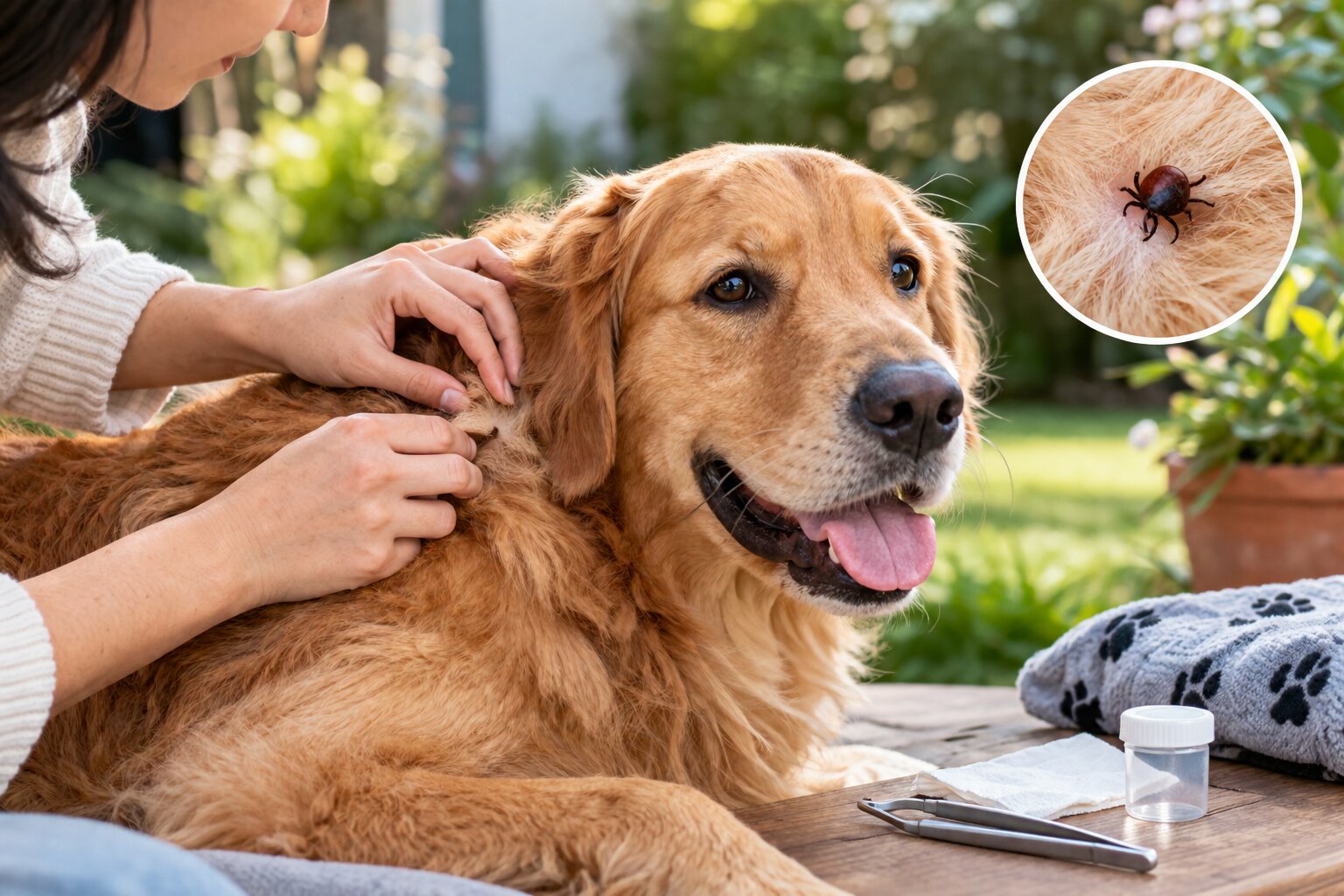 Parting the fur gently makes it easier to inspect the skin around common tick attachment areas.
What You Need to Remove a Tick
Before starting, gather the following items:
- Fine-tipped tweezers or a purpose-built tick removal tool
- Disposable gloves, if available
- A small container or sealable bag for the removed tick
- Soap and water or an appropriate disinfectant
- A clean cloth or gauze
- A second person to help calmly restrain your dog, if necessary
Fine-point tweezers are generally preferred because they allow you to grip the tick close to the skin without crushing its body. Tick-removal hooks are another option, provided they are used according to the product instructions.
Choose a well-lit area and keep your dog as calm as possible. If your dog is anxious, restless, or likely to snap, do not put yourself at risk. Ask someone experienced to help or contact your veterinarian.
How to Remove a Tick From Your Dog Safely
Removing a tick promptly is usually straightforward when done carefully. The aim is to remove the entire attached tick without squeezing or tearing it.
Expose the Tick Clearly
Part your dog’s fur until you can see exactly where the tick is attached. If necessary, use a comb to move the hair away from the area.
Avoid covering the tick with oil, grease, petroleum jelly, or other substances. These methods are not recommended because they may irritate the tick and potentially increase the release of infectious material.
Position the Tweezers Close to the Skin
Using fine-tipped tweezers, grasp the tick as close to your dog’s skin as possible. Try to hold the tick near its mouthparts rather than squeezing the swollen body.
Do not pinch the skin. A close, controlled grip is more important than pulling quickly.
Pull Straight Up Slowly and Steadily
Apply steady, even pressure and pull the tick directly upward. Do not twist, jerk, or crush it.
The tick may not release immediately. Continue applying gentle, consistent pressure rather than repeatedly tugging. Twisting or pulling sharply can cause parts of the tick to break off and remain embedded in the skin.
Important Removal Rule
Use a fine-tipped grip close to the skin and pull upward with steady, even pressure. Avoid nail polish, petroleum jelly, heat, or other substances intended to make the tick detach.
Check the Bite Area
Once the tick has been removed, examine the area carefully. The skin may be slightly red or irritated.
Ticks do not technically have a separate “head” in the way people often imagine. Their mouthparts can remain embedded if the tick is torn during removal. If a small part remains and cannot be easily removed with clean tweezers, do not dig aggressively into the skin. Contact your veterinarian for advice.
Clean the Area and Your Hands
Clean the bite site with soap and water or an appropriate pet-safe cleaning method recommended by your veterinarian. Wash your hands thoroughly afterward, even if you wore gloves.
Clean the tweezers or tick-removal tool according to its material and the disinfectant instructions.
Dispose of the Tick Carefully
Do not crush the tick with your bare fingers. Place it in a sealed container, wrap it securely in tape, or dispose of it using a safe method recommended by local health guidance.
Some owners choose to preserve the tick in a sealed container in case identification becomes useful. Ask your veterinarian whether keeping it is worthwhile in your area, particularly if your dog later develops symptoms.
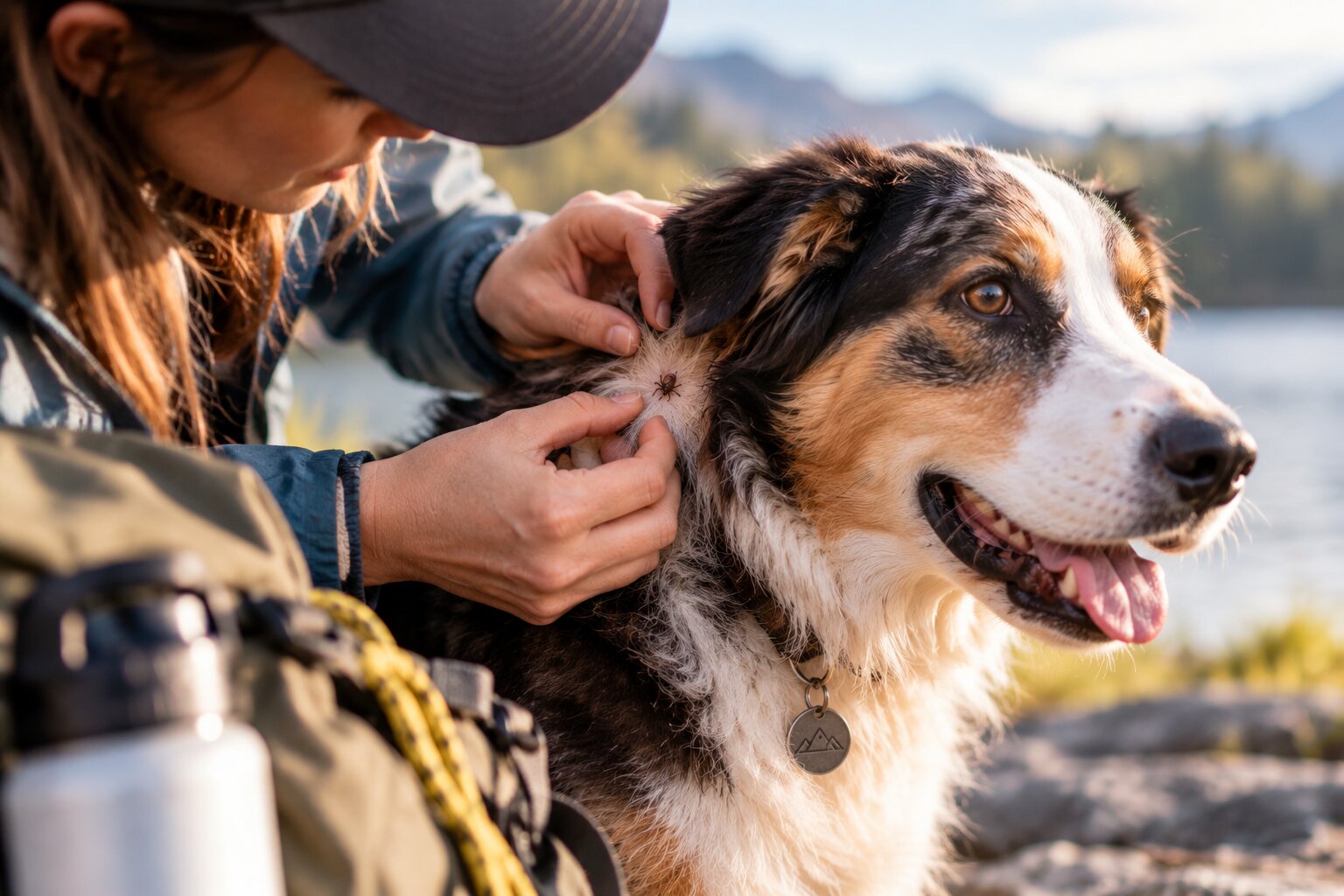 Dogs that enjoy hiking and outdoor adventures need careful tick checks after returning home.
What If the Tick’s Mouthparts Remain in the Skin?
One of the most common concerns after tick removal is whether the entire parasite has been removed.
If the tick breaks during removal, a small portion of its mouthparts may remain in the skin. If the fragment is easily accessible, it may be possible to remove it with clean tweezers. However, digging into the skin can cause additional injury and irritation.
If the remaining material cannot be removed easily, it is generally safer to leave it alone and allow the skin to heal while monitoring the area. Contact your veterinarian if the site becomes increasingly red, swollen, painful, warm, or produces discharge.
Do not attempt to cut into the skin or use harsh chemicals to remove a suspected fragment.
Signs of Tick-Borne Disease in Dogs
A dog may appear completely normal after a tick bite. Symptoms can take days or weeks to develop, and some infected dogs may show subtle signs at first.
Possible symptoms of tick-borne illness include:
- Unusual tiredness or weakness
- Reduced appetite
- Fever
- Swollen or painful joints
- Limping or stiffness
- Pale gums
- Enlarged lymph nodes
- Vomiting or digestive upset
- Unexplained weight loss
- Bruising or unusual bleeding
- Difficulty breathing
- Changes in coordination or behavior
The symptoms depend on the infection and the individual dog. For example, Lyme disease may be associated with fever, lethargy, swollen joints, or shifting lameness, while other tick-borne infections can cause more serious blood-related problems.
If your dog becomes unwell after a tick bite, tell the veterinarian about the exposure, when the tick was found, and where your dog may have encountered it. A veterinarian may recommend an examination, blood tests, or other diagnostic testing depending on the symptoms and local disease risks.
Do Not Ignore Sudden Health Changes
Do not wait for symptoms to become severe before seeking help. A dog that develops marked weakness, fever, appetite loss, unusual bleeding, breathing difficulty, or collapse needs prompt veterinary attention.
When Should You Contact a Veterinarian?
Some tick situations require professional assistance rather than home removal.
Contact your veterinarian if:
- The tick is attached near the eye or inside the ear canal.
- The tick is in a difficult-to-reach location.
- You cannot remove it without struggling with your dog.
- Multiple ticks are present.
- The bite area becomes increasingly inflamed.
- Your dog develops fever, weakness, appetite loss, or unusual behavior.
- Your dog has a history of illness that could make infection more concerning.
- You are unsure whether the object is actually a tick.
If your dog appears seriously ill, collapses, has trouble breathing, experiences seizures, or shows signs of severe weakness, seek urgent veterinary care.
A veterinarian can also recommend whether your dog needs testing for specific tick-borne diseases. Routine screening practices vary according to the dog’s lifestyle, symptoms, travel history, and local disease prevalence.
 A veterinary professional can help when a tick is difficult to remove or the dog needs further examination.
How to Prevent Ticks on Your Dog
Tick prevention is more effective when it combines regular checks, appropriate parasite-control products, and sensible outdoor habits.
Use a Veterinary-Recommended Tick Preventive
There are several types of tick prevention products, including topical treatments, oral medications, collars, and other veterinary-approved options. Some products kill ticks after they attach, while others may repel or affect ticks before they can feed.
The best option depends on your dog’s age, weight, health, lifestyle, existing medication, and local parasite risks.
Always follow the product label carefully. Never use a product intended for another species unless the label specifically confirms that it is suitable. In particular, some flea and tick products that are safe for dogs can be dangerous to cats.
If your dog has a history of seizures or neurological problems, discuss the risks and benefits of tick-control products with your veterinarian before choosing a treatment. The U.S. Food and Drug Administration has issued safety information concerning potential adverse events associated with certain flea and tick products, including products in the isoxazoline class.
Choose Prevention Carefully
Ask your veterinarian which flea and tick prevention product is appropriate for your dog. Consider the dog’s weight, age, health history, lifestyle, and the parasites common in your region. Follow all product instructions and never combine treatments without professional advice.
Check Your Dog Every Day
Even dogs receiving preventive treatment should be checked regularly. No prevention method guarantees that a dog will never encounter a tick.
Make tick checks part of your daily dog-care routine, especially after walks, hikes, or outdoor activities. Run your hands over the coat, inspect the skin, and look closely around the ears, paws, collar area, and under the legs.
Keep Your Yard Less Tick-Friendly
If your dog spends time in a garden or yard, reduce areas where ticks may thrive.
Helpful steps include:
- Mowing grass regularly
- Removing piles of leaves and garden debris
- Keeping dense brush trimmed
- Clearing overgrown vegetation around play areas
- Reducing contact between pets and wildlife where possible
- Keeping outdoor resting areas clean
These measures do not eliminate ticks, but they can reduce exposure in some environments.
Groom Your Dog Regularly
Grooming is an important part of dog health and wellness. Brushing helps you inspect the skin, identify unusual bumps, and notice parasites hidden beneath the coat.
Dogs with thick, long, or curly fur may need more frequent inspection because ticks can be difficult to see. However, short-haired dogs also need regular checks because ticks can attach to exposed skin.
Bathing alone should not be considered a reliable tick-prevention method. Use grooming and bathing as part of a broader care routine rather than as a replacement for veterinary-approved parasite control.
 Routine grooming and gentle ear care can help owners notice changes in their dog’s skin and overall condition.
Can Ticks Spread Disease Between Dogs and Humans?
Ticks can affect both animals and people. A dog does not typically transmit Lyme disease directly to a person through ordinary contact. The concern is that a dog may carry an unattached tick into the home, where it could later bite another host.
For this reason, tick prevention protects more than the dog. It also reduces the chance of ticks entering the household environment.
People should check themselves after spending time outdoors, especially in areas with tall grass, brush, or woodland. If you find a tick attached to your own skin, remove it promptly using appropriate guidance and monitor for symptoms such as fever or rash.
Common Mistakes to Avoid During Tick Removal
Several popular home remedies can create more problems than they solve.
Avoid These Tick-Removal Mistakes
- Burning the tick with a match or hot object
- Applying nail polish
- Using petroleum jelly or grease to suffocate the tick
- Pouring harsh chemicals onto the bite
- Squeezing the tick’s body
- Twisting or jerking the tick forcefully
- Digging into the skin with a sharp object
- Crushing the tick with bare fingers
These methods may irritate the tick, injure your dog’s skin, or increase the chance of leaving mouthparts behind. A simple, controlled removal with fine-tipped tweezers is usually the safest approach for an accessible tick.
Frequently Asked Questions
Can I remove a tick from my dog at home?
Yes. An accessible tick can often be removed at home using fine-tipped tweezers or a suitable tick-removal tool. If the tick is near the eye, inside the ear, deeply embedded, or difficult to remove safely, contact a veterinarian.
Should I use rubbing alcohol before removing a tick?
Do not pour rubbing alcohol directly onto an attached tick as a method of making it detach. Instead, focus on removing the tick with a controlled grip. After removal, clean the bite area and your hands appropriately.
What happens if I accidentally crush the tick?
If the tick is accidentally crushed, avoid touching it with bare hands. Clean the area and your hands, then monitor your dog for irritation or signs of illness. If the tick was attached and you are concerned about disease exposure, speak with your veterinarian.
How often should I check my dog for ticks?
Daily checks are a sensible routine, especially for dogs that spend time outdoors. Inspect your dog after walks, hikes, or visits to grassy and wooded areas.
Can a tick bite make my dog sick?
Yes. Certain ticks can transmit infections such as Lyme disease, ehrlichiosis, anaplasmosis, and babesiosis. The risk varies by location and tick species. Watch for changes in appetite, energy, movement, or general behavior.
Is tick prevention necessary during cooler weather?
Ticks can remain active outside the warmest months in many regions. Seasonal activity varies by climate and species, so ask your veterinarian whether year-round prevention is appropriate for your dog.
Final Thoughts
Learning how to remove a tick from your dog is a practical skill every dog owner should have. The safest approach is simple: expose the tick, grasp it close to the skin with fine-tipped tweezers, pull upward steadily, clean the area, and monitor your dog afterward.
However, tick removal is only one part of good dog care. Regular grooming, daily skin checks, veterinary-recommended parasite prevention, and attention to changes in your dog’s health can significantly reduce the risks associated with ticks.
If your dog develops unusual symptoms after a tick bite, do not assume the problem will resolve on its own. Early veterinary advice can help identify potential illness and ensure your pet receives appropriate care.
Research & Reference Sources
The information in this article was prepared using general veterinary and public-health guidance. Readers can consult the following resources for additional information: