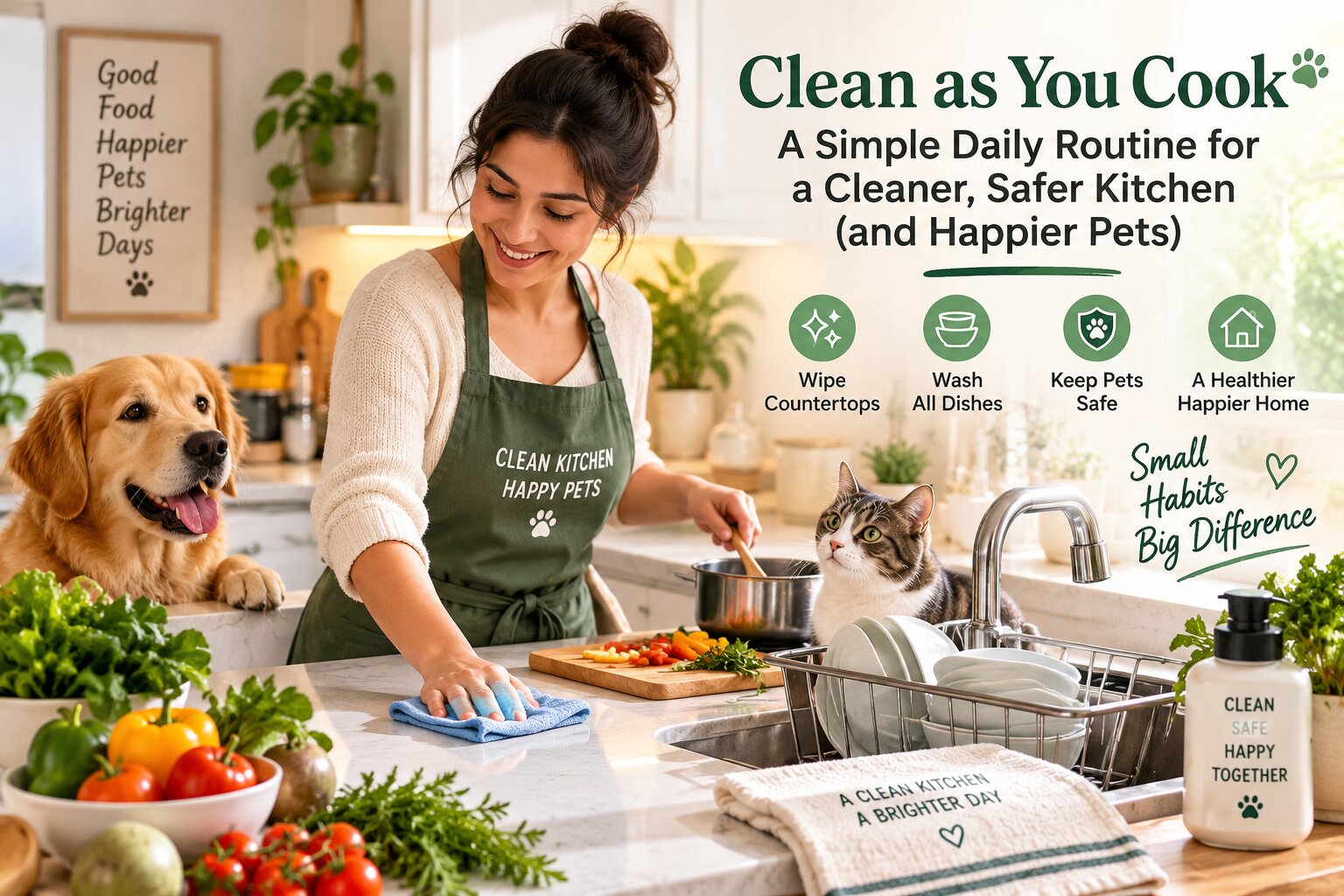
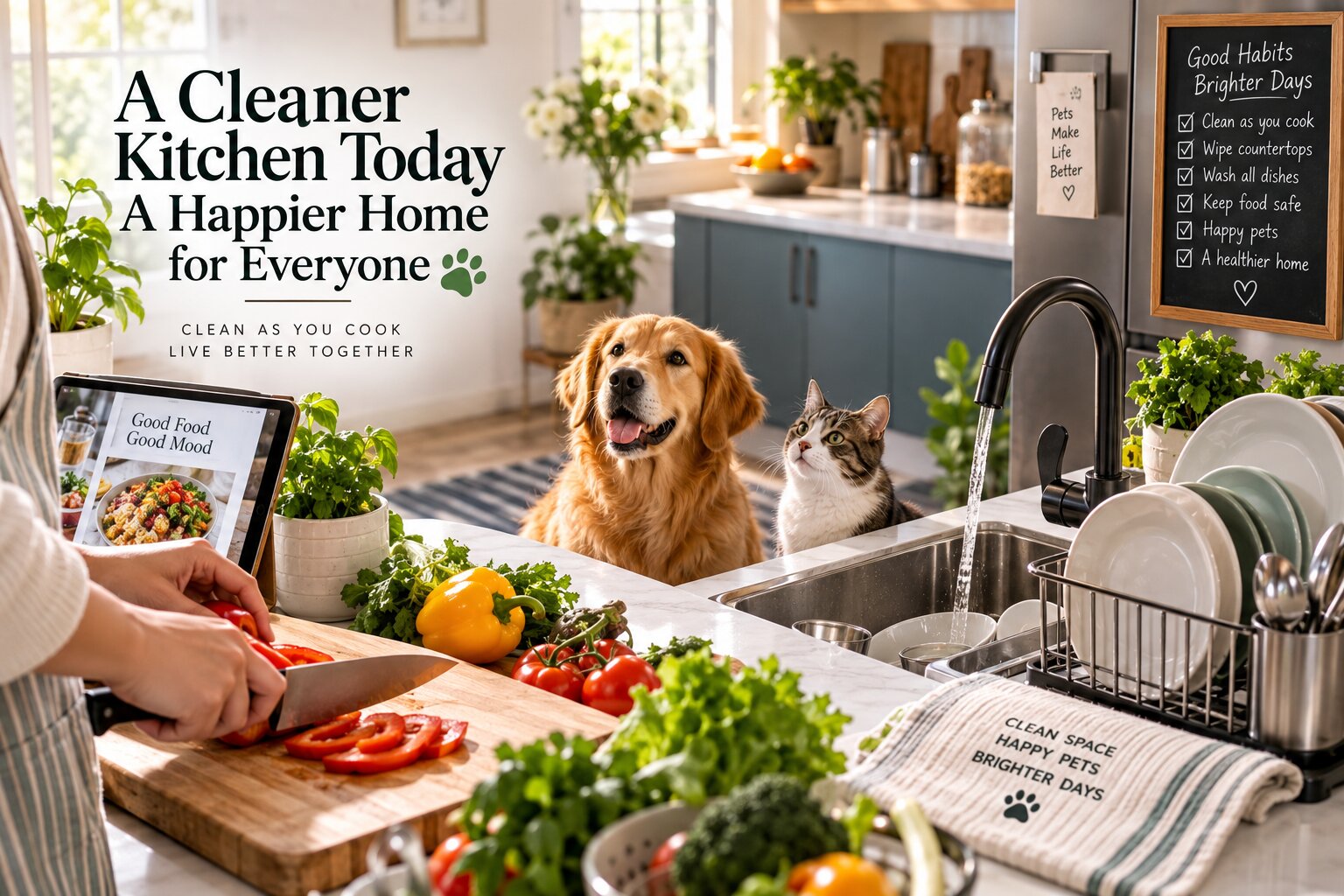
A clean kitchen does not have to mean spending an entire weekend scrubbing cabinets, degreasing appliances, and reorganising every cupboard. In many homes, the biggest difference comes from a much simpler habit: cleaning as you cook.
Wiping down countertops while food simmers, washing utensils between tasks, clearing food scraps, and finishing the evening with an empty sink can make the kitchen easier to manage. For households with dogs or cats, this routine has another benefit. It helps reduce the chances of pets coming into contact with spoiled food, cooking ingredients, dirty dishes, and surfaces used to prepare meals.
The idea is straightforward: instead of allowing every small mess to accumulate, deal with it before it becomes a larger job. A few minutes of cleaning during meal preparation, followed by a proper end-of-day reset, can support better kitchen hygiene, reduce clutter, and create a safer environment for everyone in the household.
Clean as You Cook
Handle small messes during meal preparation instead of letting them build up.
Clear Countertops
Keep food-preparation surfaces clean and ready for the next task.
Pet-Safe Habits
Store food safely, clean bowls regularly, and keep pets away from counters.
Why Cleaning as You Cook Is Worth Making a Habit
Cooking often creates several types of mess at once. Vegetable peelings collect near the chopping board, sauce splashes onto the hob, used utensils fill the sink, and food packaging takes up valuable counter space. If everything is left until after dinner, the final clean-up can feel much more demanding than the cooking itself.
A clean-as-you-go kitchen routine breaks that work into smaller tasks.
For example, while water is coming to a boil, you can put away ingredients that are no longer needed. While a meal is simmering, you can rinse a knife, wash a chopping board, or wipe a small section of the countertop. Once food has been served, only the items used for eating and the final cooking equipment may remain.
This approach is especially useful for busy households, people who cook several times a day, and families with pets. A cluttered kitchen can make it easier to overlook dropped food, open rubbish bins, or ingredients left within an animal’s reach.
Cleaning as you cook is not about making the kitchen look perfect every minute. It is about preventing manageable messes from becoming a large, unpleasant task.
Start With a Simple Kitchen Cleaning System
The most effective routine is one that is easy to repeat. You do not need dozens of cleaning products or a complicated checklist. A few basic supplies are usually enough for everyday maintenance:
- Dish soap
- Clean sponges or dish brushes
- Microfibre cloths
- Paper towels for certain food spills
- A suitable kitchen surface cleaner
- A rubbish bin or food-waste container
- A separate cloth or brush for cleaning pet bowls
- A clean drying rack or designated drying area
Keep everyday cleaning supplies somewhere convenient, but away from pet access. Dogs and cats can be curious about bottles, cloths, sponges, and anything that smells like food.
It is also helpful to use separate cleaning tools for different purposes. A cloth used for wiping the floor should not be used on a food-preparation surface. Likewise, pet-bowl cleaning tools should be kept separate from items used to clean plates and cooking utensils.
The goal is to make the correct action the easiest action. If the cloth is nearby, wiping a spill takes seconds. If the sink is already full, washing one more utensil can feel like an unnecessary chore.
Practical tip: Keep a clean microfibre cloth near the preparation area and place a small bowl nearby for vegetable scraps. These two simple changes can reduce clutter while you cook.

Wipe Down Countertops During Food Preparation
Countertops are among the most frequently used surfaces in a kitchen. They may come into contact with food packaging, vegetables, utensils, spills, and raw ingredients. Regular cleaning helps remove food debris and reduces the opportunity for contamination to spread.
The key is to wipe countertops at the right moments rather than waiting until the end of the day.
Before Cooking
Begin with a clear preparation area. Remove unnecessary objects, put away clean dishes, and make sure the surface is ready for food preparation.
Wash your hands with soap and water before handling food. The FDA recommends washing hands for at least 20 seconds and cleaning food-contact surfaces regularly.
During Cooking
Wipe up spills as soon as it is practical. A small splash of tomato sauce is easier to remove before it dries. Flour, crumbs, and vegetable scraps should also be cleared before they spread across the worktop.
However, use extra care when handling raw meat, poultry, seafood, or eggs. Surfaces that have been exposed to raw ingredients should be cleaned properly before being used for ready-to-eat food. FoodSafety.gov recommends washing countertops, utensils, and cutting boards with hot, soapy water after they have held raw meat, poultry, seafood, or eggs.
After Cooking
Once the meal is ready, give the main preparation area a final wipe. Pay attention to handles, the area around the sink, and places where food particles may have collected.
Cleaning and sanitising are different steps. Cleaning removes dirt and food residue, while sanitising is intended to reduce microorganisms to a safer level. When using a commercial product, check that it is suitable for food-contact surfaces and follow the label instructions.
Never mix bleach with vinegar, ammonia, or other cleaning products. Keep cleaning chemicals away from food, pets, and children. Always follow the product label and use only a cleaner suitable for the surface being treated.
Wash Dishes Before the End of the Day
One of the most useful household habits is to avoid leaving dirty dishes overnight whenever possible. A sink full of plates, pans, cups, and utensils can make the kitchen feel untidy and may attract insects or create unpleasant odours.
Washing dishes before bed gives the next morning a cleaner starting point. It also makes it easier to identify whether food has been left out or whether any kitchen surface needs attention.
A practical dishwashing routine looks like this:
- Scrape leftover food into the appropriate waste container.
- Separate items that need soaking.
- Wash glasses, cups, and lightly soiled dishes first.
- Clean plates and bowls.
- Wash cooking utensils and pans.
- Clean items that came into contact with raw ingredients carefully.
- Rinse and allow dishes to dry properly.
- Clean the sink and wipe the surrounding area.
Do not leave food scraps sitting in the sink. If you have a pet, this is particularly important because animals may be attracted to discarded food or attempt to investigate dirty dishes.
The American Cleaning Institute also advises keeping pets away from food preparation areas and kitchen counters.
End-of-Day Dishwashing Goal
- Clear leftover food from plates and pans.
- Wash dishes and cooking utensils.
- Rinse and dry items properly.
- Clean the sink and surrounding countertop.
- Leave the kitchen ready for the next morning.
Give Extra Attention to Cutting Boards and Knives
Cutting boards and knives are essential kitchen tools, but they can also transfer bacteria between ingredients if they are not cleaned properly.
A board used for raw chicken should not immediately be used to chop salad vegetables without being washed first. The same principle applies to knives, tongs, bowls, and other utensils.
A sensible routine is to:
- Use a clean board for each food-preparation stage.
- Wash boards with hot, soapy water after use.
- Clean knives between different food tasks.
- Keep raw meat and ready-to-eat foods separate.
- Replace heavily scratched or damaged plastic cutting boards when they become difficult to clean.
- Allow boards to dry thoroughly rather than leaving them wet in a pile.
The USDA recommends washing cutting boards with hot, soapy water after each use. It also explains that cutting boards can be sanitised using an appropriate food-safe method when necessary.
Wooden and plastic boards may require different care, so always follow the manufacturer’s instructions. A board that remains damp for long periods can develop unpleasant smells and may become harder to maintain.
Keep Pet Food and Human Food Separate
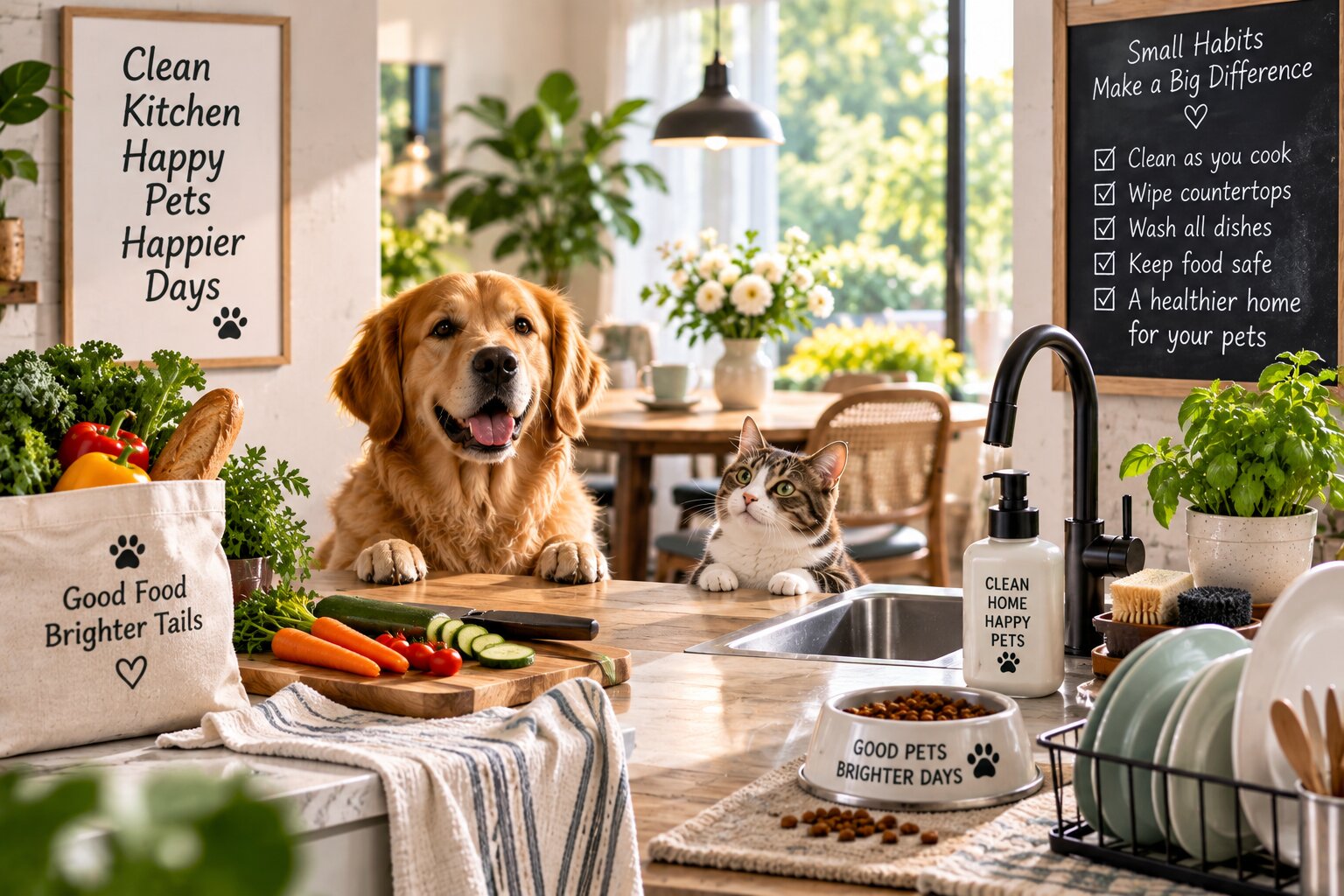
For pet owners, kitchen hygiene involves more than washing dinner plates. Dogs and cats often eat in or near the kitchen, which means their bowls, food storage containers, and feeding areas deserve a regular cleaning routine too.
Pet food should be handled separately from food intended for people. Keep dry food in a sealed container, and avoid storing pet food directly beside ingredients that are ready to eat.
Wet pet food should not be left out indefinitely. Follow the storage instructions on the product label, and remove uneaten food according to those instructions. Spoiled food can cause illness in animals, just as contaminated food can affect people.
Pet bowls should be washed regularly, especially after wet food. A bowl that looks clean may still have a layer of food residue or grease. Use hot, soapy water and rinse thoroughly. Allow bowls to dry before refilling them.
It is also sensible to clean the area beneath feeding bowls. Water spills, crumbs, and food particles can collect on the floor, creating an attractive area for insects or encouraging pets to lick surfaces that are not clean.
Pet Bowls Need a Routine Too
The FDA advises washing pet food bowls and measuring utensils with soap and hot water after each use. It also recommends washing and drying pet food storage containers between bags of dry food and keeping pet food in a cool, dry place. Water bowls should be washed daily.
Why Pets Should Stay Away From Kitchen Counters
Many dogs and cats enjoy exploring kitchen counters. They may be attracted by food smells, discarded packaging, or the possibility of finding something interesting. However, allowing pets onto food-preparation surfaces can create hygiene concerns.
Animals can carry dirt, microorganisms, or traces of substances on their paws and fur. Cats may also walk through litter areas before jumping onto furniture or counters. This does not mean that every contact will cause illness, but it is a reason to keep food-preparation surfaces separate from pet activity.
A practical approach includes:
- Discouraging pets from jumping onto kitchen counters.
- Keeping food away from the edge of worktops.
- Cleaning counters before preparing meals.
- Storing pet treats in closed containers.
- Keeping rubbish bins covered where possible.
- Washing hands after handling pets and before preparing food.
The American Cleaning Institute specifically advises keeping pets off kitchen counters and away from food preparation.
If a pet repeatedly jumps onto the counter, positive training, environmental changes, and removing food rewards can help. Avoid leaving attractive food unattended, particularly when cooking ingredients may be harmful to animals.
Be Careful With Foods That Are Dangerous to Dogs and Cats
A clean kitchen is helpful, but pet safety also depends on what is left within reach.
Some foods commonly found in kitchens can be dangerous to pets. Examples include:
- Chocolate
- Grapes and raisins
- Onions and garlic
- Xylitol-containing products
- Alcohol
- Certain caffeinated drinks
- Raw yeast dough
- Bones that can splinter
- Foods containing excessive salt or certain seasonings
The risk depends on the food, the amount consumed, and the animal’s size and health. If a dog or cat may have eaten a potentially toxic substance, contact a veterinarian or an appropriate animal poison service promptly. Do not wait for symptoms to appear if the substance is known to be dangerous.
Kitchen cleaning helps prevent accidental access. A closed cupboard, covered bin, and cleared countertop can make a meaningful difference.
Contact a veterinarian promptly and provide details about the food, estimated amount, and time of ingestion. Do not induce vomiting unless a veterinary professional specifically instructs you to do so.
Clean Sponges, Cloths, and Dish Towels Regularly
Sponges and cloths are often used repeatedly throughout the day. They may absorb food residue, grease, and moisture, making them easy to overlook during routine cleaning.
A kitchen sponge should not be treated as permanently clean simply because it is used with dish soap. Replace it regularly, and clean or sanitise it according to reliable guidance and the manufacturer’s instructions.
Dish towels should also be washed frequently. If a towel has been used to wipe up raw meat juices, it should not then be used to dry clean plates or wipe a food-preparation surface.
The FDA recommends laundering reusable cloth towels often, while FoodSafety.gov advises washing dishcloths frequently.
For households with pets, keep cleaning cloths and sponges away from animals. A dog chewing on a used sponge could swallow pieces of it or ingest cleaning residue.
Do Not Wash Raw Chicken in the Sink
One common kitchen habit deserves particular attention: washing raw chicken or other raw poultry under running water.
Food-safety authorities advise against washing raw poultry because splashing water can spread bacteria to sinks, countertops, utensils, and nearby surfaces. Washing does not make raw poultry safe; cooking it to the correct internal temperature is what controls harmful bacteria.
The FDA and USDA both advise against washing raw meat and poultry for this reason.
Instead:
- Remove poultry from its packaging carefully.
- Keep it away from ready-to-eat foods.
- Wash hands after handling it.
- Clean surfaces and utensils that come into contact with it.
- Cook it thoroughly using a food thermometer where appropriate.
This is one of the most important kitchen habits for preventing cross-contamination.
A Simple End-of-Day Kitchen Reset
The final kitchen reset does not need to take an hour. A consistent 10- to 15-minute routine can be enough for everyday maintenance, depending on how much cooking has taken place.
Put Food Away Safely
Refrigerate perishable foods promptly. Use suitable containers, label leftovers when useful, and avoid leaving cooked food uncovered.
Clear the Countertops
Return ingredients to their proper storage areas. Remove packaging, crumbs, and spills.
Wash All Dishes
Try to finish plates, bowls, utensils, and cooking equipment before the end of the evening.
Clean the Sink
Rinse away food debris and wash the sink with a suitable cleaner. Pay attention to the drain area and tap handles.
Secure the Rubbish
Food waste can attract insects and may be especially tempting to pets. Use a covered bin where possible.
Check the Floor
Look for dropped food, especially around the cooker, dining area, and pet-feeding station.
Prepare for Tomorrow
Leave out only what is needed for the next morning. A clear kitchen makes the next meal easier to begin.
Food-storage reminder: FoodSafety.gov recommends refrigerating perishable food within two hours, or within one hour when the temperature is above 90°F (32°C). Divide large amounts of leftovers into shallow containers so they cool more quickly.
A Weekly Deep-Cleaning Checklist
Daily cleaning is the foundation, but some areas need attention less frequently. A weekly kitchen cleaning routine may include:
- Cleaning the inside and outside of the microwave
- Wiping cabinet handles
- Cleaning the hob and backsplash
- Washing the rubbish bin
- Cleaning the refrigerator shelves where necessary
- Washing reusable shopping bags
- Cleaning pet-food storage containers
- Washing pet feeding mats
- Checking food expiry dates
- Cleaning under small appliances
- Washing or replacing kitchen towels
- Inspecting sponges, brushes, and cleaning tools
The exact schedule depends on how often the kitchen is used. Homes with multiple pets, young children, or frequent cooking may need to clean certain areas more often.
There is no need to deep-clean every surface every day. The better approach is to combine small daily habits with a realistic weekly maintenance plan.
Make the Routine Easier for Busy Households
A cleaning routine works best when it fits naturally into the cooking process.
Try linking tasks to activities that already happen:
- While water boils: Clear packaging and put away ingredients.
- While food simmers: Wash a utensil or wipe a nearby surface.
- After serving: Place leftovers in containers.
- After eating: Start washing dishes immediately.
- Before bed: Check the floor and secure the rubbish.
- Before breakfast: Begin with a clean sink and clear countertop.
If several people share the home, divide responsibilities. One person can cook while another loads the dishwasher or washes dishes. Pet owners can also assign a regular task for cleaning feeding bowls and checking the pet-food area.
The aim is not perfection. It is consistency.
The Bottom Line
A daily kitchen cleaning routine built around cleaning as you cook, wiping countertops, washing dishes, and completing an evening reset can make everyday life more organised and manageable. It also supports safer food handling by reducing clutter, removing food residue, and limiting opportunities for cross-contamination.
For households with dogs and cats, the routine should extend to pet bowls, feeding areas, food storage, rubbish bins, and keeping animals away from food-preparation surfaces.
The most useful habit is often the simplest one: do not allow a small kitchen mess to become tomorrow’s problem. A few minutes of cleaning during and after cooking can leave the kitchen ready for the next meal—and create a cleaner, more comfortable space for both people and pets.
Frequently Asked Questions
What does “clean as you cook” mean?
Clean as you cook means handling small cleaning tasks during meal preparation, such as wiping spills, washing utensils, clearing food scraps, and putting ingredients away instead of leaving everything until the end.
How often should kitchen countertops be cleaned?
Countertops should be cleaned before and after food preparation, with spills removed as soon as practical. Surfaces exposed to raw meat, poultry, seafood, or eggs should be washed thoroughly before being used for ready-to-eat foods.
Should dirty dishes be washed before bed?
Washing dishes before bed is a useful daily habit. It reduces clutter, helps prevent food residue from accumulating, and leaves the kitchen ready for the following morning.
How often should pet food bowls be cleaned?
Pet food bowls should be washed with soap and hot water after each use, particularly after wet food. Water bowls should also be washed daily, and both should be dried before refilling.
Why should pets be kept off kitchen counters?
Pets can carry dirt and microorganisms on their paws and fur. Keeping them away from food-preparation surfaces helps maintain kitchen hygiene and reduces the risk of contamination.
Is it safe to wash raw chicken in the sink?
Food-safety authorities advise against washing raw chicken because splashing water can spread bacteria around the sink, countertops, utensils, and nearby surfaces. Safe cooking, rather than washing, is what makes poultry safe to eat.
Information Sources
This article is intended for general lifestyle and home-hygiene information. Food-safety and pet-food handling guidance was informed by the following official resources: