A bra should support you, not distract you. Yet finding the right bra size and style can be surprisingly complicated. One bra may feel comfortable around the band but leave the cups overflowing, while another may look perfect in the fitting room but start slipping, digging or riding up after a few hours.
The reason is simple: bra size is only part of the equation. Your breast shape, band measurement, cup volume, bra construction, fabric, straps and the clothes you wear all influence how a bra actually fits.
This complete bra guide explains how to measure your bra size at home, how to recognize a properly fitting bra, what different bra styles are designed to do, how sister sizes work, when to choose wireless or underwire bras, and how to care for your lingerie so it keeps its shape and support.
Why Finding the Right Bra Size Matters
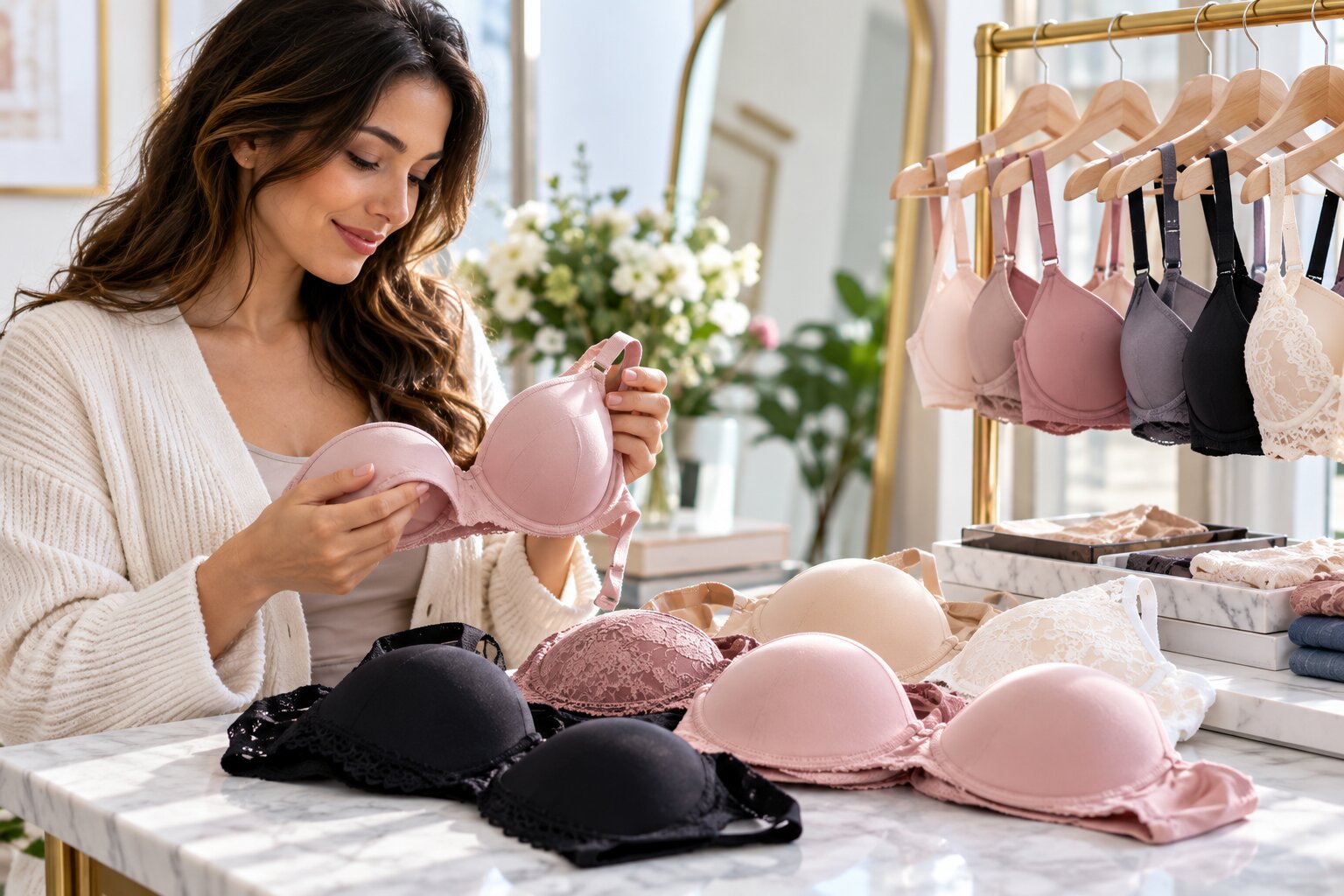
A well-fitting bra can make everyday dressing noticeably easier. The band should feel secure without creating painful pressure, the cups should contain the breast tissue without spilling or gaping, and the straps should stay comfortably in place.
The band is particularly important because it provides much of the bra’s support. If the band is too loose, people often compensate by tightening the shoulder straps, which can create unnecessary pressure around the shoulders and neck. If the band is too tight, the bra may feel restrictive and leave uncomfortable marks.
The National Breast Cancer Foundation’s bra-fit guidance explains that bra fit is an important part of comfort and breast health, while the way a bra fits does not affect breast-cancer risk.
How to Measure Your Bra Size at Home
You do not necessarily need a professional fitting to get a useful starting measurement. A soft measuring tape and a mirror can help you determine your approximate band and bust measurements.
Wacoal’s bra-fit calculator recommends using a soft measuring tape and a non-padded or lightly padded bra when measuring. The tape should remain level around the body and should not compress the breast tissue.
Step 1: Measure Your Band
Put on a non-padded or lightly padded bra and stand naturally.
Wrap the measuring tape around your rib cage directly underneath your breasts. Keep the tape level all the way around your body. It should feel secure but should not dig into your skin.
Record the measurement. This measurement helps determine your bra band size, such as 32, 34, 36 or 38.
Step 2: Measure Your Bust
Next, place the measuring tape around the fullest part of your bust. Keep it level across your back and make sure it is not squeezing your breasts.
Record this measurement separately.
The difference between the band and bust measurements is traditionally used to estimate cup size. However, don’t treat a calculated size as an absolute rule.
How Should a Bra Fit?
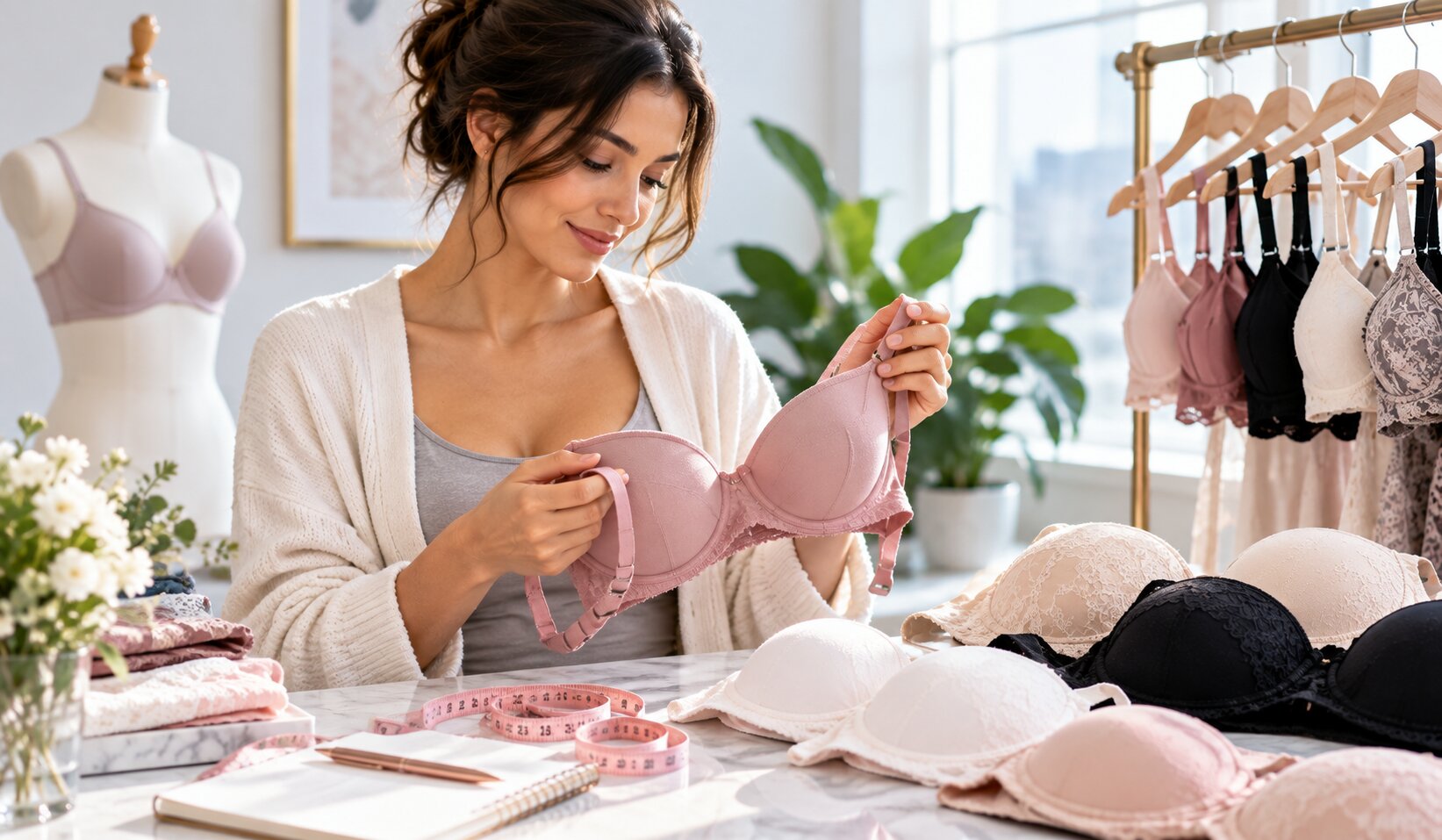
Once you have a starting size, the real test begins when you put the bra on.
A properly fitting bra should feel supportive without making you constantly aware that you are wearing it.
The Band Should Stay Level
Look at the back of the bra in a mirror.
The band should remain relatively level rather than creeping upward toward your shoulder blades. If the back rises significantly while the front sits lower, the band may be too loose.
The Cups Should Contain the Breast Tissue
Your breasts should sit comfortably inside the cups without obvious overflow at the top or sides.
If breast tissue is spilling over the cup edge, the cup may be too small—or the particular bra shape may simply not suit your breast shape.
On the other hand, significant wrinkling or empty space can indicate that the cup is too large or that the cup shape does not match your breast shape.
The Center Should Lie Flat
The center section between the cups, often called the gore, should sit comfortably against the chest in styles designed to lie flat there.
If the center is being pushed away from the body, the cup may not be large enough or the bra’s construction may not suit your shape.
The Straps Should Not Do All the Work
Bra straps are designed to assist with support, not carry the entire weight of the breasts.
If you find yourself constantly tightening your straps because the bra feels unsupported, check the band first.
Understanding Sister Sizes
One of the most useful concepts when shopping for bras is sister sizing.
A sister size changes the band measurement while maintaining a similar cup volume. For example, if a 34C feels too loose around the band but the cup volume seems right, a nearby sister size may be 32D.
Likewise, if the band of a 34C feels too tight while the cup volume works, you may explore 36B.
The key point is that you cannot simply change the band number and keep the same cup letter and expect the cup volume to remain identical.
Think of sister sizes as a fine-tuning tool, not a replacement for checking the actual fit.
Common Signs Your Bra Is the Wrong Size
Sometimes your body tells you the answer before the measuring tape does.
- The band rides up your back.
- The cups spill over at the top or sides.
- The cups wrinkle or gape.
- The underwire sits on breast tissue.
- The center section does not lie flat when it should.
- The shoulder straps constantly slip.
- The straps dig painfully into your shoulders.
- You need to tighten the straps excessively to get support.
- The bra feels uncomfortable after only a short period.
- The front of the bra moves upward when you raise your arms.
The National Breast Cancer Foundation’s fit guide discusses common issues such as cup spillover, gaping, slipping straps, uncomfortable marks and bands that do not sit correctly.
Your Breast Shape Matters Too
Bra fitting isn’t only about measurements.
Two people can have the same band and cup measurements but look completely different in the same bra because breast shape affects how the cups sit.
For example, some breasts have more fullness toward the bottom, while others have more fullness toward the top. Some are wider-set, some are closer together, and many women have some degree of natural asymmetry.
The Wacoal fit resources emphasize that finding a comfortable bra is not simply about size; breast shape and the construction of the bra also matter.
This is one reason why finding your “perfect bra size” is not always as simple as entering two numbers into a calculator.
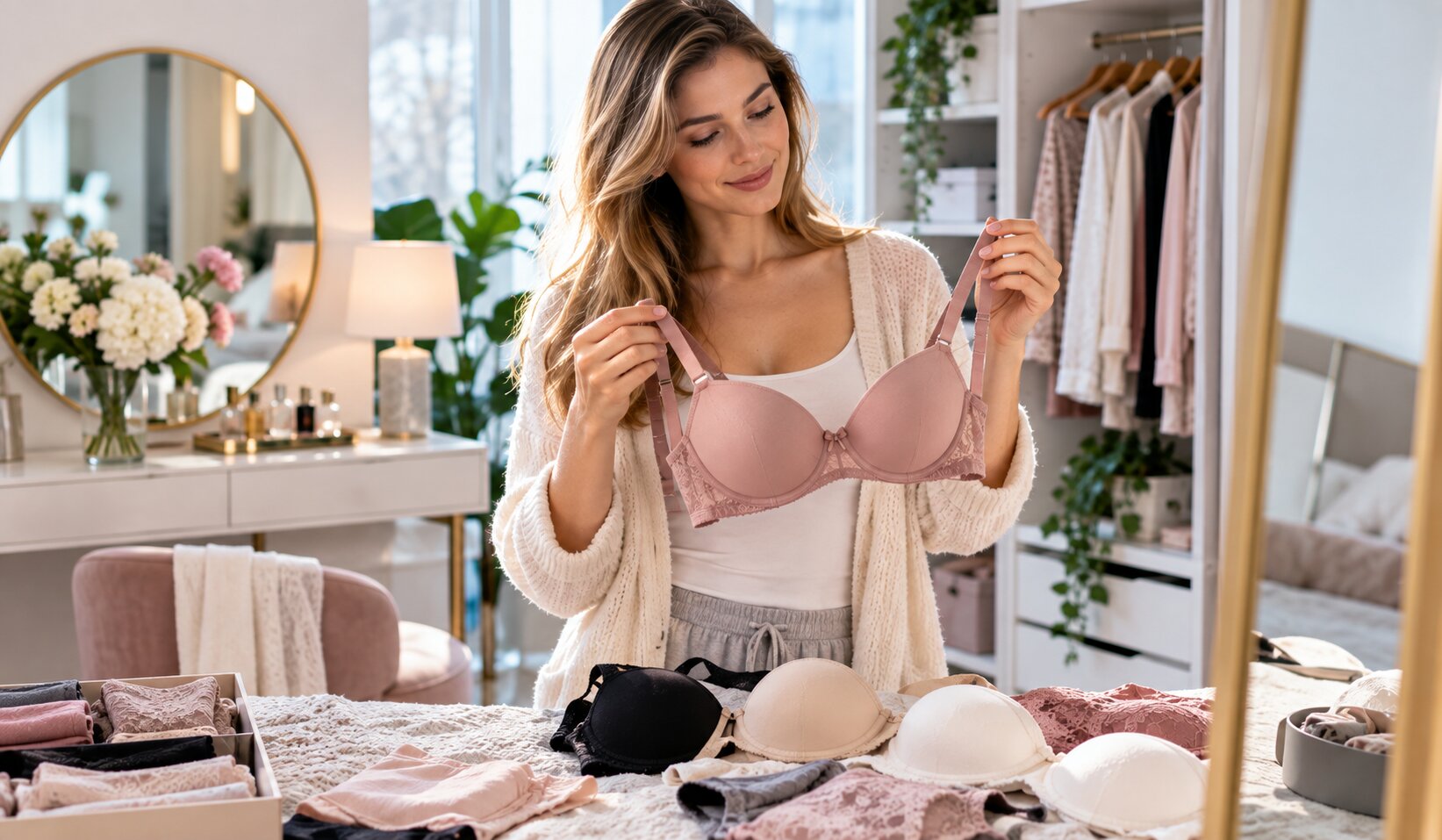
Best Bra Styles and When to Wear Them
There is no single best bra for every woman or every outfit. The right choice depends on your comfort preferences, breast shape, activity level and clothing.
T-Shirt Bra
A T-shirt bra is designed to create a smooth appearance under fitted or lightweight clothing. Moulded or seamless cups can help minimize visible seams.
It is one of the most practical everyday bras because it works particularly well with T-shirts, fitted tops and smooth fabrics.
Full-Coverage Bra
A full-coverage bra provides more coverage across the breast and can be especially useful for people who want additional containment and support.
It can be a practical everyday option, particularly for fuller busts or when you prefer a secure feeling rather than a low neckline.
Balconette Bra
A balconette bra typically has a more open neckline and can create a lifted appearance. It works particularly well with square or wider necklines.
The construction concentrates support underneath the bust while creating a more open upper silhouette.
Push-Up Bra
Push-up bras use padding or construction designed to lift the breasts and create additional cleavage.
They can work well for particular outfits, especially lower necklines, but they should still fit comfortably. Extra padding does not compensate for an incorrect band or cup size.
Wireless Bra
Wireless bras eliminate the underwire and are often chosen for softness, flexibility and relaxed everyday comfort.
They can be particularly appealing for lounging, casual wear or anyone who prefers not to wear underwire.
Bralette
Bralettes generally emphasize softness and flexibility rather than rigid structure. They can be a good choice for casual outfits and relaxed days.
Some have lining or additional support while others are deliberately minimal.
Strapless or Convertible Bra
If your wardrobe includes off-the-shoulder tops, strapless dresses, asymmetric designs or difficult necklines, a convertible bra can be extremely useful.
Convertible designs allow the straps to be repositioned or removed depending on the outfit.
Sports Bra
A sports bra serves a different purpose from an everyday bra. During exercise, breast movement can become uncomfortable, so a sports bra is designed specifically to provide support during physical activity.
Choose the level of support according to the activity. Low-impact exercise such as walking may require a different construction from running, jumping or high-intensity workouts.
Choosing a Bra for Different Outfits
Your clothing should influence your bra choice. The most useful lingerie wardrobe is not necessarily the largest one; it is the one that gives you a practical option for the clothes you actually wear.
| Outfit or Situation | Bra Style to Consider | Why It Works |
|---|---|---|
| Fitted T-shirts | Seamless or T-shirt bra | Smooth construction helps reduce visible lines under lightweight fabric. |
| Square necklines | Balconette bra | The open neckline can complement wider-cut tops. |
| Off-shoulder clothing | Strapless or convertible bra | Designed to work without conventional shoulder straps. |
| Everyday casual wear | Wireless or lightly lined bra | Useful when softness and long-wear comfort are priorities. |
| Exercise | Sports bra | Designed specifically for movement and activity. |
| Low neckline | Plunge or suitable push-up style | Can work with lower necklines while providing structure and shaping. |
Underwire vs Wireless: Which Should You Choose?
Neither option is automatically right for everyone.
An underwire can provide structure and shaping, while a wireless design may offer greater freedom and softness. Your decision should come down to fit, comfort, support and personal preference.
An underwire should not sit directly on breast tissue or painfully dig into the skin. If it does, check the cup size and the bra’s shape rather than simply tolerating the discomfort.
A wireless bra should still provide a secure fit. “Wireless” does not mean “no support.”
Choosing a Bra for Different Body Changes
Bra fit can change throughout life. Weight changes, pregnancy, breastfeeding, aging and other changes in body composition can alter how a familiar bra feels.
This is why a size that worked perfectly several years ago may not remain the best fit today. Rather than automatically buying the same size, reassess the band, cups and overall comfort.
For women looking for more lift or support as their breast shape changes, AhemBeauty also has dedicated guides covering bras for sagging breasts and additional bra options for changing breast shape .
For smaller busts, the most important point is still fit rather than automatically adding padding. Our guide to bras for smaller busts that truly fit explores styles designed around that specific concern.
How Often Should You Replace a Bra?
There is no universal replacement date that applies to every bra.
How long a bra lasts depends on how often you wear it, how frequently you wash it, how you wash it, the fabric, construction and how much the elastic is exposed to stretching.
Instead of relying only on a calendar, examine the bra itself.
- The band has lost its elasticity.
- The cups have permanently changed shape.
- The fabric is badly stretched.
- The straps no longer stay adjusted.
- The underwire has become damaged or uncomfortable.
- The bra no longer provides the support it originally did.
- You repeatedly need to tighten it to compensate for worn-out elastic.
Your body can also change. Weight changes, pregnancy, breastfeeding and other changes in body composition can alter bra fit.
How to Wash and Care for Your Bras
Even an excellent bra will not last if it is treated roughly.
Clovia’s bra-care guidance recommends gentle washing, careful drying and rotating bras rather than repeatedly wearing the same one.
Hand Wash When Possible
Use a gentle detergent and avoid aggressive rubbing. Do not twist or wring the cups because repeated mechanical stress can distort their shape.
Avoid High Heat
High heat can damage elastic fibres and affect the shape of some materials. Air drying is generally a gentler approach than putting delicate lingerie through a hot dryer.
Rotate Your Bras
If you have several everyday bras, rotate them rather than wearing the same bra every single day. This gives the elastic and fabric time to recover between wears.
Store Them Carefully
Avoid crushing moulded cups or folding padded cups in ways that permanently distort their shape. Keep bras in a drawer where they have enough space to retain their natural construction.
Does Wearing a Bra Cause Breast Cancer?
This is one of the most important myths to address.
Current evidence does not show that wearing a bra increases breast-cancer risk.
The American Cancer Society states that there is no scientific or clinical data showing that wearing a bra changes the risk of breast cancer, including evidence from a population-based study of more than 1,500 women.
The National Breast Cancer Foundation likewise explains that bra fit does not affect breast-cancer risk, although a properly fitting bra is important for comfort and overall breast health.
Breast Health Still Matters
Rejecting the bra-cancer myth does not mean ignoring breast health.
Breast self-awareness remains important. The National Breast Cancer Foundation encourages women to become familiar with how their breasts normally look and feel so they can recognize changes.
Changes such as a new lump or thickening, a change in breast shape or size, skin dimpling, nipple inversion, unusual nipple discharge, or persistent red, scaly or swollen skin should be discussed with a healthcare professional.
The purpose of breast awareness is not to create anxiety or encourage constant checking. It is simply to recognize what is normal for you and seek appropriate medical advice when something new or unusual appears.
The Bottom Line: Your Best Bra Is the One That Fits Your Life
Finding the right bra is less about chasing a magical number on a size label and more about understanding how the bra behaves on your body.
Measure carefully, understand your shape, pay attention to how the band behaves, make sure the cups contain your breast tissue comfortably and choose styles according to your clothes and lifestyle. Then take care of your bras properly so the fit lasts.
Build your lingerie wardrobe around real life: an everyday T-shirt bra, a comfortable wireless option, a supportive style for occasions that need more coverage, a sports bra for exercise and a convertible or strapless option if your wardrobe calls for it.
Most importantly, don’t normalize discomfort.
A bra that digs, spills, slips, rides up or constantly needs adjustment is giving you useful information: something about the fit needs to change.
The right bra should disappear into your day—not become the thing you spend your day adjusting.
Frequently Asked Questions
How do I know if my bra size is correct?
A good starting fit has a secure, level band, cups that contain the breast tissue without obvious spilling or gaping, comfortable straps and a center section that sits appropriately against the chest. If the bra is uncomfortable or repeatedly needs adjustment, try another size or style.
How often should I measure my bra size?
There is no mandatory schedule, but it is sensible to recheck your measurements after significant weight change or other major body changes. Your bra size can also vary between brands and styles.
Is a 34C bigger than a 32D?
Not necessarily in overall cup volume. These sizes can be sister sizes, meaning they can have a similar cup volume while using different band measurements. However, the actual fit still depends on the specific bra.
Why does my bra ride up in the back?
A back band that repeatedly rides upward can indicate that the band is too loose. If the cup fits well, you may need to explore a smaller band with the corresponding sister cup size.
Why do my bra cups gap at the top?
Cup gaping does not always mean the cup is simply too large. Breast shape and cup construction can be responsible. Trying a different cup shape or bra style may solve the problem without changing your size.
Is a wireless bra better than an underwire bra?
Neither is universally better. Wireless bras can provide a softer, more flexible feel, while underwire bras can offer additional structure and shaping. The better choice is the one that fits comfortably and provides the support you need.
Can I wear the same bra every day?
You can, but rotating several bras may help reduce wear on the elastic and fabric. Proper washing and drying are also important for maintaining a bra’s shape and longevity.
Can wearing the wrong bra size cause breast cancer?
There is no scientific evidence that wearing a bra that is too tight or too loose causes breast cancer. Poor fit can instead contribute to discomfort, pressure, skin irritation or support problems.
What is the most comfortable bra style?
Comfort is highly individual. Wireless bras, lounge bras and bralettes are often chosen for softer everyday wear, while well-fitted underwire and full-coverage styles can provide structured support. The correct size and shape are more important than the label of the style.
Trusted Sources & Further Reading
The information in this article has been developed using established bra-fitting, lingerie-care and breast-health guidance. Readers should consult the original sources for additional information.
Health disclaimer: This article is intended for general educational and lifestyle information. It is not a substitute for medical diagnosis, screening or professional medical advice. Breast symptoms or changes that concern you should be discussed with a qualified healthcare professional. Bra sizing can vary between brands, styles and sizing systems, so use measurements as a starting point and assess the actual fit.