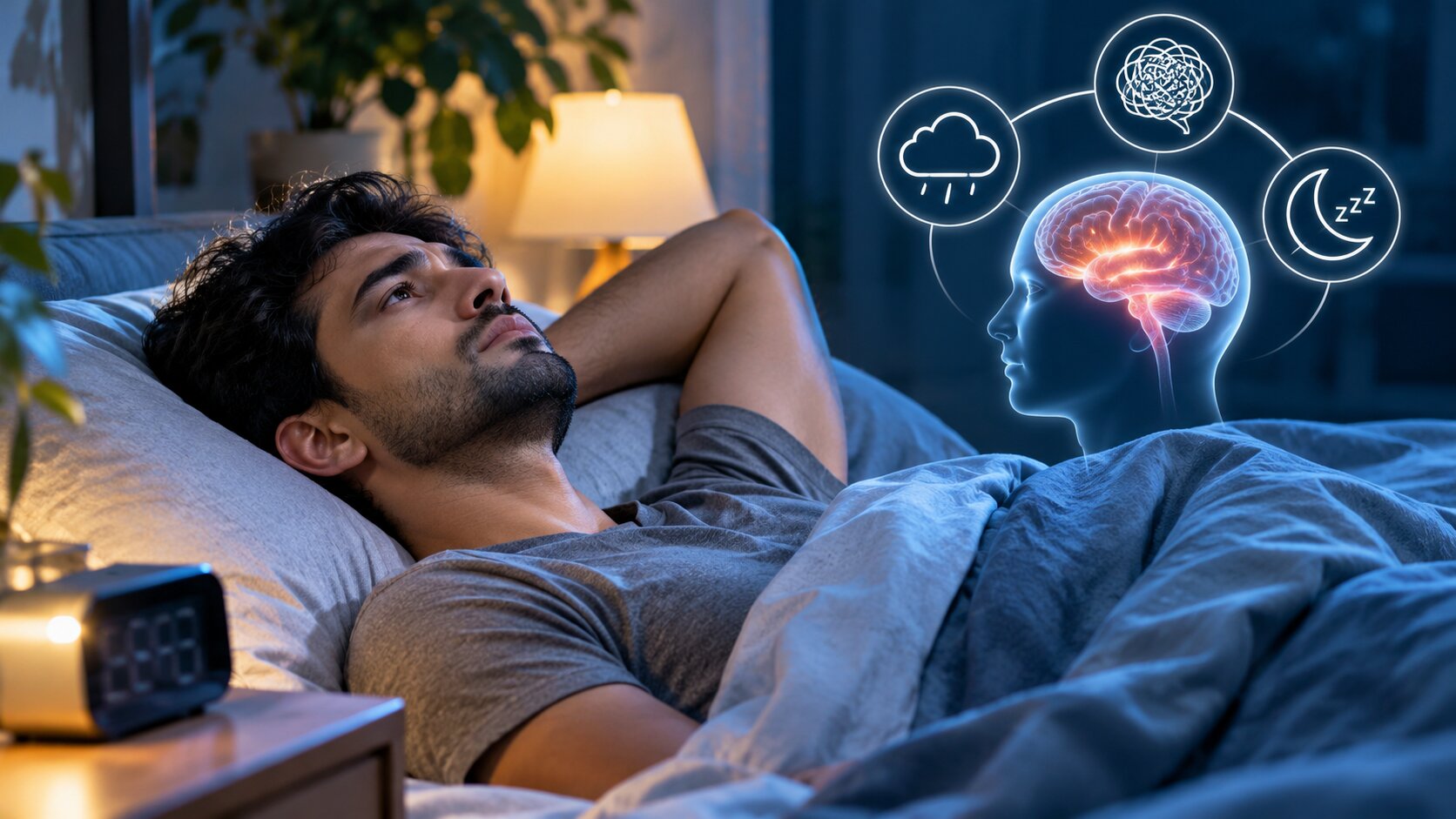
The clocks changed a few weeks ago in the US and Canada (November 1) and in the UK (October 25). For some people, the shift in daylight and daily routines can temporarily disrupt sleep. But if you have been struggling to fall asleep, waking up exhausted, or dealing with persistent back pain, there may be more going on than a simple change in schedule.
Sleep health is receiving renewed attention following several research developments in 2026. A November study has added to the growing evidence that irregular sleep schedules are associated with poorer mental health. Meanwhile, a new US government report has highlighted how common short sleep and nighttime difficulties remain among adults.
Some popular advice is useful. Some of it is expensive guesswork. Magnesium, blackout curtains, a new pillow or a new mattress may sound appealing, but none should replace an assessment of an underlying medical problem.
The question that matters first is this: is your poor sleep a temporary problem, a bedroom-environment issue, or an actual sleeping disorder?
This guide is built around that question. We will walk through what sleeping disorders are, how the main types differ, what the symptoms and causes look like, what is different for children, and when a doctor should be part of the story. Then we will tackle the part most readers actually arrive for: how back pain and sleep feed each other, and what a mattress, especially a memory foam one, can and cannot do about it.
A quick word on what this is not. This is not a “top 10 mattresses” page in disguise. A mattress is a lever, not a cure, and the plain version of this topic is more useful than the glossy one.
The latest sleep research: why regular sleep schedules matter
A research report published on November 12, 2026, by researchers associated with the University of California, San Francisco (UCSF) and the University of California, San Diego (UC San Diego), examined the relationship between sleep regularity and mental health.
The study, published in Scientific Reports, used wearable-device data to investigate how consistently people followed their sleep and wake schedules. Researchers found that less regular sleep-wake patterns were associated with more severe self-reported symptoms of anxiety, depression and loneliness.
The findings suggest that sleep health involves more than simply counting the hours spent in bed. When you go to sleep and wake up may matter too.
However, the findings show an association, not proof that an irregular sleep schedule directly causes depression or anxiety. Mental health difficulties can also disrupt sleep, so the relationship can work in both directions.
For everyday readers, the practical message is straightforward: try to maintain a reasonably consistent bedtime and wake-up time, including on weekends.
Research source: University of California research report, November 12, 2026.
Another useful development came from the US National Center for Health Statistics (NCHS), part of the Centers for Disease Control and Prevention (CDC).
Its April 29, 2026, report, Short Sleep Duration and Sleep Difficulties Among Adults: United States, 2024, found that:
- 30.5% of US adults slept fewer than seven hours on average in a 24-hour period.
- 15.4% reported trouble falling asleep most days or every day.
- 18.1% reported trouble staying asleep most days or every day.
- 54.8% said they woke feeling well-rested most days or every day.
These figures come from a US population survey. They should not be treated as estimates for Bangladesh or the entire global population. Nevertheless, they show why sleep duration and sleep quality remain important public-health concerns.
Official report: CDC National Center for Health Statistics – Short Sleep Duration and Sleep Difficulties Among Adults.

The short version
- A sleeping disorder is a condition that regularly disrupts the quantity, quality or timing of your sleep, or makes you behave abnormally during it. A few rough nights do not count.
- Common types include insomnia, sleep apnea, restless legs syndrome, narcolepsy, circadian rhythm disorders and parasomnias such as sleepwalking.
- Snoring with gasping, falling asleep at inappropriate moments, and daytime exhaustion despite “enough” hours are signs to see a doctor, not to shop for foam.
- Back pain and poor sleep form a loop. Pain wrecks sleep, and poor sleep lowers your pain tolerance. A medium to medium-firm mattress is a sensible starting point for many people with back pain, but personal comfort matters more than labels.
- The best memory foam mattress is the one that matches your sleeping position, body weight, temperature and budget, and comes with a genuine trial period.
What are sleeping disorders? (Meaning, and why the definition matters)
People use “sleeping disorders” loosely, so here is the working definition. A sleeping disorder is a medical condition that affects how well, how long or when you sleep, or that causes unusual behaviours, movements or breathing problems during sleep. Doctors may also call them sleep-wake disorders.
The distinction between a disorder and a rough patch is mostly about pattern and impact. For insomnia, for instance, clinicians generally look for trouble falling or staying asleep at least three nights a week for three months or longer, despite adequate opportunity to sleep, along with daytime consequences like fatigue, low mood or poor concentration. One awful week after a stressful deadline or a clock change is not that.
Why does this matter? Because the solutions are different. A bad patch usually responds to routine and environment. A disorder often needs a diagnosis, and sometimes a sleep study, before anything else works.
For context, health agencies treat this as a public-health issue, not a lifestyle quirk. The US Centers for Disease Control and Prevention has reported that insufficient sleep remains common among American adults. The NHS in the UK and Health Canada both publish guidance on sleep because the effects reach well beyond tiredness, touching heart health, mood, weight, accident risk and pain.
The CDC recommends that most adults aged 18–60 get at least seven hours of sleep per night. Sleep requirements vary with age, and children and teenagers generally need more.
Useful guidance: CDC – About Sleep.
Sleeping disorders list: the main types and names
The International Classification of Sleep Disorders groups these conditions into several families. You do not need to memorise the manual, but knowing the names helps you describe your experience accurately to a doctor.
| Type | What it involves | Typical clues |
|---|---|---|
| Insomnia | Difficulty falling asleep, staying asleep or waking too early | Lying awake, early waking, daytime fatigue |
| Obstructive sleep apnea | Repeated airway collapse during sleep | Loud snoring, gasping, morning headaches, heavy daytime sleepiness |
| Restless legs syndrome (RLS) | An urge to move the legs, worse in the evening | Crawling or aching sensations eased by movement |
| Narcolepsy | A neurological condition affecting sleep-wake control | Sudden sleep attacks, sleep paralysis, sometimes muscle weakness with emotion |
| Circadian rhythm disorders | Body clock out of step with the desired schedule | Delayed sleep phase in teens, shift work disorder, jet lag |
| Parasomnias | Unusual behaviours during sleep | Sleepwalking, night terrors, acting out dreams |
| Hypersomnolence disorders | Excessive sleepiness despite adequate sleep | Long sleep, difficulty waking, daytime napping |
That table doubles as a quick answer to “what are some sleeping disorders” and “types of sleeping disorders.” Now let us look at the ones people ask about most.
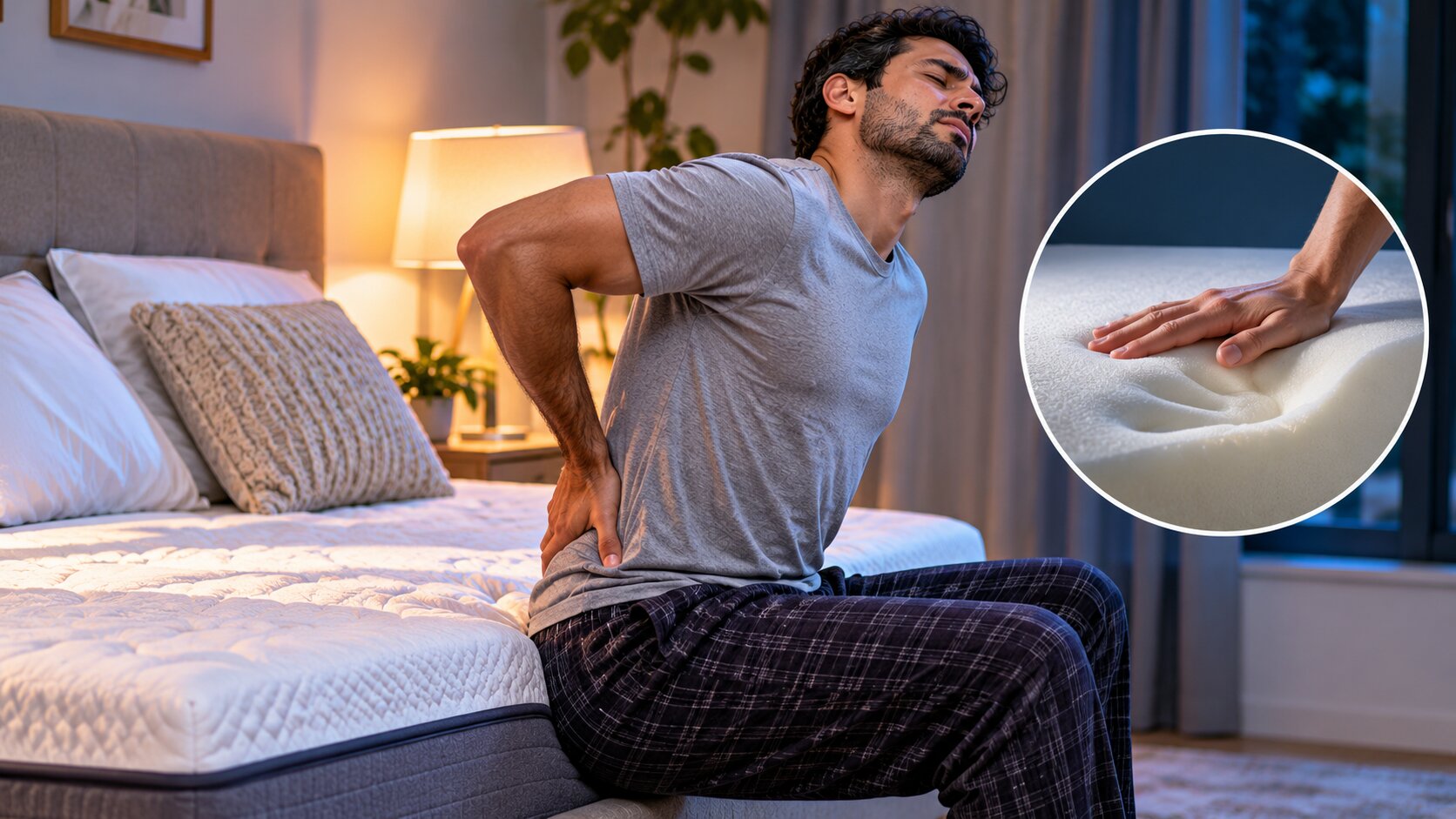
Insomnia
Insomnia is one of the most common sleeping disorders, and it is more than “can’t sleep.” It can look like taking more than 30 minutes to fall asleep, waking at 3 a.m. and staying awake, or sleeping the full night but never feeling rested.
Most articles skip this bit. For chronic insomnia, the first-line treatment recommended by bodies such as the American College of Physicians is not a pill. It is cognitive behavioural therapy for insomnia (CBT-I), a structured programme that retrains the habits and thought patterns that keep insomnia going.
CBT-I can involve sleep scheduling, stimulus control, relaxation techniques and changing unhelpful thoughts about sleep. Sleep medication has a role for some people, but usually as a carefully considered treatment, and that decision belongs with a clinician.
The American Academy of Sleep Medicine also provides clinical guidance on behavioural and psychological treatments for chronic insomnia.
Clinical guidance: American College of Physicians – Management of Chronic Insomnia Disorder in Adults.
Sleep apnea
Obstructive sleep apnea happens when the airway repeatedly narrows or closes during sleep, briefly interrupting breathing. The person often does not remember it. A partner may notice the snoring, the pauses and the gasping. Sufferers feel unrefreshed, get morning headaches and fight sleepiness at the wheel or desk.
It matters beyond comfort because untreated sleep apnea is associated with high blood pressure and other cardiovascular risks. It is also widely underdiagnosed. Treatment ranges from weight management and positional changes to CPAP therapy or oral appliances, depending on severity and the person’s medical assessment.
A practical point for mattress shoppers: no mattress treats sleep apnea. If you snore loudly and wake gasping, a doctor visit should come before a purchase.
Restless legs syndrome
Restless legs syndrome produces an uncomfortable urge to move the legs, usually in the evening or at night, relieved temporarily by movement. People describe it as crawling, tugging or aching. Low iron levels are one of the better-known contributors, which is why a doctor may check them. Some medications, pregnancy and kidney problems are also associated with RLS.
Do not assume every nighttime leg sensation is restless legs syndrome. A clinician can help distinguish it from cramps, nerve problems and other causes of discomfort.
Narcolepsy
Narcolepsy gets searched a lot because the condition is so often misunderstood. Narcolepsy is a chronic neurological disorder in which the brain cannot reliably regulate sleep-wake cycles. The core symptom is overwhelming daytime sleepiness, including sudden “sleep attacks.” Some people, in what is called type 1 narcolepsy, also experience cataplexy, a sudden loss of muscle tone triggered by strong emotion such as laughter. Others have sleep paralysis or vivid hallucinations when falling asleep or waking.
Narcolepsy is relatively rare, estimated at roughly 1 in 2,000 people, and it often begins in the teens or twenties. It is frequently mistaken for laziness or depression for years before diagnosis. It is diagnosed through specialist sleep testing, and it is treatable.
Being drowsy after a poor night does not mean you have narcolepsy, but if sleepiness is severe and relentless, raise it with a doctor.
Circadian rhythm disorders and parasomnias
Your internal clock runs on roughly a 24-hour cycle, and several conditions arise when it is out of sync with life. Delayed sleep phase is common in teenagers, who may not feel sleepy until very late. Shift work disorder affects people whose job fights their biology.
Parasomnias include sleepwalking, sleep talking, night terrors and REM sleep behaviour disorder, in which people physically act out dreams. Occasional sleepwalking in children is common and often outgrown. In adults, new or violent sleep behaviours deserve medical attention.
Sleeping disorders symptoms: how to tell a bad week from a pattern
Symptoms vary by condition, but a few signals recur across the sleeping disorders list. You may have a sleep disorder if you regularly:
- take a long time to fall asleep or wake repeatedly and cannot get back to sleep
- wake unrefreshed no matter how many hours you spend in bed
- feel strong daytime sleepiness, or doze off in meetings, on the sofa or while driving
- snore loudly, choke or gasp, or have been told you stop breathing
- feel an irresistible urge to move your legs in the evening
- act out dreams, walk or talk in your sleep
- rely on caffeine to function, then cannot sleep, then repeat
The key word is regularly. A single bad night is human. A pattern over weeks, especially with daytime impact on mood, memory or safety, is worth a conversation with a professional.
A useful habit: keep a two-week sleep diary before your appointment. Note bedtime, estimated sleep onset, night waking, wake time, caffeine, alcohol, pain, medications and how you felt the next day. Doctors can do a lot with that data, and it often reveals patterns you had not noticed.
If you feel sleepy while driving, do not wait for the diary to be complete. Stop driving when it is unsafe and seek medical advice.
What causes sleeping disorders?
There is rarely a single cause. Think of causes as layers that stack up.
Biology and genetics. Narcolepsy involves changes in specific brain signalling that promotes wakefulness. Family history plays a role in RLS and some parasomnias. Anatomy, such as airway shape, influences sleep apnea risk.
Medical conditions. Chronic pain, asthma, acid reflux, heart and kidney conditions, thyroid problems and neurological conditions can all disrupt sleep. This is where back pain enters the picture, and we will come back to it.
Mental health. Anxiety, depression and trauma are tightly linked to insomnia. The relationship runs both ways: poor sleep can worsen mood, and low mood can worsen sleep.
Medications and substances. Some antidepressants, stimulants, steroids and decongestants can interfere with sleep. Caffeine late in the day and alcohol, which may help you drift off but fragments sleep later in the night, are common culprits. Never stop a prescribed medicine without discussing it with your clinician.
Lifestyle and environment. Irregular schedules, late-night screens, shift work, noise, light and a bedroom that is too warm all chip away at sleep. A poor mattress belongs in this layer.
Age and life stage. Sleep changes with age, pregnancy and menopause. Many people find that sleep that was once easy becomes fragile in midlife.
So when people ask “what causes sleeping disorders,” the short answer is a combination of vulnerability and pressure. Your biology sets the baseline, and life and habits can tip it.
Sleeping disorders in children
Sleeping disorders in children deserve their own section because the signs look different, and because well-meaning guesses can delay help.
The American Academy of Sleep Medicine recommends roughly these totals per 24 hours, including naps: 12 to 16 hours for infants aged 4 to 12 months, 11 to 14 hours for ages 1 to 2, 10 to 13 hours for ages 3 to 5, 9 to 12 hours for ages 6 to 12, and 8 to 10 hours for teenagers.
Common problems include:
- Behavioural insomnia of childhood. Difficulty settling or night waking linked to bedtime routines, limit-setting or sleep associations such as needing to be rocked to sleep.
- Sleep apnea. Often connected to enlarged tonsils or adenoids. Clues include loud snoring, mouth breathing, restless sleep and, notably, daytime hyperactivity or attention problems rather than obvious sleepiness.
- Night terrors and sleepwalking. Usually appear in early childhood and are often outgrown. Do not try to wake a child mid-terror. Keep them safe and let it pass.
- Restless legs and growing pains. Sometimes confused. Persistent evening leg discomfort is worth mentioning to a pediatrician.
- Delayed sleep phase in adolescents. Biology shifts teenage body clocks later, which collides with early school start times.
Parents often ask whether melatonin is a safe shortcut. Because evidence, product quality and dosing questions are more complicated in children, talk to a paediatrician before using it. Consistent routines, a predictable bedtime and a screen-free wind-down are the safest first steps.
A mattress note for parents: children do not need the firmest or most expensive option. A supportive, appropriately firm, well-fitted mattress is the goal, and safe-sleep guidance applies strictly to infants.
Parent resource: CDC – About Sleep and Recommended Sleep Duration.
Back pain and sleep: the loop that is hard to break
This changes how many people shop. Back pain does not just interrupt sleep. Poor sleep can lower pain tolerance and amplify how pain feels the next day. Research on sleep and pain keeps pointing to this two-way loop: pain disturbs sleep, and disturbed sleep makes pain louder.
That is why a purely mattress-based fix often disappoints. If the underlying pain is high or the sleep disorder is untreated, a new bed may soften the problem without solving it.
What does the evidence say about firmness? The popular belief, that harder is better for backs, is outdated. A well-known randomised trial published in The Lancet in 2003 found that people with chronic non-specific low back pain who slept on medium-firm mattresses reported better outcomes than those on firm ones.
It is one study, and individual preference differs, but it supports the idea that a medium-firm mattress can be a reasonable starting point for many people with chronic nonspecific low back pain. It does not establish one universally best mattress for every back condition.
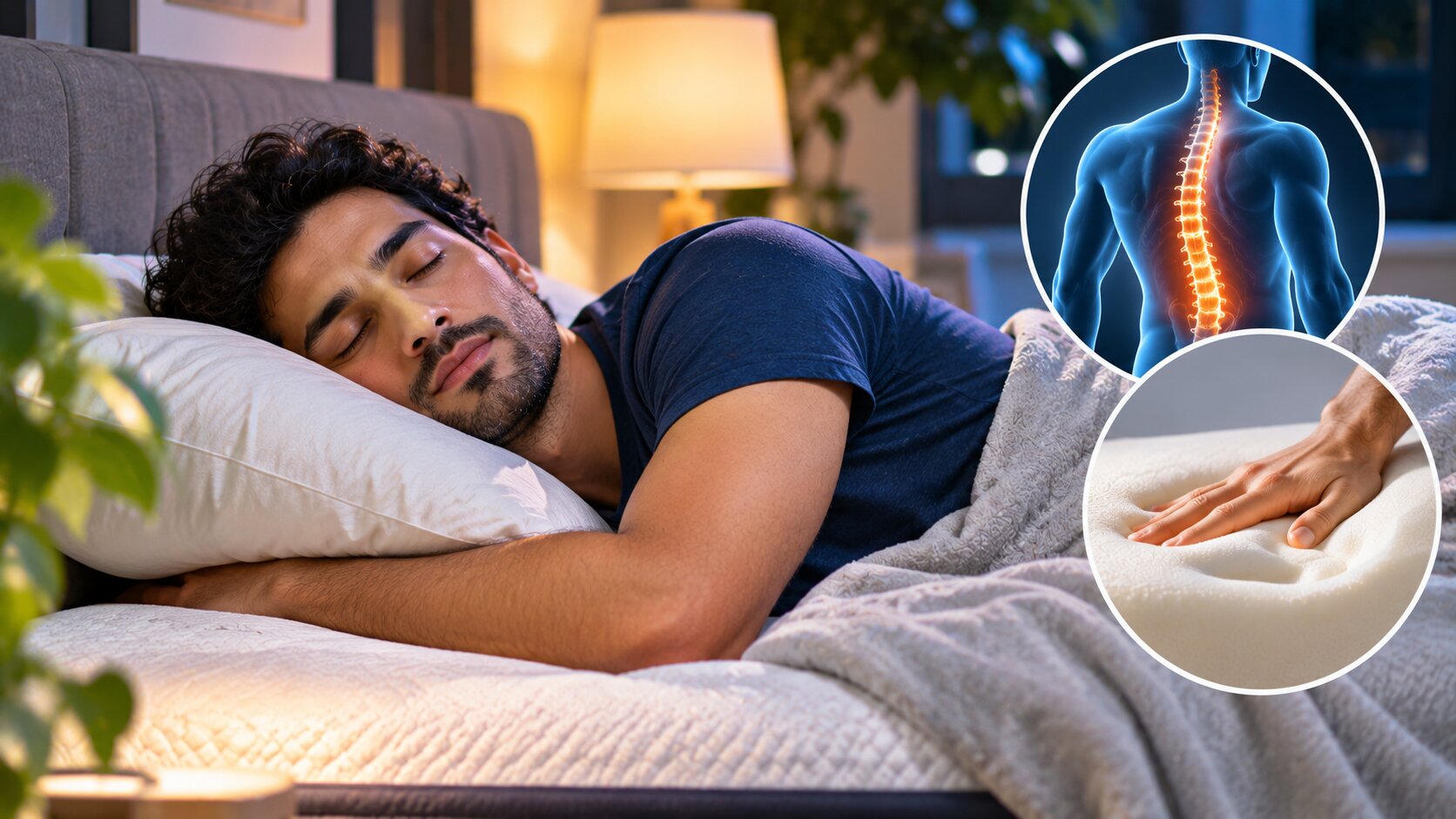
In practice, spinal alignment is what you want. Lying on your side, your spine should look roughly straight from behind, not sagging at the hips or tilting at the shoulders.
Position helps too:
- Side sleepers: place a pillow between the knees to keep the pelvis level.
- Back sleepers: a small pillow under the knees may reduce strain on the lower back.
- Stomach sleepers: often the hardest on the spine. If you cannot switch, use a thin pillow, or none, under the head and a pillow under the pelvis if that feels comfortable.

When back pain means see a doctor
See a doctor promptly if back pain follows a fall or injury, comes with fever, unexplained weight loss, numbness or weakness in the legs, or changes in bladder or bowel control.
Seek emergency care if you develop new loss of bladder or bowel control, numbness around the groin or saddle area, or rapidly worsening leg weakness. These symptoms can indicate serious nerve compression.
Pain that steadily worsens at night or that does not ease with position changes also warrants assessment. A mattress cannot fix these.
Evidence reference: Kovacs FM et al., Effect of firmness of mattress on chronic non-specific low-back pain: randomised, double-blind, controlled, multicentre trial, The Lancet, 2003. Read the research record.
When to see a doctor, and what to bring
A doctor’s appointment for sleep does not need to be dramatic. Make one if:
- poor sleep has lasted more than a few weeks and affects daily functioning
- you snore loudly, stop breathing or wake gasping
- you fall asleep unintentionally during the day
- you act out dreams or sleepwalk as an adult
- pain, anxiety or medication side effects seem to be driving the problem
- a child shows persistent snoring, severe sleep resistance or daytime behaviour changes
Bring your sleep diary, a list of medications and supplements, and your honest caffeine and alcohol habits. Useful questions include:
- Could this be sleep apnea or RLS?
- Do I need a sleep study?
- Is CBT-I available to me?
- Could any of my medications be involved?
- Are my pain and sleep issues linked?
- Would a referral to a sleep specialist or physiotherapist help?
A sleep study, called polysomnography, records breathing, brain activity, movement and oxygen levels. Some people may be suitable for a home sleep apnea test, depending on their symptoms and medical history. A clinician can decide which test is appropriate.
What sleep specialists generally recommend
Professional sleep guidance consistently puts diagnosis and evidence-based treatment ahead of quick fixes.
For persistent insomnia, CBT-I is a recommended first-line treatment for many adults. For suspected obstructive sleep apnea, assessment and appropriate testing are important because symptoms alone cannot confirm the diagnosis. For children, sleep difficulties should be assessed according to their age, development and symptoms.
A practical starting point is to keep a regular wake time, avoid late-day caffeine, create a comfortable sleeping environment and seek help when symptoms persist.
These are general recommendations, not a personal treatment plan. The right approach depends on the cause of the sleep problem.
Professional guidance:
- American Academy of Sleep Medicine
- NHS – Insomnia
- NHS – Sleep apnoea
- American College of Physicians – Chronic Insomnia Guideline
This article is educational and not a substitute for personal medical advice.
So where does the mattress fit in?
Short answer: a mattress is one variable among several, and it matters most when the bed itself is part of the problem. Signs yours is: you sleep better in hotels or on the sofa, you wake with stiffness that eases within an hour of getting up, there are visible sags or body impressions, or the mattress is old.
Most manufacturers and many sleep experts suggest evaluating a mattress around the seven to ten year mark, sooner if it sags or you notice discomfort. Age is a guideline, not a rule. A cheap mattress may fail early. A good one may last longer.
What a mattress can do: relieve pressure on shoulders and hips, support comfortable spinal alignment, reduce motion transfer from a partner and improve thermal comfort. What it cannot do: treat sleep apnea, cure insomnia, fix narcolepsy or replace medical care for chronic pain.
A mattress may help you sleep more comfortably if your current bed is causing pressure points or discomfort. However, there is limited evidence that buying a particular mattress type treats a medical sleep disorder.
Keep that boundary in mind and you will waste less money.
Memory foam, explained simply
Memory foam, or viscoelastic polyurethane foam, was developed in the 1960s through NASA-funded research and later adapted for consumer bedding. It softens with heat and pressure, moulding to your body, then slowly springs back. That slow response creates the “hug” people either love or dislike.
Why people choose it: strong pressure relief at shoulders and hips, excellent motion isolation, and a contouring feel that many find soothing, especially with joint or back discomfort.
Common complaints: heat retention in older or denser designs, a feeling of being “stuck” for people who move a lot, and a mild odour on first unboxing that usually fades.
What to look at in the specs:
- Foam density and layers. Higher-density foams tend to last longer, though density alone does not guarantee comfort. Look for a supportive base layer under the comfort layers.
- Certifications. In the US and Canada, CertiPUR-US is a common marker for foams made without certain harmful chemicals and tested against specific emissions and content criteria. In the UK and Europe, look for OEKO-TEX or comparable standards and check the product meets applicable UK fire safety regulations. Remember that certification applies to particular materials or products and is not a guarantee that a mattress will suit everyone.
- Cover and cooling features. Breathable covers, open-cell foam, gel or phase-change materials aim to reduce heat. Check independent testing where available rather than relying only on marketing language.
- Warranty. Check the sagging threshold, which may be around an inch or more depending on the manufacturer, and what voids the warranty.
- Trial period. More on this below. It is one of the most useful protections you have.
How to choose the best memory foam mattress for you
It is tempting to hunt for one “best” model. Rankings disagree because bodies do. A more reliable method: decide what you need, then test.
Best memory foam mattress for back pain: start medium-firm
Start with medium to medium-firm. You want a mattress that lets your hips sink a little without letting the lower back sag. A responsive transition layer helps, because very soft, deep-hugging foam can feel comfortable at first and unsupportive by morning.
If you have diagnosed back pain, ask your clinician or physiotherapist whether they have a firmness preference. Remember that the best mattress depends on the cause of your pain, your body shape and your sleeping position.
Best memory foam mattress for side sleepers: let the shoulder sink
Side sleeping concentrates weight on shoulder and hip. A medium-soft to medium mattress, roughly 4 to 6 on a ten-point scale, lets those points sink in and keeps the spine level. Too firm, and you may wake with shoulder numbness or hip ache. Memory foam’s contouring is a natural fit here, but pair it with the right pillow loft.
Firm or soft: matching the feel to your body
Firm and soft are two ends of one trade-off. People who want contouring without the deep sink usually look for the best firm memory foam mattress: a thinner comfort layer over a dense base, which tends to suit some heavier sleepers, stomach sleepers and anyone who dislikes feeling “in” the bed.
The best soft memory foam mattress, aimed at lighter side sleepers, trades support for cushioning, and it may be a less suitable choice for people whose lower back feels unsupported on very soft surfaces.
One caution covers both: “firm” is not standardised, so one brand’s firm is another’s medium. Read independent reviews and check the trial terms.
Best cooling memory foam mattress: treat it as a system
Hot sleepers should treat cooling as a system, not a claim. Open-cell construction, breathable covers, phase-change fabrics, gel infusions and hybrid designs with coils aim to help with heat management. Foam still tends to sleep warmer than latex or innerspring designs for many people, and the room, bedding and sleepwear matter as much as the bed.
If you run hot, a hybrid or latex option may beat any foam. Look for independent temperature testing rather than assuming a gel label guarantees a cool night’s sleep.
Budget and value: what you are really paying for
Cheap, budget, affordable and value get used as synonyms, and they are not. Cheap often means a low price and a short lifespan. The best budget memory foam mattress, or the best affordable one, should mean sensible quality at a lower cost. The best value memory foam mattress is judged by cost per year of comfortable use, which counts durability, warranty and trial period.
A lower price is fine if the foam density, warranty and return policy hold up. The red flags are very thin comfort layers, vague specifications, no trial, and warranties filled with exclusions. Sales events are frequent in the US, UK and Canada, so avoid paying full price when you do not need to.
Best rated memory foam mattress: how to read reviews
Ratings help when you read them critically. Look for patterns across many reviews rather than one glowing or furious post. Pay special attention to reviews from people with your body type and sleeping position, long-term reviews at six to twelve months, and how the company handles returns and warranty claims.
Also check whether reviews are verified purchases and whether the reviewer has actually used the mattress for long enough to assess comfort and durability.
Best non memory foam mattress: when foam is not for you
Not everyone enjoys memory foam, and that is perfectly reasonable. Good alternatives include:
- Latex. Responsive, bouncy and generally cooler, with strong durability. Usually pricier.
- Hybrid. Coils plus foam or latex layers. Good airflow, edge support and a more traditional feel.
- Innerspring with a quality comfort layer. Familiar and often affordable, though motion transfer can be higher.
- Polyfoam or responsive foam. A middle ground with less slow-sink feel.
If you move around a lot at night or feel trapped in foam, a non memory foam mattress may serve you better.
Best memory foam mattress topper, and a cooling version
A topper is the cheapest way to tweak a mattress that is basically sound but a little too firm. A two to three inch memory foam topper can add pressure relief, and a cooling topper with breathable or open-cell foam can help if heat is the complaint.
The catch: a topper cannot fix a sagging or worn-out mattress. It will conform to the dip underneath. If your mattress has visible body impressions, replace the mattress, not just the surface.
The retail reality: trials, returns and fine print
Regardless of where you live, the best protection is a real sleep trial. Many mattress-in-a-box companies in the US, UK and Canada offer trials commonly ranging from 100 nights to a full year, though terms differ by retailer and country. Always check:
- Is there a minimum period you must keep the mattress before returning it? Many sleepers need two to four weeks to adjust.
- Is return free, or are there pickup and disposal fees?
- Does the mattress need to be in a specific condition?
- Is the foundation or base compatible, and does the warranty require a specific one?
- Does the trial apply to the mattress itself, or are accessories and delivery charges excluded?
If you can, try a mattress in a showroom, but remember a ten-minute lie-down tells you much less than a month at home.
Beyond the bed: habits that change sleep more than any product
If you remember one thing: the cheapest changes often beat the most expensive purchases.
- Keep a consistent wake time. Your body clock loves predictability, even on weekends.
- Get morning light. Daylight exposure early in the day helps anchor your circadian rhythm.
- Cool, dark and quiet. Most sleep guidance points toward a bedroom that is on the cooler side.
- Watch caffeine and alcohol. Caffeine has a long half-life, and alcohol fragments the second half of the night.
- Create a wind-down. Thirty to sixty minutes of low-stimulation time. Dim lights, a book, a warm shower, gentle stretching.
- Do not stay in bed awake for long. If you have been lying awake for what feels like 20 minutes or more, get up, do something quiet in low light, and return when sleepy. This is a core CBT-I principle.
- Move your body. Regular physical activity is associated with better sleep and often with less back pain, but vigorous exercise very close to bedtime bothers some people.
- Avoid using sleep supplements as a first response. Discuss regular use of melatonin, antihistamines or other sleep aids with a healthcare professional, particularly if you take other medicines or have an existing condition.
A consistent routine is often more useful than chasing a perfect bedtime. If you work shifts or have an irregular schedule, speak to a healthcare professional about strategies suited to your working hours.
A realistic 14-night experiment
For readers who are not sure whether the bed, the habits or something medical is behind their poor sleep, try this structured approach.
Nights 1 to 3: Observe. Keep a diary. No changes yet. Record bedtime, wake time, awakenings, pain levels and next-day energy.
Nights 4 to 8: Fix the basics. Set a fixed wake time, cut caffeine after midday, dim lights in the last hour, cool the room and use a pillow position suited to your back pain.
Nights 9 to 14: Reassess. Compare diary scores. If sleep is better, the changes may have helped. If you still wake with back pain or stiffness, consider whether the mattress or a topper is a factor. If you snore, gasp, feel severely sleepy or notice something unusual, book that doctor’s appointment.
This experiment is a way to observe patterns, not a medical test. Improvement does not rule out a sleep disorder, and a lack of improvement does not prove that your mattress is the problem.
This keeps you from buying a mattress to solve a problem that a mattress cannot solve, and from ignoring a medical problem for months while changing pillows.
Frequently asked questions
What are the most common sleeping disorders?
Insomnia, obstructive sleep apnea and restless legs syndrome are among the commonly diagnosed sleep disorders. Circadian rhythm disorders and parasomnias are also recognised conditions.
Can a mattress cause a sleeping disorder?
A poor mattress can disturb sleep and worsen pain, but it does not usually cause disorders such as narcolepsy or sleep apnea. It can contribute to insomnia-like symptoms if discomfort keeps you awake.
Is memory foam good for back pain?
It can be, especially in a medium or medium-firm feel that relieves pressure while keeping the spine comfortably aligned. Very soft or very old foam can make back pain worse for some people. Individual comfort and the cause of the pain matter.
How do I know if my child has a sleeping disorder?
Look for loud snoring, pauses in breathing, extreme resistance to bedtime over weeks, frequent night terrors, or daytime sleepiness or hyperactivity. Discuss persistent signs with a paediatrician.
How long should I test a new mattress?
Give it at least a few weeks if the return policy allows. Bodies adapt gradually, and first-night impressions can mislead. Always follow the retailer’s trial and return conditions.
The bottom line
Good sleep is part biology, part habit and part environment. Sleeping disorders are real medical conditions with real treatments, and they deserve a diagnosis rather than endless experimenting. Back pain complicates the picture by feeding a loop of broken sleep and heightened pain.
Recent research also suggests that sleep regularity deserves attention alongside sleep duration and quality. Keeping a consistent schedule is a practical step, although it is not a substitute for treatment when a medical problem is present.
The mattress has a real but limited role inside that picture. Choose for alignment and comfort, not marketing. Start with medium to medium-firm if your back is the issue, test properly, use the trial period, and treat the bed as one part of a larger plan.
And if something feels off in a way no pillow can explain, trust that instinct and talk to a doctor. Sleep is too important to guess about.
Sources and further reading
The following medical and research sources support the health information in this article. They are provided so readers can check the original guidance and research rather than relying on general claims.
- Centers for Disease Control and Prevention (CDC). About Sleep – recommended sleep duration and general sleep-health guidance.
- National Center for Health Statistics (NCHS). Short Sleep Duration and Sleep Difficulties Among Adults: United States, 2024, Data Brief No. 559, April 29, 2026.
- University of California, San Francisco / University of California, San Diego. Research report on irregular sleep schedules and mental health, November 12, 2026.
- National Sleep Foundation. Sleep duration recommendations – 10-year review, June 2026.
- American Academy of Sleep Medicine. Clinical resources and sleep medicine guidance.
- American College of Physicians. Qaseem A, et al. Management of Chronic Insomnia Disorder in Adults. Annals of Internal Medicine, 2016.
- Kovacs FM, et al. Effect of firmness of mattress on chronic non-specific low-back pain. The Lancet, 2003.
- National Institute of Neurological Disorders and Stroke. Narcolepsy information.
- NHS (UK). Insomnia, Sleep apnoea and Restless legs syndrome.
- Government of Canada. Healthy sleep guidance.
- CertiPUR-US. Foam certification programme.
- OEKO-TEX. Textile and product testing standards.
About the authors

Fahim Feroz Sumon
Fahim Feroz Sumon writes about sleep, wellness, personal comfort and everyday lifestyle topics for AhemBeauty. His work focuses on making research-led information easier to understand and helping readers assess everyday products with clear explanations, practical context and links to supporting sources.
Facebook profile
Dr. Sabrina Sharmin Misha
Dr. Sabrina Sharmin Misha is a co-author of this AhemBeauty article. Her author profile is included here so readers can identify the people who contributed to the article. Professional qualifications or a medical specialty are not stated because verified details were not supplied.
Facebook profileEditorial note Health information in this article is reviewed against published medical guidance and research sources. It is intended for general education and does not replace an individual medical assessment.
Medical disclaimer This article is for general education only and does not replace professional medical advice, diagnosis or treatment. Consult a qualified healthcare professional about persistent sleep problems or pain.