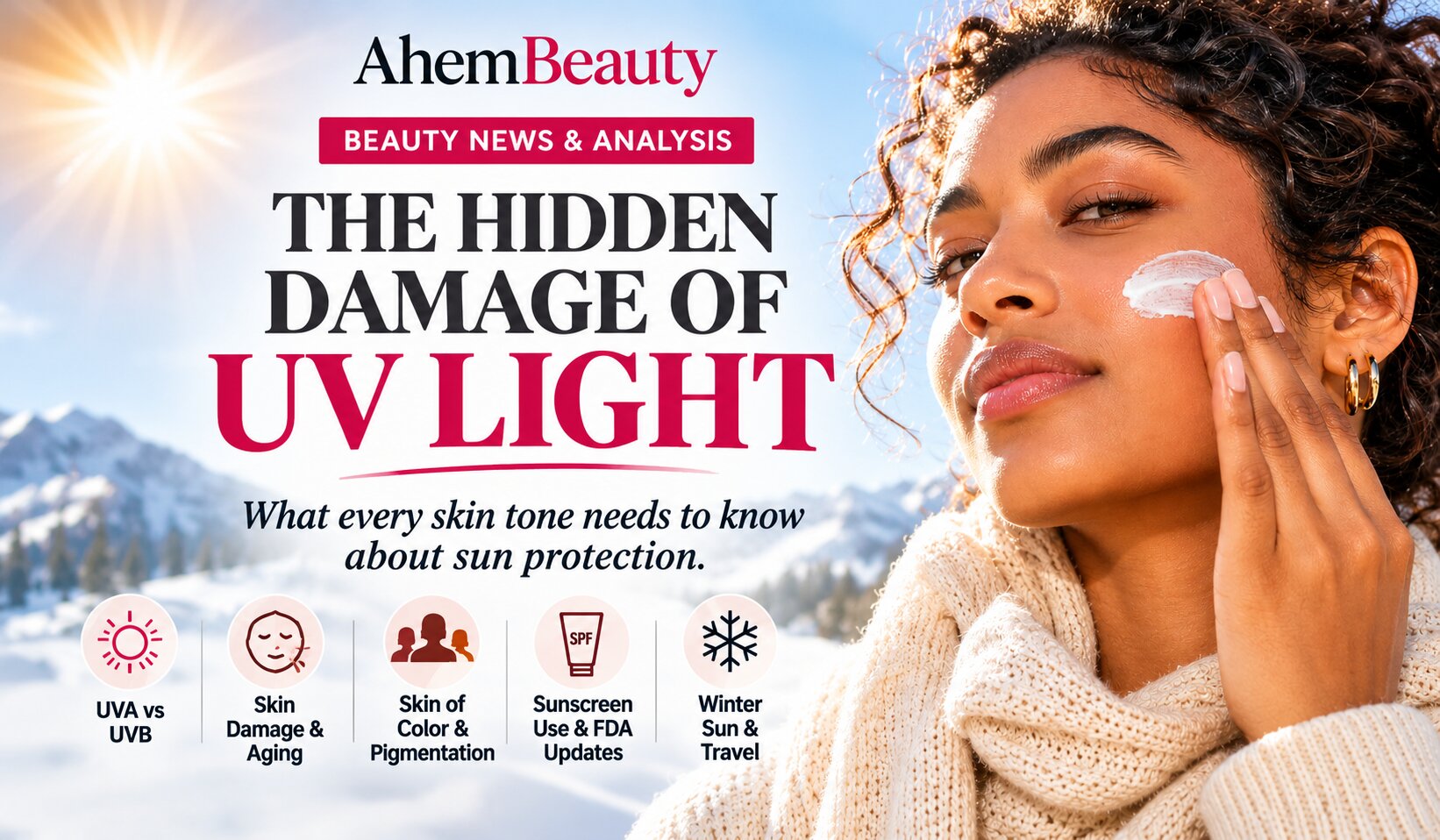
UV radiation can damage skin long before the effects become visible. From premature wrinkles and stubborn pigmentation to skin cancer, here’s what the science says about everyday exposure, sunscreen protection and the changes every consumer should understand.
 Maya RezwanBeauty & Skincare Writer · November 26, 2026
The Skin Damage You May Not See
You can spend an afternoon driving, walking outdoors or sitting beside a sunny window without noticing anything unusual about your skin. There may be no redness, burning or immediate discomfort.
But ultraviolet (UV) radiation can still reach skin cells and contribute to damage that accumulates over time.
This is one reason dermatologists place so much emphasis on daily sun protection. The effects of UV exposure are not limited to beach holidays or hot summer afternoons. They can include collagen breakdown, uneven pigmentation, premature aging and an increased risk of skin cancer.
The issue is especially relevant to beauty consumers who invest in vitamin C serums, retinoids, moisturizers and pigmentation treatments. These products may support particular skincare goals, but they cannot undo every form of UV-related cellular damage.
There is another problem. Sunscreen labels, ingredient regulations and product formulations differ between countries. American consumers shopping for Korean, Japanese or European sunscreens may encounter ingredients and claims that are unfamiliar or unavailable in traditional US formulations.
Understanding these differences can help people make better decisions about skin protection.
What Is UV Light?
Ultraviolet radiation is a form of electromagnetic energy that comes naturally from the sun. It is invisible to the human eye and has shorter wavelengths than visible light.
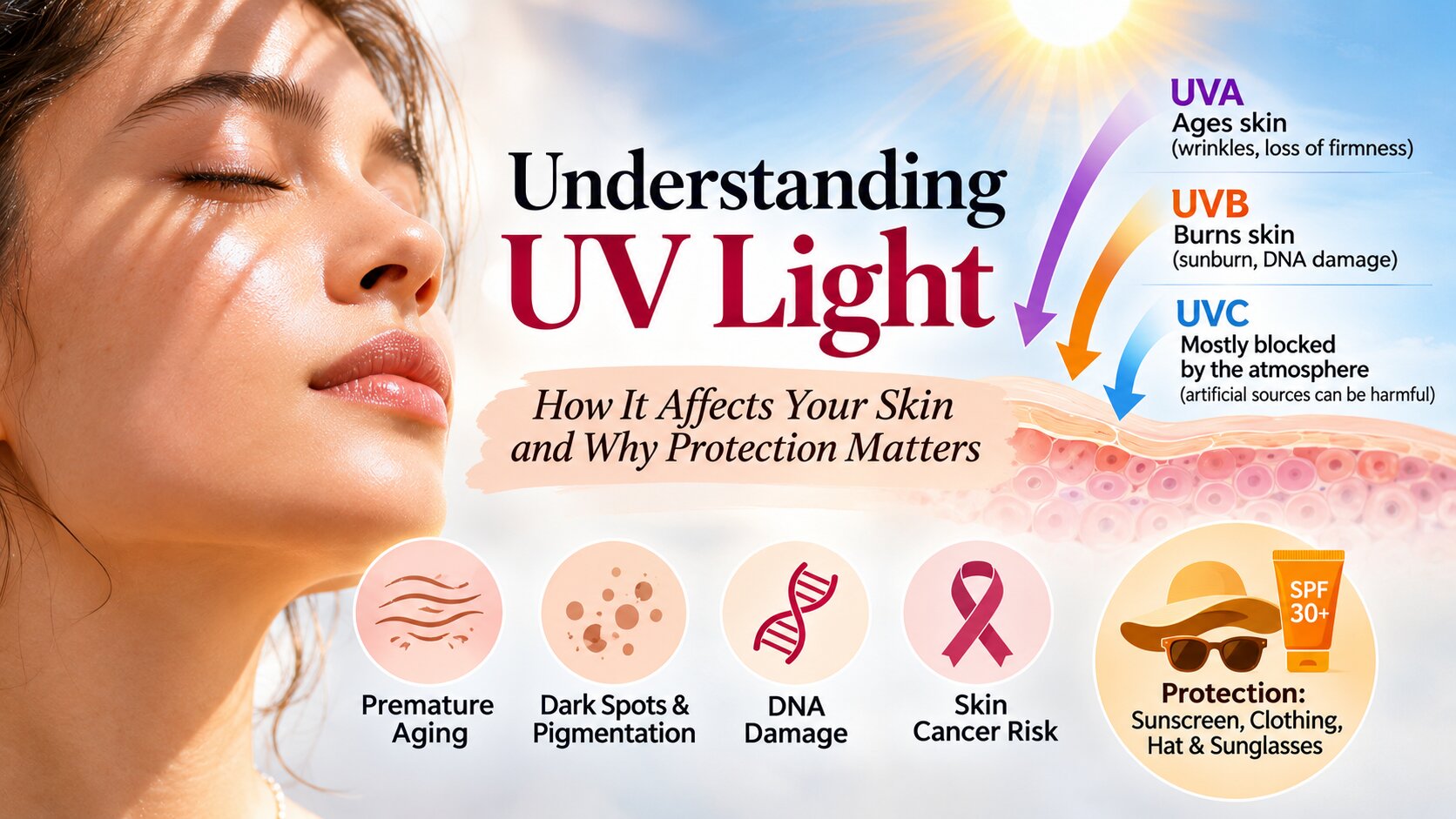
Scientists divide UV radiation into three categories: UVA, UVB and UVC.
UVA: The Long-Term Skin Aging Concern
UVA has wavelengths between 315 and 400 nanometers.
It penetrates deeper into the skin than UVB, reaching the dermis, where collagen and elastin help maintain skin structure.
Repeated exposure can contribute to:
- Fine lines and wrinkles.
- Loss of skin firmness.
- Uneven pigmentation.
- Dark spots.
- Oxidative stress and cellular damage.
- Increased skin cancer risk.
UVA can also pass through many types of window glass. This makes it relevant to people who spend long periods driving or working beside windows.
UVB: The Main Cause of Sunburn
UVB has wavelengths between 280 and 315 nanometers.
It primarily affects the outer layers of the skin and is a major cause of sunburn.
Excessive exposure can produce redness, inflammation, tenderness, peeling and blistering.
UVB can also damage cellular DNA and contribute to the development of skin cancer.
Its intensity varies with the time of day, season, location and atmospheric conditions.
UVC: A Different Kind of Exposure Risk
UVC has wavelengths between 100 and 280 nanometers.
Natural solar UVC is absorbed by the atmosphere and does not normally reach the Earth’s surface.
However, artificial UVC lamps used for disinfection can expose people to harmful radiation if they are improperly shielded or used incorrectly.
Direct exposure can injure the eyes and skin. Never look directly at an operating germicidal UVC lamp.
What UV Radiation Actually Does to Skin Cells
The visible effects of sun exposure are only part of the problem.
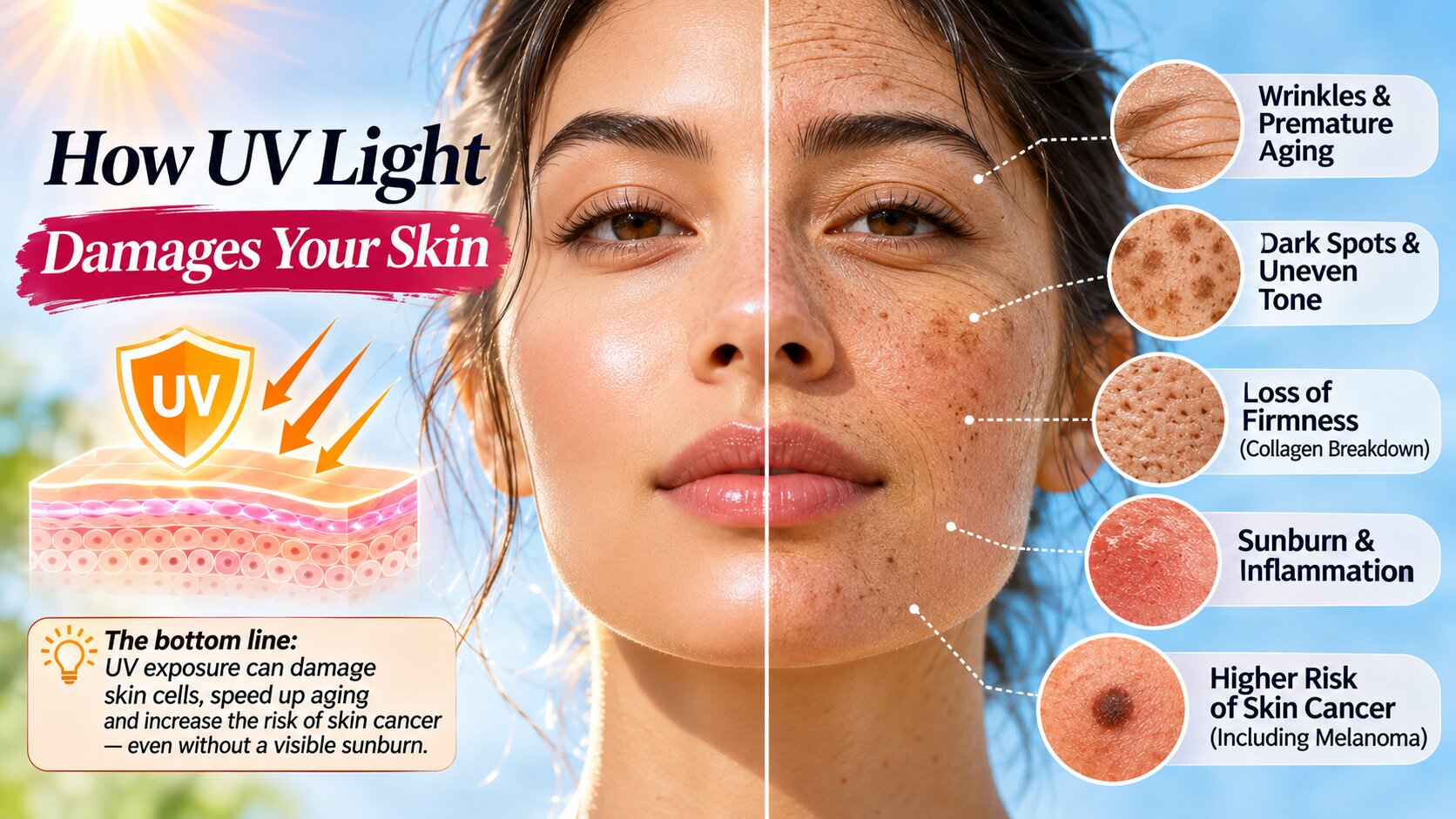
UV radiation can trigger biological changes that affect the skin’s ability to maintain its structure and repair cellular damage.
DNA damage: UVB can directly damage DNA, while UVA contributes to damage through oxidative stress and other cellular mechanisms. The body has repair systems, but repeated exposure can increase the likelihood of lasting cellular changes.
Collagen breakdown: UVA exposure can activate enzymes that break down collagen. Over time, this contributes to wrinkles, reduced elasticity and rough texture.
Pigmentation: UV exposure stimulates melanin production and can worsen melasma, sun spots and post-inflammatory hyperpigmentation.
Inflammation: Sunburn is an inflammatory response to excessive UV exposure. More severe cases can cause blistering, pain and swelling.
Skin cancer: Accumulated cellular damage can contribute to basal cell carcinoma, squamous cell carcinoma and melanoma.
The important distinction is that a person does not need to experience a visible sunburn every time their skin receives UV exposure.
Skin Cancer Is Not Just a Concern for Fair Skin
For years, sun protection messaging has often focused on people with lighter skin. That approach can leave Black, Brown and Asian-American consumers with the mistaken impression that natural pigmentation provides complete protection.
Melanin does offer some natural protection against UV radiation. However, it does not eliminate the possibility of skin damage or skin cancer.
The National Cancer Institute confirms that skin cancer can affect people of every skin tone.
There is also a difference in how some skin cancers appear.
In darker skin, melanoma can develop on the palms, soles of the feet and beneath fingernails or toenails. Acral lentiginous melanoma is particularly important to recognize because it can occur in areas that receive little direct sunlight.
People with skin of color should pay attention to new or changing spots, persistent sores and unusual dark bands beneath nails.
The practical message is straightforward: natural skin pigmentation is not a replacement for sun protection or appropriate medical assessment.
Why Skin of Color Needs a Different Sunscreen Conversation
For many Black, Brown and Asian-American consumers, the challenge is not simply finding sunscreen. It is finding a formulation that provides protection without leaving a visible white residue.
Traditional mineral sunscreens containing zinc oxide or titanium dioxide can sometimes leave a chalky appearance, particularly on deeper skin tones. Readers comparing everyday facial formulas can explore AhemBeauty’s face sunscreen guide.
This can make people less likely to apply enough product or use it consistently.
The Role of Tinted Sunscreen
Tinted sunscreens can offer an alternative.
Some formulations contain iron oxides, which provide visible-light protection in addition to UV protection.
This matters because visible light can contribute to pigmentation, particularly in people prone to melasma and post-inflammatory hyperpigmentation.
A 2024 review published in the International Journal of Dermatology discussed the role of tinted sunscreens in protecting skin of color. The research highlighted the potential benefits of iron oxide-containing formulations for people dealing with pigmentation disorders.
For consumers choosing a tinted sunscreen, consider:
- Broad-spectrum SPF 30 or higher.
- Iron oxides in the ingredient list.
- A shade that matches your natural skin tone.
- A comfortable texture that allows generous application.
- A formula that does not feel excessively greasy.
One limitation remains: available tinted shades do not always match every skin tone or undertone. This is a product-design issue worth considering when choosing a sunscreen.
A tinted sunscreen should still provide adequate labeled broad-spectrum UV protection. Tint alone does not establish an SPF level.
The FDA Sunscreen Debate: Why US Consumers Are Watching Ingredients
One difference between American and international sunscreen markets has been the range of available UV filters.
For years, consumers comparing American sunscreens with Korean, Japanese and European products noticed that some international formulations used filters that were not available under the traditional US OTC sunscreen framework.
Ingredients such as bemotrizinol, commonly known by the trade name Tinosorb S, became part of this discussion.
However, the regulatory situation changed in 2026.
What Changed in 2026?
On June 10, 2026, the US Food and Drug Administration issued Final Order OTC000039, adding bemotrizinol as an active ingredient to the US OTC sunscreen monograph.
This is an important regulatory development because bemotrizinol is a broad-spectrum UV filter used in international sunscreen formulations.
The FDA evaluated submitted safety and effectiveness information before issuing the order.
The development does not mean every international sunscreen ingredient is now automatically available for use in US OTC products. Other filters remain subject to the FDA’s regulatory review.
The agency’s September 2026 update also removed PABA and trolamine salicylate from the list of active ingredients that can be used under the OTC sunscreen monograph.
The broader review of sunscreen ingredients, labeling and maximum SPF values remains an evolving regulatory process.
What should consumers take from this?
The US sunscreen market is changing, but consumers should not assume that an ingredient is automatically safe or legally available in every formulation simply because it appears in a Korean or European product.
Check the product’s US Drug Facts label, active ingredients and regulatory status before purchasing.
Official source: FDA – Questions and Answers on Sunscreen Regulatory Actions.
What Does SPF Really Mean?
SPF stands for Sun Protection Factor. It measures protection against UVB-related sunburn under standardized testing conditions.
It does not independently describe the full level of UVA protection.
Here is an approximate comparison of the UVB radiation filtered under laboratory conditions:
| SPF | Approximate UVB filtered |
|---|---|
| SPF 15 | 93% |
| SPF 30 | 97% |
| SPF 50 | 98% |
| SPF 100 | 99% |
These figures assume correct application under test conditions. Real-world protection can be lower.
The American Academy of Dermatology recommends broad-spectrum SPF 30 or higher.
Why the Broad-Spectrum Label Matters
In the United States, the FDA uses the term Broad Spectrum on sunscreen labels to identify products that meet its UVA protection testing requirements.
For consumers, the shopping rule is simple:
Look for broad-spectrum protection, SPF 30 or higher, and water resistance when needed.
Do not assume that a product with a high SPF number automatically offers adequate UVA protection.
Is SPF 100 Necessary?
A higher SPF can provide additional UVB protection, but no sunscreen blocks all ultraviolet radiation.
The difference between SPF 50 and SPF 100 is much smaller than the difference between SPF 15 and SPF 30.
Correct application, reapplication and additional protective measures matter more than choosing an extremely high SPF and assuming it provides unlimited protection.
The FDA’s proposed changes to maximum labeled SPF values should also be distinguished from rules that are already in effect.
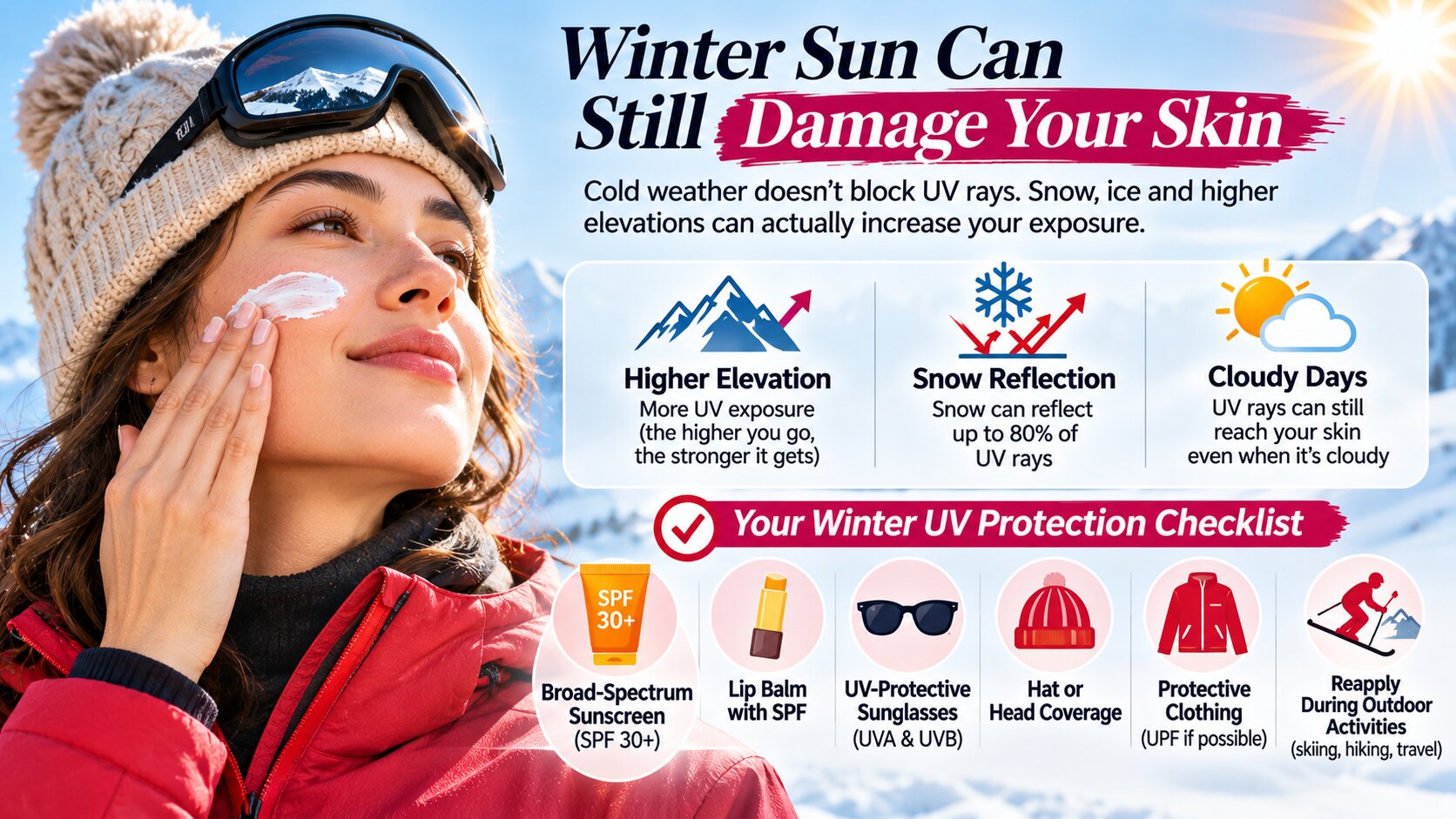
Winter Sun Is Not a Break From UV Protection
As November turns into December, many Americans reduce sunscreen use because the weather becomes colder.
This can be a mistake, especially for people traveling to snowy destinations.
Snow and ice can reflect substantial amounts of UV radiation. This means sunlight can reach exposed skin from above and reflected surfaces below.
The Skin Cancer Foundation has warned winter sports enthusiasts about sun exposure on ski slopes and during other outdoor winter activities.
Higher elevations can also increase UV exposure.
A person skiing in Colorado or spending a holiday in the mountains may experience significant sun exposure even when the temperature is below freezing.
What About Holiday Travel?
Winter travel often involves long outdoor periods, including sightseeing, skiing, snowboarding and walking through open areas.
A practical winter protection routine should include:
- Broad-spectrum SPF 30 or higher.
- Sunscreen on exposed facial skin.
- Lip balm with SPF.
- UV-protective sunglasses.
- A hat and protective clothing.
- Reapplication during prolonged outdoor activity.
Cold weather does not cancel the effects of UV radiation.
Source: The Skin Cancer Foundation – Winter Sports Sun Protection.
Everyday Exposure: The Situations People Often Overlook
The beach is not the only place where UV exposure matters.
Driving: Most modern windshields provide substantial UV protection, but side windows can allow UVA transmission. People who spend many hours driving may benefit from suitable UV-protective window film, protective clothing and sunscreen.
Cloudy weather: Clouds do not necessarily block all UV radiation. Check the UV Index instead of relying on the appearance of the sky.
Outdoor work: Construction workers, delivery drivers, gardeners and other outdoor professionals may receive repeated exposure throughout the year.
Swimming: Water and reflected sunlight can increase exposure, while swimming and towel drying reduce sunscreen protection.
Gel manicures: Some UV nail lamps emit UVA radiation. People concerned about repeated exposure can use fingerless UV-protective gloves or apply sunscreen to exposed skin before treatment.
Indoor tanning: Tanning beds expose the skin to artificial UV radiation and are not a safe alternative to sunlight.
US Regulations: Tanning Beds and Car Window Protection
The United States has federal and state-level rules that affect different forms of UV exposure.
Indoor Tanning Restrictions
The FDA classifies tanning beds and sunlamps as Class II medical devices and warns against their use by people under 18.
State laws vary.
Some states prohibit indoor tanning for all minors under 18, while others impose different age limits or parental consent requirements.
The National Conference of State Legislatures published an updated overview of indoor tanning laws in August 2026.
Consumers should check the rules in their own state rather than assuming the same restrictions apply nationwide.
Sources: NCSL – Indoor Tanning Bed Laws and AAD – Indoor Tanning.
Car Window Tinting
Window tint laws also vary by state, particularly regarding how dark a vehicle’s windows can be.
For skin protection, the important distinction is that darker tint and UV-blocking performance are not necessarily the same thing.
A clear UV-protective film may block substantial UV radiation without requiring very dark windows.
The Skin Cancer Foundation notes that most windshields are laminated and block most UV radiation, while side and rear windows can provide less UVA protection.
Before installing window film, check the applicable state vehicle regulations.
Source: The Skin Cancer Foundation – Car Window Tint for UV Protection.
How to Choose and Apply Sunscreen Properly
A good sunscreen only provides its intended protection when enough product is applied and it is reapplied appropriately.
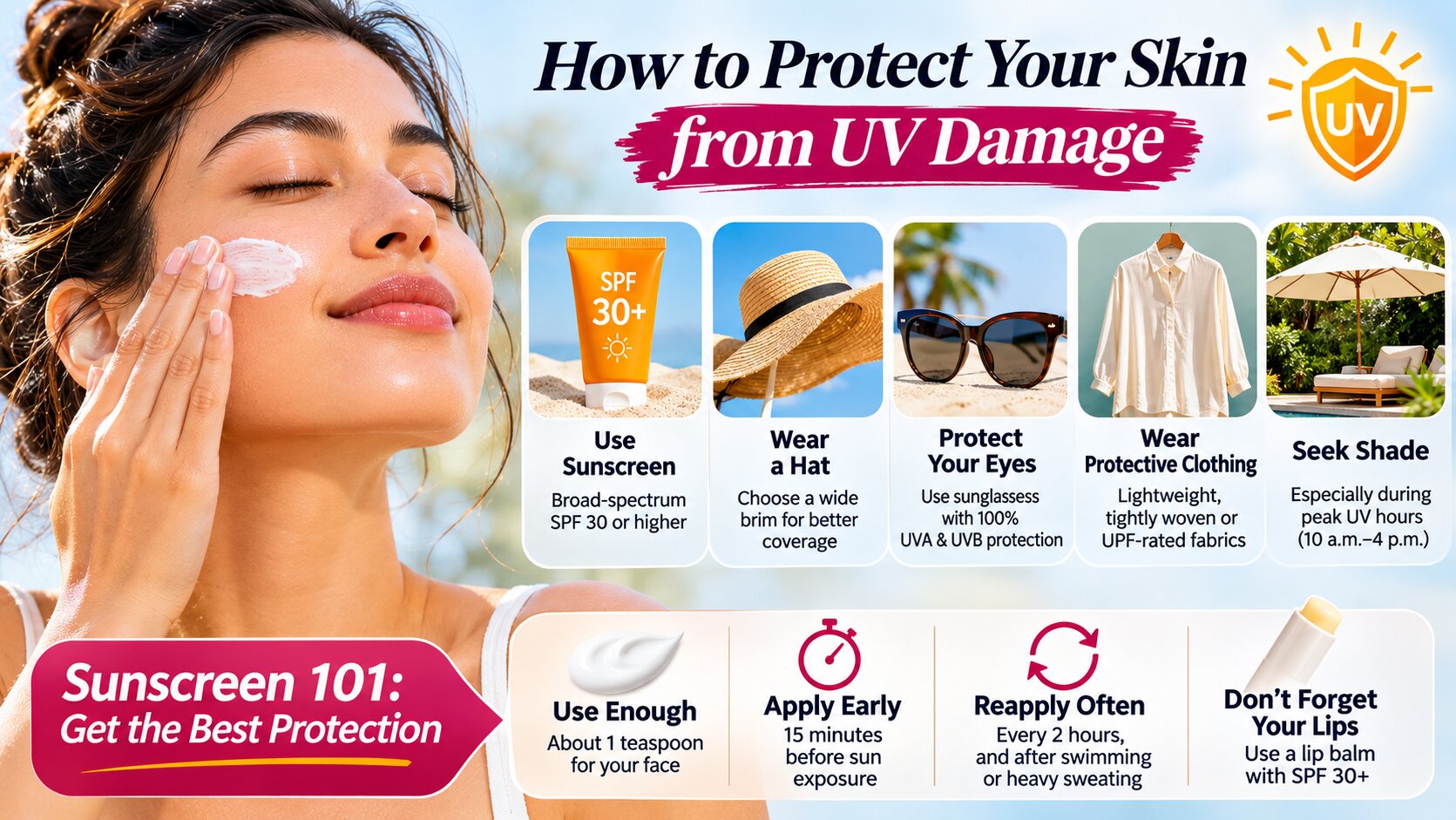
For everyday use, look for:
- Broad-spectrum protection.
- SPF 30 or higher.
- Water resistance when swimming or sweating.
- A formulation suitable for your skin.
- A shade and finish you are comfortable wearing.
The Correct Application Routine
Before going outdoors
Apply sunscreen approximately 15 minutes before sun exposure, following the product instructions.
Use enough product
The commonly recommended amount for an average adult body is approximately one ounce for all exposed skin.
For the face, approximately one teaspoon is a useful starting guide, although individual needs vary.
Cover commonly missed areas
Remember your ears, neck, hairline, hands, lips, feet and exposed scalp.
Reapply
Reapply at least every two hours while outdoors.
Reapply after swimming, heavy sweating or towel drying.
Water-resistant products are generally labeled for 40 or 80 minutes of water resistance. No sunscreen is completely waterproof.
Apply before makeup
Sunscreen should be the final step in your skincare routine before makeup.
Makeup containing SPF should not automatically replace a full application of sunscreen.
What to Do After a Sunburn
If your skin becomes painful, hot or inflamed after sun exposure, move out of the sun and cool the affected area.
A cool shower or clean damp cloth can help relieve discomfort.
Use a gentle moisturizer or suitable aloe vera product if tolerated. Drink enough water and avoid further sun exposure while the skin heals.
Do not break blisters or peel damaged skin.
Severe sunburn may require medical attention, particularly when there is extensive blistering, significant swelling, severe pain, fever, chills, dizziness, nausea or vomiting.
Confusion, fainting, seizures or signs of heatstroke require emergency medical care.
When Should You See a Dermatologist?
Changes in skin appearance are not always cancer, but some signs should not be ignored.
Use the ABCDE approach when checking suspicious moles:
| Sign | What it means |
|---|---|
| A – Asymmetry | One half looks different from the other |
| B – Border | Uneven or irregular edges |
| C – Color | Multiple or changing colors |
| D – Diameter | Often greater than 6 mm, although smaller melanomas occur |
| E – Evolving | A mole or spot changes over time |
Also seek medical advice for a sore that does not heal, a lesion that repeatedly bleeds, a rapidly changing spot or an unusual dark band beneath a nail.
People with a personal history of skin cancer, a family history of melanoma or many unusual moles should ask a dermatologist about individual screening needs.
Do not try to remove suspicious spots using cosmetic creams or home remedies.
AhemBeauty Analysis: The Sunscreen Problem Is Bigger Than SPF
The skincare industry often encourages consumers to focus on individual ingredients and product claims. AhemBeauty has also examined how viral beauty advice can affect product choices in its report on viral skin care trends.
A high SPF number, a new serum or an expensive moisturizer can easily become the center of a beauty routine.
But daily sun protection is a different kind of investment.
It helps prevent damage that many people will not notice immediately. It also supports the long-term results of other skincare treatments.
For American consumers, three issues deserve more attention.
First, sunscreen should be judged by its actual protection and proper use, not by marketing language alone.
Second, skin of color needs better attention in sunscreen design. White cast, shade mismatch and visible-light-related pigmentation are practical concerns that affect whether people use a product consistently.
Third, sunscreen regulation is evolving. The FDA’s 2026 addition of bemotrizinol shows that the US market is not permanently fixed in its older formulation landscape. Consumers should follow verified regulatory updates rather than relying on outdated claims about which filters are available.
Our view is that sun protection should be treated as part of everyday skin health, alongside cleansing, moisturizing and appropriate treatment products. For a broader routine, see AhemBeauty’s guide to a daily skin care routine.
You do not need to avoid sunlight completely. You need to understand exposure, protect your skin and recognize changes that deserve medical attention.
Frequently Asked Questions
Can UV rays damage skin without causing sunburn?
Yes. UV radiation can damage skin cells without producing visible redness or pain.
Should people with dark skin wear sunscreen?
Yes. Melanin provides some natural protection, but people with darker skin can still develop UV-related damage and skin cancer.
What is the best SPF for everyday use?
Broad-spectrum SPF 30 or higher is a widely recommended starting point. Higher SPF can be useful for prolonged outdoor exposure.
Does sunscreen protect against UVA?
Broad-spectrum sunscreen sold in the United States meets FDA UVA protection testing requirements.
Can sunlight through car windows damage skin?
Some UVA can pass through vehicle side windows. UV-protective window film and sunscreen can help reduce exposure.
Is sunscreen necessary in winter?
Yes. UV radiation remains relevant during cold weather, and snow can reflect additional UV radiation.
What is Tinosorb S?
Tinosorb S is the trade name commonly associated with bemotrizinol, a broad-spectrum UV filter. The FDA added bemotrizinol to the US OTC sunscreen monograph in June 2026.
Does tinted sunscreen prevent dark spots?
Tinted sunscreen containing iron oxides may offer additional visible-light protection, which can be helpful for people prone to melasma and hyperpigmentation. It should also provide appropriate broad-spectrum UV protection.
How often should sunscreen be reapplied?
Generally every two hours while outdoors, and sooner after swimming, sweating or towel drying.
Can a tan protect the skin from future UV damage?
A UV-induced tan is a response to radiation exposure. It is not a reliable form of sun protection.
Medical Disclaimer
This article is for general educational purposes and does not replace an individual medical consultation. Skin cancer screening, pigmentation treatment and sun protection needs should be discussed with a qualified healthcare professional when appropriate.
Editorial and medical review: Prepared by AhemBeauty News Desk using published medical and regulatory sources. This article has not been independently reviewed or endorsed by a named dermatologist.
Sources and Further Reading
- US Food and Drug Administration – Sunscreen Regulatory Updates
- American Academy of Dermatology – Sunscreen Guidance
- National Cancer Institute – Skin Cancer in People with Darker Skin
- Centers for Disease Control and Prevention – Skin Cancer Risk Factors
- The Skin Cancer Foundation – Winter Sun Protection
- The Skin Cancer Foundation – UV Window Film and Tint
- National Conference of State Legislatures – Indoor Tanning Laws
- International Journal of Dermatology – Guide to Tinted Sunscreens in Skin of Color
- World Health Organization – Ultraviolet Radiation and Skin Cancer