
Dark Circles, Puffy Eyes & Under-Eye Wrinkles: What Dermatologists Say About Causes, Treatments and Prevention
AHEMBEAUTY / BEAUTY & SKINCARE FEATURE
You wake up after a full night’s sleep, look in the mirror and notice dark shadows beneath your eyes. A little puffiness makes your face look tired, while fine lines seem more visible than they did a few months ago. You try a new eye cream, perhaps a caffeine serum, but the results are not quite what you expected.
This is a familiar experience for many people. Dark circles, under-eye bags and wrinkles are common skincare concerns, yet they often have different underlying causes. Understanding those differences is the first step towards choosing products and treatments that actually make sense.
Why the Eye Area Shows Signs of Aging So Easily
The skin around the eyes is thinner and more delicate than much of the skin on the face. It moves constantly as we blink, smile and make facial expressions.
With age, collagen and elastin gradually decline. The skin loses some firmness, underlying blood vessels may become more visible, and changes in facial fat can create hollows and shadows.
This explains why a brown under-eye patch, a blue-purple shadow and a protruding under-eye bag may look similar in photographs but require different approaches.
Dark Circles: Understanding What Is Really Happening
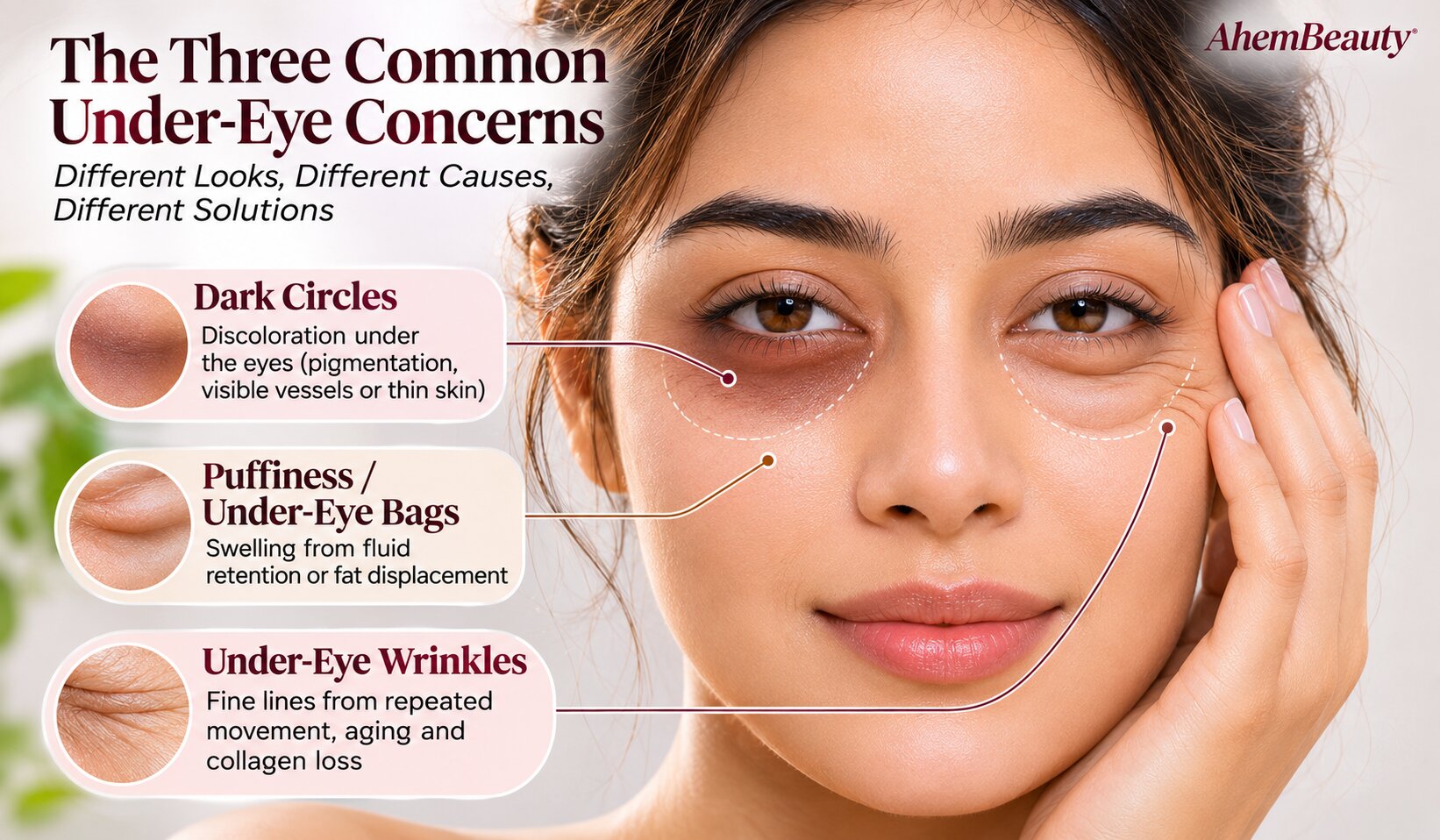
Under-eye darkness is not a single skin condition. It can result from pigmentation, visible blood vessels, thin skin or shadows created by facial anatomy.
According to the Cleveland Clinic, aging, genetics, allergies, dermatitis and sun exposure can all contribute.
Three patterns are particularly important:
Pigmentation-related darkness: Excess melanin creates brown or grey-brown discoloration. Sun exposure, inflammation and repeated irritation may contribute.
Vascular darkness: Thin skin can make underlying blood vessels more visible, producing a bluish or purplish appearance.
Structural shadows: Loss of volume around the tear trough creates hollows that cast shadows. In this situation, the skin itself may not be unusually pigmented.
An important consideration for darker skin tones
People with brown and deeper skin tones can be more prone to noticeable post-inflammatory hyperpigmentation. This occurs when inflammation or irritation triggers excess pigment production.
Eczema, allergic reactions, contact dermatitis and repeated eye rubbing can all contribute to darker patches around the eyes.
For this reason, aggressive exfoliation and strong active ingredients are rarely a sensible starting point for under-eye pigmentation. A gentle routine that protects the skin barrier is often a better approach.
Puffy Eyes and Under-Eye Bags: Two Different Concerns
Morning puffiness is often related to temporary fluid accumulation. It may become more noticeable after a salty meal, poor sleep or an episode of allergies.
Persistent under-eye bags can have a different explanation.
The Mayo Clinic explains that aging weakens the tissues supporting the eyelids. Fat that normally supports the eyes can shift into the lower eyelids, creating a more permanent bag-like appearance.
A cool compress may help temporary swelling. However, structural bags caused by changes in fat distribution are unlikely to disappear with an eye serum.
Under-Eye Wrinkles: Why Fine Lines Become More Visible
Repeated facial movements, collagen loss and UV exposure all contribute to wrinkles around the eyes.
There are two main types:
- Dynamic lines: Appear when smiling, squinting or making other facial expressions.
- Static lines: Remain visible even when the face is relaxed.
Dryness can make both types appear more pronounced. Moisturizing ingredients can soften the appearance of dehydration-related lines, while retinoids have stronger evidence for improving some signs of photoaging.
Eye Serum Ingredients: What Is Worth Your Attention?
A 2024 paper in the International Journal of Women’s Dermatology, A Review of the Efficacy of Popular Eye Cream Ingredients, examined research on retinoids, vitamins C and E, peptides, ceramides, hyaluronic acid, caffeine and niacinamide.
The review found potential benefits across hydration, skin texture, elasticity and pigmentation. However, large clinical trials specifically examining finished eye-care formulations remain limited.
Here is how some of the most commonly used ingredients fit into an eye-care routine.
When Morning Puffiness Is the Main Concern: Caffeine
Caffeine is frequently included in eye serums designed for tired-looking eyes.
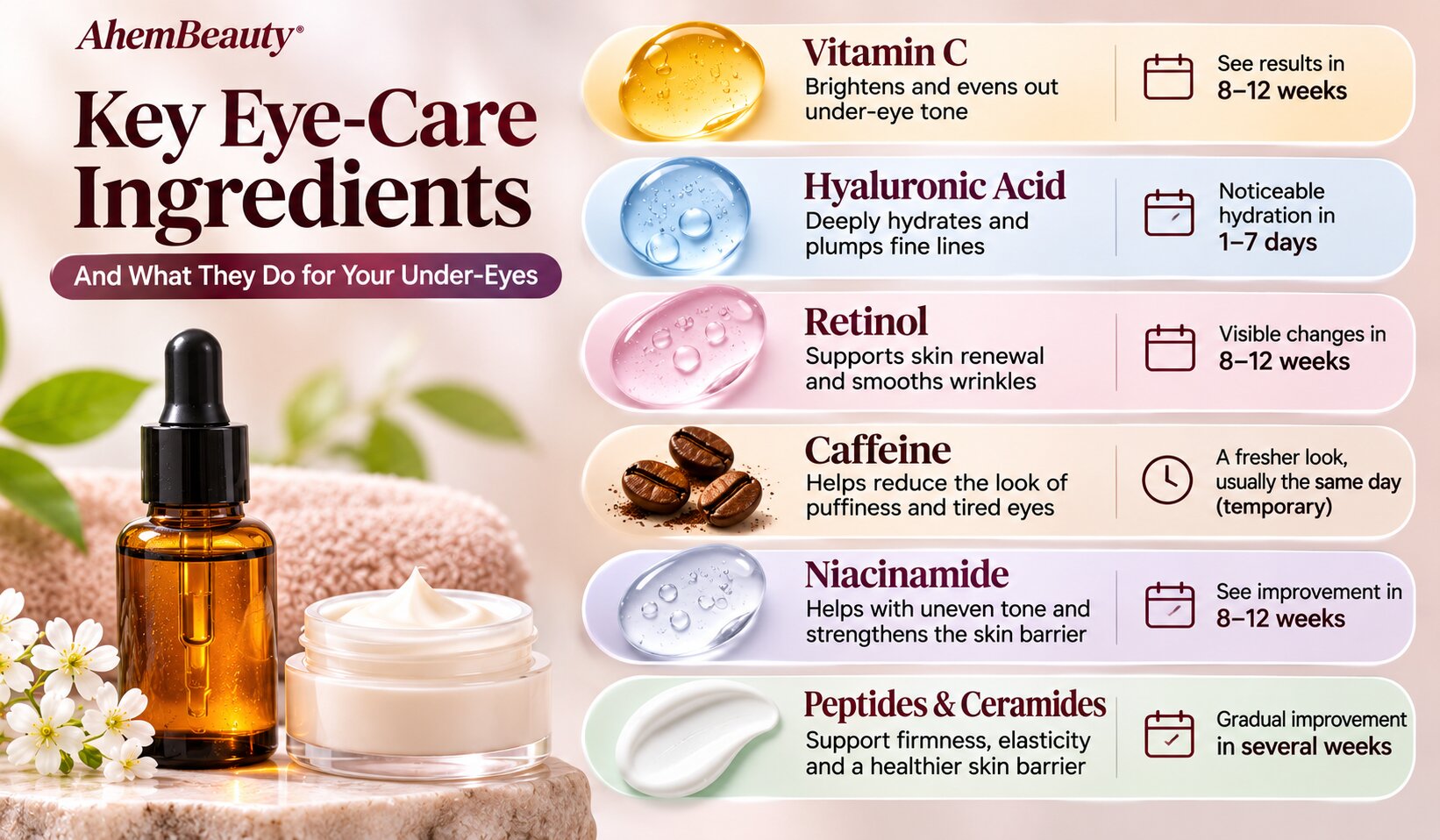
It may temporarily influence superficial blood vessels and improve the appearance of fluid-related swelling. This makes it a reasonable option for people who regularly wake up with mildly puffy eyes.
What to expect: Some people notice a temporary cosmetic improvement shortly after application, especially when using a cool product. It will not remove hereditary fat pads or permanently eliminate under-eye bags.
For Pigmentation and Dullness: Vitamin C and Niacinamide
These two ingredients approach uneven skin tone differently.
Vitamin C is an antioxidant involved in collagen production. It may help improve the appearance of pigmentation while supporting the skin against oxidative stress.
Niacinamide, a form of vitamin B3, helps support the skin barrier and can improve the appearance of uneven pigmentation.
For people with darker skin tones, gentle formulations are particularly important because irritation can trigger additional pigmentation.
What to expect: Allow approximately 8–12 weeks of consistent use before assessing changes in pigmentation. This is a practical evaluation period, not a guaranteed result.
The Anti-Aging Option: Retinol
Retinol is a vitamin A derivative commonly used to address fine lines, uneven texture and signs of photoaging.
It supports skin renewal and can improve the appearance of wrinkles with continued use.
A 2024 study published in the Journal of Drugs in Dermatology examined stabilized 0.1% retinol formulations and reported improvements in several signs of photoaging, including under-eye wrinkles.
What to expect: Early changes may appear within 4–8 weeks, with a more meaningful assessment around 8–12 weeks or longer.
Start with an eye-area formulation and introduce it gradually. Retinol can cause dryness, redness and irritation. Retinoids should be avoided during pregnancy.
The Hydration Pair: Hyaluronic Acid and Ceramides
Hyaluronic acid attracts and retains water, temporarily making the skin appear plumper and smoother. It is especially helpful when fine lines become more noticeable because of dryness.
Ceramides work differently. They help maintain the skin barrier and reduce moisture loss.
Hyaluronic acid can provide an immediate hydration-related improvement, while ceramide-based moisturizers support the skin with continued use.
What About Peptides?
Peptides are used in cosmetic formulations designed to improve the appearance of firmness and fine lines. However, evidence varies considerably between formulations.
They may be useful in a moisturizing eye product, but shoppers should be cautious about products promising dramatic lifting or wrinkle removal.
How Long Do Eye Serums Take to Work?
Different ingredients work on different timescales. This is why changing products every week can make it difficult to assess whether a routine is helping.
| Ingredient | Main purpose | Approximate assessment |
|---|---|---|
| Caffeine | Temporary puffiness | Same day, temporary |
| Hyaluronic acid | Hydration | Immediately to a few days |
| Vitamin C | Uneven pigmentation | 8–12 weeks |
| Niacinamide | Uneven pigmentation | 8–12 weeks |
| Retinol | Fine lines and texture | 8–12 weeks or longer |
| Peptides | Skin appearance | Several weeks; evidence varies |
| Ceramides | Barrier support | Days to weeks |
These are approximate periods, not guaranteed treatment outcomes.
Eye Serum vs Eye Cream: Which Should You Choose?
An eye serum is generally lighter and often formulated to deliver targeted ingredients such as caffeine, vitamin C or peptides. An eye cream is usually richer and focuses more on moisturizing and supporting the skin barrier.
If your main concern is puffiness or pigmentation, a suitable serum may be a convenient choice. If your under-eye skin is dry, sensitive or prone to dehydration lines, a moisturizing eye cream may be more useful.
Some people benefit from using both, but there is no need to buy multiple products if one well-formulated product meets their needs.
Home Remedies: What Is Worth Trying?
Home remedies can help with temporary puffiness and discomfort. Their limitations become important when dealing with hereditary pigmentation, structural bags or established wrinkles.

Cold Compress
A cool, clean washcloth is a practical option for morning puffiness.
Place it over closed eyes for five to ten minutes. Avoid pressing firmly against the eyelids.
Chilled Cucumber
Refrigerated cucumber slices can provide a cooling effect and temporary comfort.
Place clean slices over closed eyes for around ten minutes. Avoid allowing juice to enter the eyes.
There is little clinical evidence that cucumber removes established pigmentation or wrinkles.
Chilled Tea Bags
Cooled tea bags contain caffeine and plant compounds, which explains their popularity as an eye-care remedy.
If trying this approach, use clean tea bags that have cooled completely. Place them over closed eyes for a short period and remove them if irritation develops.
What to Avoid
Lemon juice, baking soda, toothpaste, undiluted essential oils and homemade exfoliating mixtures should never be applied around the eyes. These can irritate delicate skin and potentially worsen pigmentation.
Sensitive Skin: How to Introduce Eye Serums Safely
The eye area can react to ingredients that the rest of the face tolerates comfortably.
People with sensitive skin, eczema or a history of contact dermatitis should be particularly careful with retinol, fragrance, exfoliating acids and highly concentrated vitamin C.
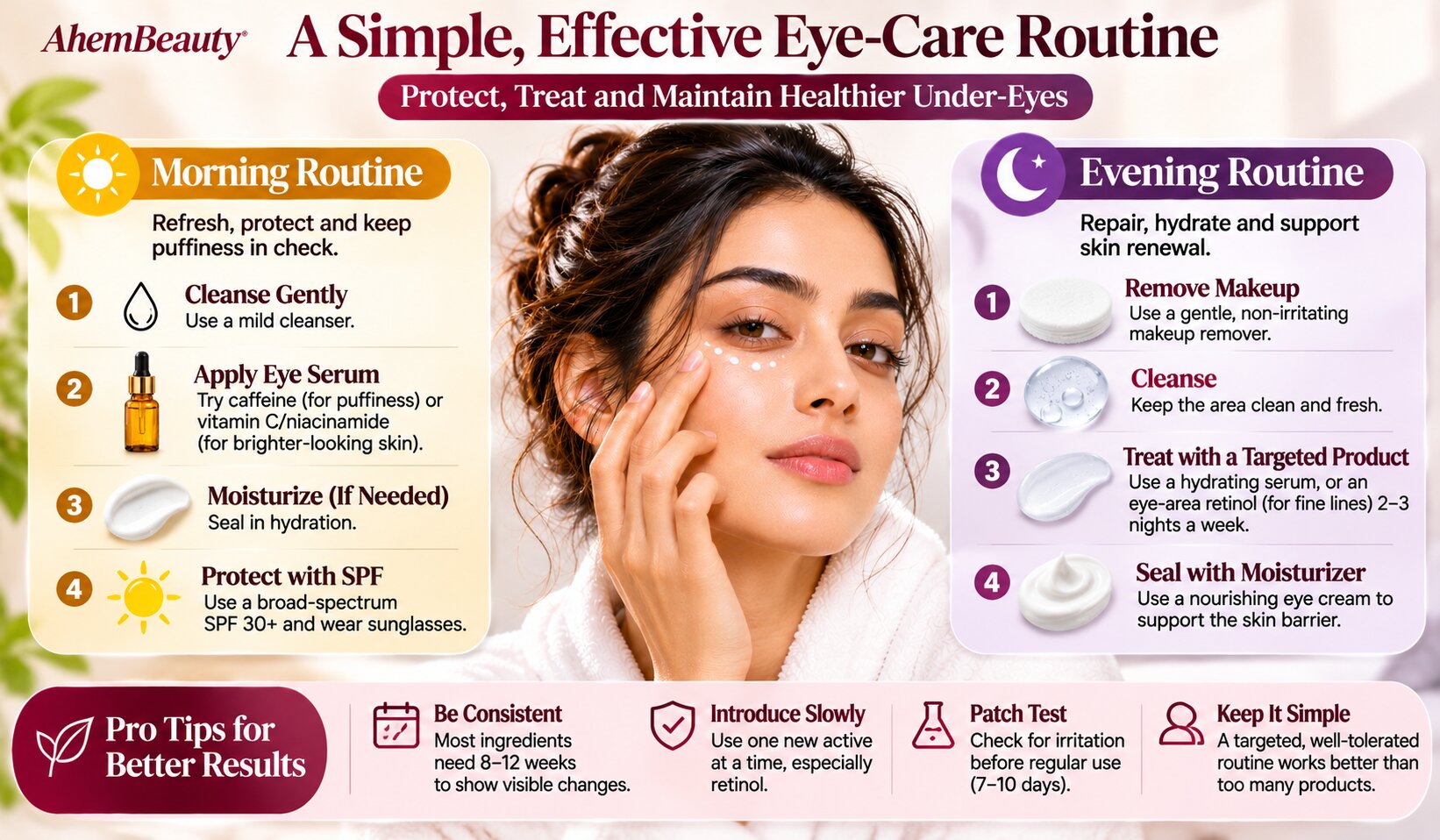
The American Academy of Dermatology recommends testing new skincare products on a small area twice daily for 7–10 days before regular use.
For eye products, follow the manufacturer’s directions. Do not test directly on the eyelid margin or close to the eye. A small test area on the arm can help identify some reactions, although it cannot guarantee that the eye area will tolerate the product.
If persistent burning, redness, itching or swelling develops, discontinue the product.
A few additional precautions help:
- Introduce one new active ingredient at a time.
- Start retinol at a low frequency.
- Use a gentle moisturizer.
- Avoid applying active products too close to the lash line.
- Do not continue using a product through significant irritation.
Building a Practical Eye-Care Routine
Morning: Cleanse gently, apply an appropriate eye serum, moisturize if needed and finish with broad-spectrum SPF 30 or higher.
Evening: Remove makeup without rubbing the eyes, cleanse and apply a hydrating eye product. If wrinkles are the main concern, introduce a suitable eye-area retinol product gradually.
Avoid starting multiple strong active ingredients together.
When Under-Eye Concerns Need Medical Attention
Most dark circles and mild under-eye bags are cosmetic. However, swelling should not automatically be treated as a skincare problem.
Seek medical advice if swelling is persistent, worsening or accompanied by pain, redness, itching or a rash.
Sudden swelling affecting one eye, particularly with pain or vision changes, needs prompt medical assessment.
A dermatologist can help distinguish pigmentation from vascular discoloration, dermatitis and structural shadows. Depending on the cause, treatment may involve prescription skincare or carefully selected procedures.
For persistent structural bags, a qualified ophthalmic or oculoplastic specialist can explain whether a procedure such as blepharoplasty is appropriate.
Frequently Asked Questions
1. Can dark circles disappear completely?
It depends on their cause. Pigmentation-related dark circles may improve with appropriate skincare and sun protection. Hereditary dark circles and structural shadows may be much harder to change with topical products.
2. Does caffeine serum really reduce puffy eyes?
Caffeine may temporarily improve the appearance of mild puffiness. It cannot remove structural under-eye bags or permanently correct fat displacement.
3. Which ingredient is best for under-eye wrinkles?
Retinol has stronger evidence for improving fine lines and signs of photoaging. Hyaluronic acid can temporarily soften dehydration-related lines by improving hydration.
4. Can I use vitamin C and retinol around my eyes?
Some eye-care formulations contain these ingredients, but using both at once may increase irritation in sensitive skin. Introduce them separately and follow the product directions.
5. How long should I use an eye serum before changing it?
For pigmentation and fine-line concerns, allow approximately 8–12 weeks when the product is well tolerated. Stop earlier if significant irritation occurs.
6. Are home remedies better than eye creams?
Neither is universally better. Cool compresses can help temporary puffiness, while formulated skincare products can provide targeted ingredients for hydration, pigmentation and fine lines.
7. Can lack of sleep cause permanent dark circles?
Poor sleep can make existing dark circles more noticeable, but it is not the only cause. Genetics, pigmentation, allergies and facial anatomy can also contribute.
The AhemBeauty Perspective: Better Eye Care Starts With the Right Diagnosis
Dark circles, puffiness and wrinkles are often grouped together in beauty advertising, but treating them as one problem can lead to disappointing results.
A caffeine serum may temporarily improve morning puffiness, while vitamin C or niacinamide may help certain forms of pigmentation. Retinol can improve fine lines over time, and hyaluronic acid can make dry skin look temporarily smoother.
For people with darker or sensitive skin, avoiding irritation deserves particular attention. An aggressive routine can make pigmentation more noticeable, even when the original intention was to brighten the area.
The smarter approach is to identify the underlying concern, select suitable ingredients and give a well-tolerated routine enough time to show whether it is helping.
Healthy-looking skin does not require perfectly smooth under-eyes. Good skincare is about supporting the skin’s health and appearance, with realistic expectations.
Medical and Research References
- Cleveland Clinic – Dark Circles Under the Eyes.
- Mayo Clinic – Bags Under Eyes: Symptoms and Causes.
- Mayo Clinic – Bags Under Eyes: Diagnosis and Treatment.
- Hamie H, et al. A Review of the Efficacy of Popular Eye Cream Ingredients. International Journal of Women’s Dermatology. 2024;10(2):e156.
- American Academy of Dermatology – Retinoid or Retinol?.
- American Academy of Dermatology – How to Test Skin Care Products.
- Journal of Drugs in Dermatology – Stabilized Bioactive Retinol for Photoaging. 2024.
Medical Disclaimer: This article is intended for educational purposes and does not replace professional medical advice, diagnosis or treatment.
Editorial Review: AhemBeauty Editorial Desk. Medical review by a qualified dermatologist has not been independently established for this article.