
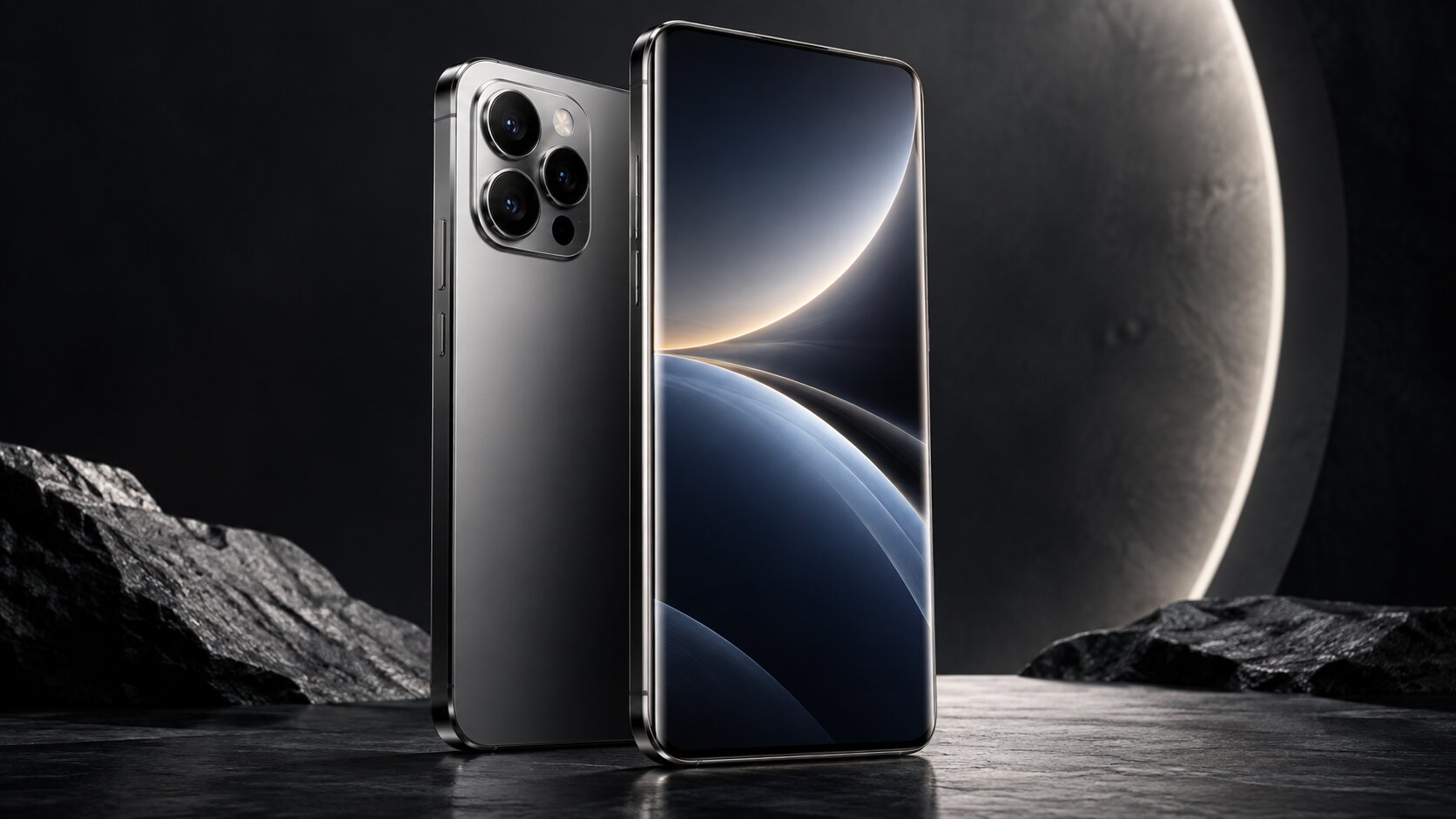
iPhone 19 Rumors: Release Date, Design, Camera, Battery, Specs and Everything We Know
Apple’s 2027 iPhone could be much more than another yearly upgrade. Here’s everything we know so far about the rumored iPhone 19, including its design, camera, display, battery, performance and the features that could make it genuinely different.
There is something slightly unusual about the iPhone 19 story.
Normally, when we start talking about the next iPhone, the conversation is fairly straightforward. A new chip, a better camera, a brighter display, perhaps a bigger battery, and a few design changes. Then Apple arrives in September, reveals the phone, and most of the rumors finally have somewhere to land.
The 2027 iPhone is different.
Apple will celebrate the iPhone’s 20th anniversary in 2027, and the rumors suggest the company is planning something much bigger than another yearly upgrade. In fact, Apple may not even call it the iPhone 19. The company skipped the iPhone 9 and went from iPhone 8 to iPhone X for the 10th anniversary in 2017, and there is growing speculation that history could repeat itself. Names such as iPhone 20 and iPhone XX have already appeared in reports.
Whatever Apple decides to call it, the phone currently being discussed could become one of the company’s most ambitious iPhone redesigns since the iPhone X.
And if even half of these reports turn out to be true, the changes won’t be limited to the camera or processor. Apple appears to be thinking about what an iPhone should actually look like.
So, what can we realistically expect?
Let’s look at everything we know so far about the rumored iPhone 19, including its design, display, camera, video recording, battery, performance, microphone, speakers, connectivity and the features that could make it genuinely different.
iPhone 19 Release Date: When Could It Launch?
The simplest answer is fall 2027.
Apple has traditionally introduced its flagship iPhones around September, and the 20th anniversary model is expected to follow that general schedule. The first iPhone was announced in January 2007 and went on sale in June, meaning the 20th anniversary technically falls in June 2027. But Apple has already shown with the iPhone X that an anniversary model does not necessarily have to launch exactly on the anniversary date.
Current reports point toward a fall 2027 launch alongside the next generation of Apple’s foldable iPhone.
There is also an interesting possibility that Apple could change the lineup itself. One report suggests the anniversary Pro models could effectively take the place of the iPhone 19 Pro and iPhone 19 Pro Max, while a regular iPhone 19 could arrive later.
Will Apple Actually Call It iPhone 19?
This is probably the first thing worth clearing up.
Maybe not.
The name iPhone 19 is currently being used because it follows the existing numbering system. But Apple has done this before. The company skipped iPhone 9 and introduced the iPhone X to mark ten years of the product.
That is why the rumored 2027 model is frequently referred to as the iPhone 20 or iPhone XX.
There is no official confirmation of either name yet.
For now, iPhone 19 is the easiest name to use when talking about the next-generation iPhone, but readers should keep in mind that Apple’s final branding could be very different.
iPhone 19 Design: Apple Could Finally Change the Formula
This is where the story gets exciting.
The basic iPhone design has been evolving rather than completely changing for years. The Dynamic Island replaced the notch, camera modules have become larger, and the frame and materials have been refined, but the basic rectangular glass-and-metal formula has remained familiar.
Apple’s 2027 anniversary iPhone could finally break away from that formula.
Multiple reports describe a glass-heavy design with curved glass wrapping around the sides of the device. Instead of looking like a conventional phone with a screen sitting inside a frame, the idea is to make the phone feel much more like one continuous piece of glass.
That does not necessarily mean the entire phone will literally be glass.
And this is important because recent reporting has actually cleared up some of the earlier rumors. Bloomberg’s Mark Gurman has reported that Apple is still working on a glass-centric design, but a more extreme version that used even more glass was reportedly abandoned during development. The current concept is said to use glass on the front and back, curving into the sides around a thin metal band.
The dream of a completely glass iPhone may have been scaled back, but the broader redesign appears to be alive.
A Quad-Curved Display Could Make the iPhone Look Almost Borderless
One of the most talked-about elements is a four-sided curved display.
The idea is not simply to curve the screen like some older Android phones did along the left and right edges. Instead, Apple is reportedly exploring a design where the glass curves around all four sides.
That could make the bezels almost disappear visually.
The result would be a phone that looks more like a single uninterrupted slab of glass. Apple’s challenge, of course, is making that look good without introducing accidental touches, distortion, brightness problems or durability issues.
Some recent reporting suggests Apple is working with suppliers on a display and cover-glass approach that creates this borderless visual effect without necessarily making the underlying display itself dramatically curved.
It is a clever distinction, and it could be exactly how Apple gets the futuristic look without inheriting every problem associated with aggressively curved screens.
What About the Dynamic Island?
The Dynamic Island could be on its way out.
For years, the obvious problem with a truly edge-to-edge iPhone has been the front camera and Face ID hardware. You can make the bezels incredibly thin, but eventually you still need somewhere to put the sensors.
That is why under-display Face ID has become one of the biggest iPhone 19 rumors.
That would make a huge difference when watching movies, playing games or simply looking at photos. Instead of working around a cutout, the display could finally feel like the entire front of the phone.
There is still a major question mark around the front camera, though. Under-display cameras remain technically difficult because putting a camera behind a display can reduce the amount of light reaching the sensor.
Apple is unlikely to sacrifice selfie quality simply to achieve a cleaner design.
So this is one area where we should be particularly careful with rumors.
iPhone 19 Display: Expect More Than Just a Bigger Screen
The anniversary iPhone is expected to come in two sizes, roughly corresponding to the Pro and Pro Max sizes Apple is using for the current generation.
Reports have pointed to approximately 6.3-inch and 6.9-inch display classes, although Apple has not confirmed those dimensions.
The bigger story will probably be the way the display is integrated into the body.
Apple probably will not need to chase absurdly high resolution numbers. The company has historically preferred making the overall display experience feel better rather than simply increasing specifications on paper.
iPhone 19 Camera: This Could Be a Serious Upgrade
If the design gets most of the attention, the camera may quietly become one of the most important upgrades.
Apple does not usually play the megapixel game in the same way some Android manufacturers do. Instead, the company tends to focus on the sensor, image processing, color consistency and how the camera behaves in difficult lighting.
That philosophy could continue with the 2027 iPhone.

One of the more interesting rumors points to Apple working with Sony on a custom image sensor using LOFIC technology.
LOFIC is particularly interesting because it can help a camera capture brighter and darker areas of a scene without simply increasing ISO and adding more noise. In practical terms, that could mean better dynamic range, cleaner shadows and more detail in difficult lighting.
That is the kind of improvement that matters much more in everyday photography than simply moving from one megapixel number to another.
Will the iPhone 19 Have a 200MP Camera?
A 200MP camera has been mentioned in some reports and rumor roundups, but it is nowhere near the level of certainty we would have for something like the overall Pro camera layout.
And honestly, Apple does not need 200 megapixels to make the iPhone camera better.
The more believable direction is an improved sensor, better computational photography and better control over highlights and shadows.
If Apple does introduce a very high-resolution sensor, it could use pixel binning to produce lower-resolution images with better light gathering and detail.
But at this point, the 200MP claim should be treated as a possibility, not a specification.
Triple Camera System Is Still the Likely Setup
The Pro models are expected to continue with a three-camera system, likely built around wide, ultrawide and telephoto cameras.
That makes sense. Apple has spent years building its Pro camera system around those three perspectives, and there is little reason to throw away that formula.
The real improvements could come from the sensors and lenses themselves.
A stronger main sensor would help everyday photography.
A better ultrawide camera would make landscapes, architecture and group shots more useful.
And a better telephoto system would make portraits and long-distance photography considerably stronger.
Apple is also reportedly exploring variable aperture technology, which could give the main camera more control over how much light reaches the sensor.
That could be particularly useful for portraits and low-light photography.
iPhone 19 Photo Quality: What Could Actually Improve?
This is where Apple could make the biggest difference without dramatically changing the camera app.
A better sensor and more powerful image processing could improve:
The important thing is that these improvements should show up in the finished photograph rather than in the specification sheet.
That is what will determine whether the iPhone 19 camera is actually better.
iPhone 19 Video: Apple Still Has a Lot to Prove
The iPhone has become a serious camera for creators, and Apple knows it.
YouTube creators, filmmakers, Instagram users and people making short-form video already rely heavily on iPhones because they offer consistent video quality without requiring a lot of setup.
The 2027 model could push that further.
The biggest improvement could be consistency.
Anyone who has filmed video on a phone knows that a technically impressive camera can still produce disappointing footage when exposure suddenly changes or the phone struggles with mixed lighting.
Apple’s advantage has always been making the entire system work together.
If the rumored new sensor and next-generation processor arrive together, the iPhone 19 could become an even stronger pocket camera for serious video creators.
Microphone and Speaker Quality
The camera gets most of the attention, but audio matters just as much when you are recording video.
There has not yet been a major credible leak revealing a completely redesigned microphone system for the 2027 iPhone. So it would be premature to promise some dramatic audio revolution.
Still, Apple can improve microphone performance through better hardware and processing.