Healthy eyes are easy to take for granted. We use them from the moment we wake up to the moment we fall asleep, yet eye care often gets attention only after something starts to feel wrong.
This guide brings together practical eye-health habits, screen-time advice, nutrition, UV protection, contact-lens care, preventive eye exams, age-related changes and warning signs that deserve professional attention.

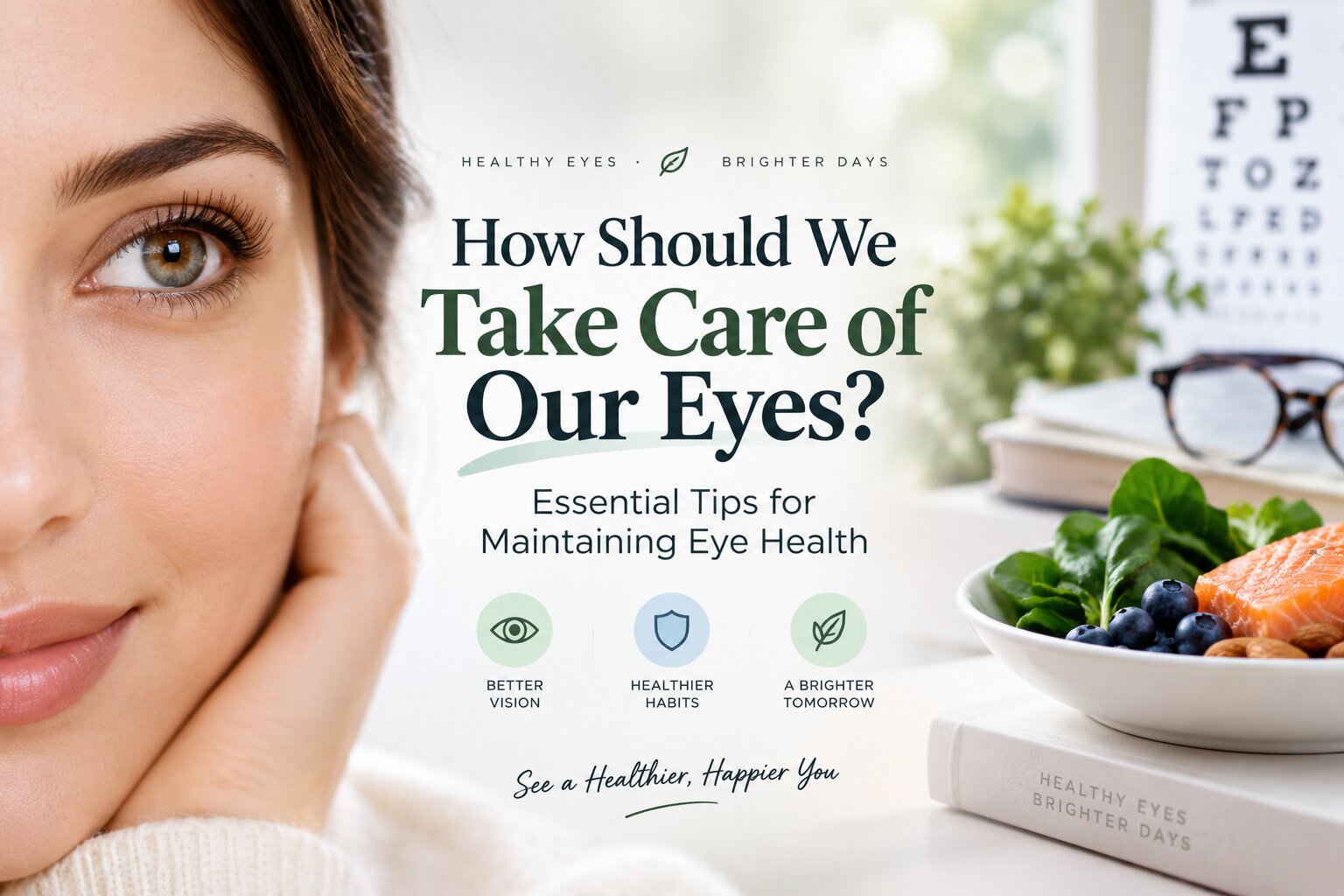
How Should We Take Care of Our Eyes?
There is a strange thing about healthy eyesight: when it works well, you barely think about it.
You wake up and check your phone. You read messages, work on a laptop, drive, watch television, shop online and scroll through social media. Your eyes quietly handle all of it. Then one day, perhaps after a long afternoon at a computer, you notice that the words on the screen don’t look quite as comfortable as they used to. Your eyes feel dry. Small print seems harder to focus on. Headlights at night look more bothersome.
It’s easy to blame the screen, your age, tiredness or simply a busy day. Sometimes the explanation really is ordinary eye strain. But that’s exactly why eye health deserves a little more attention: not every change in vision is something you should simply work around.
Looking after your eyes isn’t about finding a miracle food, buying the most expensive eye supplement or avoiding screens altogether. It is mostly about a handful of sensible habits repeated over time, along with regular eye examinations and knowing when a change deserves professional attention.
Here is what that looks like in real life.
Start With Something Most People Put Off: An Eye Exam
Being able to see clearly doesn’t necessarily mean everything inside your eyes is healthy.
That’s one of the easiest things to forget about eye care. We tend to judge our eyes by what we can see in front of us. But some eye diseases can develop without noticeable symptoms in their early stages.
A comprehensive eye examination gives an eye-care professional the opportunity to look at parts of the eye that you can’t assess yourself in the bathroom mirror or by reading a few lines on a vision chart.
Conditions such as glaucoma, diabetic eye disease and age-related macular degeneration can require monitoring even when everyday vision seems normal.
How often you need an eye exam depends on factors such as your age, medical history, family history and existing eye conditions. Someone with diabetes or a strong family history of eye disease may need a different schedule from someone without those risk factors.
Your Phone Probably Isn’t the Enemy. Your Habits May Be.
It’s tempting to blame smartphones and computers for every modern eye complaint. The reality is a little more useful than that.
For many people, the problem is prolonged close-up work without enough breaks. Hours can disappear while answering emails, editing documents, scrolling through social media or watching videos. During intense screen use, people also tend to blink less frequently.
The result can be tired, dry or irritated eyes, headaches and temporary difficulty focusing.
One simple habit that can help is the 20-20-20 rule: every 20 minutes, look at something around 20 feet away for at least 20 seconds.
It sounds almost too simple, which is probably why people forget to do it. You don’t need a special app or expensive piece of equipment. A window, a distant building or anything else across the room can work.
Also pay attention to your workspace. A monitor positioned too close, strong glare from a window, poor lighting or air conditioning blowing directly into your face can make long periods of screen work less comfortable.
Blinking Is One of the Small Things That Actually Matters
Here’s an easy habit to overlook: blink.
When you’re concentrating on a screen, reading or doing detailed work, your blinking pattern can change. Blinking helps spread the tear film across the surface of the eye, so reduced blinking can contribute to dryness and discomfort.
If you regularly finish a workday with burning, gritty or unusually tired eyes, look at your screen habits before automatically assuming that you need a new eye product.
Take breaks. Blink normally. Adjust the screen and lighting. If symptoms continue, get them checked rather than repeatedly treating the discomfort yourself.
Sunglasses Are About More Than Looking Good
A good pair of sunglasses can be one of the easiest pieces of eye protection to use regularly.
Long-term exposure to ultraviolet radiation is associated with several eye problems, including cataracts. The important detail when choosing sunglasses isn’t how dark the lenses look. Look for sunglasses that provide 99% to 100% UVA and UVB protection.
UV exposure doesn’t disappear just because the sky is cloudy. If you’re spending a long time outdoors, sunglasses combined with a hat can provide useful additional protection.
This is especially worth remembering if you drive frequently, spend time near water, work outdoors or enjoy outdoor sports.
Don’t Build Your Diet Around One “Eye Health” Food
Carrots have carried the reputation of being the ultimate eye food for generations. They’re nutritious, but eye health is not that simple.
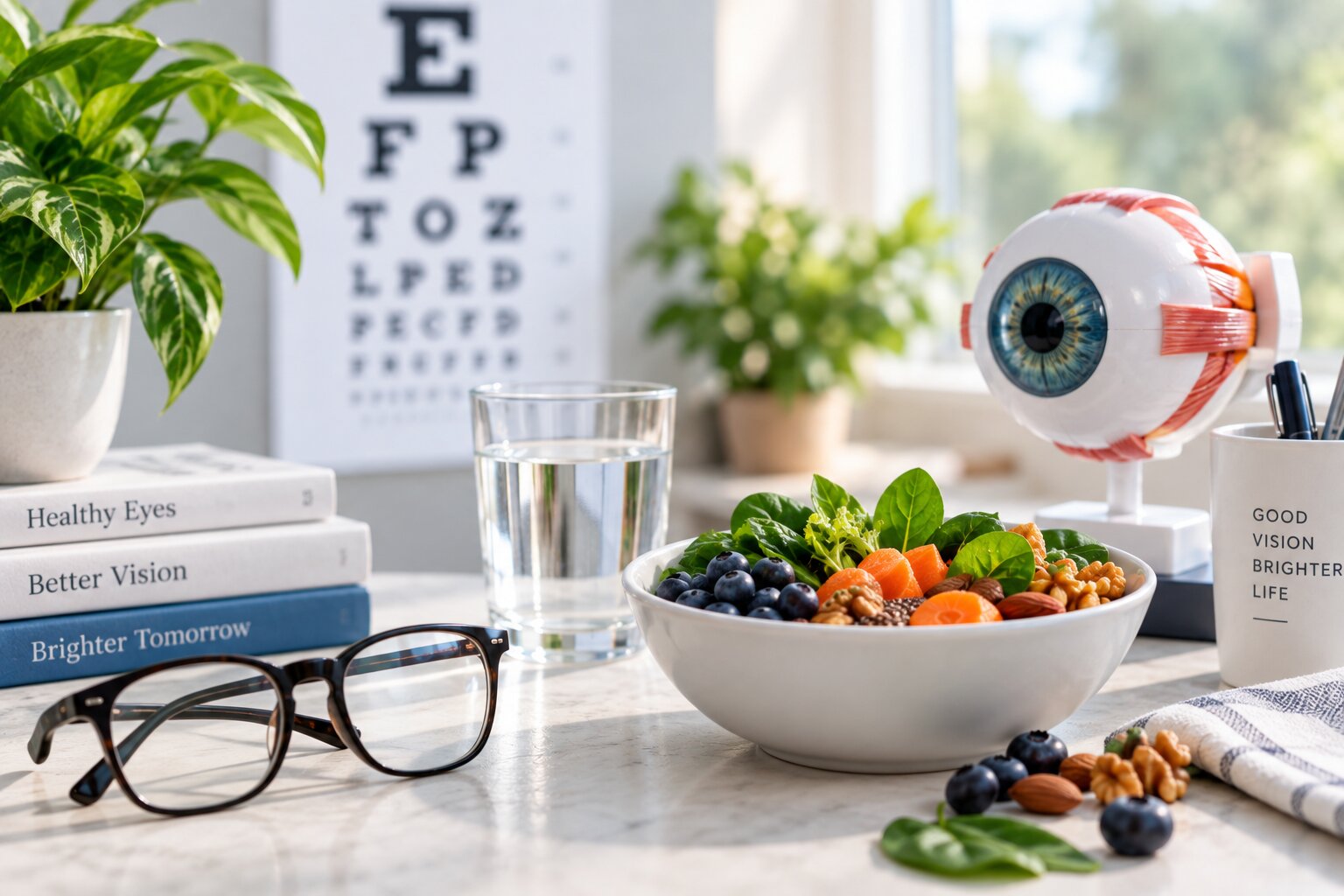
Your eyes benefit from the same kind of balanced diet that supports the rest of your body. Leafy green vegetables such as spinach and kale provide nutrients associated with eye health. Fish such as salmon and tuna provide omega-3 fatty acids. Fruits and vegetables add a range of vitamins and antioxidants.
The useful lesson isn’t to find one magical food and eat it every day. It’s to make variety normal.
A dinner containing vegetables, a nutritious protein source and a sensible carbohydrate is more useful as a long-term habit than occasionally buying an expensive product marketed specifically for “perfect vision.”
Eye-Healthy Foods: What to Put on Your Plate
There is no single food that guarantees good eyesight, but certain foods provide nutrients that support normal eye function. The easiest approach is to build variety into ordinary meals rather than turning eye health into a restrictive diet.
| Food | Useful nutrients | Simple way to include it |
|---|---|---|
| Spinach and other leafy greens | Lutein, zeaxanthin and other nutrients | Salads, soups, curries or cooked vegetables |
| Salmon and other oily fish | Omega-3 fatty acids | Grilled, baked or added to meals |
| Eggs | Lutein, zeaxanthin and protein | Breakfast, salads or simple meals |
| Citrus and other fruits | Vitamin C and other antioxidants | Fresh fruit or added to meals |
| Nuts and seeds | Vitamin E and healthy fats | A small snack or addition to breakfast |
| Colorful vegetables | Various vitamins and antioxidants | Roasted, steamed or added to everyday meals |
The bigger picture matters more than any individual item. A varied diet is easier to maintain and supports overall health alongside eye health.
Blood Sugar and Blood Pressure Matter to Your Eyes
This is where eye care becomes part of general health.
Diabetes can damage the blood vessels in the retina. High blood pressure can also affect the blood vessels supplying the eye. That means managing these conditions isn’t just about protecting your heart, kidneys or overall health. It can matter for your vision too.
If you have diabetes, high blood pressure or another medical condition that increases your risk of eye disease, don’t use clear vision as proof that everything is fine.
Keep your recommended medical appointments and eye examinations, and follow the treatment plan given by your healthcare professional.
Eye Health Changes With Age
Your eyes don’t stay exactly the same throughout life. Some changes are a normal part of ageing, while others need medical attention. Understanding the difference can help you know when an ordinary change deserves a closer look.
Children and teenagers
Vision plays an important role in learning, reading, sports and everyday activities. Difficulty seeing the board, frequent squinting, headaches after reading or holding books and screens unusually close can be reasons to discuss vision with an eye-care professional.
Children also spend significant amounts of time on digital devices, so encouraging outdoor activity and sensible screen habits is useful. Parents shouldn’t assume that a child will always tell them when vision is becoming difficult.
Adults in their 20s and 30s
For younger adults, prolonged screen use, contact-lens habits, UV exposure and eye injuries are often more relevant day-to-day concerns. Long workdays can make digital eye strain especially noticeable.
This is a good stage to establish habits that are easy to keep later: regular breaks, sensible screen positioning, UV protection and appropriate eye examinations.
Adults in their 40s and 50s
Many people begin noticing changes in near vision during this period. Reading small print may become more difficult, particularly in low light, and you may find yourself moving a phone or book farther away to focus comfortably.
Presbyopia is a common age-related change in the eye’s ability to focus on nearby objects. It is different from suddenly developing a serious eye disease, but persistent changes in vision still deserve appropriate assessment.
Older adults
With increasing age, the risk of conditions such as cataracts, glaucoma and age-related macular degeneration becomes more relevant. Regular eye examinations become particularly important because some of these conditions may develop gradually.
Age itself doesn’t mean that worsening vision should simply be accepted without assessment. A change may be treatable, correctable or something that needs monitoring.
Contact Lenses: Convenience Comes With Rules
Contact lenses can make life easier, especially for people who don’t want to wear glasses all day. But they require more discipline than many people realise.
Wash and dry your hands before handling lenses. Follow the cleaning and storage instructions for your particular lenses and solution. Replace lenses according to the recommended schedule rather than trying to extend their use.
And don’t improvise when it comes to lens care. Contact lenses sit directly on the eye, so contamination can create a genuine risk of infection.
If a contact lens suddenly becomes uncomfortable, your eye becomes unusually red, you’re sensitive to light or your vision changes, take the lens out and seek professional advice.
Protective Eyewear Is Worth Wearing Before You Need It
Some eye injuries happen during ordinary activities rather than dramatic accidents.
Cutting wood, drilling, mowing the lawn, gardening, using certain chemicals or taking part in sports can send dust, debris or other material toward your eyes.
That is exactly when protective eyewear earns its place. Prescription glasses aren’t automatically designed to protect against every type of impact or chemical exposure.
If an activity creates a realistic risk to your eyes, use the appropriate safety glasses or goggles. It takes seconds to put them on. An eye injury can take much longer to recover from.
Common Eye-Care Mistakes People Make
Eye care is often less about adding another product to your routine and more about stopping a few habits that can cause avoidable problems.
- Waiting until vision becomes noticeably poor: Some eye conditions can develop before symptoms become obvious.
- Using sunglasses based only on how dark they look: Darkness and UV protection are not the same thing.
- Spending hours at a screen without breaks: Long uninterrupted periods of close-up work can contribute to digital eye strain.
- Forgetting to blink: Concentration can reduce normal blinking and contribute to dryness.
- Stretching contact-lens replacement schedules: Lenses should be replaced according to the manufacturer’s or eye-care professional’s instructions.
- Rubbing irritated eyes repeatedly: Persistent irritation deserves an explanation rather than endless rubbing or self-treatment.
- Assuming everyone needs eye vitamins: Supplements have specific uses and aren’t automatically necessary for every healthy adult.
- Ignoring sudden changes: Flashes, a sudden increase in floaters, sudden vision loss or a curtain-like shadow require prompt attention.
Smoking Can Affect Your Vision Too
Most people associate smoking with lung and heart disease. Eye health is another reason to take it seriously.
Smoking is associated with a higher risk of several eye conditions, including cataracts and age-related macular degeneration, and can damage the optic nerve.
If you smoke, quitting can remove one avoidable risk factor from your long-term eye-health picture. If you don’t smoke, there is no health benefit to starting.
Dry Eyes Are Common, but Don’t Automatically Ignore Them
Dry, gritty or irritated eyes are increasingly common in people who spend much of the day indoors and in front of screens.
Air conditioning, fans, smoke, wind, low humidity and prolonged screen use can all contribute to uncomfortable dry-eye symptoms. Lack of sleep can make tired, irritated eyes feel even worse.
Simple changes can help some people: take regular screen breaks, blink frequently, avoid air blowing directly toward your eyes and give yourself enough time to sleep.
But there is an important distinction between occasional discomfort and persistent symptoms. If your eyes repeatedly feel dry, painful or irritated despite changing your habits, have them assessed. Persistent dry eye can have several causes and may need more specific treatment.
Family History Can Tell Your Eye Doctor Something You May Not Know
When was the last time you asked your family about eye disease?
It’s a surprisingly useful question.
Some eye diseases can run in families. Knowing whether a parent, sibling or close relative has had glaucoma, macular degeneration or another significant eye condition can help an eye-care professional understand your risk profile.
You don’t need to become an expert in your family’s medical history. Even knowing that a close relative had a particular eye disease is useful information to mention during an eye examination.
Do You Really Need an Eye Supplement?
The supplement market can make eye health sound complicated. Shelves are filled with products promising sharper vision, healthier eyes and protection from age-related problems.
But a supplement isn’t automatically necessary simply because it is marketed for the eyes.
Some specific nutritional formulations are used for certain eye conditions and may be recommended by an eye-care professional. That’s very different from saying that every healthy person needs an “eye vitamin.”
For most people, the sensible starting point is a balanced diet and appropriate healthcare. If you have a diagnosed eye condition or a nutritional deficiency, ask your doctor or eye-care professional whether a supplement makes sense for you.
A Simple Eye-Health Routine You Can Actually Keep
The best routine is usually the one you can continue.
When you go outside: Wear sunglasses with 99% to 100% UVA and UVB protection and consider a hat when you’ll be outside for an extended period.
When you’re working: Take regular breaks from close-up screen work. Try the 20-20-20 rule, keep your screen at a comfortable distance and pay attention to glare and lighting.
When you eat: Choose variety. Include vegetables, leafy greens, fruit and nutritious protein sources rather than relying on a single “eye health” food.
When you exercise or work around tools: Wear appropriate protective eyewear whenever there is a realistic risk of flying debris or other eye injury.
When you wear contacts: Wash your hands, follow the care instructions and replace lenses as recommended.
When something changes: Don’t rely on guesswork. Persistent or sudden changes in vision deserve professional attention.
Quick Eye Health Checklist
- ☐ Schedule eye examinations according to your age, health and risk factors.
- ☐ Use the 20-20-20 rule during prolonged screen work.
- ☐ Blink regularly when concentrating on a computer or phone.
- ☐ Choose sunglasses with 99% to 100% UVA and UVB protection.
- ☐ Eat a varied diet with vegetables, leafy greens, fruit and nutritious protein sources.
- ☐ Keep diabetes and blood pressure under appropriate medical control.
- ☐ Follow proper contact-lens cleaning, storage and replacement instructions.
- ☐ Wear suitable protective eyewear during activities that can injure the eyes.
- ☐ Avoid smoking.
- ☐ Get professional advice for persistent or unexplained eye symptoms.
- ☐ Seek urgent medical attention for sudden vision loss, significant eye pain, flashes, a sudden increase in floaters or a curtain-like shadow across your vision.

Frequently Asked Questions About Eye Health
How often should I have an eye exam?
There isn’t one schedule that fits everyone. Your age, health, family history, existing eye conditions and other risk factors can affect how often you need an examination. Ask your eye-care professional what schedule is appropriate for you.
Can too much screen time damage your eyes?
Long periods of screen use can contribute to digital eye strain, dryness, tired eyes and headaches. Taking regular breaks, blinking normally and maintaining a comfortable viewing setup can help reduce discomfort. Persistent symptoms should be assessed rather than automatically blamed on screen time.
Does the 20-20-20 rule really help?
The 20-20-20 rule is a practical way to interrupt prolonged close-up screen work. Every 20 minutes, look at something about 20 feet away for at least 20 seconds. It is simple, free and easy to build into a working day.
Are carrots really good for your eyes?
Carrots provide beta-carotene and are part of a healthy diet, but they aren’t a magic solution for eyesight. Overall dietary variety matters more than relying on one food.
What foods are best for eye health?
Leafy greens, colorful fruits and vegetables, fish containing omega-3 fatty acids, eggs, nuts and other nutrient-rich foods can all contribute to a balanced diet that supports overall health and eye health.
Do I need special eye vitamins?
Not necessarily. Certain nutritional formulations may be recommended for specific eye conditions, but that does not mean every healthy adult needs an eye supplement. Discuss supplements with a healthcare professional if you have a diagnosed eye condition or nutritional deficiency.
Are sunglasses necessary on cloudy days?
UV radiation can still reach your eyes when the sky is cloudy. When you are spending significant time outdoors, sunglasses that provide 99% to 100% UVA and UVB protection can help protect your eyes from UV exposure.
Why do my eyes feel dry when I use my phone or computer?
People often blink less frequently when concentrating on screens. That can contribute to dryness, while air conditioning, fans, smoke and low humidity can add to the problem. Regular breaks and normal blinking may help, but persistent symptoms should be checked.
When are eye floaters an emergency?
A few stable floaters can occur for many reasons, but a sudden increase in floaters, especially when accompanied by flashes of light or a curtain-like shadow over your vision, requires prompt medical assessment.
Can diabetes affect eyesight?
Yes. Diabetes can damage blood vessels in the retina and lead to diabetic eye disease. People with diabetes should follow their recommended medical and eye-examination schedule even when their vision seems normal.
When should I seek urgent eye care?
Sudden vision loss, significant eye pain, new flashes, a sudden increase in floaters, double vision or a curtain-like shadow across your vision should not be ignored. Seek prompt medical attention.
The Most Useful Mindset for Long-Term Eye Health
There is a tendency to make eye care sound either extremely complicated or completely passive: take a supplement, eat carrots and hope your eyesight stays perfect.
Neither approach is particularly useful.
Your eyes are part of your body, so many of the habits that protect your general health also support your vision. Eating well, staying active, managing conditions such as diabetes and high blood pressure, avoiding smoking and getting appropriate preventive care all belong in the same picture.
Then there are the eye-specific habits: protecting yourself from UV exposure, using screens sensibly, caring for contact lenses properly and wearing protective eyewear when necessary.
None of these habits guarantees perfect eyesight forever. That’s not what healthy eye care is supposed to promise.
The goal is simpler: reduce avoidable risks, catch problems early and give your eyes the conditions they need to stay healthy for as long as possible.

When Should You Book an Eye Examination?
If your vision has gradually changed, you’re struggling to read at your usual distance, you’re getting recurring headaches while doing visual tasks, night driving has become noticeably harder or you have persistent dryness or irritation, it’s worth discussing the symptoms with an eye-care professional.
People with diabetes, high blood pressure, a family history of eye disease or an existing eye condition may need examinations more often than people without those risk factors.
And if you experience sudden vision loss, significant eye pain, flashes, a sudden increase in floaters, double vision or a curtain-like shadow across your sight, don’t wait for a routine appointment.
Final Takeaway
Taking care of your eyes doesn’t require a complicated wellness routine. In fact, the most useful habits are fairly ordinary: protect your eyes from UV light, give them regular breaks from prolonged screen work, eat a varied diet, stay physically active, don’t smoke, use protective eyewear when necessary and take contact-lens hygiene seriously.
Most importantly, don’t wait until your eyesight becomes obviously poor before paying attention to your eyes.
Clear vision is something many of us take for granted because it works quietly in the background of everyday life. A little preventive care, combined with appropriate eye examinations and quick attention to unusual symptoms, is a much more sensible long-term strategy than trying to fix problems after they become obvious.
Medical Sources
This article was researched using guidance and health information from established public-health and medical institutions:
“`Health note: This article is for general educational purposes and does not replace personalized medical advice. Your recommended eye-examination schedule depends on your age, health history, family history and individual risk factors. Seek prompt medical attention for sudden vision loss, significant eye pain, new flashes, a sudden increase in floaters or other acute changes in vision.