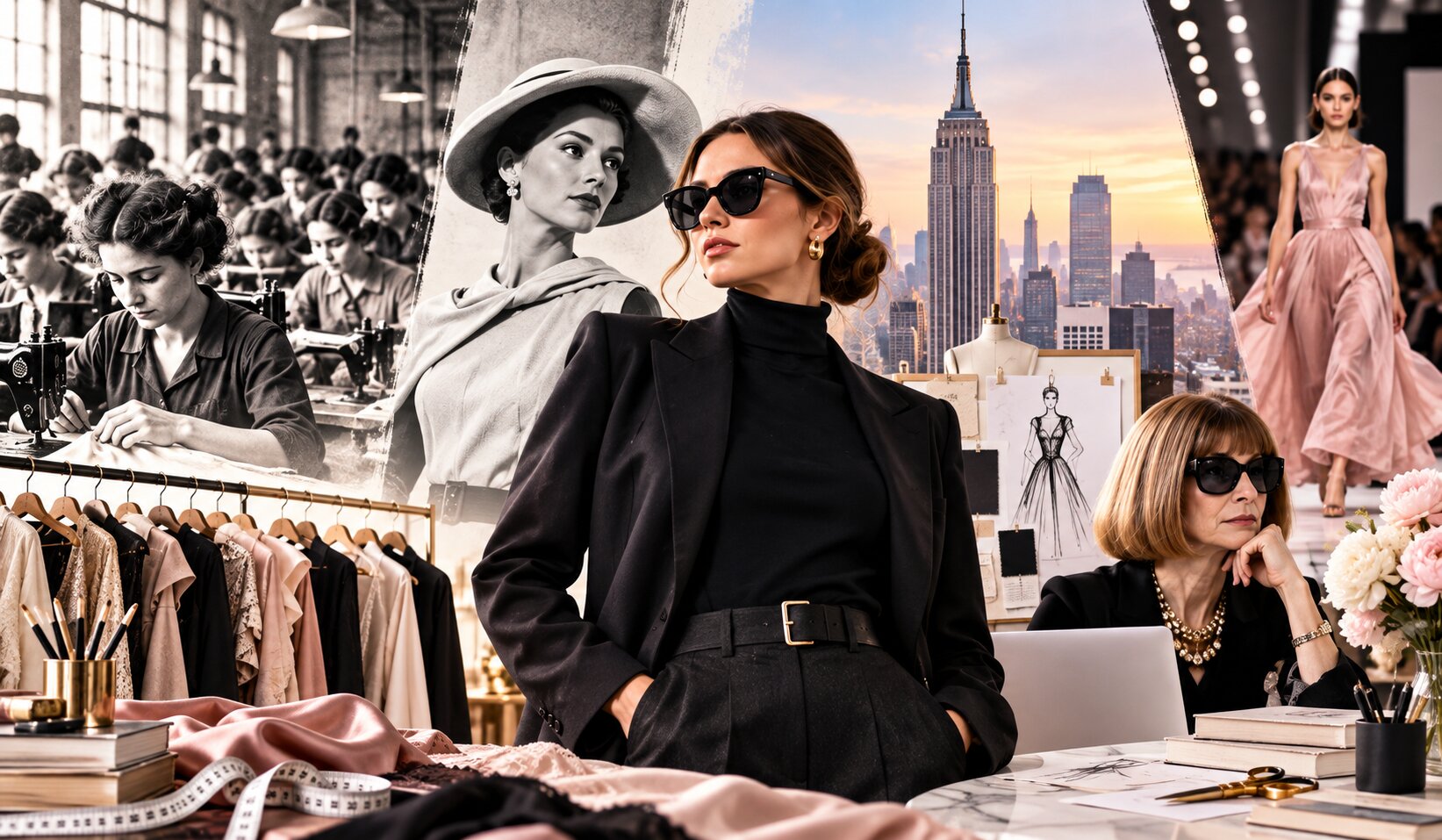
Fashion is often described through its most visible images: runway lights, glossy magazine covers, luxury boutiques and the seasonal rush to buy something new. But behind that polished surface is a much larger story about work, money, technology, identity and power.
In the United States, women have been central to nearly every stage of that story. They operated sewing machines in crowded factories, organized against dangerous working conditions, designed clothes for changing lifestyles, edited the publications that shaped public taste and built brands that turned personal style into major businesses. Many also challenged an industry that frequently treated women as consumers while reserving its highest positions for men.
The history of American fashion is therefore not simply a parade of celebrated designers. It is a record of women changing what clothing could do, who it could serve and who had the authority to define it.
From the garment workers of New York’s Lower East Side to Claire McCardell’s practical dresses, Donna Karan’s professional wardrobe and the entrepreneurs reshaping fashion through digital platforms, women helped build the American fashion industry as both an economic force and a cultural institution.
The Women Who Built the Industry Before They Ran It
By the early 20th century, New York had become the center of American garment manufacturing. The industry depended on thousands of immigrant workers, many of them young women working in factories, workshops and tenement-based production spaces.
These workers made the shirts, dresses and other garments that helped expand access to ready-to-wear clothing. Yet the people whose labor made the industry possible often had limited control over wages, working hours and workplace safety.
The imbalance was especially stark because garment production was becoming increasingly important to the American economy while many of its workers remained economically vulnerable. Women were essential to the system, but their contributions were rarely reflected in the industry’s leadership or public image.
That began to change through labor organizing. The story of American fashion cannot be separated from the women who demanded that the people making clothes deserved dignity and protection.
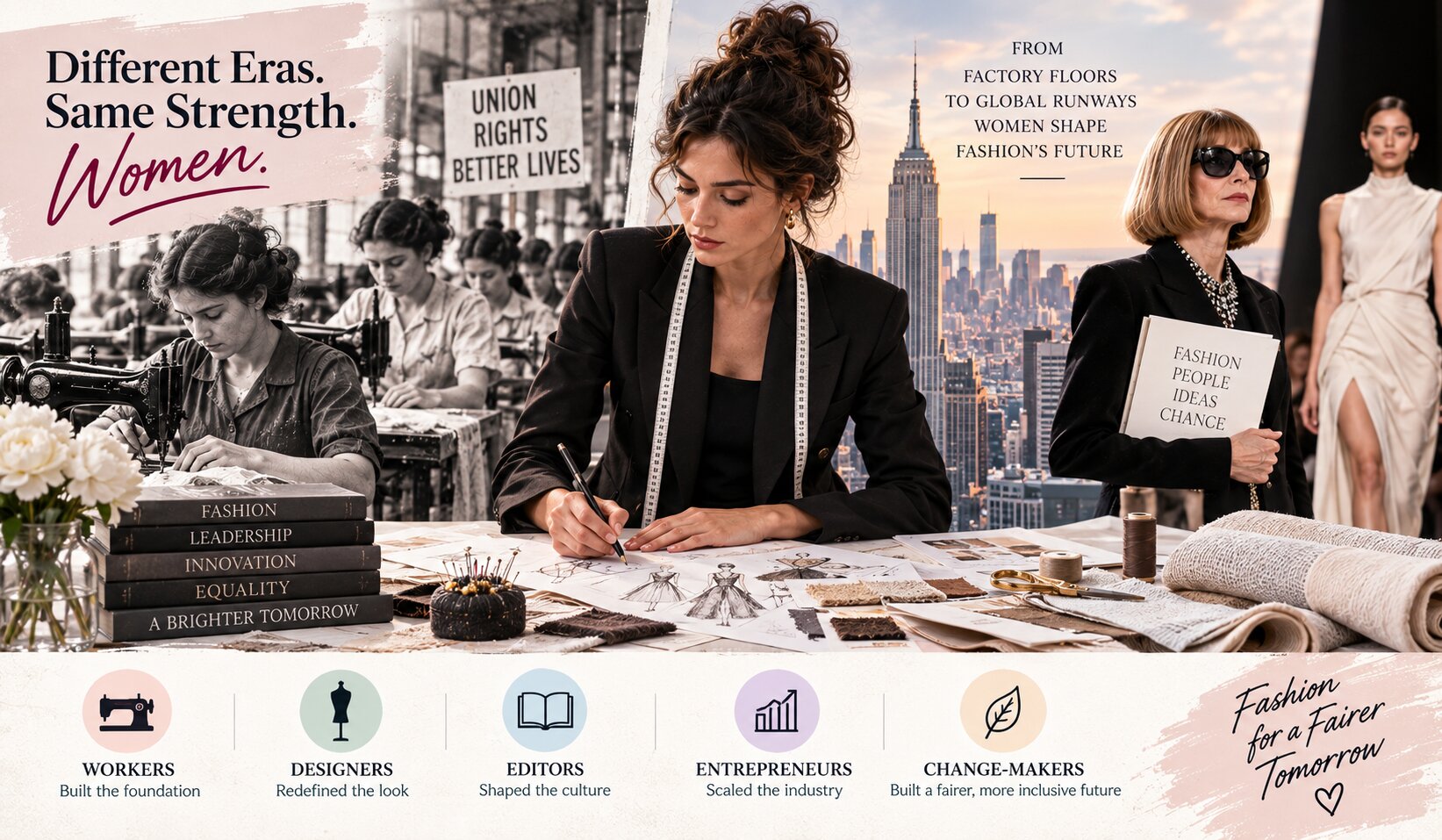
Women’s contribution to American fashion extends from garment manufacturing and labor activism to design, business and cultural leadership.
The Uprising of the 20,000
One of the defining moments came in 1909, when thousands of mostly immigrant women working in New York’s shirtwaist factories went on strike. The movement became known as the Uprising of the 20,000.
The strike was closely associated with Clara Lemlich, a 23-year-old garment worker who called for a general strike at a meeting at Cooper Union in November 1909. The workers demanded better wages, shorter hours and improved working conditions. The National Park Service and Cornell University’s ILR School document the strike as a major organizing effort involving tens of thousands of garment workers.
The strike also demonstrated something important about women’s labor activism. These workers were not passive victims of industrialization. They developed organizing networks, took public risks and forced employers and political institutions to respond to their demands.
The International Ladies’ Garment Workers’ Union (ILGWU) became a major institution in this history. Founded in New York in 1900, the union represented workers in an industry where women formed a large part of the workforce. Its early struggles included the 1909 shirtwaist strike and the continuing fight for union recognition and workplace protections.
Why the 1909 strike mattered
The Uprising of the 20,000 showed that women garment workers could organize on a large scale and challenge the companies that depended on their labor. It helped bring questions of wages, hours, union recognition and workplace conditions into public debate.
Triangle Shirtwaist Factory Fire: When Fashion Became a Public Safety Issue
On March 25, 1911, a fire at the Triangle Shirtwaist Factory in New York City killed 146 workers, most of them young immigrant women. Workers were trapped by locked doors, inadequate fire escapes and other unsafe conditions.
The tragedy exposed the human cost of an industry that prioritized production while failing to protect its workforce. It also helped create political pressure for workplace reform. The U.S. Department of Labor explains that the fire led to investigations and contributed to major changes in New York’s factory safety and occupational regulations.
The Triangle fire was not simply an event in labor history. It remains part of fashion history because the clothing industry was the setting in which these workers lost their lives—and because their deaths helped change the rules under which American manufacturing operated.
The legacy is still relevant. Much of the world’s garment production now takes place outside the United States, and women continue to make up a large share of garment workers globally. Questions about fair wages, factory safety, supply-chain transparency and worker representation remain part of the fashion industry’s unresolved responsibilities.
Claire McCardell and the Birth of a More American Fashion
For much of the early 20th century, Paris remained the dominant authority in Western fashion. American designers and manufacturers often looked to French couture for ideas, prestige and commercial direction.
But by the middle of the century, a group of American designers began developing a different approach. Instead of designing primarily for formal occasions or rigid social conventions, they focused on clothing that suited movement, work, travel and everyday life.
At the center of that shift was Claire McCardell.
Designing for Movement, Comfort and Independence
McCardell is widely recognized as one of the pioneers of American sportswear. After studying at Parsons and spending time in Paris, she returned to the United States and developed clothing that combined practical materials with distinctive silhouettes.
The Metropolitan Museum of Art and the National Women’s History Museum describe her work as functional, accessible and designed around the needs of the everyday woman. Her designs used fabrics such as cotton, denim and jersey, while inventive construction and comfortable shapes made them easier to wear in real life.
McCardell’s significance was not simply that she made casual clothing fashionable. She helped establish the idea that comfort, practicality and modern design could belong together.
Her work included wrap construction, adjustable details, separates and useful pockets. These features reflected a different understanding of the wearer. A woman did not have to remain physically restricted by her clothes to appear stylish.
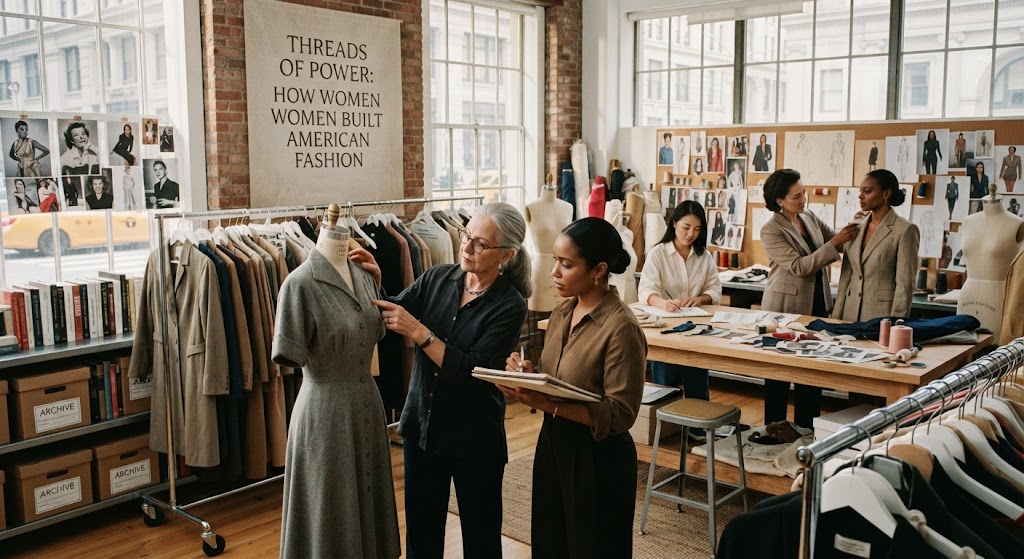
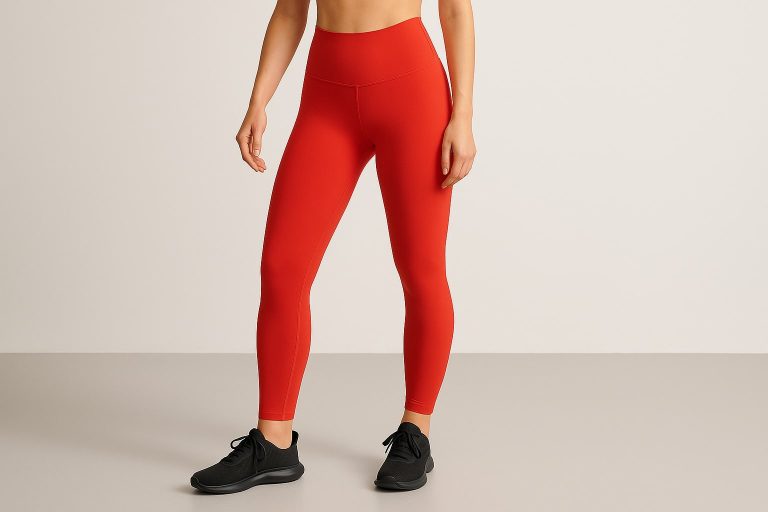
American sportswear developed a design language built around comfort, versatility and the practical needs of modern life.
The Pop-over dress, held in the Metropolitan Museum’s collection, is a useful example of this philosophy. Its large pocket and simple construction show how McCardell considered the practical needs of the person wearing the garment.
This was a meaningful departure from fashion that treated clothing primarily as a visual display. McCardell’s designs recognized that women worked, moved, carried things, traveled and lived active lives.
Her work helped give American sportswear its lasting identity: wearable, adaptable, relatively accessible and designed around the body rather than against it.
Bonnie Cashin: The Logic of Utility Becomes a Design Language
Bonnie Cashin extended this practical American approach through clothing and accessories that emphasized function, layering and movement.
Cashin became known for her use of leather, distinctive fastenings and industrial-inspired hardware. Toggles, clasps and other functional elements became recognizable parts of her design vocabulary.
Her work challenged the idea that fashion had to be delicate or highly structured to be sophisticated. She explored clothing and accessories that could be adjusted, combined and used in different ways.
That approach mattered because it treated utility as a creative principle. A fastening could be beautiful because it worked well. A bag could be designed around how a person carried it. Clothing could be layered according to weather, activity or personal preference.
Cashin’s contribution helped broaden the meaning of American sportswear beyond individual garments. It became a way of thinking about fashion as a system of use.
Donna Karan, Vera Wang and the Rise of the Lifestyle Brand
By the late 20th century, American fashion had moved far beyond its earlier dependence on European approval. Designers were building brands that reflected the country’s changing professional culture, consumer economy and ideas about modern womanhood.
Two influential examples are Donna Karan and Vera Wang, whose businesses show how women designers could shape entire categories of fashion.
Donna Karan: A Wardrobe for the Working Woman
Donna Karan understood that many women wanted clothing that could move across the demands of a complicated day. Office, travel, dinner, family responsibilities and social occasions often required flexibility rather than a separate wardrobe for every setting.
In 1985, Karan introduced Seven Easy Pieces, a system built around a bodysuit, tailored jacket, skirt, trousers, cashmere sweater, leather jacket and evening look. Her official brand history describes the collection as a flexible system of dressing that could take a woman from home to office and from day to night.
The idea was commercially effective because it addressed a practical problem: how to build a wardrobe that could adapt to different situations.
It was also culturally significant. Karan’s designs reflected the growing visibility of professional women and the changing expectations surrounding women’s workwear. The modern woman did not necessarily want clothing that made her resemble a man, nor did she want to sacrifice comfort or femininity to appear authoritative.
Karan’s approach offered another possibility: clothing could be polished, sensual and practical at the same time.
The idea behind Seven Easy Pieces
Karan’s system treated a wardrobe as a collection of interchangeable pieces rather than a series of isolated outfits. The approach anticipated the modern interest in capsule wardrobes, versatile basics and buying fewer items that can be worn in more combinations.
Her DKNY line, launched in 1989, extended that idea into a broader lifestyle brand inspired by New York. The business connected fashion with the pace and variety of city life, reaching customers who wanted clothing that could fit into multiple parts of their day.
Vera Wang: Reinventing the Bridal Industry
Vera Wang made her most visible mark by changing the expectations surrounding bridal fashion.
Before launching her own brand, Wang worked as a fashion editor at Vogue and later as a design director at Ralph Lauren. In 1990, she opened her first flagship store in Manhattan and began building a bridal business known for sophisticated silhouettes, refined detailing and a modern approach to wedding dressing.
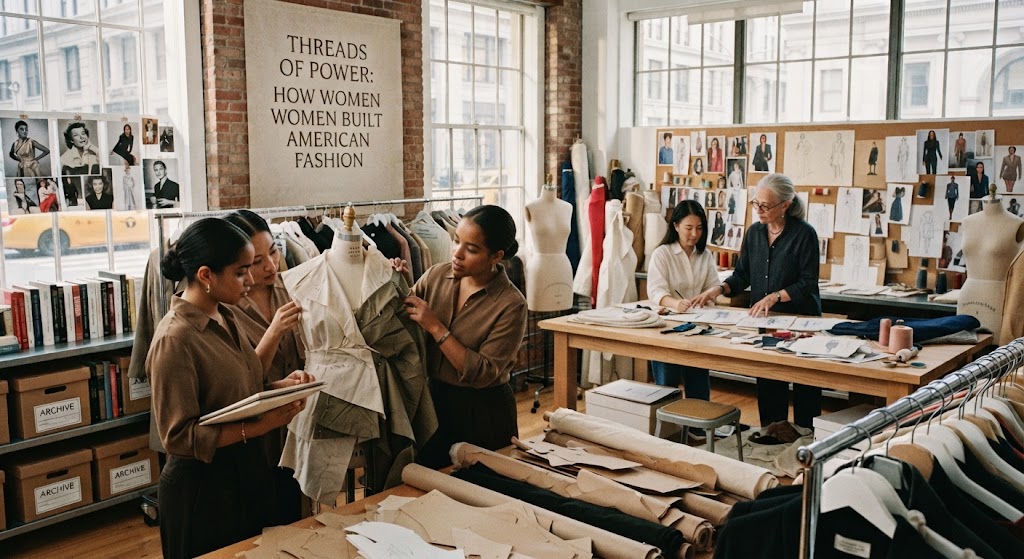
Women designers helped expand American fashion from individual garments into wider businesses, categories and lifestyle brands.
Wang’s importance lies partly in how she treated bridalwear as a serious design category rather than a narrow, traditional niche. She brought fashion-editorial sensibility, luxury construction and contemporary styling into an industry often dominated by conventional expectations.
Her brand later expanded into ready-to-wear, fragrance, accessories, home products and other categories. That expansion illustrates how a designer’s vision can become a broader lifestyle business when the brand’s identity remains recognizable across products.
Wang’s career also shows that women did not have to remain confined to one role within fashion. A woman could move between media, design, retail and entrepreneurship—and use experience in one area to build authority in another.
Women Who Shaped Fashion Through Magazines and Media
Clothing does not become influential through design alone. Fashion also depends on editors, photographers, stylists, publishers, retailers and critics who decide what deserves attention.
Women played a major role in turning fashion journalism into a powerful cultural and commercial institution. Their work influenced which designers became visible, how trends were interpreted and how the public imagined modern style.
Carmel Snow: Making Fashion Feel Alive
Carmel Snow, the influential editor of Harper’s Bazaar, helped change the visual language of fashion magazines during the 1930s and beyond.
Under her leadership, the magazine became known for dynamic photography, strong art direction and an editorial approach that treated fashion as part of modern life rather than a static display of garments.
One of Snow’s important decisions was bringing photographer Martin Munkácsi into fashion photography. His 1933 Harper’s Bazaar swimwear shoot showed a model running toward the camera on a beach—an energetic departure from the stiff, studio-based fashion images that had been common before.
Snow also helped build a creative environment that included art director Alexey Brodovitch, photographer Richard Avedon and fashion editor Diana Vreeland. Their collaboration helped define the magazine’s visual identity and influenced fashion photography for decades.
Her achievement was not simply hiring talented people. She understood that editorial power came from creating a distinctive point of view.
Diana Vreeland: Fashion as Imagination and Performance
Diana Vreeland brought a different kind of energy to fashion journalism. Her career at Harper’s Bazaar and later Vogue helped establish the fashion editor as a recognizable creative personality.
Her Harper’s Bazaar column, “Why Don’t You…,” became famous for its playful, extravagant suggestions. Her writing and styling treated fashion as fantasy, theatre and self-invention.
Vreeland also helped promote emerging cultural figures and collaborated with leading photographers. Her influence demonstrated that fashion magazines did more than report what people were wearing. They could create desire, introduce new faces and shape the cultural meaning of style.
Her work was sometimes extravagant and inaccessible, but its effect on fashion communication was substantial. She helped make editorial vision itself a form of power.
Anna Wintour: Editorial Influence Meets Industry Infrastructure
Anna Wintour represents a later stage in the evolution of fashion media, when editorial influence became increasingly connected to business development, designer support and the global fashion economy.
During her long tenure as editor-in-chief of Vogue, Wintour helped shape the magazine’s influence on designers, celebrities, retailers and the wider fashion industry. Her role later expanded to global editorial leadership at Vogue and chief content responsibilities at Condé Nast.
One of her most concrete contributions to American fashion was the creation of the CFDA/Vogue Fashion Fund in 2003, established after the disruption caused by the September 11 attacks. The program was designed to support emerging American designers through funding, mentoring and industry connections.
The fund illustrates how women in fashion leadership can influence the industry beyond their own creative work. By helping determine which young designers receive resources and visibility, they can affect the next generation of American fashion.
Fashion media is part of the industry itself
Editors do more than describe fashion. Their choices influence which designers receive attention, which trends reach consumers and which creative voices gain access to the industry’s most powerful platforms.
The New Guard: Entrepreneurship, Representation and Inclusion
The modern fashion industry is more fragmented than the one dominated by department stores, traditional magazines and a small number of luxury houses. Social media, e-commerce and direct-to-consumer businesses have lowered some barriers to entry, allowing designers and entrepreneurs to reach customers without relying entirely on established gatekeepers.
Women have been active in this shift, particularly in brands built around specific customer needs that older fashion systems often overlooked.
Designing for More Bodies and More Lives
For decades, mainstream fashion frequently treated a narrow body range as the default. Women designers and entrepreneurs have helped challenge that assumption through inclusive sizing, adaptive clothing, practical design and more varied representation.
This work is not limited to producing larger size ranges. It can involve reconsidering how garments fit, how clothing fastens, how bodies change and what customers need from everyday apparel.
The growing interest in adaptive fashion is one example. New businesses are exploring clothing designed around people experiencing disability, surgery recovery, pregnancy, aging or other physical changes. These efforts point toward a more practical understanding of fashion, where the garment begins with the wearer’s needs.
Aurora James and the Push for Greater Representation
Women have also played an important role in challenging racial exclusion within the American fashion system.
Aurora James, founder of Brother Vellies, launched the Fifteen Percent Pledge, which calls on major retailers to commit to carrying more products from Black-owned businesses. The initiative emerged from a broader recognition that Black consumers represent a significant part of the market while Black designers and business owners have often received limited retail access and investment.
The CFDA’s IMPACT initiative, launched in 2021, similarly focuses on connecting and supporting Black and Brown creatives and professionals in fashion. These efforts address a practical problem: representation becomes more meaningful when people have access to capital, retail shelves, manufacturing, mentorship and decision-making roles.
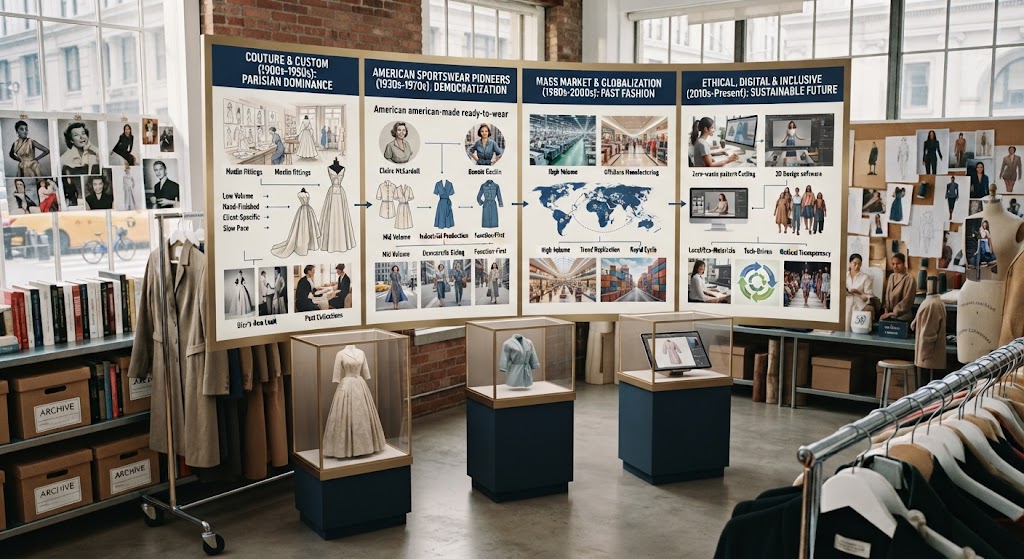
Today’s fashion entrepreneurs are challenging traditional ideas about access, representation, business ownership and design.
Sustainability and the Responsibility of Fashion
The environmental cost of fashion has also become a major concern. Textile waste, overproduction, water use, chemical pollution and the short lifespan of many garments have pushed consumers and businesses to reconsider how clothing is made and discarded.
Women are active across this movement, from designers working with recycled materials to entrepreneurs developing resale, repair, rental and circular-fashion businesses.
However, sustainability claims deserve scrutiny. A brand using recycled fabric is not automatically sustainable, and a collection marketed as “conscious” may still involve overproduction or opaque supply chains. The more useful question is whether a company can demonstrate measurable improvements in materials, manufacturing, product durability, labor conditions and waste reduction.
What meaningful fashion progress looks like
A more responsible fashion industry needs to consider the entire life of a garment: how it is designed, who makes it, how long it lasts, whether it can be repaired or reused, and what happens when it is no longer wanted.
Why Women’s Contribution Matters Beyond Fashion
The influence of women on American fashion cannot be reduced to a list of famous names. Their contributions changed the industry at different levels.
There is also an important distinction between women being visible in fashion and women having power within it. The industry has long depended on women as workers and consumers. Progress becomes more meaningful when women also control businesses, own intellectual property, receive investment, lead institutions and participate in decisions about how fashion is produced.
This distinction helps explain why the history of women in American fashion is both a story of achievement and a story of unfinished work. Women have shaped the industry for generations, but influence has not always meant equal access to ownership, wealth or authority.
A Short Timeline of Women’s Influence
- 1900 The International Ladies’ Garment Workers’ Union is founded in New York, becoming an important institution in the history of garment labor.
- 1909 The Uprising of the 20,000 brings thousands of garment workers, many of them women, into a major strike for better working conditions.
- 1911 The Triangle Shirtwaist Factory fire kills 146 workers and intensifies pressure for factory safety reform.
- 1930s–1970s Women designers help establish American sportswear as a practical, versatile and distinctly American fashion tradition.
- 1985 Donna Karan introduces Seven Easy Pieces, a flexible wardrobe system designed around the realities of modern women’s lives.
- 1990 Vera Wang opens her first flagship store and begins building a bridal fashion brand that changes expectations around wedding design.
- 2003–2004 The CFDA/Vogue Fashion Fund is established under Anna Wintour’s leadership to support emerging American designers.
- Today Women continue to reshape fashion through entrepreneurship, inclusive design, digital commerce, sustainability and labor advocacy.
The Bottom Line
American fashion was not built by designers alone, and it was never shaped only by the people whose names appeared on labels. Its foundations were laid by women who worked in factories, organized for safer conditions, developed new ways of dressing, built brands, edited magazines and challenged the industry’s limits.
Their contributions changed both the appearance and the structure of American fashion. They helped move clothing away from rigid ideals of formality toward greater comfort, flexibility and personal expression. They also pushed the industry to confront questions about labor, representation and who gets to participate in fashion’s economic rewards.
The story is still unfinished. Today’s women in fashion are working within a system that offers more routes to influence than earlier generations had, while still carrying serious problems around labor, sustainability, access and inequality.
But one fact is difficult to dispute: the American fashion industry owes much of its shape to women who refused to remain merely the people fashion was made for. They helped decide what it would become.
Further Reading & Sources
- Claire McCardell — Metropolitan Museum of Art — Collection information on McCardell’s practical American sportswear.
- American Ingenuity: Sportswear, 1930s–1970s — The Metropolitan Museum of Art — Historical context on American sportswear designers and their influence.
- Triangle Shirtwaist Factory — National Park Service — Background on the workers, the 1909 strike and the 1911 factory fire.
- The New York Factory Investigating Commission — U.S. Department of Labor — Information on the fire and subsequent workplace safety reforms.
- The Uprising of the 20,000 — Cornell University ILR School — Timeline and historical details about the 1909 garment workers’ strike.
- Donna Karan — Official Brand History — Background on Seven Easy Pieces and the brand’s system of dressing.
- Vera Wang — Council of Fashion Designers of America — Career and brand history.
- CFDA History — Background on the CFDA/Vogue Fashion Fund and American fashion institutions.