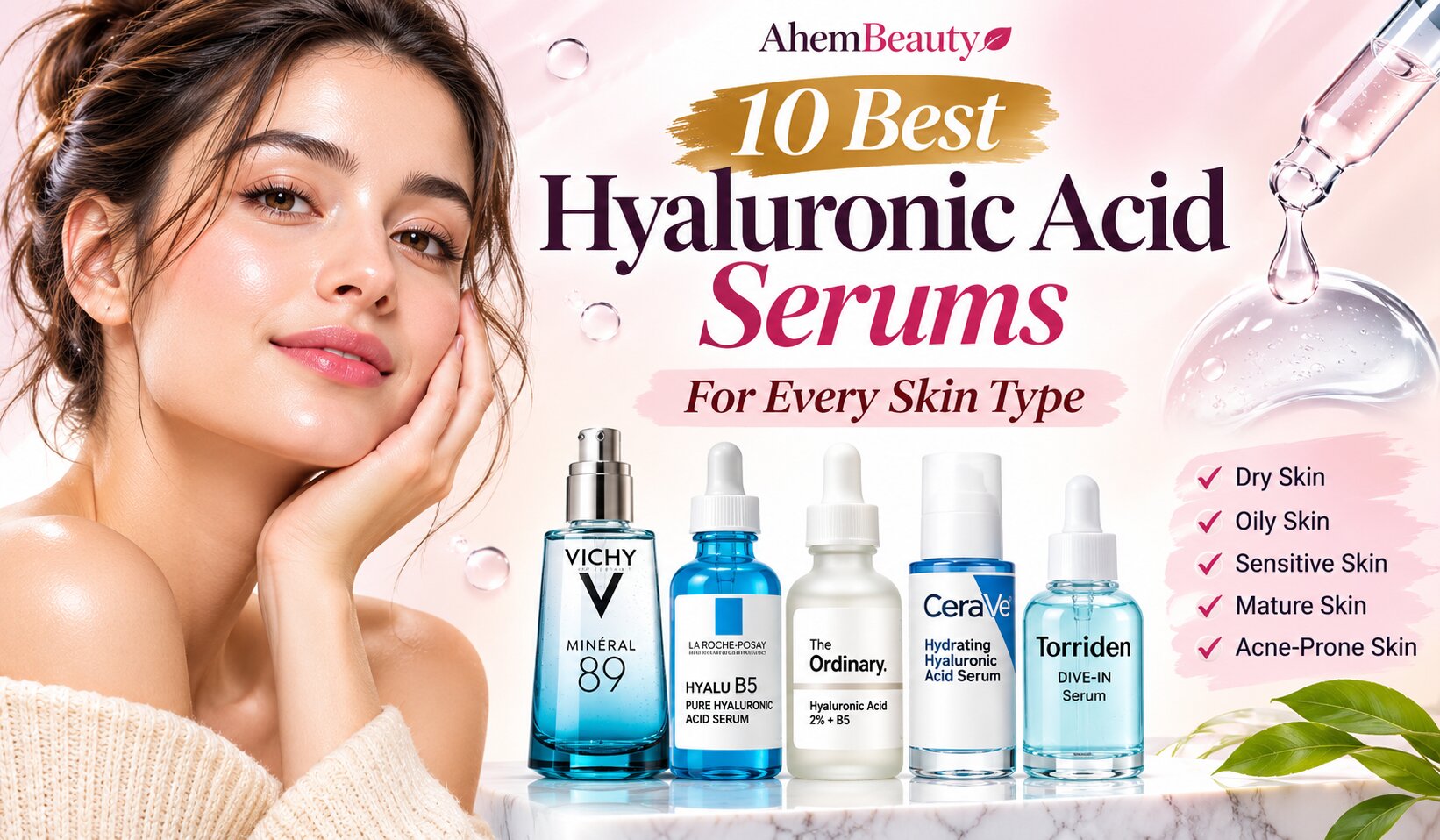
A considered guide to the formulas, ingredients and everyday routines that help skin feel comfortably hydrated — from affordable staples to Korean skincare favourites.
(This article contains affiliate links. We may earn a commission if you purchase through links in this article, at no extra cost to you.)
There’s a reason hyaluronic acid keeps turning up in skincare routines. When skin feels tight after cleansing, looks a little flat or shows fine dehydration lines, a well-formulated hydrating serum can make a visible difference to how comfortable and smooth it looks.
But the ingredient name alone doesn’t tell you whether a serum is right for your skin. Some formulas are deliberately simple. Others pair hyaluronic acid with ceramides, vitamin B5, peptides or vitamin C. Texture matters too, especially if your skin gets oily during the day or reacts to fragrance.
This guide looks at ten different formulas and explains where each one fits. It also covers what hyaluronic acid can realistically do, how to use it, which ingredients work well alongside it and what to check before buying. Our choices are based on published ingredient lists, official brand information, stated sizes and prices, and suitability for the category — not undisclosed hands-on testing.
10 Best Hyaluronic Acid Serums at a Glance
Each category has a distinct pick. The table is a quick starting point; the individual reviews explain the trade-offs.
| Category | Product | What to expect |
|---|---|---|
| Best Overall | Vichy Minéral 89 | HA and polyglutamic acid in a fragrance-free gel |
| Best for Dry Skin | La Roche-Posay Hyalu B5 | Multiple HA forms, panthenol and madecassoside |
| Best Drugstore | The Ordinary HA 2% + B5 | Low-cost daily hydration with panthenol |
| Best for Sensitive Skin | CeraVe Hydrating HA Serum | Three ceramides, panthenol and no added fragrance |
| Best for Oily Skin | Neutrogena Hydro Boost Hydrating Serum | Oil-free, non-comedogenic positioning and a light feel |
| Best Korean Serum | Torriden DIVE-IN | Five HA forms plus panthenol and allantoin |
| Best for Barrier Support | COSRX The Hyaluronic Acid 3 Serum | 3% sodium hyaluronate, NMF components and ceramide |
| Best for Mature Skin | L’Oréal Revitalift 1.5% HA | Hydration for a plumper-looking finish |
| Best Pure-HA-Focused Formula | Good Molecules HA Serum | A short formula centred on sodium hyaluronate and glycerin |
| Best with Vitamin C | Timeless HA + Vitamin C | Magnesium ascorbyl phosphate, HA and Matrixyl 3000 |
Prices below are US brand-listing prices where a current figure could be verified, checked November 25, 2026. They are not guaranteed Amazon prices. Retailer discounts, stock and regional formulas can differ.
What Is Hyaluronic Acid Serum, and Why Use It?
Hyaluronic acid (HA) is a water-binding substance found naturally in the body, including the skin. In skincare, it works as a humectant: it attracts water and helps hold it in the outer layers of the skin. That can leave skin feeling softer and looking temporarily plumper.
It helps to separate two concerns that are often mixed up. Dry skin generally lacks oil, while dehydrated skin lacks water. Oily skin can still be dehydrated, particularly after over-cleansing, exfoliating or using acne treatments.
A serum is a convenient way to add humectants without necessarily adding a heavy cream texture. The rest of the formula determines how it feels and what else it contributes.
- Hydration: Helps attract water and ease the tight feeling associated with dehydration.
- A temporarily plumper look: Better-hydrated skin can appear smoother and fuller.
- Dehydration lines: Fine lines caused or exaggerated by dryness may look less obvious.
- Comfort: Formulas with glycerin, panthenol or ceramides can add useful skin-conditioning support.
- Routine flexibility: Most HA serums can be used alongside vitamin C, niacinamide or retinoids.
There are limits. HA does not clear blocked pores, treat acne, remove pigmentation or rebuild lost collagen. For those concerns, you’ll need other ingredients and, where appropriate, professional advice.
10 Best Hyaluronic Acid Serums: The Reviews
These reviews focus on what the formula actually contains and who may find it useful. No texture test, wear test or personal-use claim is made unless a product has genuinely been tested in person.
Vichy Minéral 89 Hydrating & Plumping Daily Booster
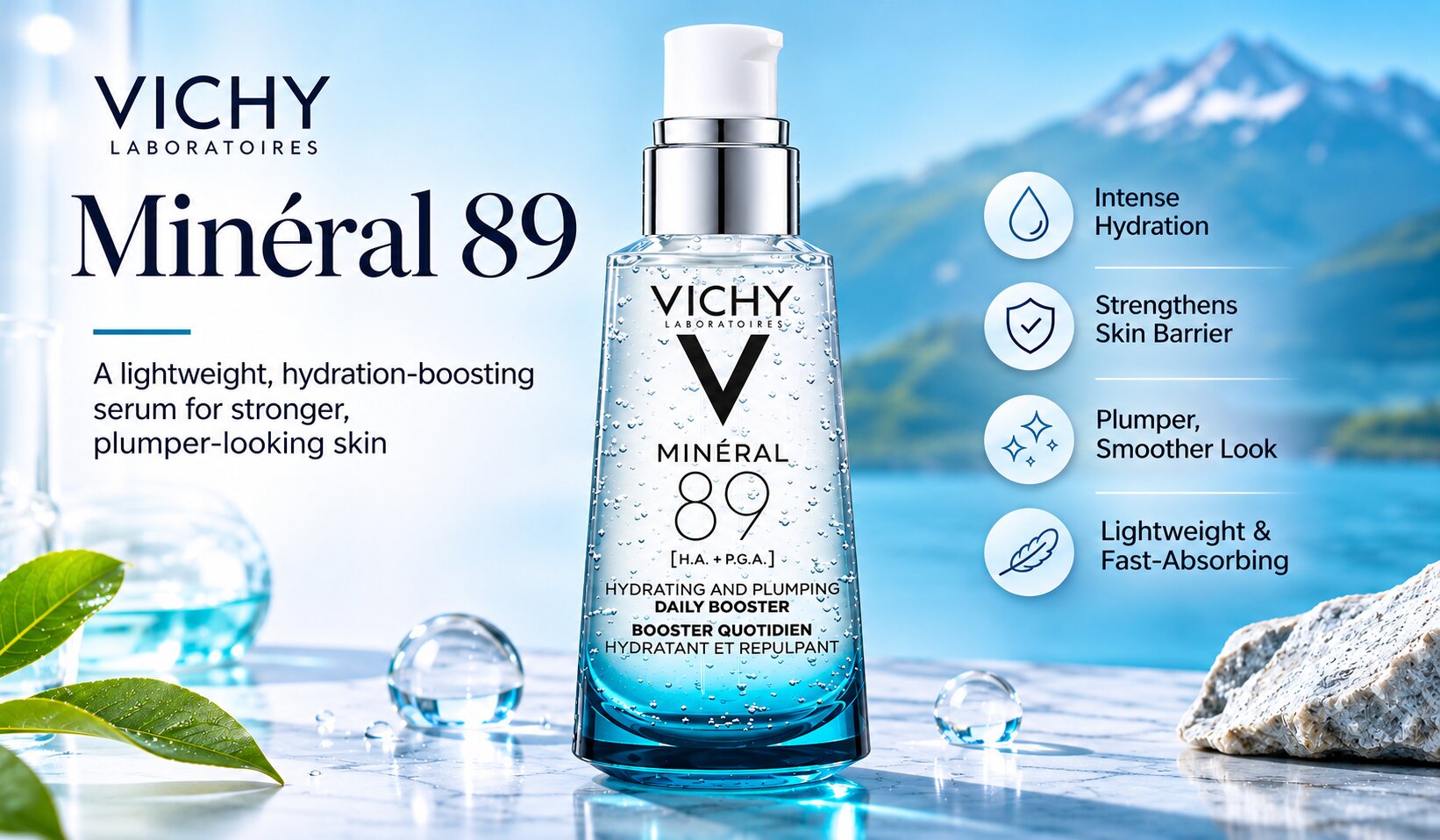
Vichy’s updated Minéral 89 has a clear brief: daily hydration without turning the serum step into a complicated treatment. The current US formula pairs hyaluronic acid with polyglutamic acid and Vichy Volcanic Water. Polyglutamic acid is another humectant, making the pairing relevant for a product built around moisture retention and a plumper-looking finish.
The brand describes the gel as fast-absorbing and non-sticky, and lists the formula as fragrance-free, oil-free and alcohol-free. It also says the product is dermatologist-tested and suitable for sensitive skin. Those are manufacturer claims, so anyone with a history of reactions should still check the ingredient list on the exact bottle.
There’s no dedicated acne, pigment or wrinkle-treatment active here. That’s fine. A serum doesn’t need to do everything. Minéral 89 makes the most sense when you want a straightforward hydration layer under moisturiser and sunscreen.
Why it gets the top spot: A focused, fragrance-free hydration formula with two water-binding ingredients. It’s the most versatile pick in this selection, although very dry skin will still need a moisturiser over it.
Official details: Vichy Minéral 89.
La Roche-Posay Hyalu B5 Pure Hyaluronic Acid Serum
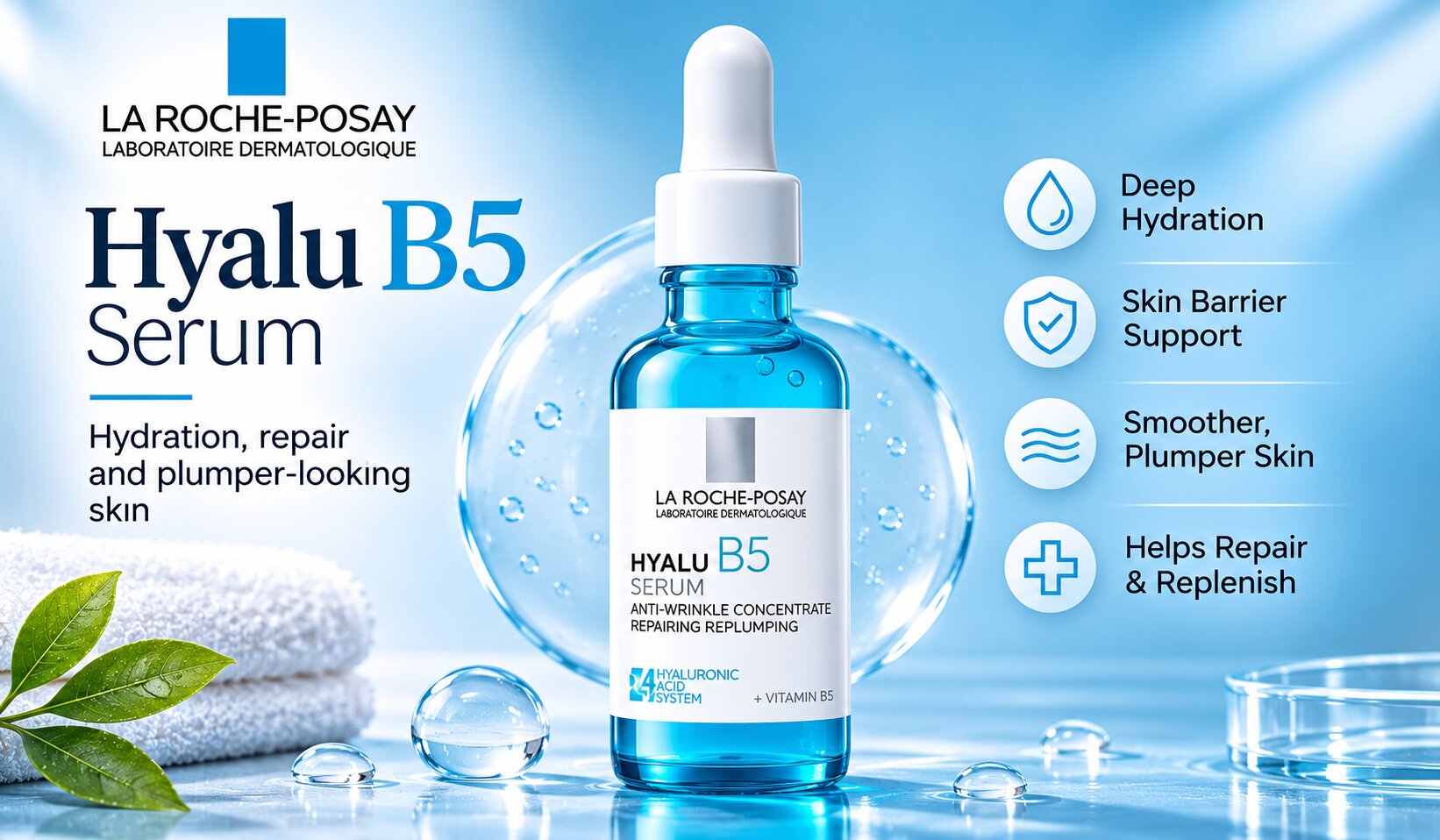
Hyalu B5 is the more layered option for skin that feels tight, rough or short on moisture. The current US listing describes a four-form hyaluronic acid system, with panthenol (vitamin B5), glycerin and madecassoside. HA attracts water; glycerin supports hydration; panthenol helps condition the skin; and madecassoside is used in skincare for its soothing properties.
The brand positions it for fine lines and wrinkles as well as hydration. That claim needs a little context: plumper, better-hydrated skin can make dehydration lines look softer, but a hydrating serum won’t erase established wrinkles or replace sunscreen and a retinoid routine.
One important buying detail: the US formula includes fragrance and denatured alcohol in its ingredient list. If you’re fragrance-sensitive, I’d skip this one and compare CeraVe or Vichy instead. The formula sold in another country may differ, so check the box rather than relying on a review of a different regional version.
Consider this one if: Dry skin that wants HA plus additional conditioning ingredients and tolerates the US formula’s fragrance. It’s a premium choice, not the obvious pick for every sensitive-skin shopper.
Official details and current US sizes: La Roche-Posay Hyalu B5.
The Ordinary Hyaluronic Acid 2% + B5
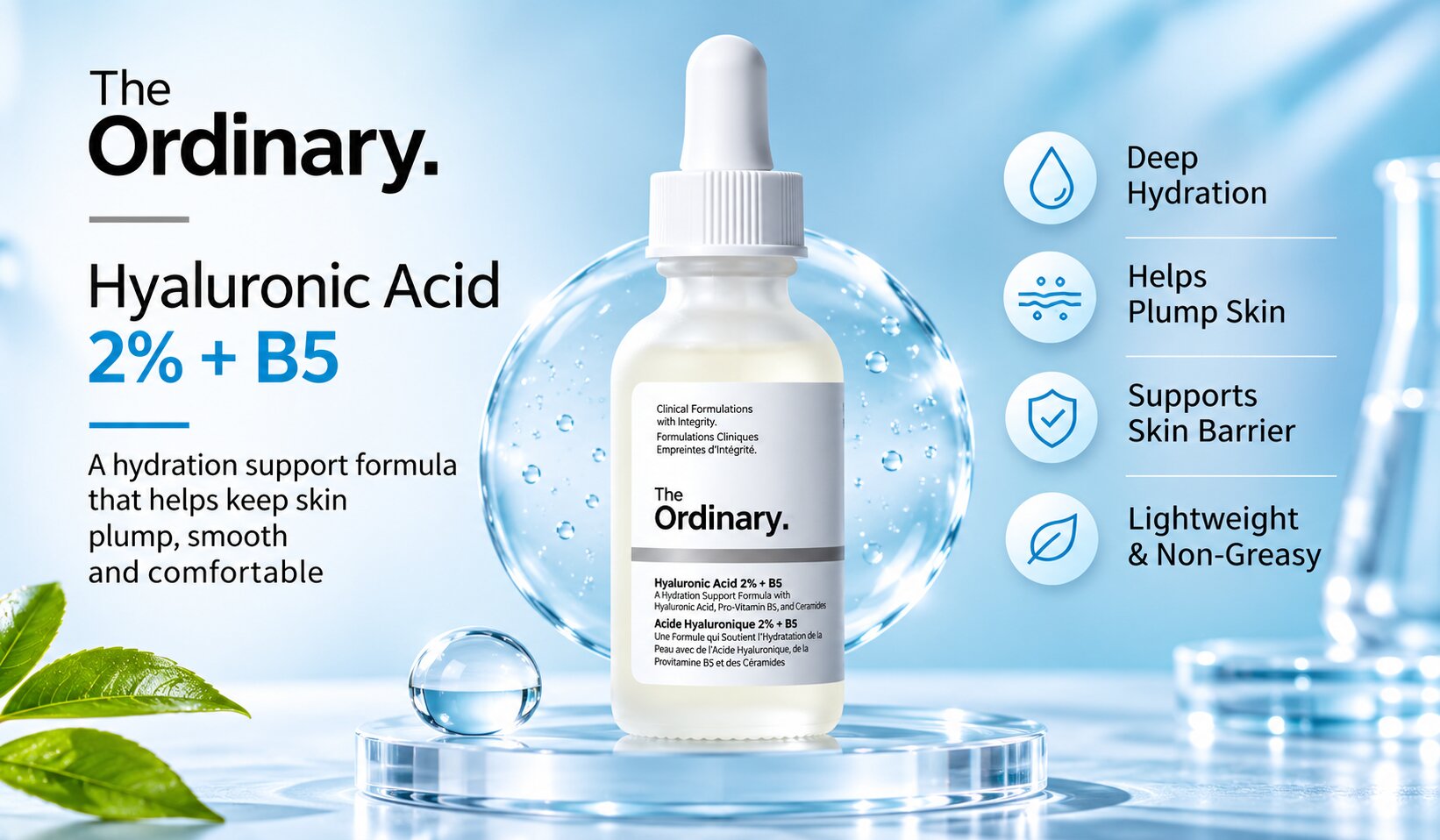
At $8.90, this is an accessible way to add a dedicated hydration step. The original formula lists sodium hyaluronate, sodium hyaluronate crosspolymer, panthenol and glycerin. That gives it a simple job: help skin hold onto moisture and feel more comfortable.
A small label detail is useful to understand. The “2%” refers to the brand’s hyaluronic acid complex, not 2% of one single form of pure HA. Percentage claims are not always directly comparable between brands because they may describe different complexes or ingredient blends.
Some users find HA serums tacky when too much is applied. Start with a small amount on slightly damp skin and follow with moisturiser. If the formula pills, reduce the amount and give each layer time to settle.
Our call: The best drugstore hyaluronic acid serum in this line-up for shoppers who want to keep costs down. It’s also a reasonable first HA serum if you don’t need extra treatment ingredients.
Official ingredients and price: The Ordinary US. Formula may differ by purchase date and region.
CeraVe Hydrating Hyaluronic Acid Serum
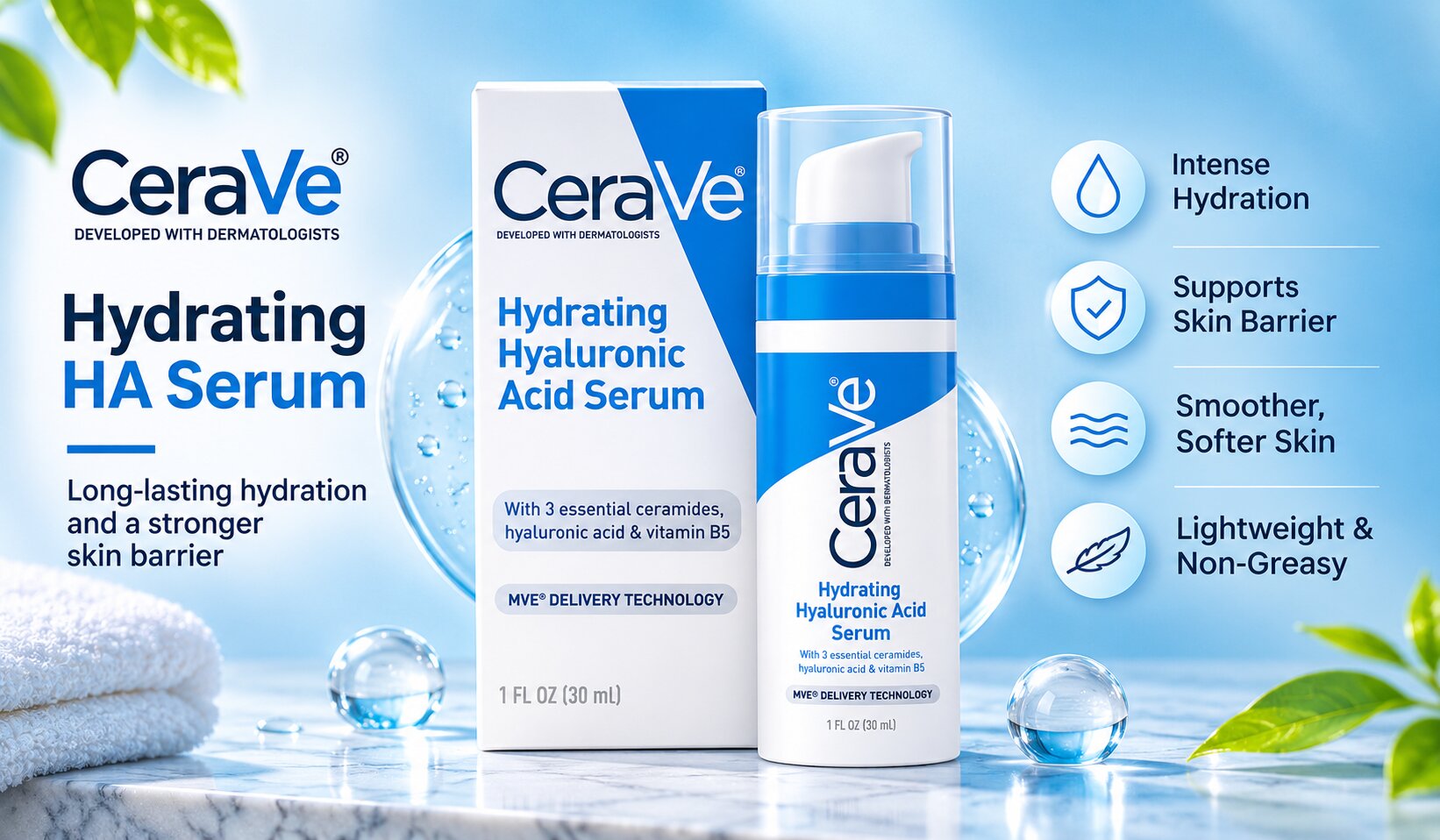
CeraVe takes a barrier-conscious approach. Alongside sodium hyaluronate, the ingredient list includes panthenol and three essential ceramides: NP, AP and EOP. Glycerin and cholesterol are also present. That combination makes the serum relevant when dryness comes with a feeling of tightness or a compromised moisture barrier.
The US product page describes it as free of added fragrance and non-comedogenic. The texture is a gel-cream rather than an ultra-watery essence, which may appeal to someone who wants a little more substance from a serum.
For the best hyaluronic acid serum for dry sensitive skin, CeraVe is the more cautious pick in this group compared with the fragranced US Hyalu B5 formula. “Fragrance-free” doesn’t mean allergy-proof, though. If your skin is highly reactive, introduce it slowly and check the full ingredient list.
Why choose it: HA, panthenol and ceramides in one formula, without added fragrance in the US version. The supporting ingredients are the reason it earns this category.
Official ingredient list and product claims: CeraVe Hydrating Hyaluronic Acid Serum.
Neutrogena Hydro Boost Hydrating Serum
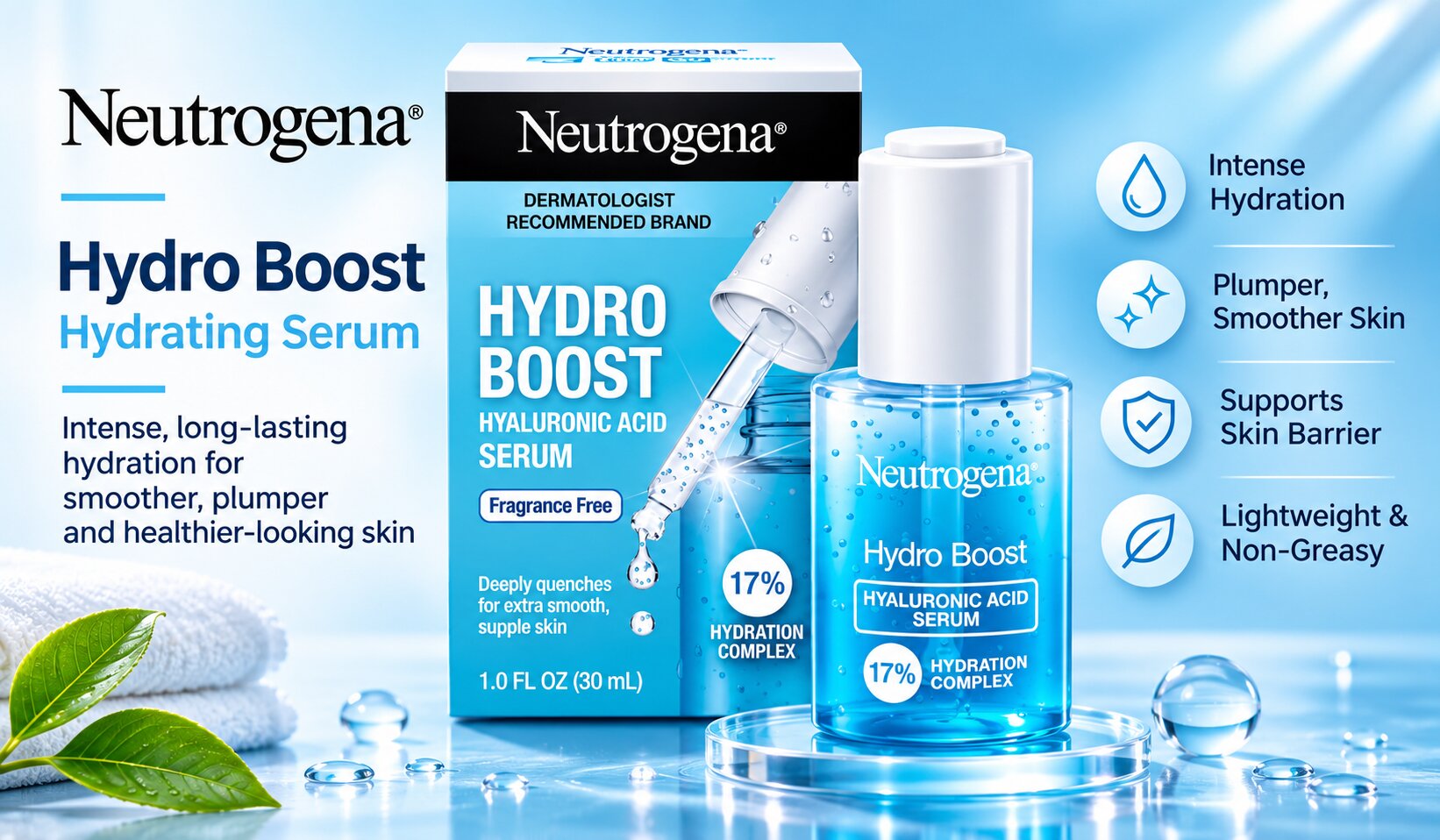
Oily skin still needs water. Neutrogena’s Hydro Boost Hydrating Serum is described by the brand as lightweight, oil-free and non-comedogenic, making it a candidate for people who dislike rich moisturising textures.
There’s a detail shoppers should not miss: the current US ingredient list includes fragrance. That means it isn’t the fragrance-free choice for sensitive skin, despite the lightweight positioning. The published list also includes glycerin, sodium PCA and sodium hyaluronate.
It hydrates; it doesn’t control sebum or clear acne. If you’re looking for the best hyaluronic acid serum for acne prone skin, this can be considered as a hydration step if you tolerate the formula, but it isn’t an acne treatment. The “non-comedogenic” description is the manufacturer’s claim, not a guarantee that no individual will break out.
Skip it if: fragrance is a known trigger for you. Otherwise, its oil-free positioning may suit oily or combination skin that wants a light hydration layer.
Current US ingredients and product details: Neutrogena official page.
Torriden DIVE-IN Low Molecular Hyaluronic Acid Serum
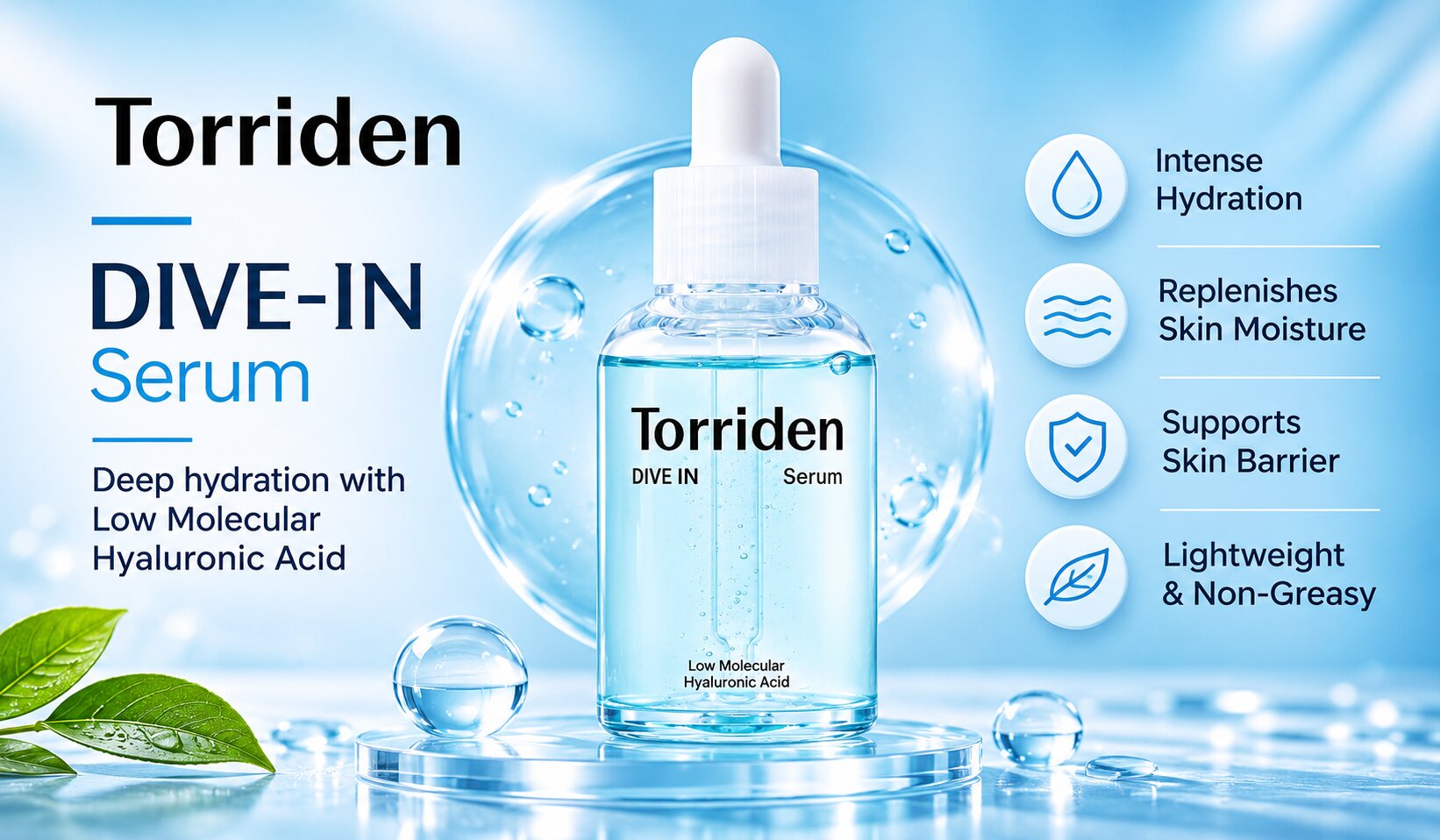
Torriden’s DIVE-IN is built around a five-part hyaluronic acid blend. The official ingredient list names sodium hyaluronate, hydrolyzed hyaluronic acid, sodium acetylated hyaluronate, sodium hyaluronate crosspolymer and hydrolyzed sodium hyaluronate. Panthenol and allantoin add skin-conditioning support.
The formula also includes beta-glucan, ceramide NP and madecassoside. Its watery, layer-friendly positioning makes sense for people who enjoy Korean skincare routines and want hydration without starting with a rich cream.
It’s often associated with a dewy or “glass skin” look. Keep expectations grounded: hydration can make the surface look smoother and more luminous, but glass skin is not something one serum can guarantee. The ingredient list also includes witch hazel leaf extract and other botanical extracts, so check it if you know your skin reacts to those.
The formula in context: A multi-form HA serum with panthenol and allantoin, in a 50 ml bottle. It’s the Korean pick for someone who values a light, layered hydration routine.
Official US product, ingredients and price: Torriden DIVE-IN Serum.
COSRX The Hyaluronic Acid 3 Serum
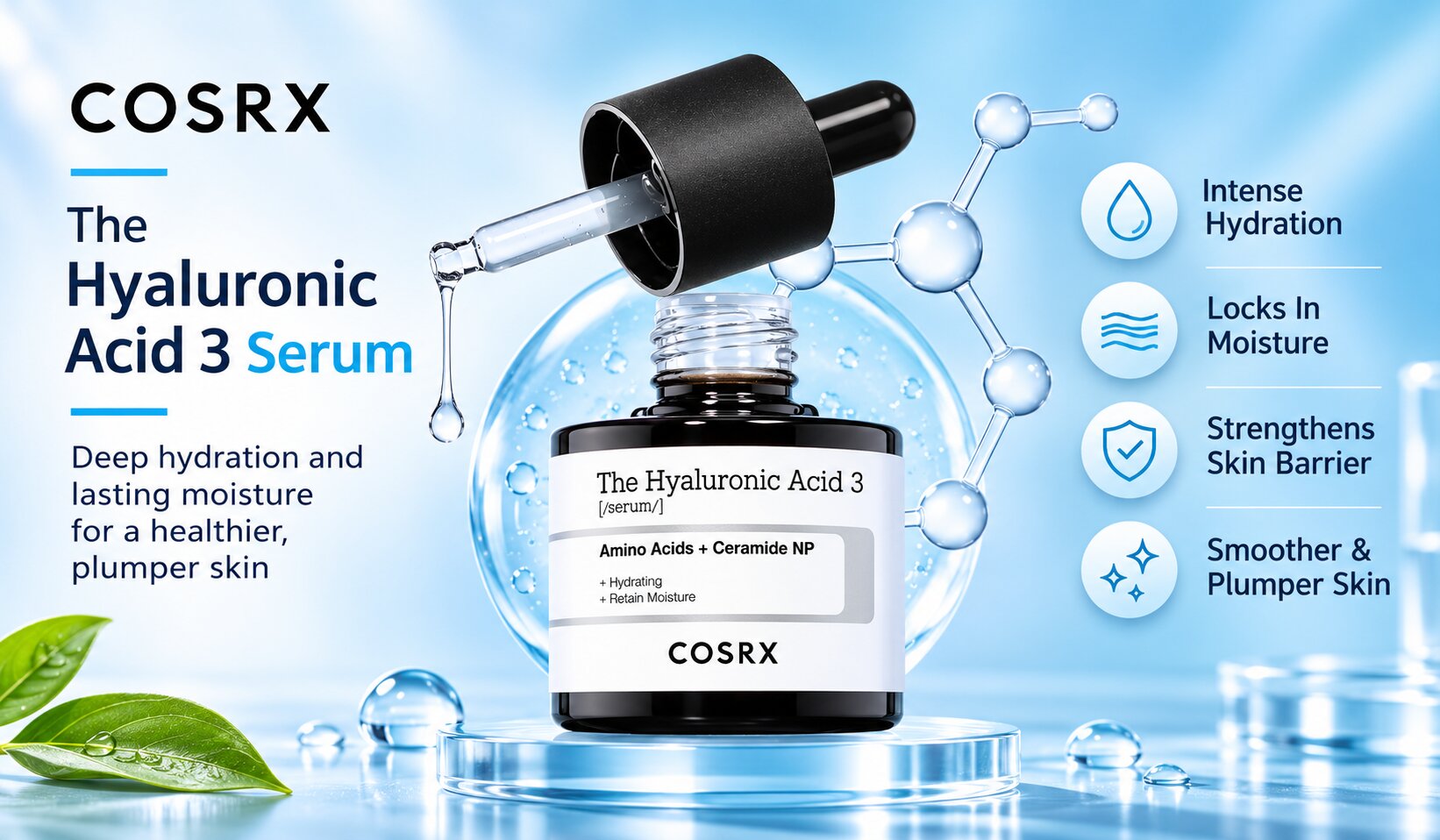
COSRX lists 3% sodium hyaluronate in this formula. The supporting ingredients are what make the rest of the label interesting: glycerin, betaine, sodium PCA, amino acids, ceramide NP and cholesterol. Sodium PCA and amino acids are components associated with the skin’s natural moisturising factors, while ceramide and cholesterol are relevant to barrier care.
The brand recommends it for dryness, dehydration and rough texture, and describes the finish as lightweight and non-greasy. The 3% figure is a manufacturer formulation claim; it doesn’t automatically make this serum more effective than a product with a lower advertised percentage.
The bottle is 20 ml, noticeably smaller than Torriden’s 50 ml size. Compare the cost per millilitre before deciding. Also note that the ingredient list includes alcohol, so very reactive skin should review the full formula rather than relying on the “hydrating” label alone.
Best for: Someone who wants a concentrated HA-centred formula with NMF components and ceramide. The small bottle is the main value drawback.
Official formula and ingredient list: COSRX The Hyaluronic Acid 3 Serum. Check whether the listing is sold as a single item or bundle before ordering.
L’Oréal Paris Revitalift 1.5% Pure Hyaluronic Acid Serum
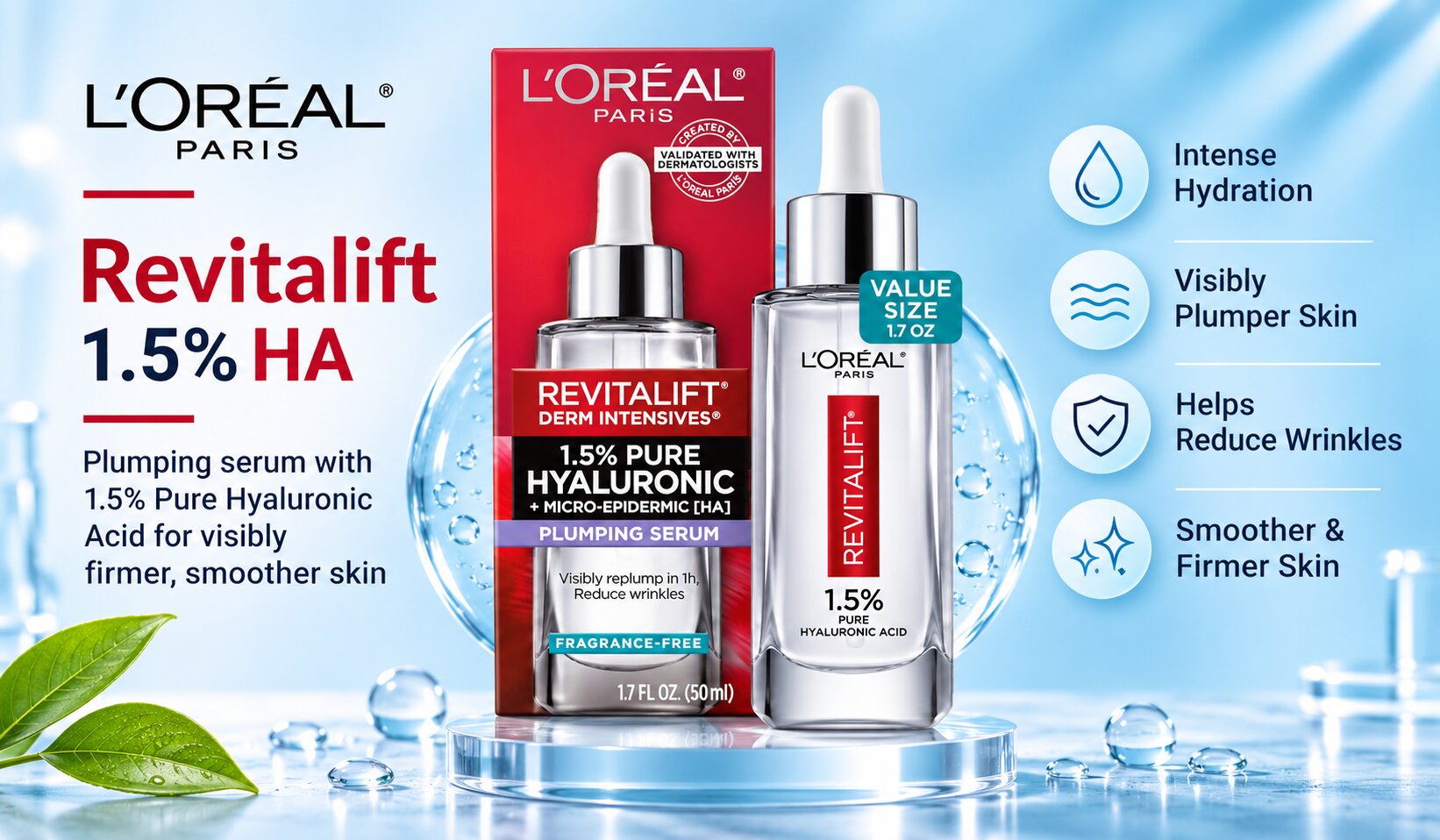
When skin gets drier with age, fine lines can become more noticeable. L’Oréal’s Revitalift serum is aimed at hydration and a plumper-looking finish, using a 1.5% pure hyaluronic acid claim on its US product page.
The brand describes the US formula as fragrance-free and non-comedogenic. Those details may matter if you want a straightforward hydration step that can sit alongside other age-supportive products. The key word here is “alongside”: HA can soften the look of dehydration lines, but it won’t reverse sun damage or replace a retinoid, moisturiser or daily sunscreen.
For the best hyaluronic acid serum for mature skin, this is a reasonable hydration-led choice when dryness is the concern. If deeper wrinkles are your main priority, set realistic expectations and consider a broader routine.
Our view: A useful mature-skin pick for moisture and temporary plumping, rather than a wrinkle-erasing treatment.
Official product claims, size and price: L’Oréal Paris US.
Good Molecules Hyaluronic Acid Serum
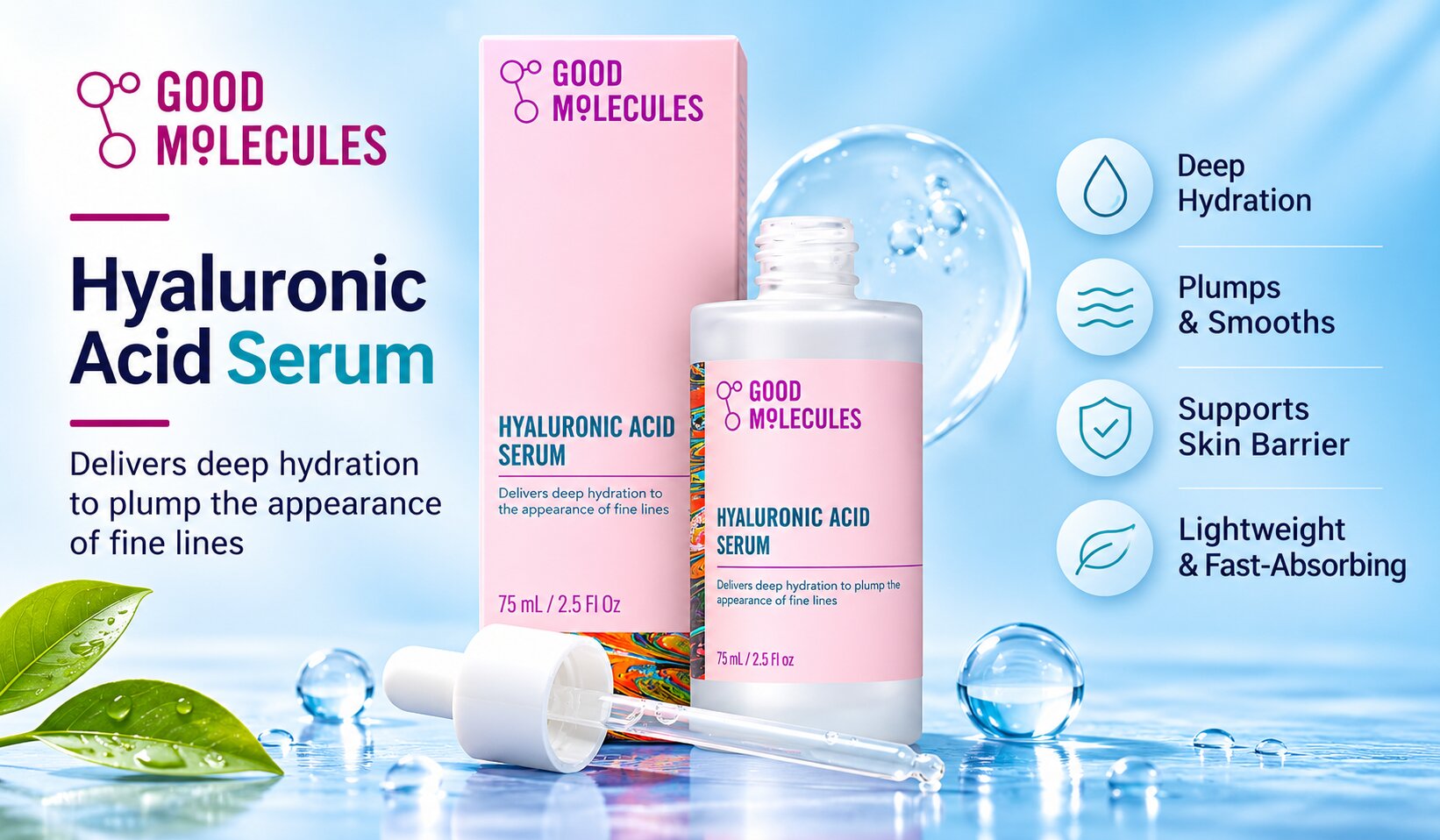
“Pure hyaluronic acid serum” is a phrase that needs a little unpacking. A finished water-based serum still needs water, preservatives and other supporting ingredients. What many shoppers mean is a formula centred on HA, without a long list of extra treatment actives.
Good Molecules is a straightforward example. Its official listing gives 1% sodium hyaluronate and 3% glycerin. The brand describes it as fragrance-free and recommends applying it to damp skin before oils, creams or moisturisers.
That makes it a good fit for someone who already uses separate products for acne, pigmentation or retinoids and simply wants a hydration layer. It isn’t a pore treatment, and the minimalist ingredient profile shouldn’t be mistaken for a cure-all.
Why it earns this slot: A simple HA-and-glycerin formula at a low entry price. For a shopper who wants fewer extras, that’s the point.
Official sizes, ingredient percentages and price: Good Molecules Hyaluronic Acid Serum.
Timeless Hyaluronic Acid + Vitamin C Serum
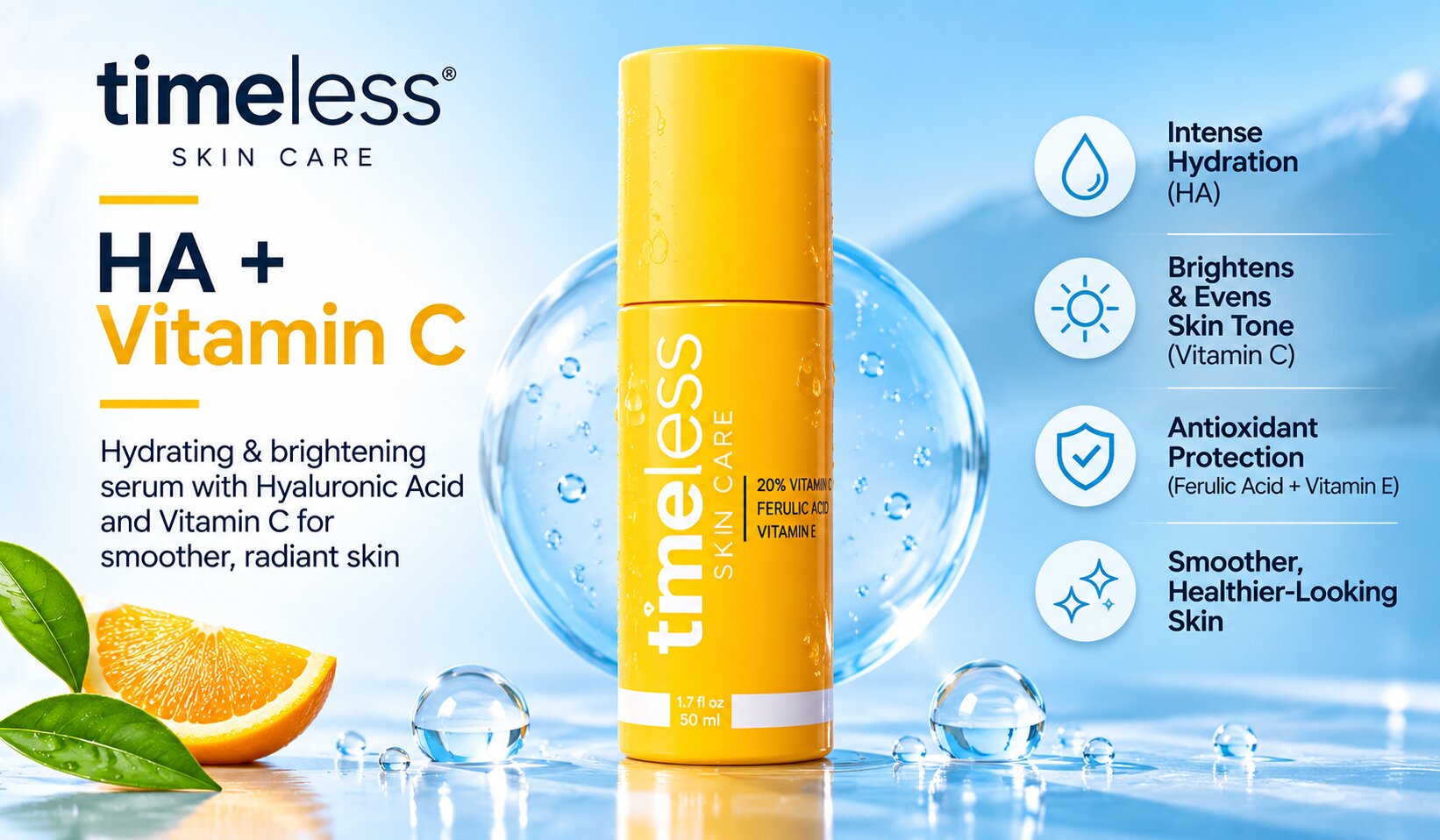
This formula combines three headline ingredients: 5% magnesium ascorbyl phosphate, a vitamin C derivative; 1% hyaluronic acid; and 1% Matrixyl 3000 peptide complex. Glycerin and aloe are also listed.
Magnesium ascorbyl phosphate is not the same form of vitamin C as L-ascorbic acid. It’s useful to understand the difference when comparing brightening serums, because the ingredient form and overall formulation matter more than a percentage in isolation.
HA contributes hydration, while the vitamin C derivative gives the formula its brightening and antioxidant angle. The brand also lists benzyl alcohol in the ingredient list. If you know you react to it, choose another formula rather than hoping this one will be fine.
Consider this one if: Shoppers who specifically want the best hyaluronic acid serum with vitamin C in one bottle. It combines hydration with a vitamin C derivative and peptides, but it doesn’t replace sunscreen.
Official ingredients, directions and price: Timeless Skin Care.
Which Hyaluronic Acid Serum Is Best for Your Skin Type?
Start with the issue you want to solve, then check the complete formula. A product labelled “for all skin types” can still contain an ingredient your skin doesn’t tolerate.
Dry Skin
Look for HA alongside glycerin, panthenol or barrier-supporting ingredients, then seal it with a moisturiser. La Roche-Posay Hyalu B5 is the richer ingredient-led choice in this selection if you tolerate its US formula. CeraVe is the alternative if you prefer no added fragrance and ceramides.
Oily Skin
Choose a lighter texture and don’t skip moisturiser altogether. Neutrogena’s Hydro Boost Hydrating Serum is oil-free and non-comedogenic according to the manufacturer, but its current US formula contains fragrance. Vichy Minéral 89 is a fragrance-free alternative if that ingredient is a concern.
Sensitive Skin
Prioritise a formula without known triggers. CeraVe’s US serum is free of added fragrance and contains three ceramides; Vichy Minéral 89 is another fragrance-free option. Neither can guarantee that every sensitive-skin user will tolerate it.
Dry Sensitive Skin
CeraVe is the more cautious starting point among these ten because it combines HA, panthenol and ceramides without added fragrance in the US version. Check the current packaging and patch-test first, especially if you have eczema or a history of contact reactions.
Acne-Prone Skin
HA can support hydration when acne treatments leave skin feeling tight, but it won’t unclog pores or treat breakouts. Good Molecules is a simple hydration option; Vichy is another fragrance-free formula. Keep using an appropriate acne treatment separately, and don’t assume “non-comedogenic” guarantees a product will never cause a breakout.
Mature Skin and Fine Lines
L’Oréal Revitalift is the hydration-focused pick for mature skin, while La Roche-Posay Hyalu B5 is positioned for fine lines and wrinkles. Both can make dehydration lines look less pronounced by improving surface hydration. Neither should be described as removing established wrinkles.
How to Choose: The Ingredients That Matter
Different Forms of Hyaluronic Acid
Ingredient lists may include hyaluronic acid, sodium hyaluronate, hydrolyzed hyaluronic acid or sodium hyaluronate crosspolymer. These are related forms used in skincare, but they differ in structure and formulation behaviour. A product with several forms isn’t automatically superior; the finished formula and your skin’s response matter more.
Glycerin, Betaine and Sodium PCA
These are humectants or water-binding ingredients that can complement HA. Glycerin is especially common in moisturisers and serums because it helps attract and retain water in the outer skin layers.
Vitamin B5 (Panthenol)
Panthenol helps condition the skin and is often included in formulas intended for dryness or discomfort. The Ordinary, CeraVe, La Roche-Posay and Torriden list panthenol in their respective formulas, although the rest of each ingredient list differs.
Ceramides and Barrier-Supporting Lipids
Ceramides, cholesterol and fatty acids are part of the skin barrier’s lipid structure. They are useful additions when dryness and moisture-barrier support are priorities. CeraVe and COSRX include ceramide ingredients, but their overall formulas are not interchangeable.
Fragrance and Botanical Extracts
Fragrance can be a problem for some people with sensitive skin. Botanical extracts can also trigger individual reactions. If you know a particular ingredient causes trouble, check the full INCI list rather than relying on a product’s headline claims.
Texture, Bottle Size and Cost per Millilitre
Watery formulas suit people who prefer light layers; gel-creams feel more substantial. Bottle size matters too. A $18 serum in a 20 ml bottle costs more per millilitre than a $24 serum in a 50 ml bottle. Compare the actual amount, not just the shelf price.
Regional Formula Differences
Brands sometimes change ingredients, packaging or product names between the US, UK, EU and Asian markets. The review above refers to the stated US formula wherever specified. Before buying in another country, compare the ingredient list on the local product page and on the box you receive.
Special Ingredient Questions: Vitamin C, Niacinamide and Vitamin B5
Best Hyaluronic Acid Serum with Vitamin C
Timeless is the dedicated combination in this list: 5% magnesium ascorbyl phosphate, 1% HA and 1% Matrixyl 3000. It suits shoppers who want hydration and a vitamin C derivative in one step. If you already own a vitamin C product, there’s no need to buy another one just to use HA.
Best Hyaluronic Acid Serum with Niacinamide
HA and niacinamide can work well in the same routine. HA helps hydrate; niacinamide can support the skin barrier and improve the appearance of uneven tone and visible pores. None of the ten products selected here is being presented as a verified dedicated HA-plus-niacinamide formula. You can use a separate niacinamide serum with a basic HA product instead.
Best Hyaluronic Acid Serum with Vitamin B5
Look for panthenol on the ingredient list. The Ordinary, CeraVe, La Roche-Posay and Torriden include it in their published formulas. CeraVe adds three ceramides; La Roche-Posay combines panthenol with multiple HA forms and madecassoside. Your choice should depend on budget, fragrance tolerance and the rest of the formula.
Best Pure Hyaluronic Acid Serum
No finished water-based serum is literally just hyaluronic acid: it needs a vehicle and supporting ingredients to remain usable. If by “pure” you mean HA-focused with few extra treatment actives, Good Molecules is the minimalist choice here. L’Oréal also uses the phrase “1.5% pure hyaluronic acid” in its US product name and marketing.
Best Affordable Hyaluronic Acid Serum Under $20
At the US brand prices checked for this guide, The Ordinary ($8.90), Good Molecules ($6 for 30 ml) and COSRX (around $18, subject to availability) fall under $20. Compare bottle size and shipping before deciding; the cheapest bottle isn’t always the lowest cost per millilitre.
How to Use Hyaluronic Acid Serum Correctly
Application doesn’t need to be complicated. The usual approach is to apply the serum after cleansing and follow with moisturiser. Slightly damp skin is a useful starting point for many HA formulas.
- Cleanse gently. Avoid leaving the skin stripped or tight.
- Keep skin slightly damp. Pat dry, but don’t rub until the face feels completely dry.
- Apply a small amount. Follow the directions on the bottle; more serum doesn’t mean more hydration.
- Use moisturiser. This helps reduce moisture loss and completes the routine.
- Finish with sunscreen in the morning. Choose broad-spectrum SPF 30 or higher.
Gentle cleanser → Hyaluronic acid serum → Moisturiser → Broad-spectrum sunscreen
Evening routineCleanser → Hyaluronic acid serum → Other treatment (if used) → Moisturiser
Most people can use a well-tolerated HA serum once or twice daily, following the product directions. If layering causes pilling, use less product, allow each layer to settle and avoid applying several thick water-based layers at once.
Can You Combine Hyaluronic Acid with Other Actives?
With Retinol
Yes. HA can add hydration to a retinoid routine. Retinol may cause dryness or peeling, especially when first introduced, so use a moisturiser and start the retinoid gradually. HA does not prevent every retinoid reaction.
With Vitamin C
Yes. Vitamin C is used for antioxidant support and uneven-looking tone, while HA adds hydration. They can be layered or used in a combined formula such as Timeless.
With Niacinamide
Yes. This pairing makes sense when you want hydration alongside barrier support and improvements in the appearance of visible pores or uneven tone. Apply each product according to its texture and instructions.
With Salicylic Acid
Yes. Salicylic acid is used to exfoliate inside pores and is common in acne routines. HA can help with hydration alongside it. Introduce exfoliating products gradually, particularly if your skin is sensitive.
With Ceramides
They complement each other. HA attracts water, while ceramides help maintain the skin barrier and limit moisture loss. This combination can be useful for dry or dehydrated skin.
What Does Clinical Research Say About Hyaluronic Acid?
Research supports topical HA as a hydration ingredient, but study results need to be read in context. A trial of one particular formulation doesn’t prove that every serum on a shop shelf will deliver the same result.
A 2024 Randomised Trial in Older Adults with Dry Skin
Muhammad and colleagues published a double-blind, randomised controlled trial in Archives of Dermatological Research in 2024. It involved 36 nursing-home residents in Jakarta, aged 60–80, with dry skin. Each participant applied three different moisturising lotions — low-molecular-weight HA, high-molecular-weight HA and a vehicle control — to separate areas of the leg over four weeks.
The low-molecular-weight HA area showed higher skin-capacitance (hydration) measurements than the high-molecular-weight and vehicle areas. The groups did not show significant differences in transepidermal water loss or symptom scores, and no side effects were reported. This is useful evidence about those tested lotions and older adults with dry skin; it doesn’t establish that every low-molecular-weight serum is better than every other HA formula.
Read the 2024 randomised controlled trial on PubMed.
A 2021 Study of a Topical HA Serum and Facial Photoageing
Draelos and colleagues evaluated a topical HA serum used twice daily by 40 women aged 30–65 with photoaged skin. Assessments ran for six weeks and included hydration, smoothness, plumping and the appearance of fine lines and wrinkles. The paper reported improvements in hydration and several appearance measures.
The limitations matter. The study evaluated one specific serum, involved a relatively small group and was not a comparison of all HA products. Some co-authors were affiliated with Colgate-Palmolive, which should be considered when weighing the research’s commercial context.
Read the 2021 clinical study on PubMed.
What the Evidence Does — and Doesn’t — Tell Us
The evidence supports topical HA as a way to improve skin hydration. It does not show that HA alone clears acne, removes pigmentation, permanently erases wrinkles or restores lost collagen. The formula, the rest of your routine and your individual skin all matter.
Is Hyaluronic Acid Safe for Every Skin Type?
Topical HA is generally well tolerated and is used in products for dry, oily, combination and sensitive skin. Reactions may come from other parts of a formula, including fragrance, preservatives or botanical extracts.
If you have eczema, rosacea, a known contact allergy or a history of reacting to skincare, check the full ingredient list and consider asking a dermatologist before introducing a new product. Patch-test according to the product directions. Stop using it if you develop persistent burning, swelling, itching or a rash.
What About Dermatologist-Recommended Hyaluronic Acid Serums?
There isn’t one serum every dermatologist recommends for every person. A recommendation depends on skin condition, allergies, other treatments and the full ingredient list.
Vichy describes Minéral 89 as dermatologist-tested and dermatologist-recommended on its US product page. CeraVe says its products are developed with dermatologists and lists three essential ceramides in its HA serum. Those are brand statements and formulation details, not proof of a universal medical endorsement.
If you’re searching for the best dermatologist recommended hyaluronic acid serum, look for transparent ingredients, a formula that fits your skin and a product you can tolerate consistently. If you have a diagnosed skin condition, personal advice from your own dermatologist is more useful than a generic bestseller list.
Common Hyaluronic Acid Mistakes to Avoid
- Skipping moisturiser: A serum may not be enough on its own, especially if your skin is dry.
- Applying too much: Excess product can feel sticky or pill without giving you extra benefit.
- Expecting acne treatment: HA hydrates; it doesn’t replace salicylic acid, benzoyl peroxide or prescribed acne care.
- Chasing the biggest percentage: A higher number on the label doesn’t automatically mean a better serum.
- Starting several new products together: Introduce one at a time so you can identify a possible trigger.
- Ignoring regional formulas: Check the ingredient list on the product sold in your market.
Frequently Asked Questions
1. Can I use hyaluronic acid serum every day?
Yes. Most people can use it once or twice daily if the formula suits their skin and the label allows it.
2. Should I apply hyaluronic acid to wet or dry skin?
Slightly damp skin is a useful starting point. Follow with moisturiser.
3. Can hyaluronic acid cause acne?
HA itself isn’t generally considered a common acne trigger. Other ingredients in a finished formula may not suit everyone.
4. Does hyaluronic acid reduce wrinkles?
It can make dehydration-related fine lines look less noticeable. It doesn’t permanently remove established wrinkles.
5. Can I use hyaluronic acid with vitamin C?
Yes. They can be layered or used in a combined formula.
6. Is hyaluronic acid good for men?
Yes. It isn’t gender-specific and can be used after cleansing or shaving.
7. Can I use hyaluronic acid during pregnancy?
Topical HA is generally considered a low-concern skincare ingredient. Review the complete formula and ask your healthcare professional about other active ingredients.
8. Is Korean hyaluronic acid better?
Not automatically. Korean formulas offer varied textures and ingredient combinations, but the complete formula matters more than country of origin.
9. Can I use HA with retinol?
Yes. HA can add hydration alongside retinol. Use moisturiser and introduce retinol gradually.
10. How long does hyaluronic acid take to work?
Skin may feel more hydrated after application. Changes in dryness and texture depend on consistent use and the full routine.
11. Is hyaluronic acid suitable for acne-prone skin?
Often, yes, as a hydration step. Choose a formula you tolerate and keep a separate acne treatment if needed.
12. Can I use hyaluronic acid with niacinamide?
Yes. They serve different purposes and can be used in the same routine.
The Final Word: Choose for Your Skin, Not the Hype
There’s no need to spend the most to get a useful hydration serum. Vichy Minéral 89 is the all-round pick for a straightforward, fragrance-free formula. La Roche-Posay Hyalu B5 brings a more involved blend for dry skin, while The Ordinary and Good Molecules keep the price down. CeraVe is the better match when ceramides and no added fragrance are priorities. Neutrogena may suit oily skin that tolerates fragrance.
For Korean skincare fans, Torriden offers a multi-form HA blend; COSRX adds NMF components and ceramide. L’Oréal focuses on a plumper-looking finish for mature skin, and Timeless combines HA with a vitamin C derivative and peptides.
The best serum is the one that fits your skin and the routine you’ll actually keep using. Apply it as directed, follow with moisturiser and wear sunscreen during the day. Hydration is one part of skincare — and it works best when the rest of the routine makes sense too.
Sources & Further Reading
For readers who want to look beyond product descriptions, these publications and dermatology resources offer background on topical hyaluronic acid, skin hydration and practical moisturising advice. Study findings apply to the specific formulas and participants examined; they should not be treated as proof that every hyaluronic acid serum will produce the same results.
- Muhammad et al. (2024) — Topical hyaluronic acid of different molecular weights in older adults
A double-blind randomized trial involving 36 nursing-home residents aged 60–80 in Jakarta. It compared lotions containing low- and high-molecular-weight HA with a vehicle over four weeks. The low-molecular-weight HA site showed higher skin-capacitance readings, while TEWL and symptom scores did not differ significantly.
- Bravo et al. (2022) — Benefits of topical hyaluronic acid for skin quality and signs of skin aging
An open-access review discussing topical HA formulations and the available clinical evidence. Some authors were affiliated with L’Oréal, which readers may wish to note when weighing the review.
- Draelos et al. (2021) — Efficacy evaluation of a topical hyaluronic acid serum in facial photoaging
A six-week study of a topical HA serum in women aged 30–65. Several authors were affiliated with Colgate-Palmolive; the findings relate to the tested serum and study design, not all HA products.
- American Academy of Dermatology — Dermatologists’ tips for relieving dry skin
Practical guidance on choosing moisturisers, including fragrance-free products and ingredients such as glycerin and hyaluronic acid, plus when persistent dryness should be assessed by a dermatologist.