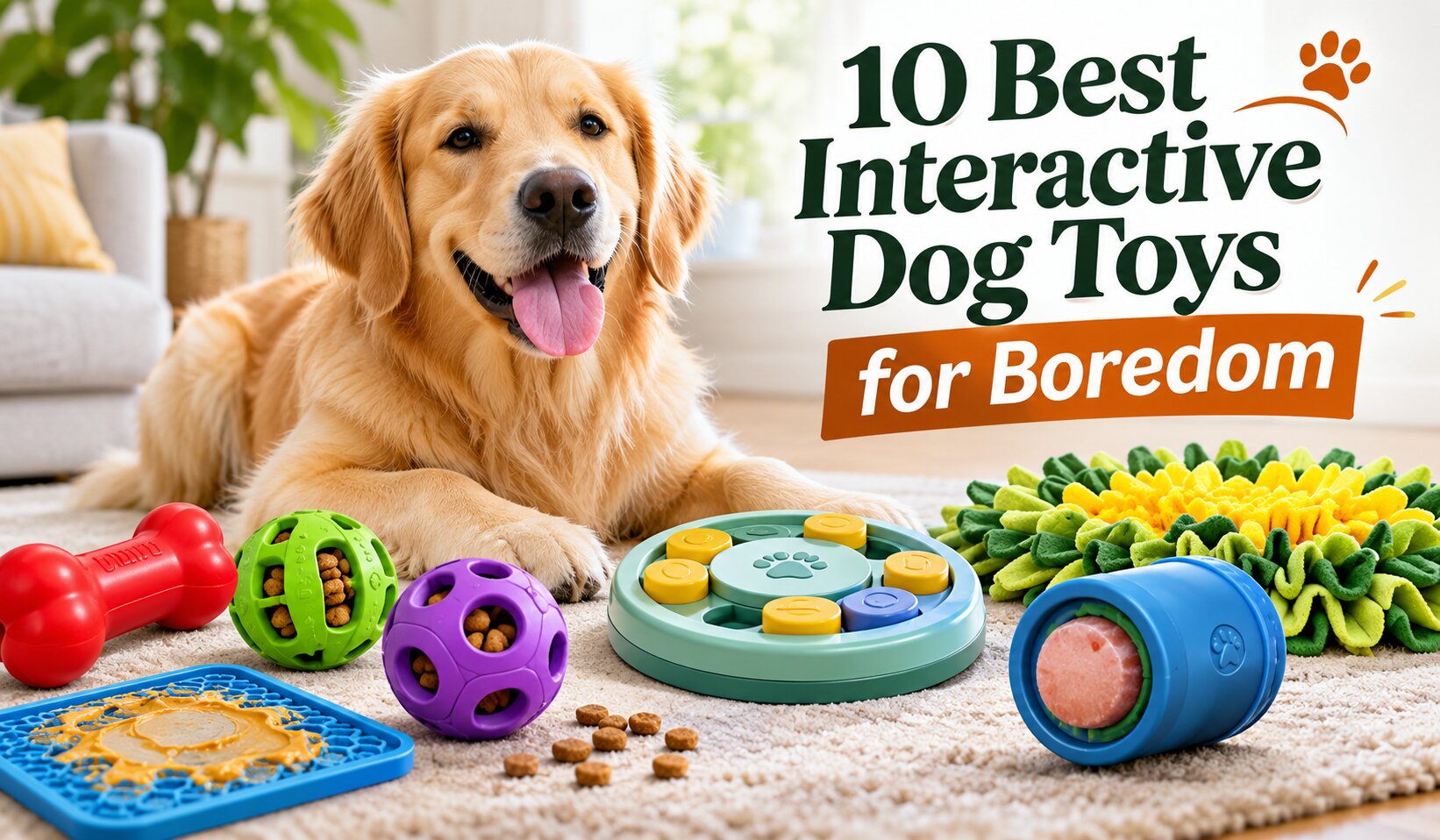

Thoughtful play, curious noses and happier days at home. A considered guide to toys that give dogs something rewarding to do.
A dog can have plenty of toys around the house and still find something else to do. A forgotten shoe, a sofa cushion or a corner of the rug can suddenly become more interesting than the toys sitting in the basket. For many dogs, the missing ingredient is mental stimulation.
The best interactive dog toys give dogs an activity to work through. Some hide treats behind sliding compartments, others release kibble when rolled or encourage dogs to search for food using their noses. These activities can make everyday play and mealtimes more interesting.
Choosing the right toy depends on your dog’s personality and habits. A beginner-friendly puzzle may be perfect for one dog, while a curious problem-solver may need a more challenging activity. Chewing strength, body size and food preferences also matter. If you are still building your understanding of everyday dog care, see our guide to having a dog as a pet.
For this guide, we selected ten popular products with identifiable Amazon US listings. These interactive dog toys for bored dogs cover several play styles, from food puzzles and rolling dispensers to scent-based activities. The collection includes the KONG Goodie Bone, PETSTA Dog Puzzle Toy, DR CATCH Dog Puzzle, WOOF Pupsicle and Outward Hound Snoop, alongside snuffle mats, lick mats and treat-dispensing balls.
Our Best Overall pick is the KONG Goodie Bone. Its stuffable design makes it useful for several types of food-based enrichment. If you specifically want a puzzle board at a more accessible price, the PETSTA Dog Puzzle Toy is our Best Budget Puzzle.
Quick Picks: Best Dog Toys for Boredom
| Product | Category | Difficulty | Chewer suitability | Cleaning | Price |
|---|---|---|---|---|---|
| KONG Goodie Bone | Best Overall | Easy–Medium | Depends on size and chewing style | Easy | $$ |
| PETSTA Dog Puzzle Toy | Best Budget Puzzle | Medium | Gentle chewers | Easy | $$ |
| DR CATCH Dog Puzzle | Best Beginner Puzzle | Easy–Medium | Gentle chewers | Easy | $ |
| WOOF Pupsicle | Best Frozen Treat Enrichment | Easy–Medium | Supervised use | Easy | $$ |
| AWOOF Pet Snuffle Mat | Best Snuffle Mat | Easy | Non-destructive dogs | Fabric care | $$ |
| LUKITO Lick Mat | Best Lick Mat | Easy | Non-destructive dogs | Easy | $ |
| Outward Hound Snoop | Best Treat Dispenser | Medium | Supervised use | Easy | $$ |
| HIPPIH Dog Puzzle Ball 2-Pack | Best Rolling Treat Balls | Easy–Medium | Supervised use | Easy | $ |
| BSISUERM Treat Dispensing Ball | Best Adjustable Treat Ball | Easy–Medium | Supervised use | Easy | $ |
| FOXMM Interactive Puzzle Toy | Best Alternative Puzzle Board | Medium | Gentle chewers | Easy | $$ |
Price categories are indicative rather than fixed prices. Amazon prices, offers, sellers and product sizes can change.
Only buying one? Choose the KONG Goodie Bone for versatile food-based enrichment. Choose PETSTA if your dog prefers working through puzzle compartments.
The 10 Best Interactive Dog Toys for Boredom
1. KONG Goodie Bone: Best Overall
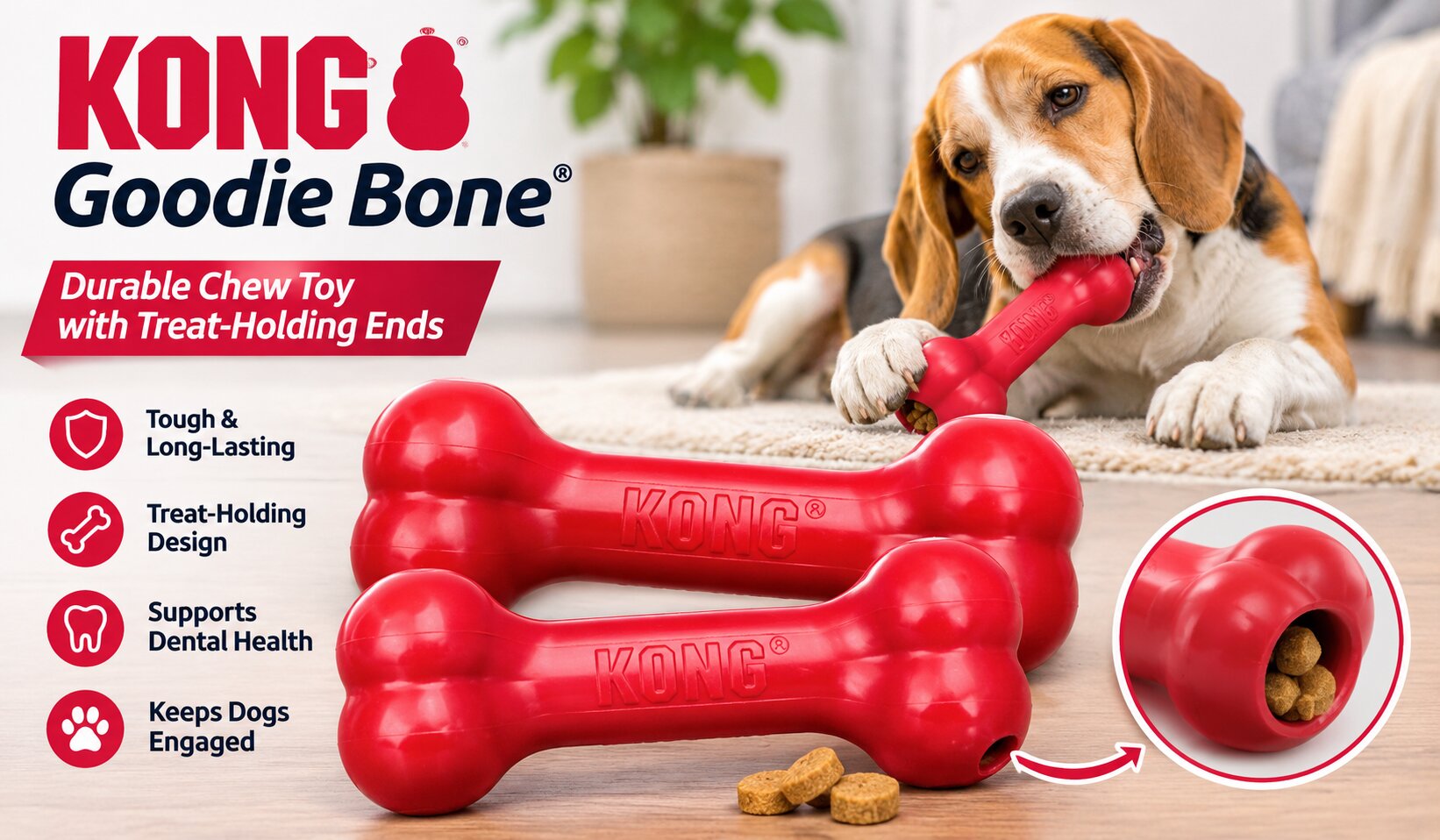
Quick facts: Stuffable rubber chew bone | Easy–Medium | Multiple sizes | Natural rubber
The KONG Goodie Bone is our Best Overall choice because its bone-shaped design has two treat-holding Goodie Grippers. It gives food-motivated dogs a way to work at kibble or suitable treats while chewing, with a different shape from a conventional hollow food toy.
Why we picked it
Its two Goodie Gripper openings hold kibble or suitable treats. Dogs work at the openings to reach the food, while the bone shape gives them a different way to hold and chew the toy.
It is better understood as a stuffable chew toy than a sliding puzzle board. The challenge comes from working food out of the two openings, rather than moving compartments.
Amazon marketplace tracking identified strong demand for the KONG Goodie Bone listing in August 2026, with an estimated 5,000 monthly sales and a customer rating around 4.6. These are third-party listing estimates and snapshots, not guaranteed current figures.
How it works
Place suitable kibble or treats in the two Goodie Gripper openings, following the manufacturer’s guidance. Begin with food that is easy to remove before making the challenge harder.
Pros
- Versatile design for food-based enrichment and fetch.
- Available in different sizes.
- Works with several types of suitable food fillings.
Cons
- Wet fillings can create a mess.
- The standard Classic version is not suitable for every aggressive chewer.
- The correct size and supervision are important.
Pro tip: Combine soaked kibble with a little dog-safe wet food and freeze it. Start with an easy filling before making the activity more challenging.
Skip it if: Your dog repeatedly tears rubber toys apart or swallows pieces.
2. PETSTA Dog Puzzle Toy: Best Budget Puzzle
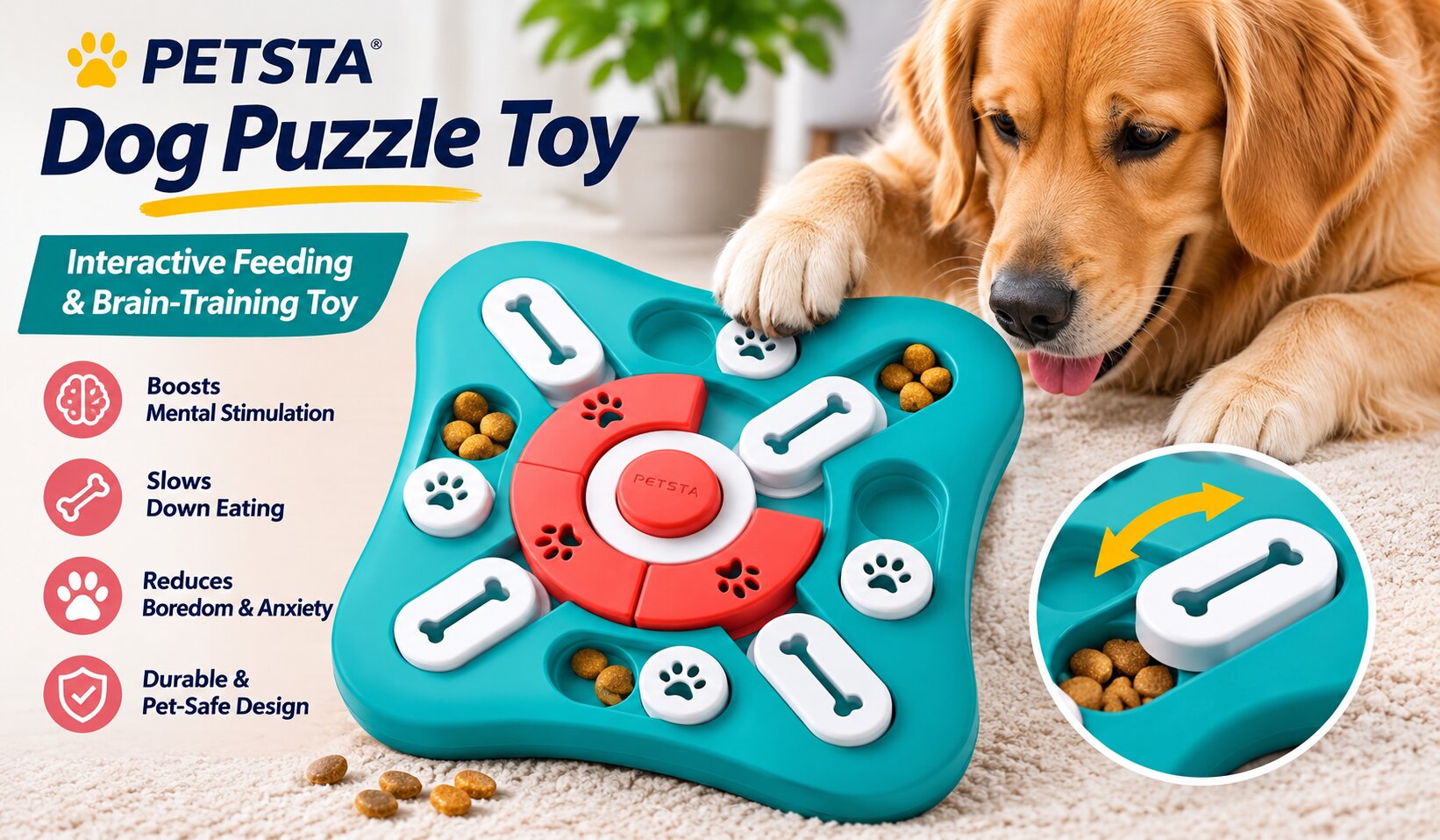
Quick facts: Multi-compartment treat puzzle | Medium difficulty | Board-style design | Plastic
The PETSTA Dog Puzzle Toy is a practical choice for owners who want a dedicated food puzzle without moving into more expensive puzzle systems.
Why we picked it
The toy uses different compartments to hide small food rewards. Dogs need to investigate the board and work out how to access the treats.
It is particularly relevant for owners searching for the best interactive dog toys for smart dogs, provided the dog is still comfortable with this level of challenge.
ASINsight’s August 2026 marketplace estimate recorded approximately 10,000 monthly sales for the researched listing, with a customer rating around 4.4. The estimate is not an official Amazon sales figure.
How it works
Owners hide small pieces of kibble or treats in the available sections. The dog investigates the board and works through the compartments.
It can be an introduction to dog puzzle toys for food-motivated beginners, as well as a simple indoor activity for dogs that already understand basic puzzles.
Pros
- Several food-hiding sections provide variety.
- Dedicated puzzle-board design.
- Strong marketplace demand in the researched period.
Cons
- Plastic components are not suitable for aggressive chewing.
- Some dogs may flip or bite the board instead of solving it.
- Supervision is necessary.
Pro tip: Start by leaving a few treats partly visible so your dog understands the activity.
Skip it if: Your dog regularly destroys plastic toys or swallows small components.
3. DR CATCH Dog Puzzle: Best Beginner Puzzle
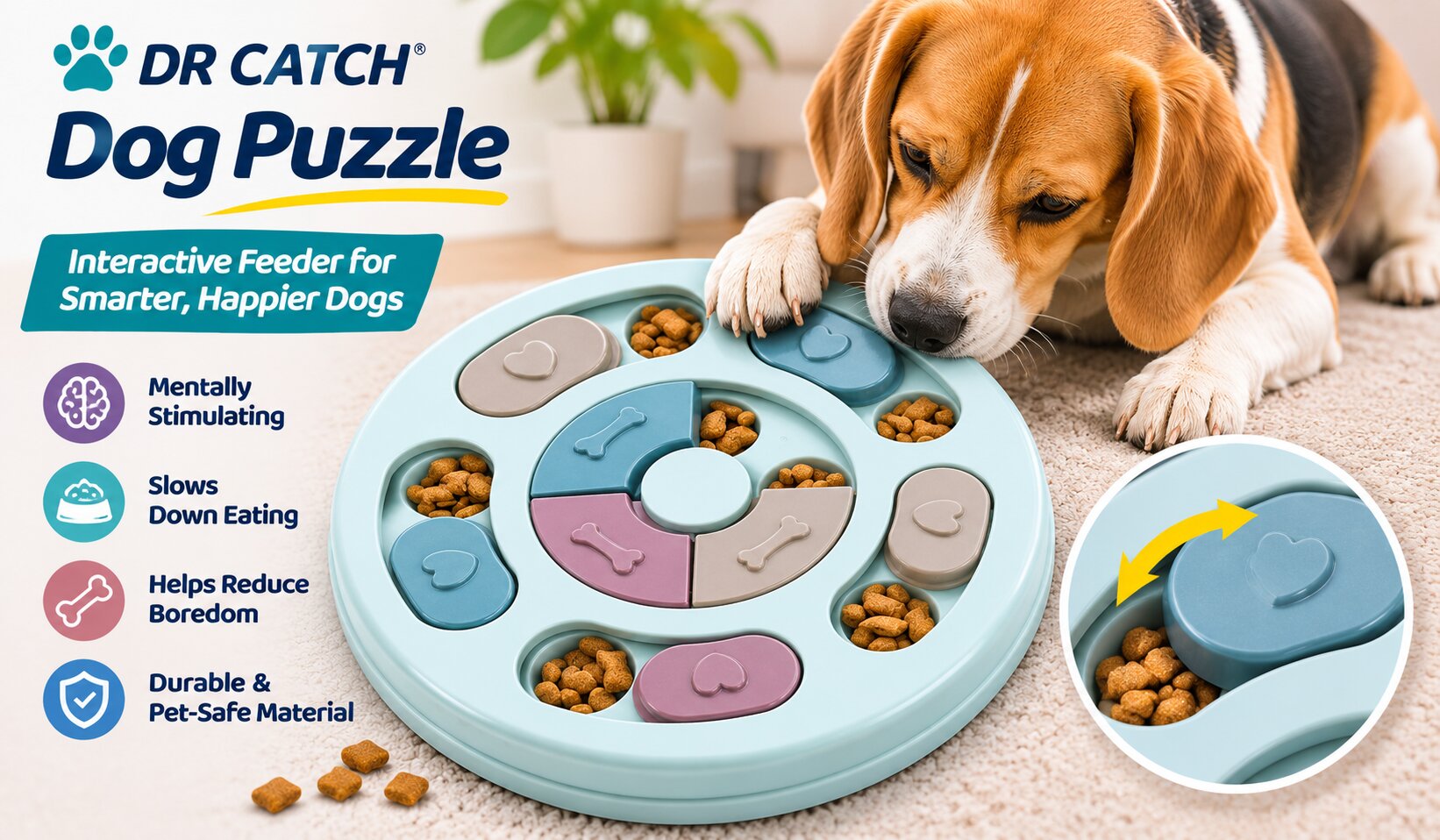
Quick facts: Food puzzle board | Easy–Medium | Compact board design | Plastic
Not every dog needs an advanced puzzle. The DR CATCH Dog Puzzle is a more accessible option for owners who want to introduce food-based problem-solving.
Why we picked it
This puzzle is designed around hidden food compartments that dogs need to uncover. It offers an alternative to simply placing kibble in a regular bowl.
Third-party marketplace tracking recorded approximately 9,000 estimated monthly sales for the researched listing in August 2026, with a customer rating around 4.3. These figures are estimates and can change.
How it works
Place a few treats in the available hiding sections and let your dog investigate. The activity can become more challenging as your dog learns how the compartments work.
For a first-time puzzle user, the important thing is to make the initial activity easy enough to understand.
Pros
- Accessible entry point into puzzle feeding.
- Encourages searching and food-based problem-solving.
- Compact board-style design.
Cons
- Not designed for destructive chewers.
- Dogs familiar with advanced puzzles may find it simple.
- Requires supervision while in use.
Pro tip: Use part of your dog’s regular kibble rather than adding extra treats.
Skip it if: Your dog prefers chasing moving toys or needs a more physically active activity.
4. WOOF Pupsicle: Best Frozen Treat Enrichment
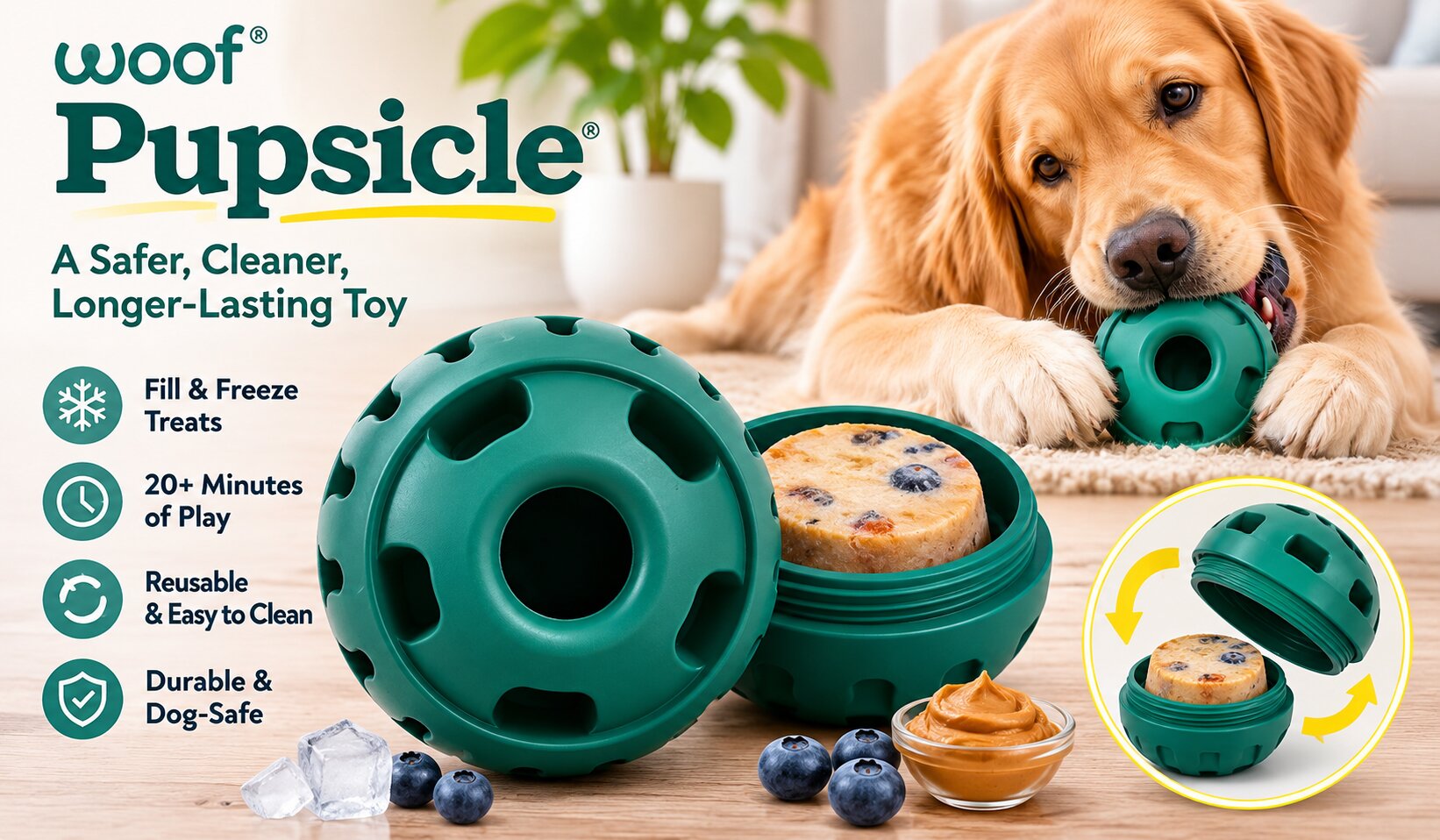
Quick facts: Refillable treat ball | Easy–Medium | Size-specific options | Rubber
The WOOF Pupsicle is designed for dogs that enjoy licking and working through food-based rewards.
Why we picked it
Its refillable design makes it different from a conventional treat ball. Owners can use compatible refill pops or prepare suitable fillings at home, following the manufacturer’s guidance.
A third-party marketplace report recorded approximately 7,000 estimated monthly sales for the researched listing in August 2026, with a customer rating around 4.2.
How it works
Add an appropriate filling or compatible treat pop. The dog then licks and works through the food inside.
It offers another option for owners looking for mental stimulation dog toys that use food rewards rather than sliding puzzle compartments.
Pros
- Refillable design supports repeated use.
- Offers an alternative to conventional puzzle boards.
- Suitable for frozen food enrichment when prepared correctly.
Cons
- Compatible refills can increase the ongoing cost.
- Determined chewers may damage rubber.
- The correct size matters.
Pro tip: Choose the correct size for your dog’s weight and follow the manufacturer’s filling instructions.
Skip it if: Your dog bites through rubber products instead of licking the food.
5. AWOOF Pet Snuffle Mat: Best Snuffle Mat
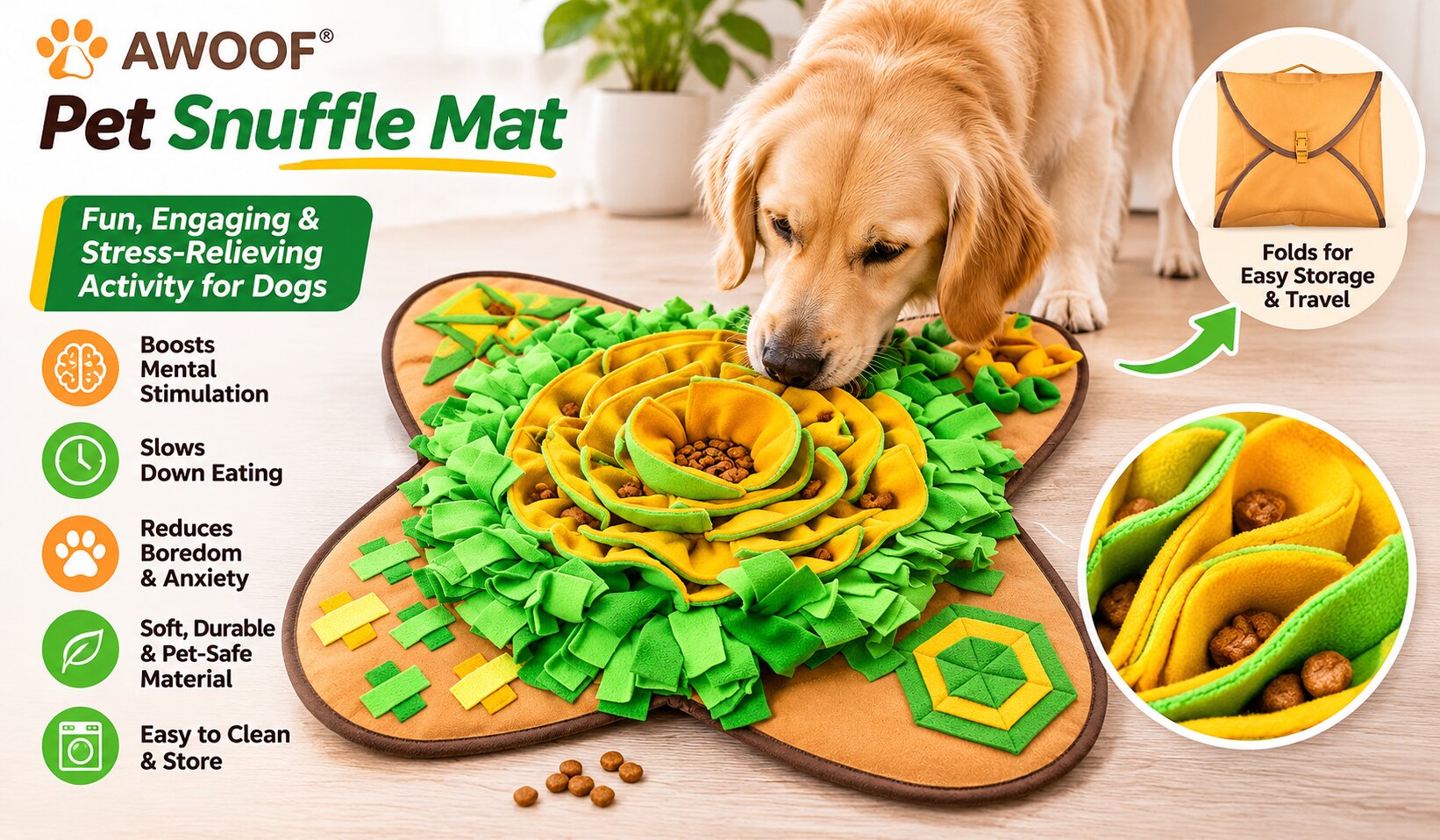
Quick facts: Scent-based foraging mat | Easy | Fabric construction | Fabric cleaning required
Some dogs prefer using their noses rather than manipulating puzzle pieces. The AWOOF Pet Snuffle Mat is designed around that natural behaviour.
Why we picked it
The mat contains fabric folds and sections where owners can hide small portions of food. Dogs search through the material to find the rewards.
This makes it a useful choice for dogs that enjoy sniffing and foraging. It can also add variety to ordinary feeding routines.
The researched Amazon listing had approximately 4,000 estimated monthly sales in August 2026, with a customer rating around 4.2, according to third-party marketplace tracking.
How it works
Scatter a small amount of kibble across the fabric sections. Let your dog sniff and search for the food.
It can make ordinary mealtimes more interesting for dogs that eat quickly, although a snuffle mat is not a substitute for a suitable slow-feeding plan when one is needed.
Pros
- Encourages sniffing and foraging.
- Provides a quiet indoor activity.
- Offers a different experience from plastic puzzle boards.
Cons
- Fabric can collect food crumbs and moisture.
- Not suitable for dogs that pull apart and swallow fabric.
- Requires regular cleaning.
Pro tip: Divide a small portion of breakfast across several sections of the mat.
Skip it if: Your dog regularly chews blankets, carpets or fabric toys.
6. LUKITO Lick Mat: Best Lick Mat
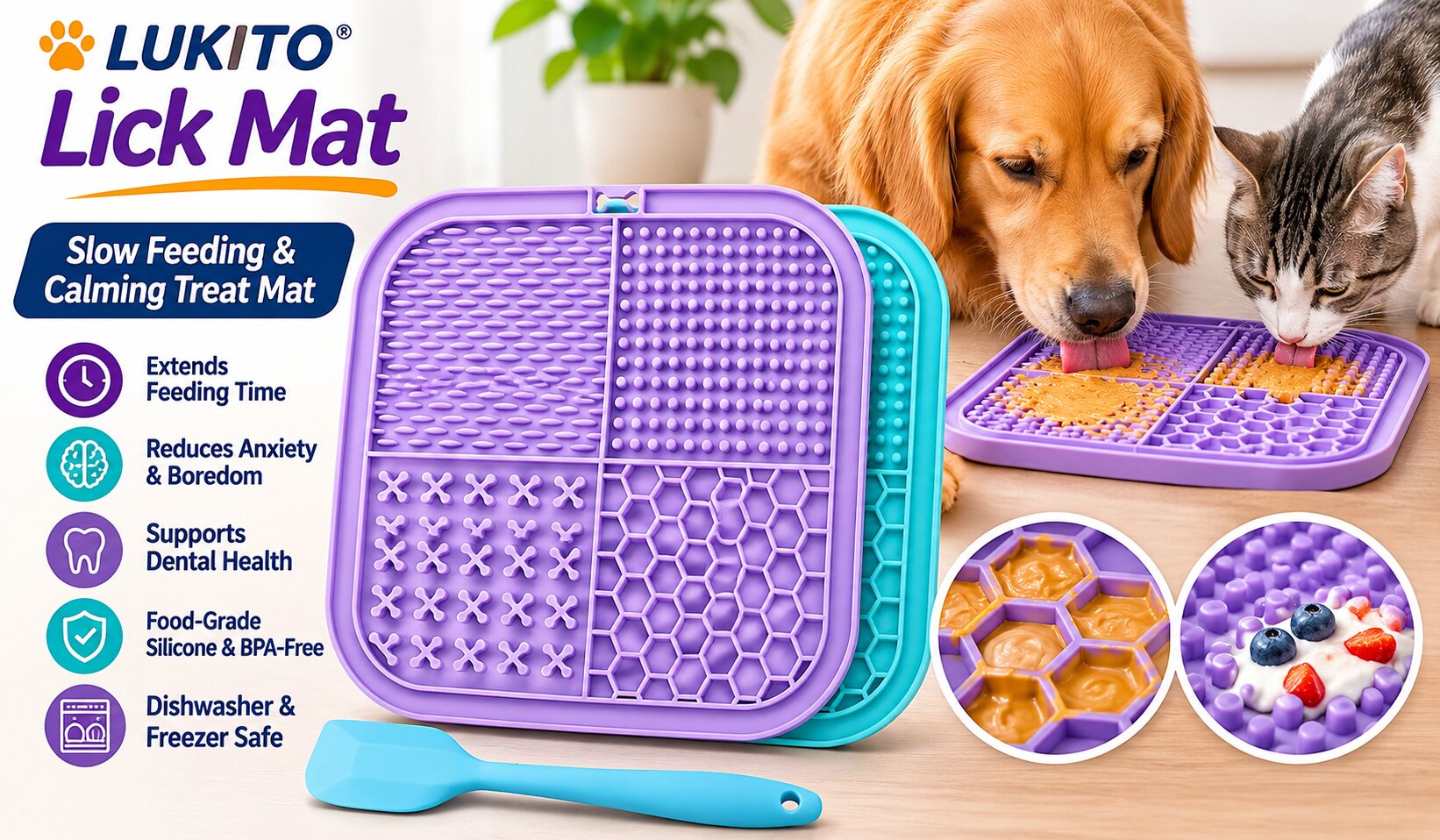
Quick facts: Textured licking mat | Easy | Flat silicone-style design | Food-contact material
A lick mat offers a quieter alternative to rolling dispensers and complicated puzzle toys.
Why we picked it
The LUKITO Lick Mat is designed with textured sections that hold soft food. Its suction-cup design can help attach it to suitable smooth surfaces, depending on the model and surface condition.
It suits dogs that enjoy licking and owners who want a simple activity to prepare. It is also an option for people comparing dog enrichment toys for indoor routines.
Third-party marketplace tracking recorded approximately 6,000 estimated monthly sales for the researched listing in August 2026, with a customer rating around 4.4.
How it works
Spread a thin layer of suitable wet dog food across the textured surface. Your dog works through the food by licking the different sections.
It may be useful during supervised grooming preparation or short periods of indoor activity. It should not be used to distract a dog from a procedure or situation that is causing significant fear.
Pros
- Simple to prepare and use.
- Offers a relatively quiet enrichment activity.
- Easy to store.
Cons
- Dogs that chew the mat can damage it.
- Provides less problem-solving than a sliding puzzle.
- Suction performance depends on the surface.
Pro tip: Refrigerate the prepared mat before offering it to your dog.
Skip it if: Your dog bites or swallows silicone and rubber accessories.
7. Outward Hound Snoop: Best Treat Dispenser
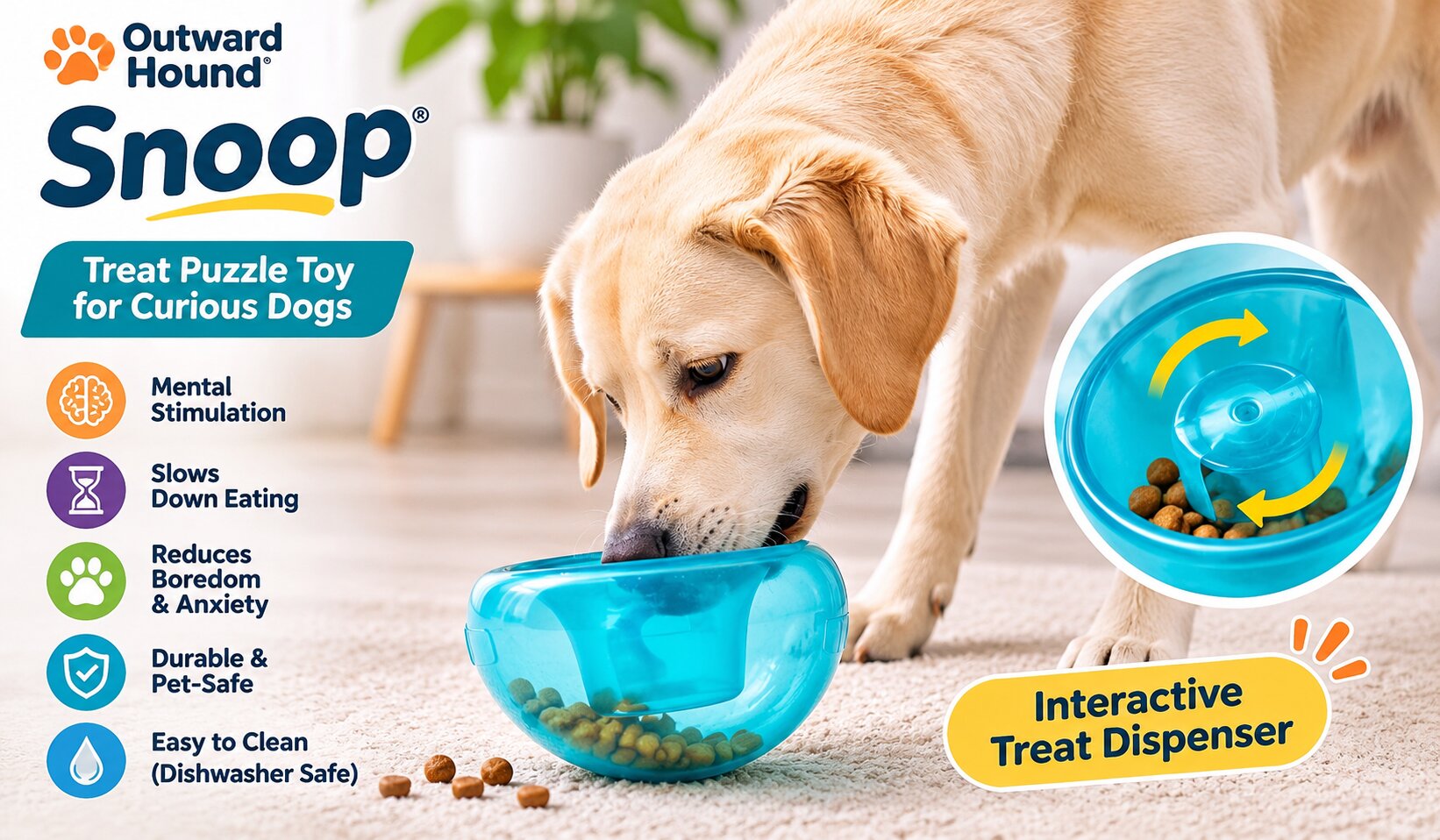
Quick facts: Flexible treat dispenser | Medium | Different size options | Flexible material
The Outward Hound Snoop is designed for dogs that enjoy moving a toy to release food.
Why we picked it
Its flexible opening allows owners to place small treats or kibble inside. Dogs then roll, nudge and manipulate the toy to reach the food.
This makes it a useful alternative to a stationary puzzle board. It is also a good option for owners comparing treat dispensing dog toys.
The researched Amazon listing recorded approximately 2,000 estimated monthly sales in August 2026, with a customer rating around 4.4 in the third-party marketplace data.
How it works
Add dry kibble or suitably sized treats through the opening. Your dog needs to manipulate the toy to release the food.
Pros
- Combines movement with food-based enrichment.
- Offers an alternative to traditional puzzle boards.
- Flexible design provides a different type of interaction.
Cons
- Some dogs may need time to understand the dispensing action.
- Flexible material still needs regular inspection for damage.
- May not suit dogs that chew rather than roll toys.
Pro tip: Start with easy-to-release food if your dog is new to treat dispensers.
Skip it if: Your dog attempts to bite through flexible toys or swallows damaged material.
8. HIPPIH Dog Puzzle Ball 2-Pack: Best Rolling Treat Balls
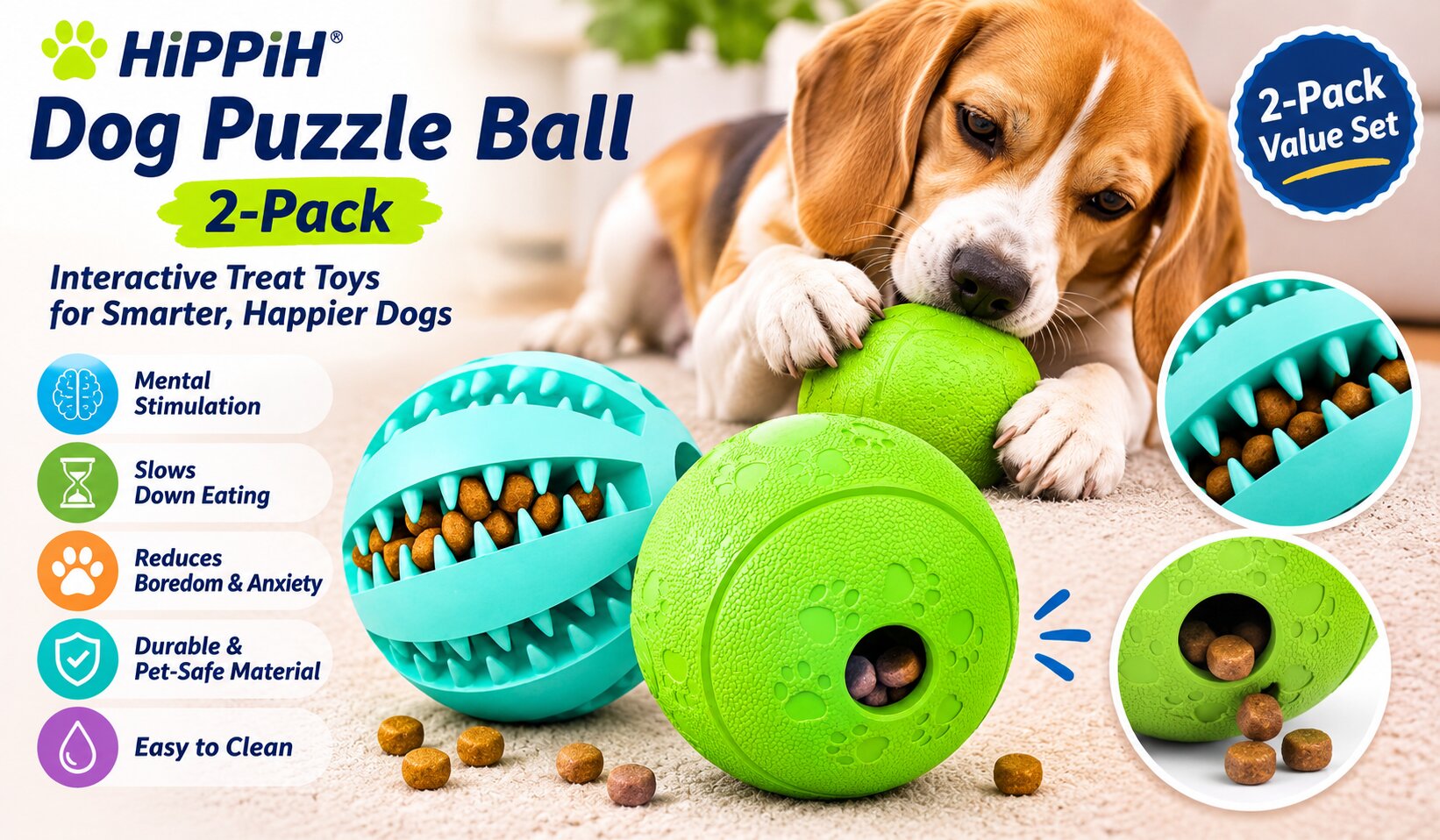
Quick facts: Rolling treat balls | Easy–Medium | Two ball sizes | Plastic
A pair of treat-dispensing balls can add movement to ordinary food rewards without requiring a large puzzle board.
Why we picked it
The HIPPIH two-pack is designed around rolling toys that release food as dogs move them. Different ball sizes can provide options for different play preferences, subject to the dog’s size and the manufacturer’s guidance.
A 2026 marketplace report identified the researched listing as a growing interactive toy, with approximately 3,000 estimated monthly sales in August and a customer rating around 4.3.
How it works
Put suitable treats inside and allow your dog to roll the balls to release the food. The activity encourages movement while giving the dog a reason to keep investigating.
Pros
- Two toys provide some variety.
- Portable design is convenient for indoor play.
- Combines food rewards with movement.
Cons
- Not suitable for powerful chewers.
- Small versions may be unsuitable for large dogs.
- Ball dimensions should be checked before purchase.
Pro tip: Use dry kibble that fits easily through the dispensing openings.
Skip it if: Your dog tends to swallow small toys or cannot safely handle the ball dimensions.
9. BSISUERM Adjustable Treat Dispensing Ball: Best Adjustable Treat Ball
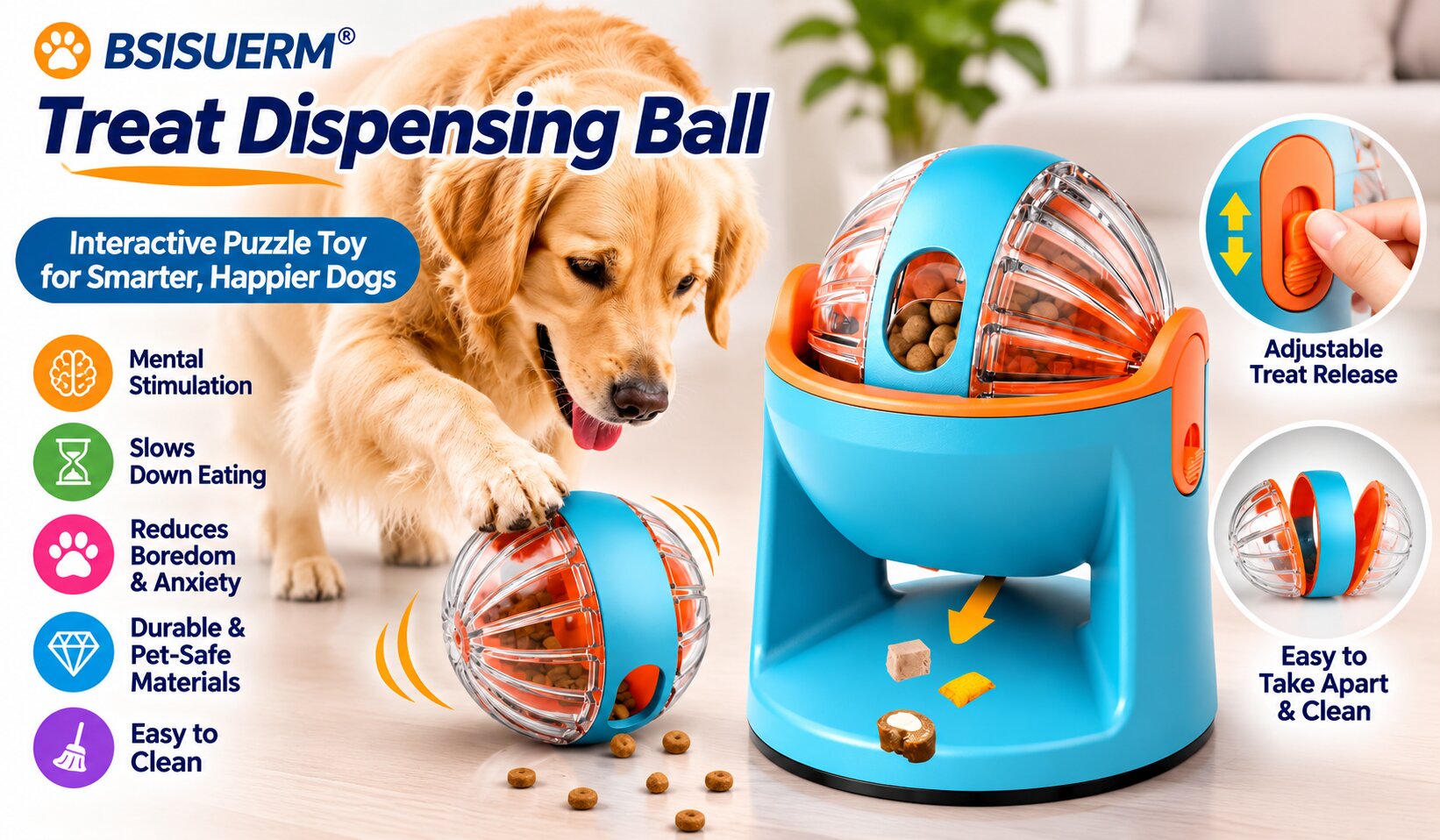
Quick facts: Adjustable treat ball | Easy–Medium | Model-dependent | Plastic
Some dogs quickly understand basic rolling toys. An adjustable opening can make a dispenser more practical because owners can change how easily food comes out.
Why we picked it
The BSISUERM treat ball is designed with an adjustable dispensing opening. It can be used for food-based enrichment and to encourage dogs to move the toy around.
Third-party marketplace tracking identified the researched listing as a product with approximately 4,000 estimated monthly sales in August 2026 and a customer rating around 4.2.
How it works
Add appropriately sized kibble and set the opening according to the manufacturer’s instructions. The dog moves the ball to release the food.
Pros
- Adjustable dispensing design.
- Combines food rewards with movement.
- Offers a different challenge from a fixed-opening treat ball.
Cons
- Hard plastic can be noisy on some floors.
- Not suitable for dogs that aggressively bite plastic.
- Requires inspection for cracks or damage.
Pro tip: Start with an easy dispensing setting and adjust only when your dog understands the activity.
Skip it if: Your dog is likely to break off and swallow plastic parts.
10. FOXMM Interactive Dog Puzzle Toy: Best Alternative Puzzle Board
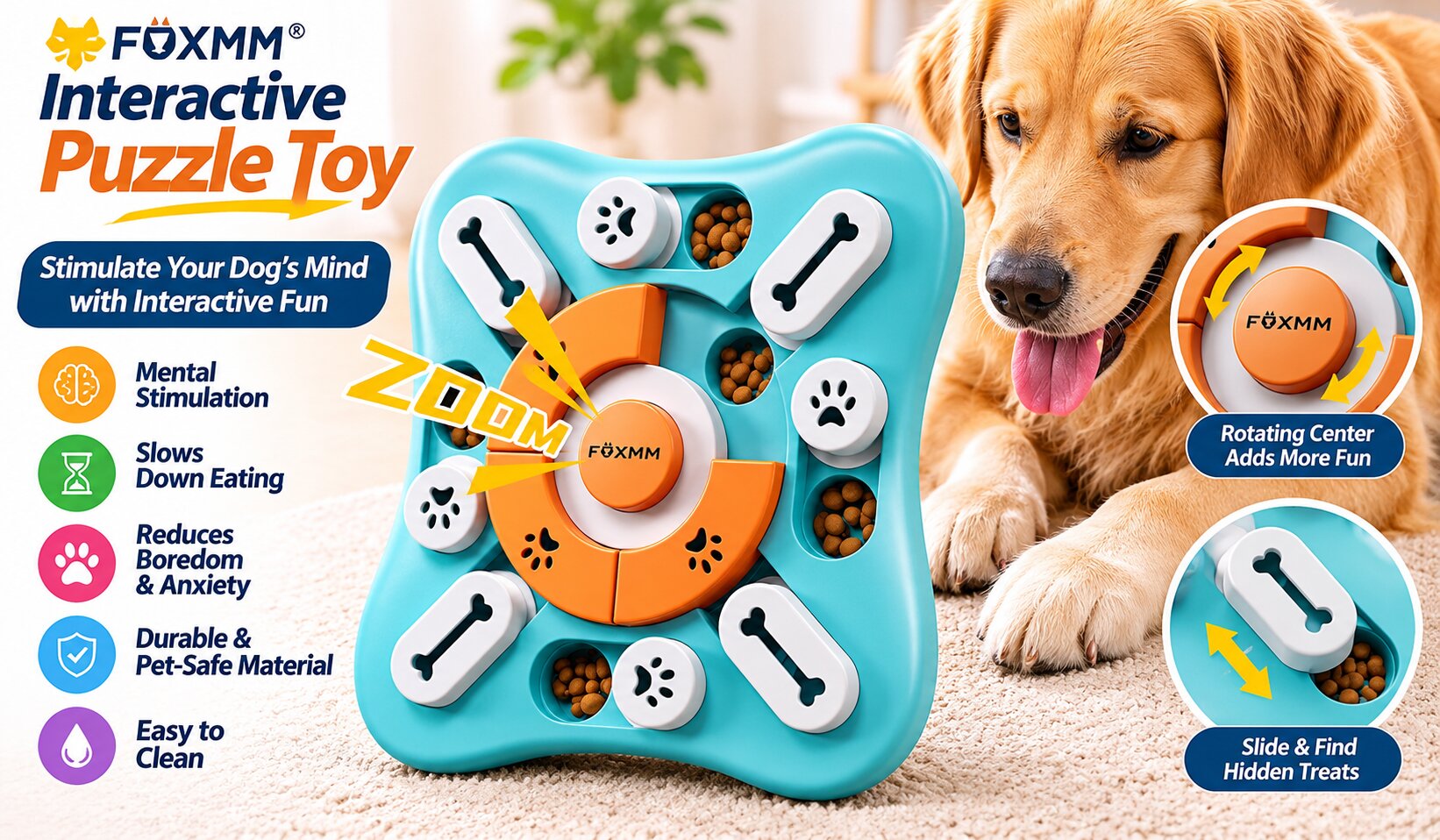
Quick facts: Multi-section food puzzle | Medium | Board-style design | Plastic
If you want another puzzle-board option, the FOXMM Interactive Dog Puzzle Toy is worth considering.
Why we picked it
Its design combines hidden food compartments with different puzzle actions. It offers an alternative for owners comparing affordable dog enrichment toys.
The researched Amazon listing recorded approximately 4,000 estimated monthly sales in a 2026 reporting period, with a customer rating around 4.5 in the marketplace data.
How it works
Place small treats in the designated compartments and allow your dog to discover how to access them.
Start with easier hiding positions and gradually make the activity more challenging. Avoid filling every section when introducing the puzzle for the first time.
Pros
- Provides another food-based problem-solving activity.
- Offers an alternative to more expensive puzzle brands.
- Suitable for owners comparing different puzzle-board designs.
Cons
- Plastic parts require supervision.
- Some dogs may find the challenge too simple or too difficult.
- Not intended as a chew toy.
Pro tip: Demonstrate one compartment first instead of filling every section immediately.
Skip it if: Your dog has a habit of chewing puzzle boards rather than manipulating their components.
How We Selected These Interactive Dog Toys
We used a research-based selection process to identify products with established Amazon US listings and evidence of customer demand. Our research considered marketplace sales estimates, available customer ratings, product descriptions, design and intended use.
For marketplace demand, we consulted ASINsight, a third-party Amazon product research and sales-estimation service. The sales figures used during selection refer to its August 2026 estimates. These are approximate third-party figures, not official Amazon sales disclosures. They can differ between reporting periods and should not be treated as a permanent ranking.
The comparison focused on five areas:
- Popularity: Available Amazon marketplace sales estimates and customer-rating information.
- Mental engagement: Whether the toy encourages sniffing, licking, searching, movement or problem-solving.
- Ease of use: Whether a dog can learn the activity without unnecessary frustration.
- Practical design: Food access, refill options, materials and cleaning.
- Suitability: Whether the product makes sense for different sizes, play styles and chewing habits.
We did not physically test these products with dogs. We therefore do not claim personal play-test results, exact engagement times or destruction-test outcomes. Customer ratings and marketplace demand can help identify established products, but they cannot guarantee that a particular toy will suit every dog.
We also did not conduct a verified, product-by-product analysis of individual Amazon review complaints. For that reason, this guide does not present unverified customer complaints as common problems.
Why Dogs Get Bored and How Interactive Toys Help
Dogs need more than occasional access to toys. They benefit from opportunities to explore, sniff, learn and interact with their surroundings.
A dog that spends much of the day indoors without suitable activities may look for its own entertainment. This kind of bored dog behavior can include destructive chewing, repeated barking or persistent attention-seeking, although those signs can have other causes too. Unfortunately, that can involve chewing household objects, digging, barking or repeatedly demanding attention.
The American Kennel Club explains that boredom can lead to destructive behaviour and restlessness. It also recommends mental activities such as scent games, puzzle toys and regular toy rotation.
Signs Your Dog Is Bored
Some common signs include:
- Chewing shoes, furniture or household objects.
- Barking or whining to attract attention.
- Digging in gardens or scratching at doors.
- Restlessness and repeatedly walking around the house.
- Stealing objects to encourage interaction.
- Showing little interest in familiar activities.
These behaviours can have several causes. A sudden change in behaviour may also be related to stress, discomfort or an underlying health problem, so boredom should not be assumed without considering the dog’s overall behaviour. Consistent walks and outdoor routines are part of everyday care, and practical supplies such as reliable dog poop bags can make those outings easier to manage.
Boredom vs Separation Anxiety
Boredom and separation anxiety can produce similar behaviours, including barking, chewing and destructive activity. However, they are not the same problem.
Separation-related distress involves a dog’s reaction to being left alone or separated from a particular person. Signs may include persistent vocalisation, pacing, salivation, attempts to damage exit points, vomiting or indoor accidents.
A food puzzle may provide an activity for some dogs, but it cannot treat an anxiety disorder. People searching for the best dog toys for boredom and anxiety should understand that enrichment toys may offer a useful activity, while dog toys for separation anxiety are not a treatment for clinical separation-related distress. If your dog repeatedly panics when left alone, attempts to escape or cannot settle, speak with a veterinarian or qualified canine behaviour professional.
The VCA Animal Hospitals guide to separation-related distress explains how these behaviours can differ and why a suitable treatment plan may be needed.
What Are Interactive Dog Toys?
Interactive dog toys are products that encourage dogs to engage with an activity to obtain a reward or complete a task. They may involve finding hidden food, moving puzzle pieces, rolling a dispenser or licking a textured surface.
These products include:
- Dog puzzle toys: Boards or containers with compartments that hide food.
- Treat dispensing dog toys: Toys that release kibble or treats when moved.
- Snuffle mats for dogs: Fabric mats that encourage scent-based searching. A snuffle mat for dogs can turn part of a regular meal into a simple foraging activity.
- Lick mats: Textured surfaces that hold soft food.
- Slow feeder puzzles for dogs: Feeding products that make dogs work around obstacles to reach their food. A slow feeder puzzle for dogs can help make mealtimes more engaging, although it is not a substitute for veterinary advice about eating or digestion.
- Dog enrichment toys: A wider category that includes food puzzles, scent activities, chew toys and interactive games.
These activities encourage natural behaviours such as sniffing, exploring and foraging. They supplement regular walks, exercise, training and social interaction. They should not replace them.
How to Choose the Right Interactive Dog Toy
1. Consider Your Dog’s Chewing Style
Gentle chewers can enjoy puzzle boards, snuffle mats and soft enrichment products. Dogs that chew more enthusiastically may need appropriately sized rubber toys designed for their chewing style.
Destructive chewers require extra care and supervision. No toy is completely indestructible, and even products marketed for strong chewers need regular inspection.
2. Match the Difficulty to Experience
Start with a simple puzzle if your dog has never used one. More complicated sliding compartments and multi-step challenges can be introduced later.
A puzzle that is too difficult may cause frustration. The aim is to give your dog an activity it can understand and enjoy.
3. Think About Food Motivation
Dogs that enjoy treats may prefer food dispensers, snuffle mats and frozen toys. Dogs that are less interested in food may respond better to hide-and-seek games, training activities or interactive fetch. If you are comparing the best interactive dog toys for large dogs, check the product dimensions and the manufacturer’s size guidance rather than relying on the product name alone.
4. Consider Your Home Environment
A rolling toy may create noise on hard floors, while electronic toys need enough space for safe movement. For apartments, stationary puzzles and lick mats are often more convenient.
5. Check the Size and Cleaning Instructions
A toy should be suitable for your dog’s size. Avoid products with components that could easily be swallowed. Food-based toys also need regular cleaning to prevent leftover food from collecting in small spaces.
What Didn’t Make Our List?
We focused on products with identifiable Amazon US listings, a clear enrichment purpose and available marketplace demand evidence.
We did not add every familiar product to reach ten entries. For example, automatic ball launchers and electronic moving toys serve a different purpose from food puzzles, snuffle mats and treat dispensers. They may suit some dogs, but they are not interchangeable with the products in this guide.
We also avoided adding products solely because they are popular brand names. A product should have a clear use, an identifiable listing and a practical reason to be included.
One important distinction: a high sales estimate does not prove that a toy is safer or better than a less popular alternative. Marketplace demand is one selection signal. Material, size, chewing habits and the dog’s response matter just as much.
Best Interactive Dog Toys by Dog Type
Different dogs enjoy different activities. Use this table as a starting point, then check the manufacturer’s size and safety instructions.
| Your dog’s needs | Recommended product | Category | Why it may suit |
|---|---|---|---|
| Puppies | DR CATCH Dog Puzzle | Best Beginner Puzzle | A simple food-based activity with supervision |
| Dogs that enjoy food toys | KONG Goodie Bone | Best Overall | Flexible stuffable design |
| Budget-conscious owners | PETSTA Dog Puzzle Toy | Best Budget Puzzle | Dedicated puzzle-board activity |
| Large dogs | KONG Goodie Bone | Best Overall | Multiple sizes are available |
| Smart dogs | PETSTA Dog Puzzle Toy | Best Budget Puzzle | Food-based problem-solving |
| Small apartments | LUKITO Lick Mat | Best Lick Mat | Quiet, stationary activity |
| Food-motivated dogs | Outward Hound Snoop | Best Treat Dispenser | Food is released through movement |
| Dogs that love sniffing | AWOOF Pet Snuffle Mat | Best Snuffle Mat | Encourages natural foraging |
| Dogs that enjoy licking | WOOF Pupsicle | Best Frozen Treat Enrichment | Refillable food-based activity |
| Dogs that enjoy rolling toys | HIPPIH Dog Puzzle Ball 2-Pack | Best Rolling Treat Balls | Encourages movement for food rewards |
What About Aggressive Chewers?
Owners searching for the best interactive dog toys for aggressive chewers should pay particular attention to the product’s intended chewing strength. Destructive chewing can quickly damage toys that are not designed for that purpose, so supervision and regular inspection matter.
The KONG Goodie Bone is a versatile stuffable toy, but the standard Classic version is not a universal choice for powerful chewers. The manufacturer also sells other rubber formulations, including the KONG Extreme range. That is a separate product line and is not one of the ten products reviewed above.
No toy should be treated as indestructible. Supervise chewing, inspect the product regularly and remove it if pieces become loose or damaged.
What About Puppies and Senior Dogs?
The best interactive dog toys for puppies are usually simple, appropriately sized and easy to understand. Choose puppy-appropriate materials and avoid small components that could be swallowed. Start with a small amount of food and supervise every session.
Senior dogs may prefer activities that do not require jumping, fast movement or complicated manipulation. A lick mat or an easy food puzzle may be more suitable, depending on their dental health, mobility and appetite. A comfortable resting place can matter too; see our guide to orthopedic dog beds for joint support.
Interactive Toys That Fit Your Home and Routine
A good enrichment routine does not need to take over your day. A few practical activities can fit around ordinary household tasks.
During Your Morning Routine
If you’re preparing breakfast, getting dressed or following your skincare routine, a prepared food puzzle can give your dog a short supervised activity nearby.
A lick mat or stuffed KONG is easy to prepare beforehand. Choose something your dog already knows how to use rather than introducing a complicated puzzle when you’re busy.
For a Quieter Work-From-Home Day
Dogs can become restless when owners spend long periods at a desk. A snuffle mat or treat puzzle can provide a short break from inactivity.
Keep the activity appropriate for the dog’s chewing habits and collect the toy when the food is gone.
Keeping Your Living Space Organised
Pet accessories are part of a home’s everyday environment. A fabric snuffle mat or a simple rubber enrichment toy may be easier to store alongside other household accessories.
A small basket can help keep the toys organised and make rotation easier. Keeping only a few toys accessible at a time can also make rotation more practical.
When You’re Going to Work
The best toys to keep dogs busy while at work depend on whether the dog can use them safely without supervision. Owners also search for toys to keep dogs busy while you’re away, but no product should be left with a dog until its safe use has been established.
Do not assume that a puzzle or food dispenser is automatically suitable for leaving with a dog alone. Introduce it while present, check for damage and follow the manufacturer’s instructions.
Some dogs can use a familiar, suitable food toy while their owner is away. Others may chew or damage the same product. If your dog has not demonstrated safe use, do not leave the toy unattended.
For dogs with separation-related distress, a toy alone is unlikely to solve the problem. The VCA recommends assessing the dog’s individual response and seeking veterinary guidance when signs of distress appear. For outdoor safety and identification, you may also want to compare GPS dog collars without subscription fees and GPS trackers for dogs.
A Simple Five-Day Dog Enrichment Rotation Plan
You do not need ten toys available every day. Rotating a few activities can provide variety without making the routine complicated.
| Day | Activity | Suggested product | Main activity |
|---|---|---|---|
| Day 1 | Stuffed food toy | KONG Goodie Bone | Licking and working for food |
| Day 2 | Scent search | AWOOF Pet Snuffle Mat | Sniffing and foraging |
| Day 3 | Puzzle session | PETSTA Dog Puzzle Toy | Finding hidden treats |
| Day 4 | Rolling food game | Outward Hound Snoop | Moving a dispenser to release food |
| Day 5 | Calm licking activity | LUKITO Lick Mat | Working through soft food |
Use part of your dog’s normal daily food allowance where appropriate. Keep sessions short enough to remain enjoyable, and adjust the difficulty to your dog’s ability.
After Day 5, you can repeat the rotation or swap in the DR CATCH puzzle, WOOF Pupsicle or another suitable product.
This is a suggested routine, not a veterinary prescription. Your dog’s age, health, diet and chewing behaviour should guide the activities you choose.
Are There Interactive Dog Toys That Move on Their Own?
Some interactive dog toys use batteries or electronic movement to attract a dog’s attention. These may include rolling toys, moving balls or products that react to touch.
However, the ten products in this guide are mainly food-based enrichment toys. They do not independently move around the room like an electronic toy.
If you are considering interactive dog toys that move on their own, check the manufacturer’s age and size recommendations, battery compartment design, charging requirements and supervision guidance. Electronic movement does not automatically make a toy more mentally stimulating or safer.
For many dogs, a simple treat puzzle or scent game may provide a more useful activity than a moving gadget. At mealtimes, a slow-feed dog bowl is another option for dogs that benefit from a slower eating routine.
Safety Tips for Using Interactive Dog Toys
Interactive toys should be selected with safety in mind. Training can also give dogs a useful mental activity; our guides to dog training clickers and dog training collars cover other training tools to consider.
- Supervise your dog when introducing a new toy.
- Choose a size that cannot easily be swallowed.
- Remove products with cracks, loose components or damaged rubber.
- Watch for removable puzzle pieces and squeakers.
- Clean food toys regularly according to the manufacturer’s instructions.
- Include treats used in enrichment activities in your dog’s daily food allowance.
- Avoid leaving destructive chewers alone with toys they can damage.
- Stop the activity if your dog becomes frustrated or starts chewing the toy itself.
The American Kennel Club’s guide to dog boredom discusses mental stimulation, scent games and toy rotation. For separation-related distress, consult the VCA Animal Hospitals guidance.
How to Get the Most Out of Puzzle Toys
Start with a simple activity. Put a few visible pieces of kibble in a puzzle and let your dog discover the reward.
Once your dog understands the basic idea, increase the difficulty gradually. Add more hiding places or try a different dispensing toy.
Rotate three or four toys rather than keeping everything available at once. Bringing a familiar toy back after a few days can introduce variety.
You can also use part of your dog’s regular meal in a treat dispenser instead of adding unnecessary extra calories.
For suitable stuffable toys, frozen food can provide another variation. Always use dog-safe ingredients and follow the product’s instructions.
Most importantly, finish with a successful reward. If a puzzle is too difficult, make it easier rather than allowing your dog to become frustrated.
Frequently Asked Questions
1. What Is the Best Toy to Keep My Dog Entertained?
The KONG Goodie Bone is our Best Overall choice because it can be filled with different suitable foods and used in several ways. PETSTA is a good option for dogs that enjoy puzzle boards. The best choice depends on chewing habits, size and play preferences.
2. What Are the Best Boredom Busters for Dogs?
Treat-dispensing toys, puzzle boards, snuffle mats, frozen food toys and supervised interactive games are useful boredom busters. Combining different activities gives dogs opportunities to sniff, search, lick and solve problems.
3. Do Interactive Dog Toys Tire Dogs Out?
Mental activities can help some dogs settle after a session. The effect varies between dogs and activities. Interactive toys complement walks, physical exercise, training and social interaction.
4. What Is the Number One Dog Toy?
There is no single number one dog toy for every dog. For versatile food-based enrichment, we choose the KONG Goodie Bone as Best Overall. Dogs that prefer puzzle-solving may enjoy PETSTA or DR CATCH more.
5. Are Puzzle Toys Safe to Leave With Dogs Alone?
Not automatically. Some toys contain removable parts, flexible materials or components that can become dangerous if chewed. Introduce new products under supervision and only consider independent use when the manufacturer permits it and your dog has demonstrated safe behaviour.
6. How Often Should I Rotate My Dog’s Toys?
Try rotating available toys every three or four days. You do not need to follow a strict schedule. Keep a few accessible and store the others to provide variety.
7. What Are the Best Interactive Dog Toys for Aggressive Chewers?
Consider appropriately sized rubber toys designed for stronger chewing, such as products in the KONG Extreme range. The standard KONG Goodie Bone is not a universal solution for aggressive chewers. No toy is indestructible, so inspect products regularly and remove them if they become damaged.
8. Can Interactive Dog Toys Help With Separation Anxiety?
They may provide an enjoyable activity for some dogs, but they are not a treatment for separation anxiety. Persistent distress when left alone should be discussed with a veterinarian or qualified behaviour professional.
9. Are Interactive Dog Toys Suitable for Puppies?
Yes, if the product is appropriate for the puppy’s age, size and chewing stage. Start with simple puzzles and supervise play. Avoid small parts that could be swallowed.
10. What Are the Best Treat Dispensing Dog Toys?
The KONG Goodie Bone, Outward Hound Snoop, HIPPIH Dog Puzzle Ball 2-Pack and BSISUERM Treat Dispensing Ball are among the best treat dispensing dog toys in this selection, offering different ways to make dogs work for food rewards. Choose based on your dog’s size, chewing habits and experience.
11. Are Snuffle Mats Good for Dogs?
Snuffle mats encourage dogs to use their noses to search for hidden food. They can add variety to mealtimes and provide a quiet indoor activity. Choose a mat that your dog will not pull apart or swallow.
12. Are There Interactive Dog Toys That Move on Their Own?
Yes. Some electronic dog toys use battery-powered movement to attract attention. These are examples of interactive dog toys that move on their own, although the products in this guide are mainly food-based enrichment toys. The products in this guide are mainly food-based enrichment toys and do not independently move around a room. Check the manufacturer’s safety and supervision instructions before buying an electronic toy.
13. Where Can I Buy Interactive Dog Toys in the US, UK or Canada?
Many popular products are sold through Amazon marketplaces in these countries. However, listings, sellers, prices and sizes can differ. The links in this guide point to Amazon US listings. Check the relevant country’s Amazon store before ordering.
Final Verdict: Which Interactive Dog Toy Is Worth Buying?
The best interactive dog toys for boredom depend on how your dog likes to play.
The KONG Goodie Bone is our Best Overall because its stuffable design offers flexibility for food-based enrichment, while the PETSTA Dog Puzzle Toy is our Best Budget Puzzle for dogs that enjoy working through hidden compartments.
The DR CATCH Dog Puzzle is a sensible beginner option, the AWOOF Snuffle Mat encourages scent-based searching, and the Outward Hound Snoop offers a different experience through movement and food rewards.
If you want just one recommendation, start with the KONG Goodie Bone. If your dog enjoys solving puzzles, choose PETSTA. Check the correct size, supervise new activities and introduce challenges gradually.
A suitable toy can make ordinary indoor time more interesting. The best choice is the one your dog can use safely and enjoys returning to.
For more practical advice, explore AhemBeauty’s pet care and lifestyle articles.
Useful Links
Product pages and trusted pet-care resources for further reading.
Product Pages
- KONG Goodie Bone (Small) — Amazon US
- PETSTA Dog Puzzle Toy — Amazon US
- DR CATCH Dog Puzzle — Amazon US
- WOOF Pupsicle — Amazon US
- AWOOF Pet Snuffle Mat — Amazon US
- LUKITO Lick Mat — Amazon US
- Outward Hound Snoop — Amazon US
- HIPPIH Dog Puzzle Toy — Amazon US
- BSISUERM Treat Dispensing Ball — Amazon US
- FOXMM Interactive Dog Puzzle Toy — Amazon US
Trusted Dog and Pet-Care Resources
About the Author
Esrazur Rahman is a senior writer at AhemBeauty who covers consumer products, lifestyle and practical buying guides. His editorial approach combines careful product research, specification checks and clear explanations of what readers should consider before buying. For this guide, he draws on product information, marketplace research and established animal-care guidance rather than claiming hands-on testing with dogs.
Editorial approach This guide uses product specifications, Amazon US marketplace listings, third-party sales estimates and available customer-rating data. We have not physically tested these products with dogs. Sales estimates are not official Amazon disclosures, and customer ratings can change.