

MEN’S GROOMING • SKIN HEALTH • EVERYDAY ROUTINES
Healthy skin starts with simple daily habits, the right essentials and better protection from everyday damage.
You wash your face in the shower, shave when you need to, and get on with your day. Then one morning, you notice dry patches around your nose, a few stubborn spots on your forehead, or fine lines that weren’t quite so visible a year ago.
Men’s skincare often gets overlooked because many people still think looking after your skin is mainly a women’s concern. That’s an outdated idea. Your skin deals with sunlight, pollution, sweat, shaving and changing weather every day. It deserves some attention, regardless of gender.
The good news? You don’t need a bathroom full of expensive products. A few well-chosen essentials can help keep your skin comfortable, healthy and protected.
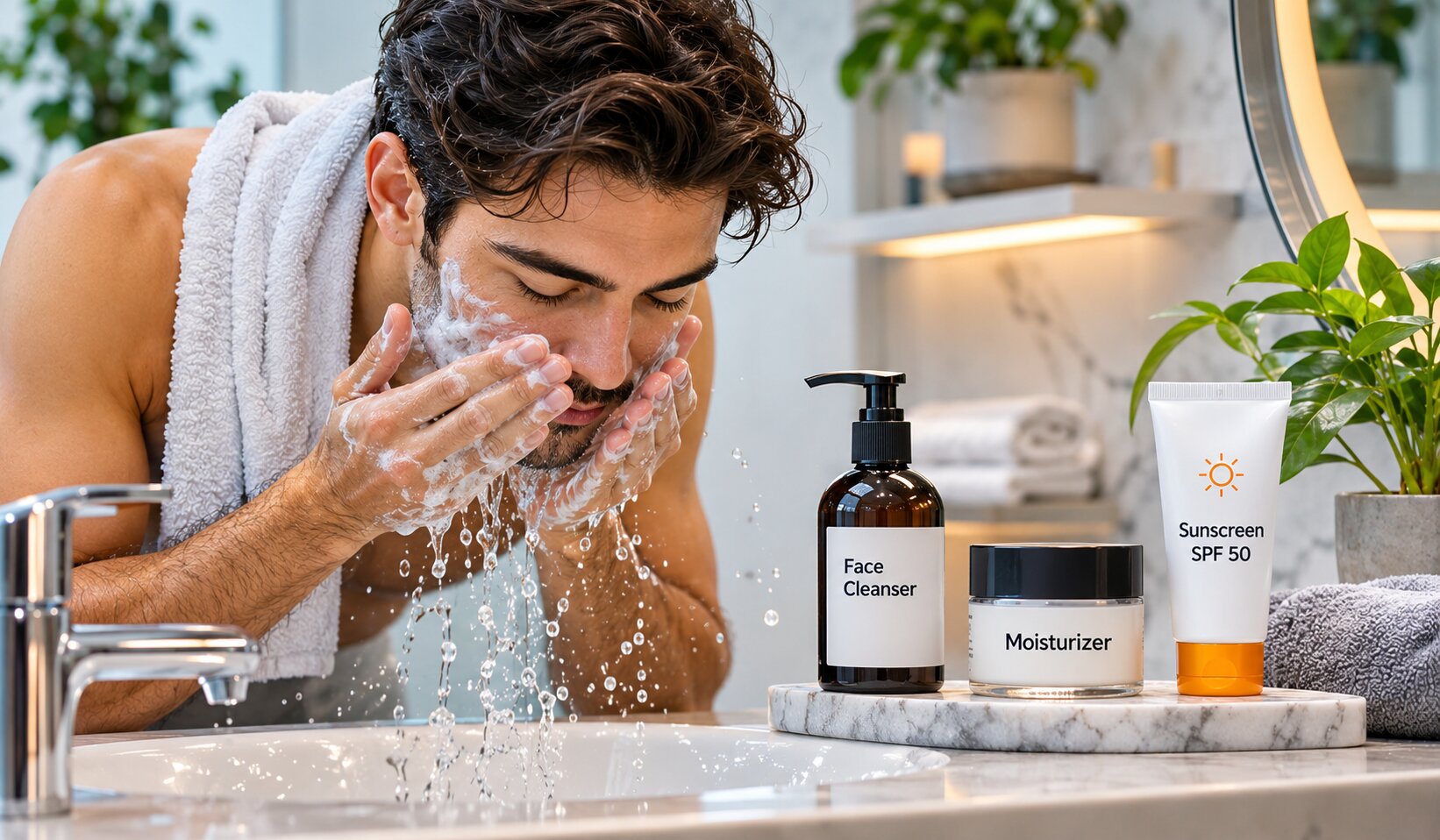
Why Men Need to Take Care of Their Skin
Skincare isn’t simply about looking younger. Your skin protects your body from environmental irritants, helps regulate temperature and acts as a barrier against outside threats.
According to the American Academy of Dermatology (AAD), men have some distinct skin characteristics, but the basic principles of an effective skincare routine remain the same.
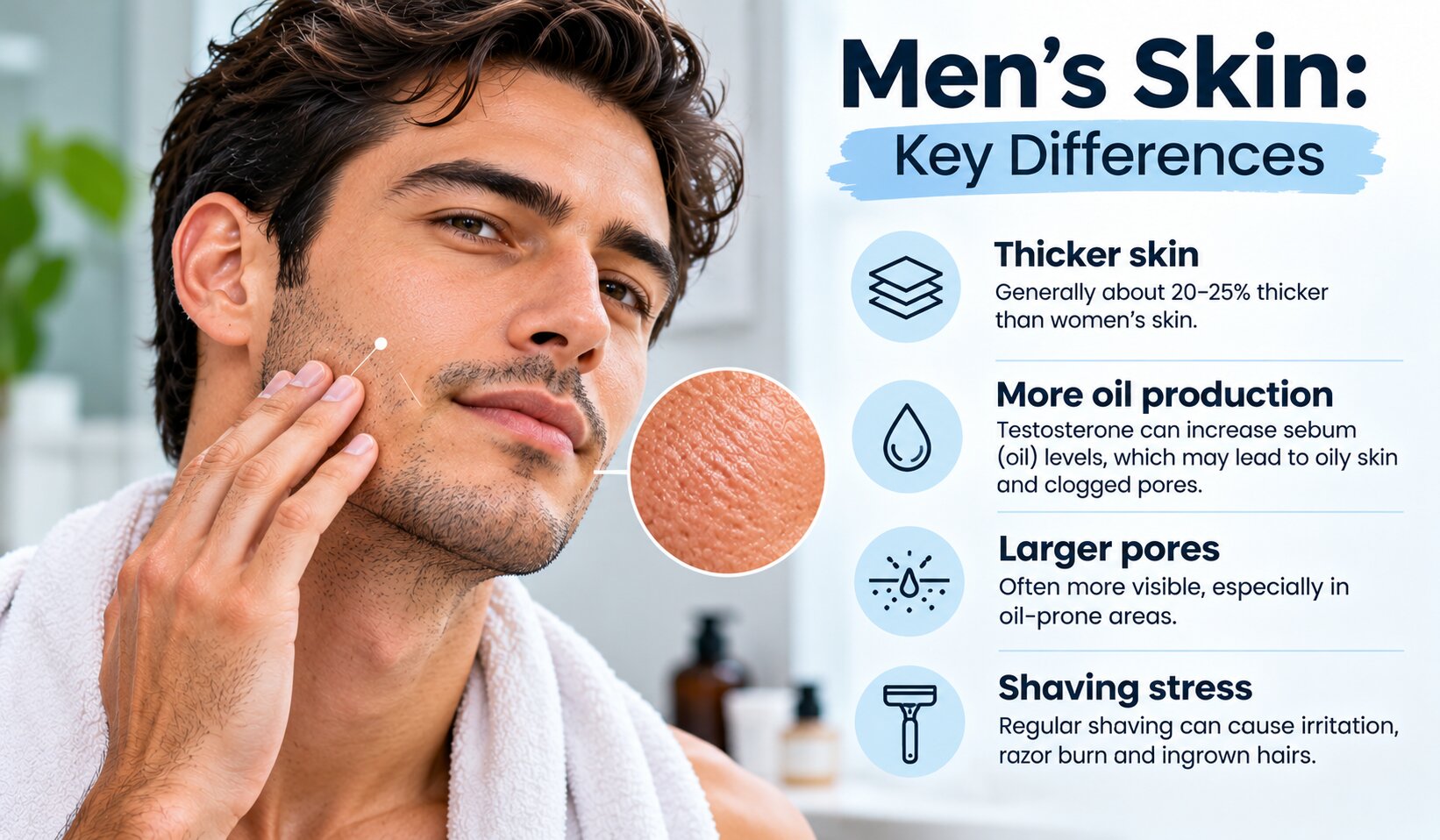
Men’s Skin Has Some Biological Differences
Men’s skin is generally thicker than women’s skin. Testosterone also influences oil production, which can contribute to oily skin, clogged pores and acne.
Men may have more visible pores and facial hair, while regular shaving introduces another source of friction and irritation.
There are differences in collagen and skin aging patterns too. However, genetics, age, hormones and sun exposure all influence how an individual’s skin changes.
These differences may affect which products feel comfortable, but they don’t require an entirely separate approach to skincare.
Daily Exposure Takes Its Toll
Think about a normal working day. You leave home, commute through traffic, spend time outdoors, sweat, sit in air-conditioned rooms and perhaps exercise in the evening.
Your skin experiences all of it.
UV radiation can damage skin even when the weather feels cool. Pollution and airborne particles can contribute to irritation, while sweat and excess oil can contribute to clogged pores.
Climate matters, too. Humid summers may make oily skin feel worse, while cold winters and dry indoor air can leave skin tight and flaky.
A gentle cleansing routine and suitable moisturizer help manage these everyday conditions.
Shaving Can Leave Your Skin Irritated
Shaving removes facial hair, but it also creates friction and can disturb the skin’s outer barrier.
Shaving against the direction of hair growth, using a blunt blade or repeatedly passing over the same area can cause razor burn, redness and ingrown hairs.
The NHS explains that people with coarse or curly hair may be more likely to develop ingrown hairs because cut hairs can grow back into the skin.
This is why skincare after shaving matters. Better shaving technique and a gentle moisturizer can help reduce irritation.
Early Aging and Sun Damage Add Up
Fine lines, uneven skin tone, dark spots and rough texture don’t appear overnight.
UV radiation contributes to collagen damage and premature skin aging. According to the Skin Cancer Foundation, regular sunscreen use helps reduce sun damage associated with wrinkles, age spots and other visible changes.
An anti-aging routine doesn’t need to start with expensive serums or complicated treatments.
Daily sun protection is one of the most useful long-term habits you can build.
Acne, Blackheads and Other Skin Problems Affect Men Too
Acne doesn’t automatically disappear after your teenage years. Adult men can experience breakouts, blackheads, excess oil and clogged pores.
Other common concerns include:
- Dryness and flaking around the nose and cheeks.
- Dandruff affecting the scalp, beard or eyebrows.
- Ingrown hairs along the beard line.
- Fungal skin infections, particularly in warm, sweaty areas.
- Irritation caused by shaving or fragranced products.
A cleanser may help remove excess oil, but it won’t treat every skin condition. Persistent symptoms may need medical attention.
Men Shouldn’t Overlook Skin Cancer Prevention
Sun protection deserves particular attention. Men sometimes spend long periods outdoors without applying sunscreen, especially when working, exercising or traveling.
Repeated UV exposure increases the risk of skin damage and skin cancer. The AAD recommends broad-spectrum, water-resistant sunscreen with SPF 30 or higher.
Men over 50 also deserve particular attention here. The AAD identifies this age group as having a higher risk of melanoma than the general population.
Check your skin regularly for new or changing spots. A mole that changes shape or color, bleeds, itches or develops an unusual appearance should be assessed by a healthcare professional.
Healthy Skin Can Improve Everyday Confidence
You don’t need perfectly smooth skin to look well-groomed.
Reducing visible dryness, controlling excess shine and managing shaving irritation can make you feel more comfortable with your appearance.
Think of skincare as part of men’s grooming. It’s basic maintenance, not a competition to look younger or follow every new beauty trend. For more everyday grooming ideas, see our guide to how to be a handsome guy.
Know Your Skin Type Before Buying Anything
Buying products without understanding your skin is an easy way to waste money.
A moisturizer that works for someone with dry skin may feel too heavy on an oily face. An acne-focused cleanser might leave sensitive skin uncomfortable.
Try this simple test at home.
The 30-Minute Wash-and-Wait Test
- Wash your face using a gentle cleanser and lukewarm water.
- Pat it dry with a clean towel.
- Don’t apply moisturizer, serum or other products.
- Wait approximately 30 minutes.
- Observe how your skin feels and looks.
This isn’t a medical diagnosis, but it gives you a useful starting point.
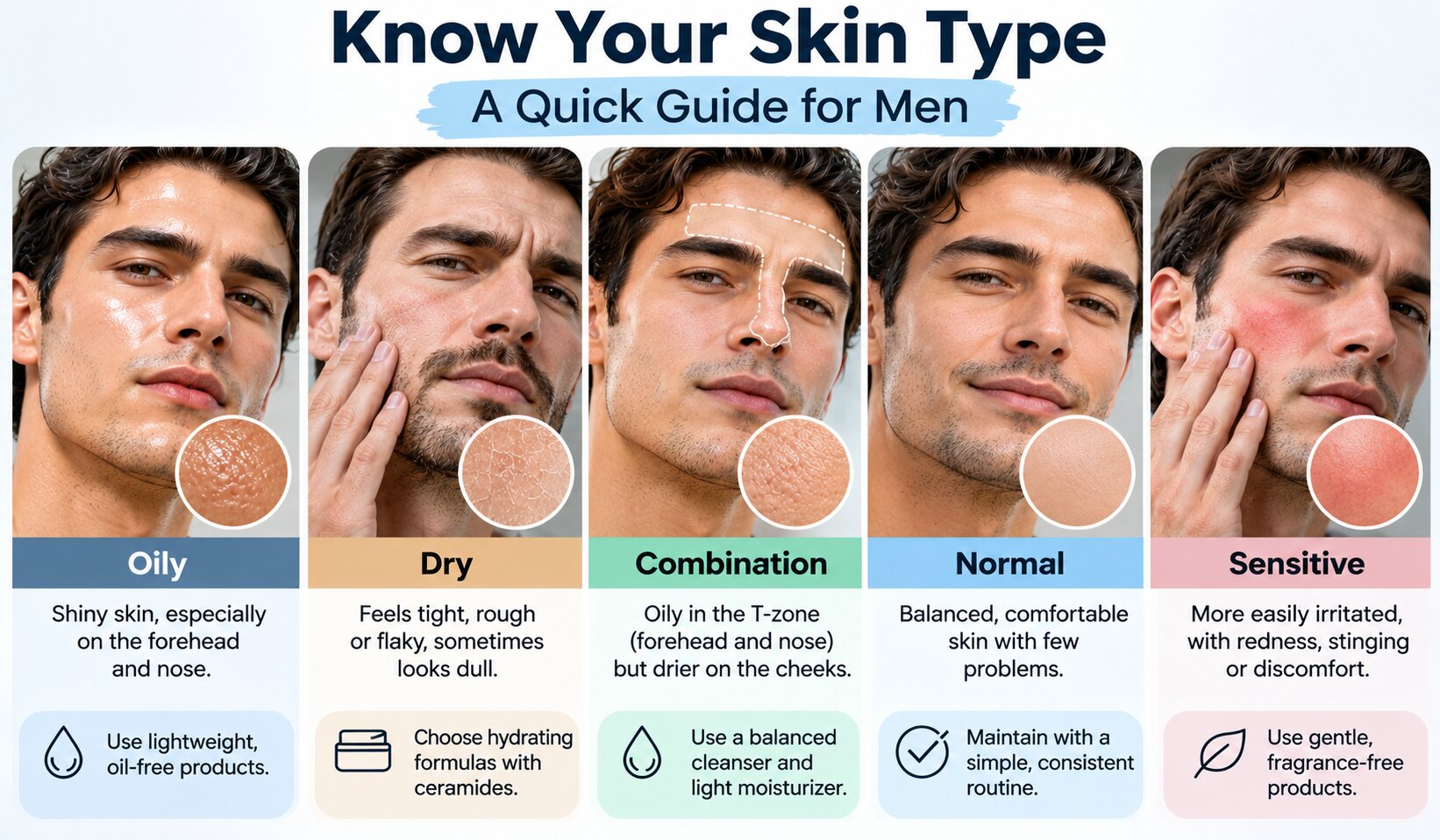
| Skin type | Signs | What to look for |
|---|---|---|
| Oily | Shiny appearance, especially around the forehead and nose; frequent clogged pores | Lightweight, oil-free, non-comedogenic products |
| Dry | Tightness, rough patches, flaking | Cream moisturizers, ceramides and hyaluronic acid |
| Combination | Oily forehead and nose but drier cheeks | Lightweight moisturizer and gentle cleanser |
| Normal | Comfortable, balanced skin with little excess oil or dryness | Basic daily skincare products |
| Sensitive | Stinging, redness, burning or irritation after products | Fragrance-free, gentle formulas |
Your skin type can change with age, climate, hormones and medication. Reassess it when your usual products suddenly stop feeling comfortable.
The Basic Daily Skincare Routine for Men
A practical men’s skincare routine needs two short sessions: one in the morning and another at night.
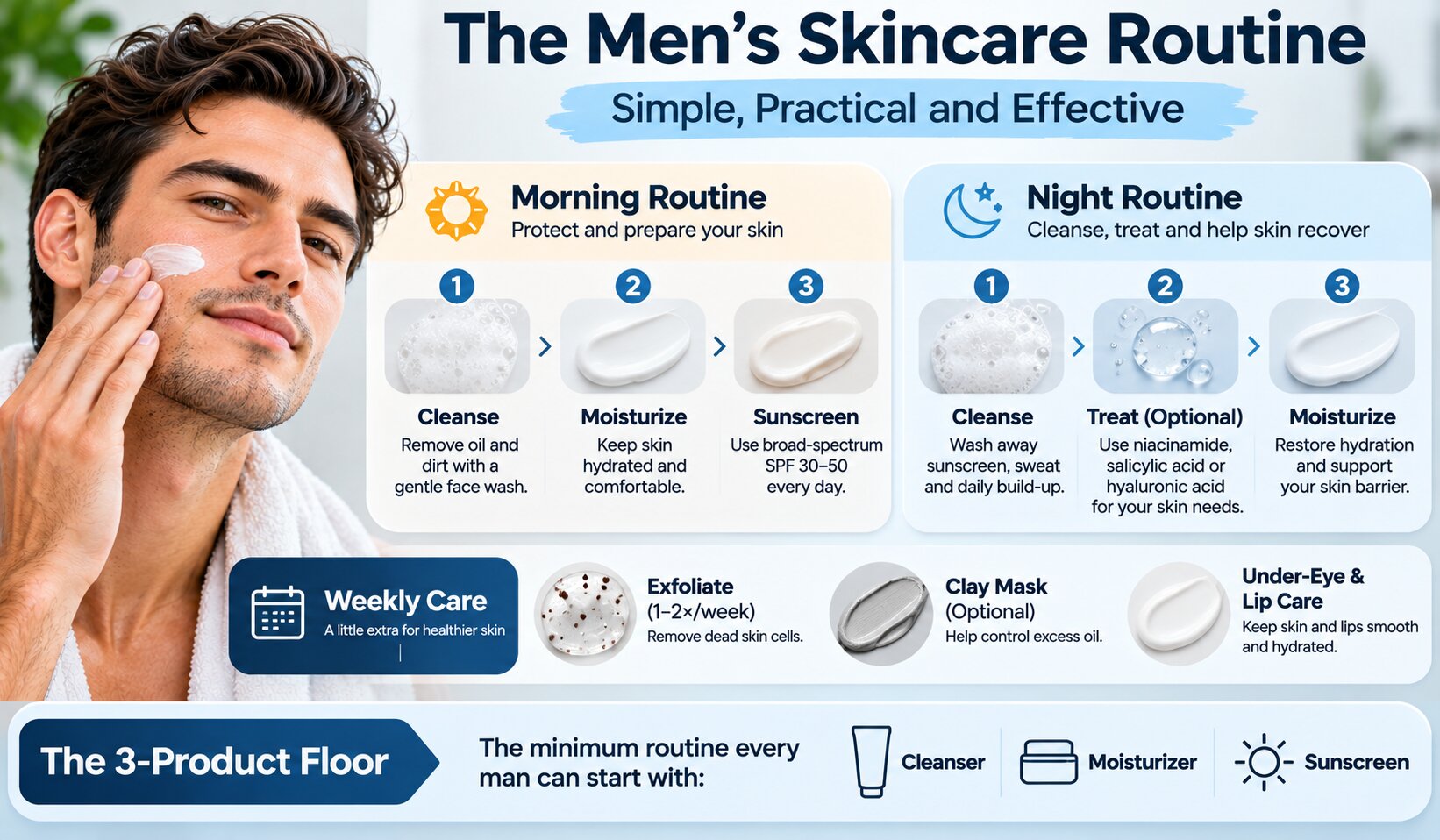
Morning: Clean, Moisturize and Protect
1. Start with a gentle cleanser
Wash your face with a mild facial cleanser. Use lukewarm water and your fingertips rather than scrubbing with a rough towel.
A good face wash for men should remove excess oil and dirt without leaving your skin feeling tight.
If your skin is particularly dry, rinsing with water in the morning may be sufficient. Cleanse properly at night.
2. Toner is optional
A toner isn’t essential for healthy skin. Some formulas contain ingredients that help with oiliness or hydration, but you can skip this step.
If you use one, avoid harsh, alcohol-heavy formulas that leave your face feeling stripped.
3. Apply moisturizer
Use a suitable moisturizer after cleansing. Apply it while your skin is slightly damp to help retain moisture.
The best moisturizer for men depends on skin type. Oily skin usually prefers a light lotion or gel, while dry skin may benefit from a richer cream.
4. Finish with sunscreen
This is the step worth making a daily habit.
Choose broad-spectrum SPF 30–50 sunscreen that protects against UVA and UVB rays. Apply it to your face, ears, neck and other exposed areas.
The AAD recommends approximately one teaspoon for the face, with additional sunscreen for the neck and other exposed areas. Apply it before going outdoors and reapply approximately every two hours when outside, or sooner after swimming or heavy sweating.
Night: Remove the Day and Let Skin Recover
1. Cleanse again
Remove sunscreen, sweat, excess oil and accumulated dirt. A gentle cleanser is usually enough.
2. Add one treatment if needed
Choose an ingredient based on your actual concern:
- Niacinamide may help with excess oil, uneven tone and the appearance of pores.
- Salicylic acid can help unclog pores and manage blackheads.
- Hyaluronic acid attracts water and helps improve skin hydration.
Start with one treatment rather than combining several active ingredients immediately.
3. Moisturize
Finish with a moisturizer that supports your skin barrier. This is particularly useful after shaving or using an acne treatment that can cause dryness.
Weekly Care: A Little Extra Attention
Daily care handles the essentials. Weekly care can address specific concerns.
- Exfoliation: Start once a week. Increase to twice weekly only if your skin tolerates it. Avoid aggressive scrubbing.
- Clay mask: Optional for oily skin. It may temporarily absorb excess surface oil.
- Lip balm: Apply regularly if your lips become dry. Choose SPF protection for daytime outdoor use.
- Under-eye care: A basic moisturizer may be enough. A separate eye cream is optional.
Adjust Your Routine to Your Skin Type
The best skincare routine for men is one that suits their skin rather than one copied from somebody else’s bathroom shelf.
Skincare Routine for Men With Oily Skin
If your face becomes shiny a few hours after washing, focus on controlling excess oil without stripping the skin.
Look for a gentle cleanser, lightweight moisturizer and non-comedogenic sunscreen.
Niacinamide may help improve the appearance of oily skin, while salicylic acid can be useful for blackheads and clogged pores.
Avoid washing your face repeatedly throughout the day. Excessive cleansing can irritate your skin without solving the underlying oil production.
Skincare Routine for Men With Dry Skin
Dry skin needs moisture and protection.
Choose a gentle cleanser and a cream-based moisturizer containing ceramides, glycerin or hyaluronic acid.
Avoid very hot showers and harsh exfoliating products. Apply moisturizer immediately after washing while your skin is slightly damp.
If dryness continues despite regular moisturizing, consider speaking to a dermatologist.
Skincare Routine for Men With Combination Skin
Your forehead and nose may become oily, while your c