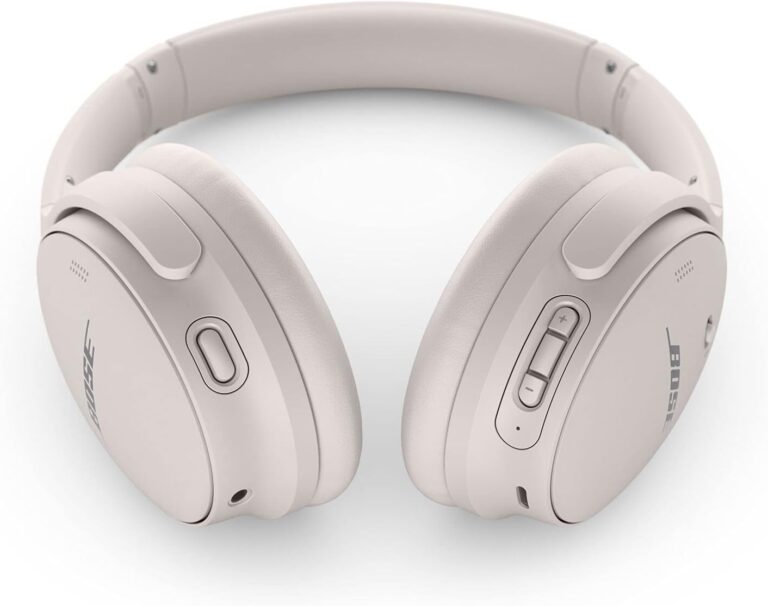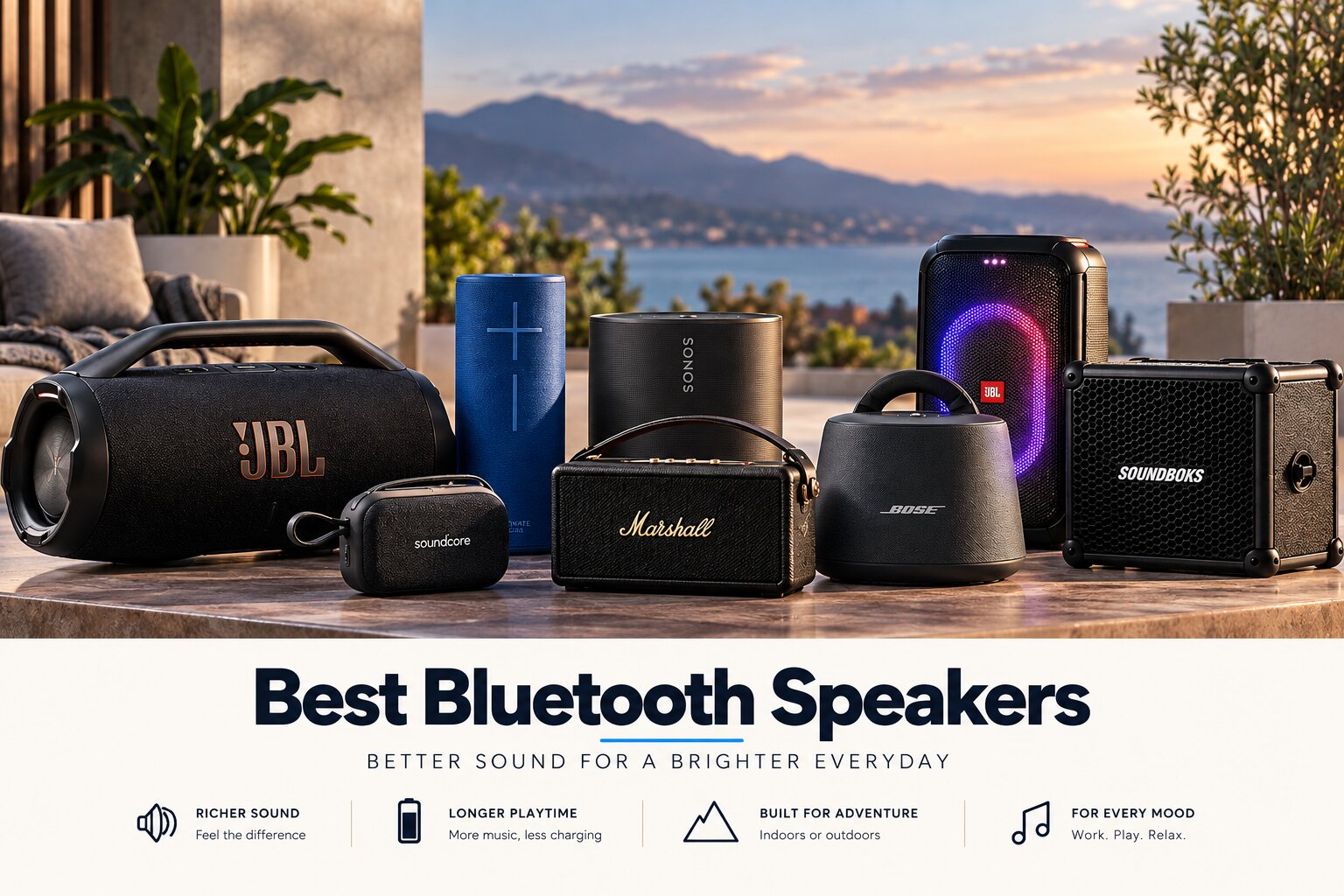
The best Bluetooth speakers are no longer defined by one simple feature. Some are designed for deep bass and high-volume outdoor listening, others are built for portability, and premium home models focus on room-filling sound, Wi-Fi features and multi-room audio.
That makes direct comparison surprisingly difficult.
A tiny speaker such as the Anker Soundcore Select 4 Go should not be judged by the same standards as a JBL Boombox 4. The former is designed around portability and low cost, while the latter uses a much larger enclosure to deliver substantially more output and deeper bass. Similarly, a Sonos Era 300 is primarily a home audio product, so features such as room correction and Dolby Atmos Music matter more than waterproofing.
For this Best Bluetooth Speakers 2026 guide, we compared ten products across sound quality, bass extension, maximum loudness, directivity, portability, battery performance, durability, connectivity and practical use.
We also looked closely at independent testing rather than treating manufacturer specifications as the whole story. RTINGS, for example, currently uses a standardized speaker methodology covering areas such as frequency response, directivity, loudness, battery and connectivity. Its test bench was updated for several of the products in this guide during 2026.
The result is a product-focused guide for readers trying to answer a practical question:
Which Bluetooth speaker actually fits the way you listen?
Best Bluetooth Speakers 2026: Quick Comparison
| Speaker | Best For | Bass | Sound Quality | Portability | Battery | Water Resistance | Connectivity | Key Strength | Main Drawback |
|---|---|---|---|---|---|---|---|---|---|
| JBL Boombox 4 | Bass and outdoor use | Excellent | Very good | Moderate | Excellent | Strong outdoor protection | Bluetooth, Auracast/LE Audio | Powerful output and deep bass | Large and heavy |
| Ultimate Ears EPICBOOM | Outdoor and 360° listening | Good | Good | Good | Good | IP67 | Bluetooth + app | Broad sound coverage | Limited deep bass |
| Ultimate Ears MEGABOOM 4 | Portable everyday use | Good for size | Good | Excellent | Up to 20h claimed | IP67 | Bluetooth + app | Excellent directivity | Not very loud |
| Anker Soundcore Select 4 Go | Budget and small size | Limited | Fair | Excellent | Around 10h tested | IP67 | Bluetooth + app | Tiny, inexpensive and rugged | Weak low bass |
| LG Sound Suite M7 | Home-theater integration | System-dependent | Home-focused | Low | AC/home system | Not a portable model | Part of LG home system | Satellite/home-theater role | Not a standalone portable Bluetooth speaker |
| Sonos Era 300 | Premium home listening | Moderate | Very good | Poor | AC powered | Indoor-focused | Wi-Fi + Bluetooth + AirPlay 2 | Immersive home audio | Limited deep bass |
| Marshall Kilburn III | Music and portable home use | Good | Good | Good | 23h measured | IP54 | Bluetooth + app | Warm sound and long battery | Bass compression at high volume |
| Bose Lifestyle Ultra Speaker | Smart home audio | Moderate | Good | Poor | AC powered | No | Wi-Fi, Bluetooth, AirPlay, Chromecast | Excellent voice control | Not portable or waterproof |
| JBL PartyBox Club 120 | Parties and karaoke | Excellent | Good | Moderate | 10h+ tested | IPX4 | Bluetooth + wired inputs | Loud, bass-heavy and karaoke-ready | Bulky |
| SOUNDBOKS Mix | High-volume outdoor use | Very good | Good | Moderate | 18h measured | Outdoor-oriented rugged design | Bluetooth + AUX + app | Very high output | Large and fewer party inputs |
How We Evaluated the Best Bluetooth Speakers Best Bluetooth Speakers
A meaningful Bluetooth speaker comparison needs more than a specification sheet.
Manufacturers commonly advertise battery life, power, waterproofing and proprietary sound technologies. Those numbers are useful, but they don’t always tell you how the speaker behaves when you actually listen to it.
Our research framework therefore focuses on ten areas.
Sound quality
We consider tonal balance across bass, midrange and treble.
A speaker with boosted bass may sound exciting at first, but excessive upper-bass energy can make vocals and instruments sound less clear.
Bass extension
Deep bass is different from boosted bass.
A speaker can sound “bassy” because it emphasizes higher bass frequencies without reproducing the lowest frequencies particularly well.
This distinction is especially important when comparing small portable speakers with larger party models.
Maximum loudness
A speaker intended for outdoor parties needs much more output than one designed for a bedroom.
We therefore consider loudness according to the intended environment rather than treating maximum volume as a universal measure of quality.
Directivity
Directivity tells us how consistently a speaker sounds when you move around it.
This is especially important for 360-degree speakers.
The MEGABOOM 4, for example, is specifically strong in this area because its cylindrical design provides very consistent sound across listening angles.
Compression
Compression becomes important when a speaker is pushed toward maximum volume.
A speaker may technically become louder while losing some bass punch, dynamics or clarity.
RTINGS identifies this behavior in several of the models covered here, including the JBL Boombox 4, Marshall Kilburn III and JBL PartyBox Club 120.
Battery performance
Advertised battery life is not necessarily the same as measured battery life.
Volume, EQ settings and other conditions can change runtime considerably.
The Marshall Kilburn III illustrates the point particularly well: RTINGS measured a little over 23 hours while noting that the manufacturer’s advertised figure was substantially higher.
Durability
For outdoor speakers, IP certification is more useful than vague phrases such as “water resistant.”
IP67, for example, provides dust-tight protection and temporary immersion resistance under the applicable testing conditions.
Connectivity
We consider Bluetooth stability, app support, stereo pairing, Wi-Fi, AirPlay, wired inputs and other connection options where applicable.
Portability
Weight is only part of portability.
A comfortable handle, carrying loop and overall shape can matter just as much.
Intended use
Finally, we judge whether the speaker is actually appropriate for the environment in which it is likely to be used.
That prevents a common mistake: treating every Bluetooth speaker as though it were designed for the same job.
Manufacturer Specifications vs Independent Testing
This distinction is important throughout this guide.
Manufacturer specifications can tell you:
- advertised battery life
- IP rating
- supported Bluetooth technologies
- claimed power
- physical dimensions
- supported inputs
- advertised features
Independent testing can reveal:
- measured battery life
- frequency-response behavior
- bass extension
- maximum loudness
- compression
- directivity
- latency
- sound consistency
- real-world limitations
Neither category should automatically replace the other.
Manufacturer information is the appropriate source for some specifications, particularly features and compatibility. Independent measurements are more useful when judging how the speaker behaves acoustically.
For example, Ultimate Ears advertises up to 20 hours of battery life for the MEGABOOM 4, while independent testing can show how the speaker behaves in areas such as bass, loudness and directivity. RTINGS’ current MEGABOOM 4 test notes its excellent 360-degree directivity but also its limited deep-bass reproduction and relatively modest maximum loudness.
That is the approach used throughout this article.
1. JBL Boombox 4
Best for: Bass, outdoor listening and high-volume portable use Best Bluetooth Speakers
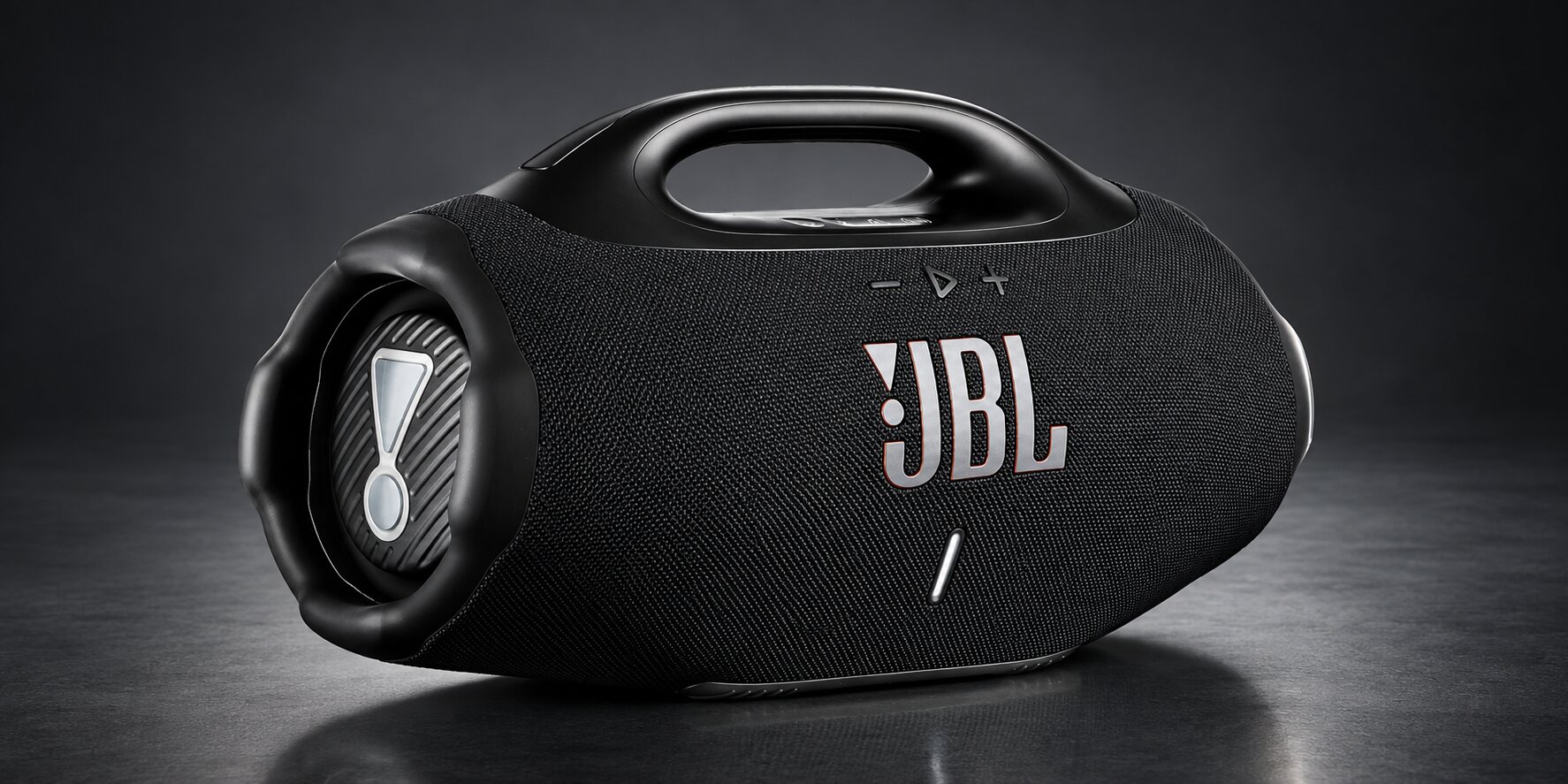
The JBL Boombox 4 is aimed at people who want a portable speaker that can deliver considerably more scale than a conventional compact Bluetooth model.
Its size is part of the product’s purpose.
A larger enclosure allows JBL to build a system capable of substantially stronger low-frequency output than tiny travel speakers. RTINGS’ current review describes the Boombox 4 as the next-generation successor to the Boombox 3, with upgrades including Bluetooth LE Audio, Auracast compatibility and a detachable, replaceable battery. It is also lighter and louder than the previous generation.
Sound quality
The Boombox 4 is designed around powerful, full-range playback rather than a delicate near-field listening experience.
Its bass performance is one of its clearest advantages.
RTINGS’ testing shows that it can reproduce significantly deeper bass than many smaller portable models. The speaker also provides Bass Boost modes and EQ control through the companion app, giving listeners some flexibility over its tonal balance.
That makes it particularly attractive for electronic music, hip-hop, dance tracks and recordings where low-frequency impact matters.
Bass performance
This is one of the models in this group that makes sense when “bass” is genuinely high on the buying list.
However, more output does not mean unlimited headroom.
At extreme volume levels, independent testing identifies compression that can reduce some of the speaker’s dynamic impact.
For normal and moderately loud listening, that is unlikely to be the main concern. It becomes more relevant when the objective is to run the speaker at maximum output for a large gathering.
Portability
The Boombox 4 is portable in the sense that it runs from a battery and includes a carrying handle.
It is not portable in the same way as the MEGABOOM 4 or Select 4 Go.
This distinction matters.
If your typical journey involves moving the speaker from the house to the backyard, its size may be completely reasonable. If you expect to carry it for several kilometers, its weight becomes much more relevant.
Battery and longevity
The detachable, replaceable battery is one of the more practical upgrades.
A removable battery can be useful for people who use a speaker heavily over several years, because battery replacement becomes less dependent on the entire speaker remaining permanently sealed.
Who should buy it?
- strong bass
- high output
- outdoor capability
- long battery operation
- a large portable speaker
- app-based sound adjustment
- modern wireless features
Buy the Boombox 4 if you want:
Who should skip it?
- you mainly listen in a bedroom
- portability means “fits in a backpack”
- you rarely listen above moderate volume
- you want a small speaker for travel
Skip it if:
What you get for the money
The value proposition is straightforward: you are paying for scale, output, bass capability and battery-powered freedom.
If you don’t need those characteristics, a smaller speaker may offer better value.
2. Ultimate Ears EPICBOOM
Best for: Outdoor listening and broad 360-degree sound
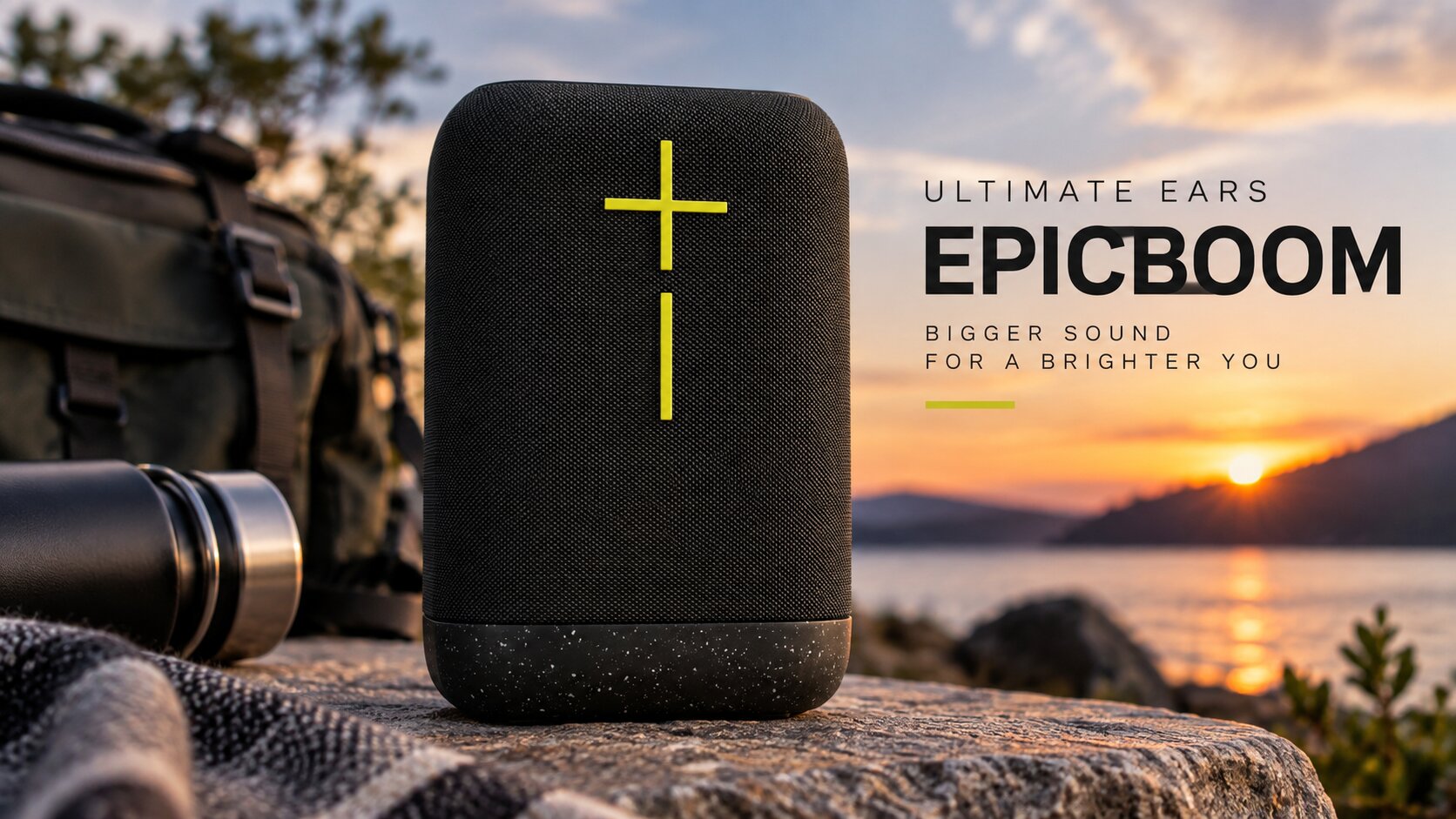
The Ultimate Ears EPICBOOM occupies the middle ground between compact portable speakers and much larger party models.
RTINGS describes it as a premium-feeling portable Bluetooth speaker with indoor and outdoor applications, multiple sound customization options and an IP67 rating. Its cylindrical form is designed to distribute sound broadly.
Sound quality
The EPICBOOM’s tuning is slightly warm.
Its Adaptive EQ can optimize the speaker’s sound for the room, while its graphic EQ and presets allow additional adjustment.
Its midrange is generally balanced enough for voices and lead instruments, although the speaker does not reproduce the deepest bass.
This is an important distinction.
The EPICBOOM can sound full without being a true deep-bass specialist.
Outdoor performance
Outdoor use is one of its strongest categories.
The IP67 rating provides dust and water protection, while the rugged construction is designed for more demanding use than a conventional home speaker. RTINGS also reports nearly 16 hours of measured battery life in its testing.
The speaker also includes an Outdoor Mode designed to alter its presentation for more open environments.
Directivity
The broad sound presentation is one of the reasons this model makes sense for groups.
If listeners are sitting at different angles around the speaker, a 360-degree design can be more useful than a strongly forward-facing system.
Who should buy it?
- outdoor gatherings
- camping
- poolside listening
- garden use
- group listening
- users who move around while music is playing
The EPICBOOM is a strong fit for:
Who should skip it?
- extremely deep bass
- maximum possible volume
- a very small speaker
- a premium stationary home system
Skip it if your main priority is:
What you get for the money
You are mainly paying for a combination of ruggedness, broad sound coverage, portability and sound customization.
3. Ultimate Ears MEGABOOM 4
Best for: Portable everyday listening
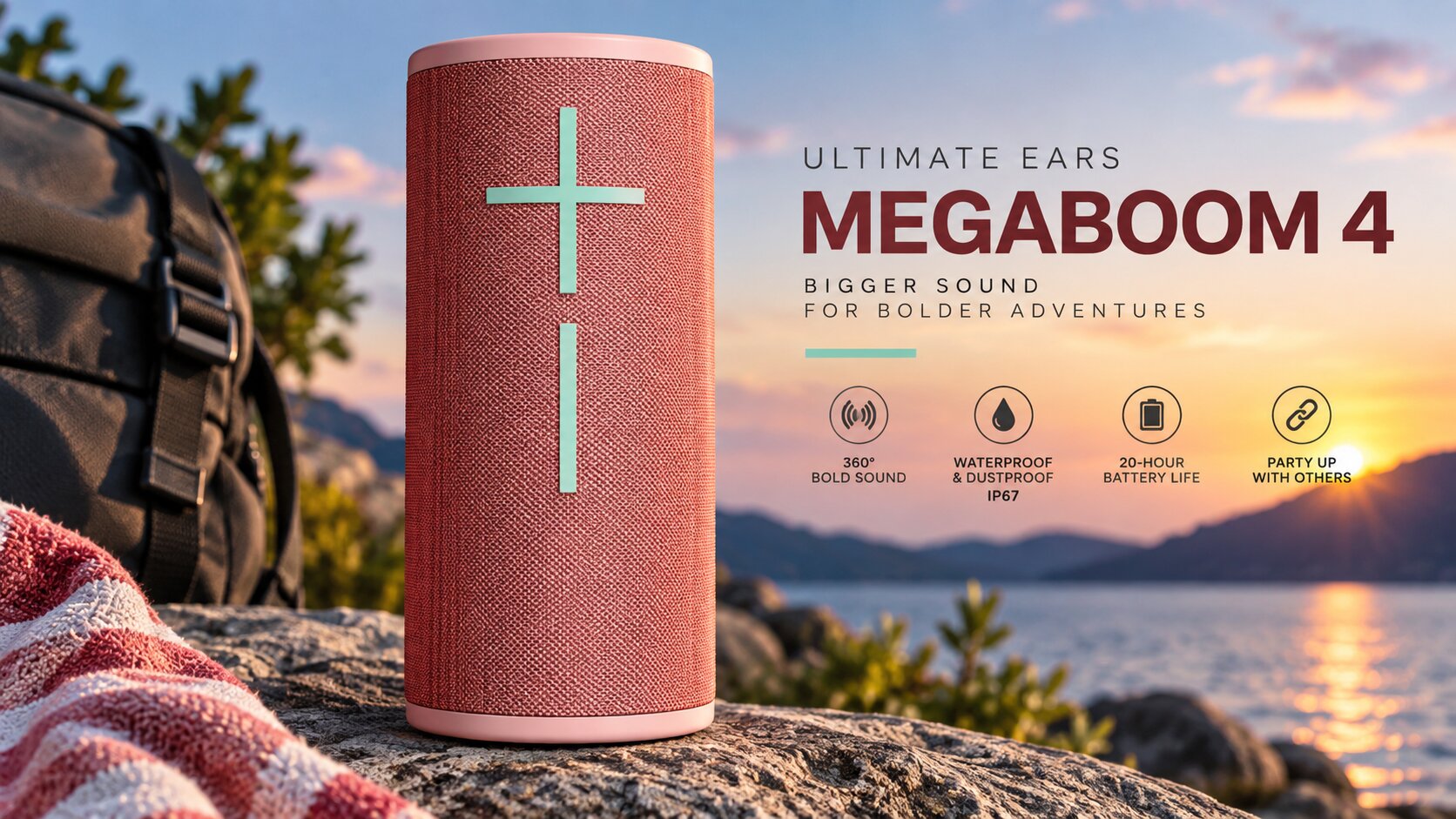
The Ultimate Ears MEGABOOM 4 is one of the most balanced products in this selection for people who want to carry their speaker regularly.
RTINGS’ current test describes it as very portable, with outstanding directivity and useful app-based EQ and PartyUp functionality. Its main limitations are maximum loudness and deep-bass reproduction.
Sound quality
The MEGABOOM 4 adds warmth to kick drums and basslines.
That makes it more engaging than a completely thin-sounding compact speaker.
But its physical size limits its low-frequency extension.
RTINGS specifically notes that it does not reproduce much low bass, so music containing significant sub-bass lacks some of the deep thump available from larger models.
Directivity
This is arguably one of its most useful characteristics.
The 360-degree design means the sound remains remarkably consistent around the speaker.
That makes it a natural choice for:
- picnics
- small gatherings
- travel
- kitchens
- patios
- camping
Volume
It is not one of the loudest speakers in this group.
That is an important limitation if you regularly listen outdoors in noisy environments.
The speaker can be excellent for personal and small-group listening while being the wrong tool for a large party.
Who should buy it?
- easy portability
- 360-degree sound
- outdoor durability
- useful app controls
- good battery life
- a middle ground between tiny and large speakers
Buy it if you want:
Who should skip it?
- deep bass is your top priority
- you need very high SPL
- you want Wi-Fi
- you need multiple device connections
Skip it if:
What you get for the money
Its value is in balance rather than any single extreme specification.
4. Anker Soundcore Select 4 Go
Best for: Budget buyers and small portable use
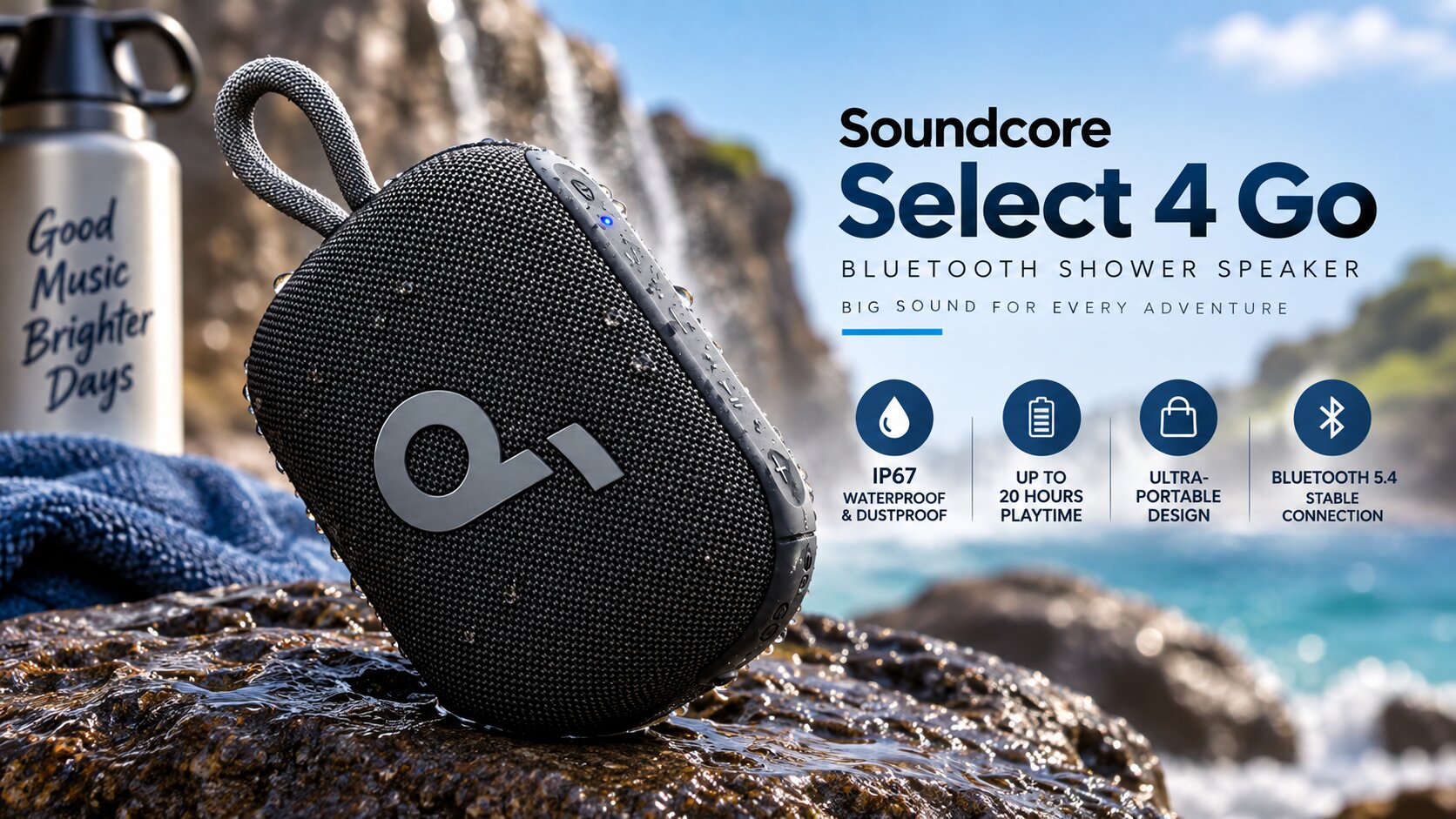
The Anker Soundcore Select 4 Go is the clearest example in this group of a product where size matters more than raw acoustic performance.
RTINGS categorizes it among small, portable, budget and waterproof Bluetooth speakers. It is a mono speaker by itself, but two units can be paired for stereo playback, and the companion app provides EQ controls.
Sound quality
The Select 4 Go’s main weakness is bass.
That is expected from a speaker of this size.
RTINGS notes that its small drivers cannot reproduce much low-bass thump, particularly affecting bass-heavy music such as EDM. Its midrange is more balanced, allowing voices and instruments to remain reasonably clear.
Portability
This is where it makes the most sense.
Its carrying loop makes it easy to attach to a bag, and its small footprint means it can go places where a larger speaker cannot.
Stereo option
A second unit can be paired to produce stereo playback.
That is a useful upgrade path for buyers who like the speaker but later want wider coverage.
Who should buy it?
- students
- travelers
- casual listeners
- small-room users
- people who want a shower or kitchen speaker
- budget buyers
Who should skip it?
- deep bass
- loud party playback
- large-room coverage
- high-end music reproduction
Skip it if you want:
What you get for the money
You are buying convenience, durability and affordability, not acoustic power.
That is exactly why it can still be one of the more sensible choices for a specific type of buyer.
5. LG Sound Suite M7
Best for: LG home-theater integration
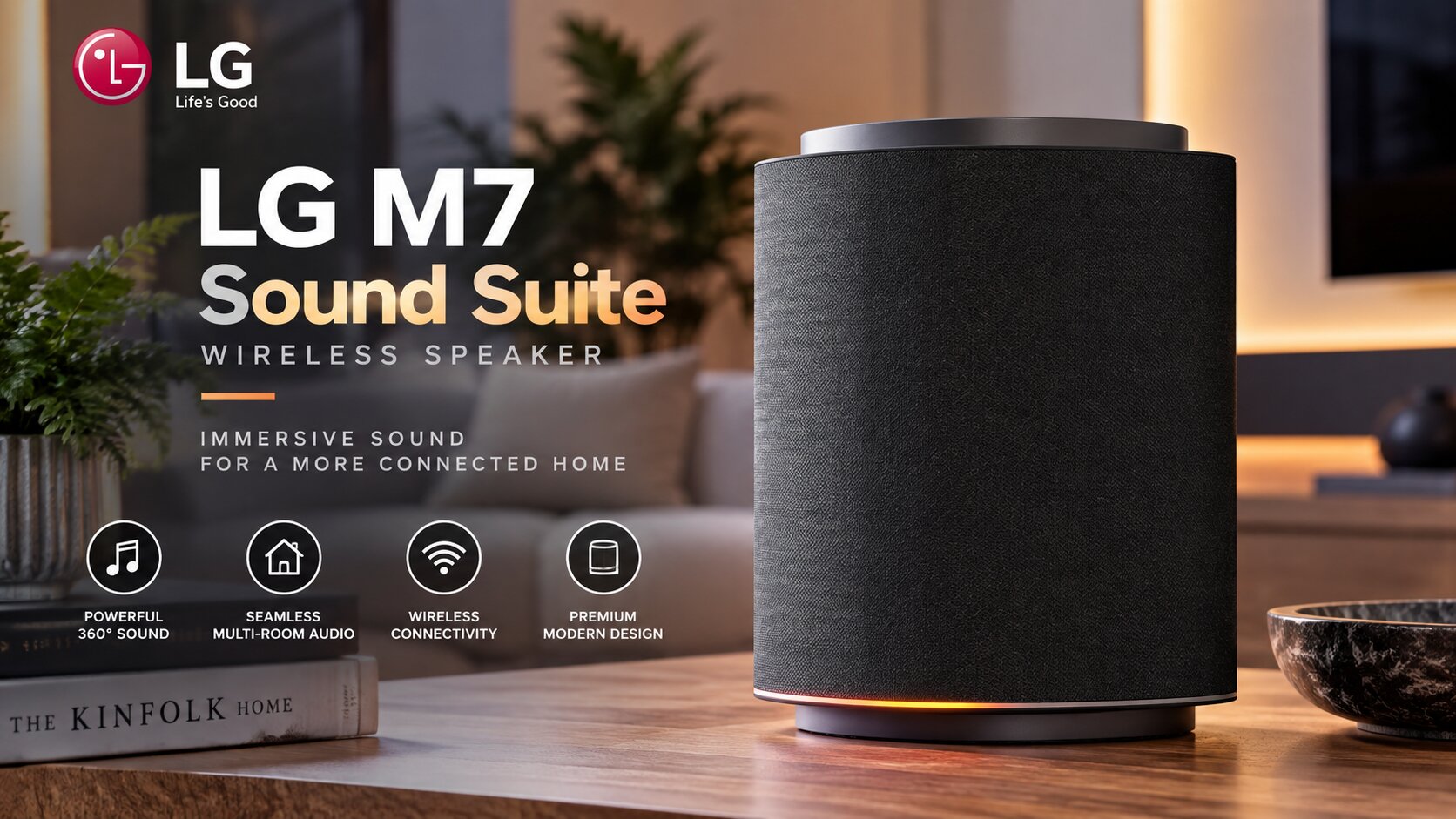
The LG Sound Suite M7 needs a qualification before it can be fairly compared with the other products here.
It is not simply another standalone battery-powered Bluetooth speaker.
Current LG Sound Suite information places the M7 within LG’s modular home-theater system. The LG Immersive Quad Suite 7 Pro, for example, uses four M7 speakers as satellite speakers alongside the H7 soundbar and W7 subwoofer. RTINGS’ current review pipeline also lists the M7 as a recent speaker product under testing.
Why it belongs in this comparison
It belongs here because many readers searching for best Bluetooth speakers for home are actually looking for home wireless audio rather than a portable speaker.
But it should not be judged against the Anker Select 4 Go or MEGABOOM 4 on portability.
Its job is different.
Home-theater role
The M7 is intended to work as part of LG’s broader home-audio architecture.
That means its value depends heavily on the rest of the system.
A satellite speaker can be excellent within a properly configured surround setup while making little sense as a standalone purchase.
Who should buy it?
- the speaker will stay indoors
- you want Wi-Fi
- you already use Sonos
- you care about immersive music
- room correction matters
- you want a premium home system
Consider it if you are building or expanding a compatible LG home-theater system.
Who should skip it?
- you need battery power
- you want waterproofing
- you need deep party-level bass
- you want a speaker for outdoor use
Skip it if you simply want a portable Bluetooth speaker.
What you get for the money
Its value is tied to system integration, not standalone portability.
This is exactly the type of product that should not be reduced to a generic “best Bluetooth speaker” ranking.
6. Sonos Era 300
Best for: Premium home listening and immersive audio
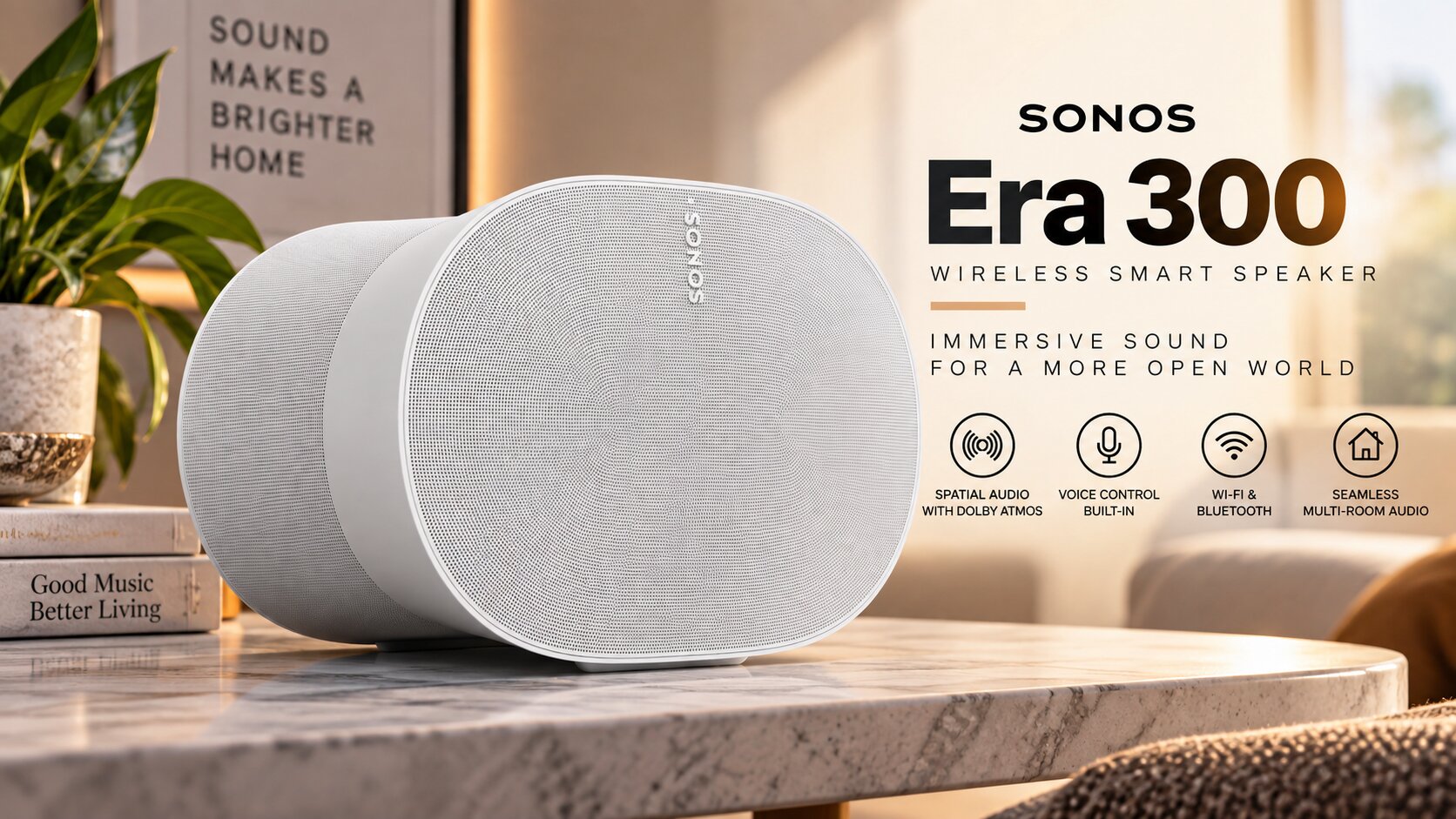
The Sonos Era 300 is a home speaker first and a Bluetooth speaker second.
RTINGS’ current test identifies Bluetooth alongside Wi-Fi, AirPlay 2 and Sonos ecosystem integration. It also supports Trueplay room correction and Dolby Atmos Music on compatible services.
Sound quality
The Era 300 has a wide, immersive presentation.
Its voices and lead instruments are reproduced accurately, while the speaker’s directivity helps maintain a broad listening experience.
However, it is not the model to buy simply because you want the deepest possible bass.
RTINGS notes that it does not reproduce much low bass, so bass-heavy genres can lack some of the rumble produced by larger party speakers.
Room correction
Trueplay is a major reason to consider it.
A room can alter perceived frequency response significantly.
Walls, furniture and speaker placement all influence the sound reaching the listener.
Room correction attempts to compensate for some of these acoustic effects.
Dolby Atmos Music
Dolby Atmos support gives the Era 300 a distinct role among these products.
For listeners using compatible streaming services and recordings, the speaker can reproduce immersive music formats that are not the focus of conventional portable Bluetooth speakers.
Who should buy it?
- listeners who like warm sound
- users who move between home and outdoors
- people who value long battery life
- buyers who care about design
Buy it if:
Who should skip it?
- maximum bass depth
- maximum volume
- full waterproofing
- Wi-Fi
Skip it if:
What you get for the money
You are paying for home audio integration, room correction, immersive playback and ecosystem features, rather than extreme loudness.
7. Marshall Kilburn III
Best for: Warm sound, portability and long listening sessions
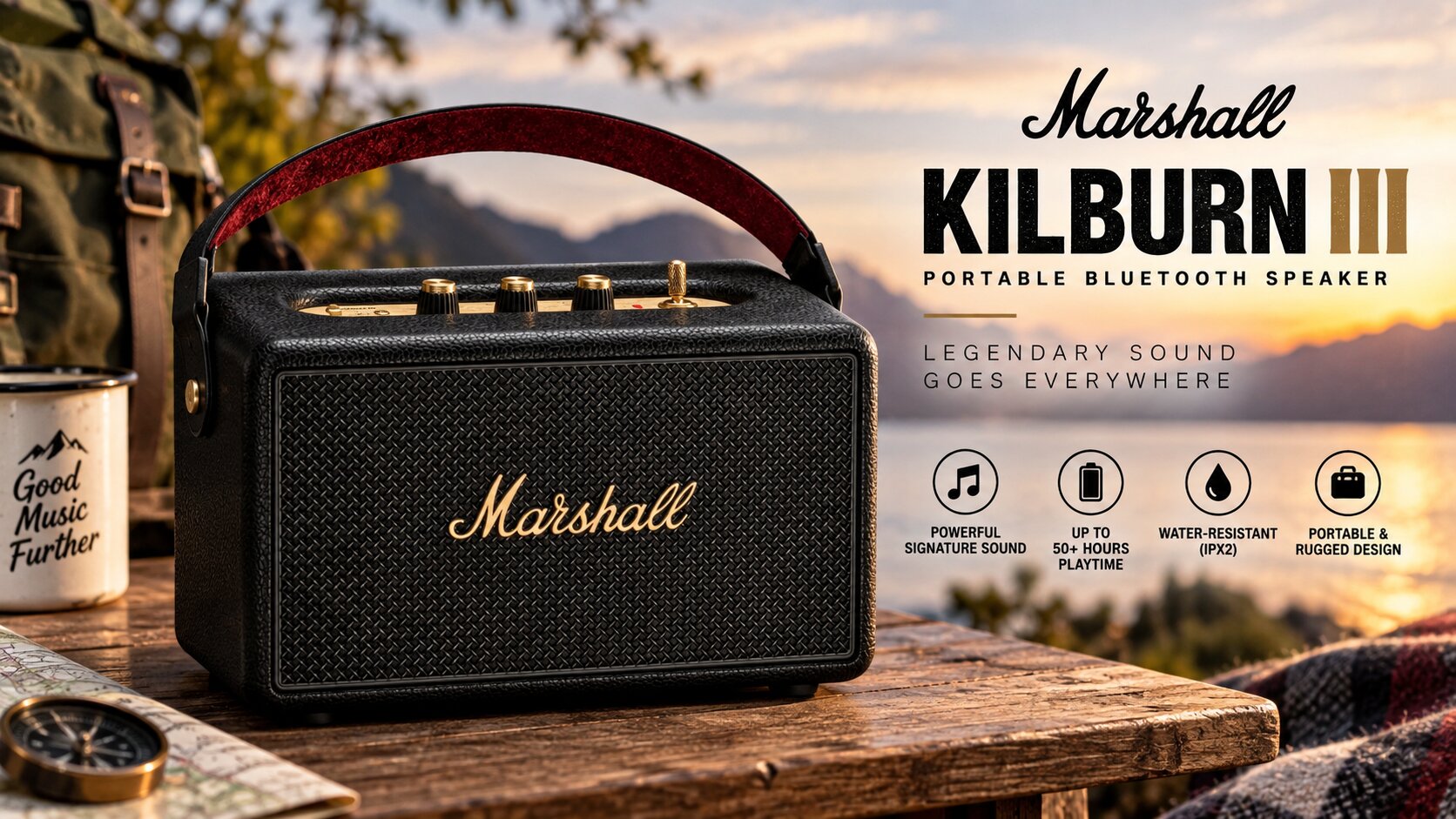
The Marshall Kilburn III takes a more traditional portable-speaker approach while retaining Marshall’s distinctive amplifier-inspired design.
RTINGS’ current review describes a warm default sound with substantial high bass and low-mid energy. It also offers EQ, presets and placement correction through the app.
Sound quality
The warm tuning can make music sound full and substantial.
That can work particularly well for rock, acoustic recordings and many vocal-driven tracks.
There is a downside.
RTINGS notes that the relatively restrained treble can make voices somewhat muddy compared with a more neutral presentation.
Directivity
The Kilburn III performs well across different listening angles.
That is useful outdoors because listeners do not need to stand directly in front of the speaker.
Battery
This is one of its strongest practical characteristics.
RTINGS measured a little over 23 hours, although this was below the manufacturer’s advertised 50-plus-hour figure. The result illustrates why measured battery performance can be more useful than marketing claims alone.
Outdoor use
The IP54 rating protects against dust and water splashes.
It is therefore suitable for many outdoor situations, but it should not be treated like an IP67 speaker.
Who should buy it?
- the speaker will stay indoors
- you want voice control
- you want Wi-Fi and Bluetooth
- you use AirPlay or Chromecast
- you want to integrate it with a Bose home setup
Who should skip it?
- you need battery power
- you need waterproofing
- you want a travel speaker
- deep bass is your priority
Skip it if you need:
What you get for the money
The Kilburn III offers a strong combination of sound character, portability, battery life and physical design.
8. Bose Lifestyle Ultra Speaker
Best for: Smart home audio
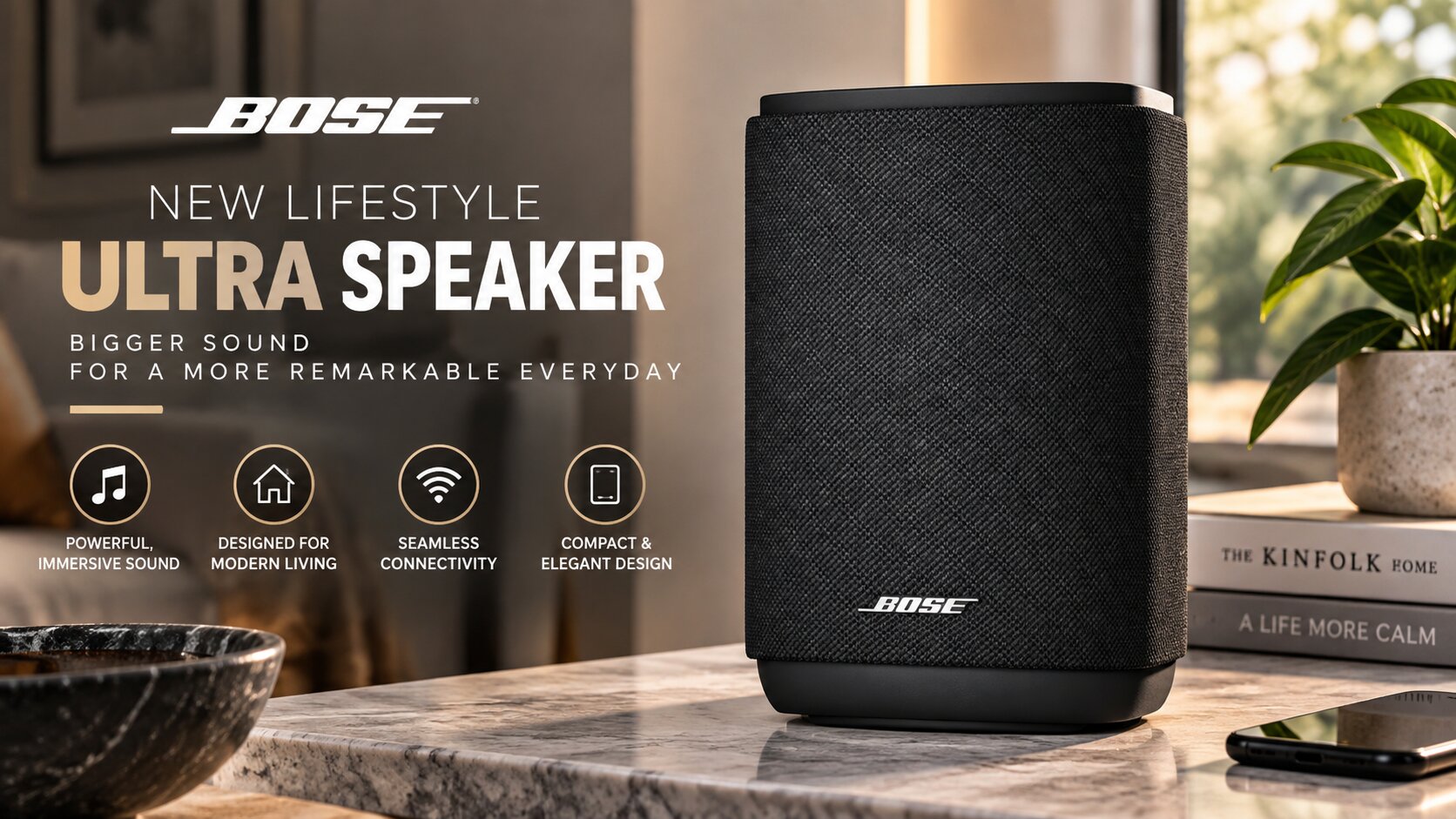
The Bose Lifestyle Ultra Speaker is another product that makes much more sense when viewed as a home speaker.
RTINGS’ 2026 Bose speaker review describes it as an AC-powered home model without water or dust resistance. It supports Bluetooth, Wi-Fi, Apple AirPlay, Google Chromecast and built-in Amazon Alexa, while its microphones are designed to pick up voice commands from around a room.
Sound quality
The default sound is warm and suitable for vocals and acoustic instruments.
It does not reproduce especially deep bass, so it is not the obvious choice for someone building a bass-heavy party setup.
Smart features
Voice control is one of the strongest reasons to buy it.
The built-in microphones are designed for far-field voice pickup, allowing users to control supported functions without standing beside the speaker.
Stereo
A single unit downmixes stereo content to mono, but two units can be paired through the companion app for stereo playback. They can also integrate with compatible Bose home-theater setups.
Who should buy it?
- party hosts
- karaoke users
- outdoor gatherings
- bass-focused listeners
- people who need high volume
Buy it if:
Who should skip it?
- you live in a small apartment
- you need a backpack speaker
- you mostly listen quietly
- you want premium home stereo imaging
Skip it if:
What you get for the money
The value comes from smart-home integration and convenience, rather than portability.
9. JBL PartyBox Club 120
Best for: Parties, karaoke and bass-heavy music
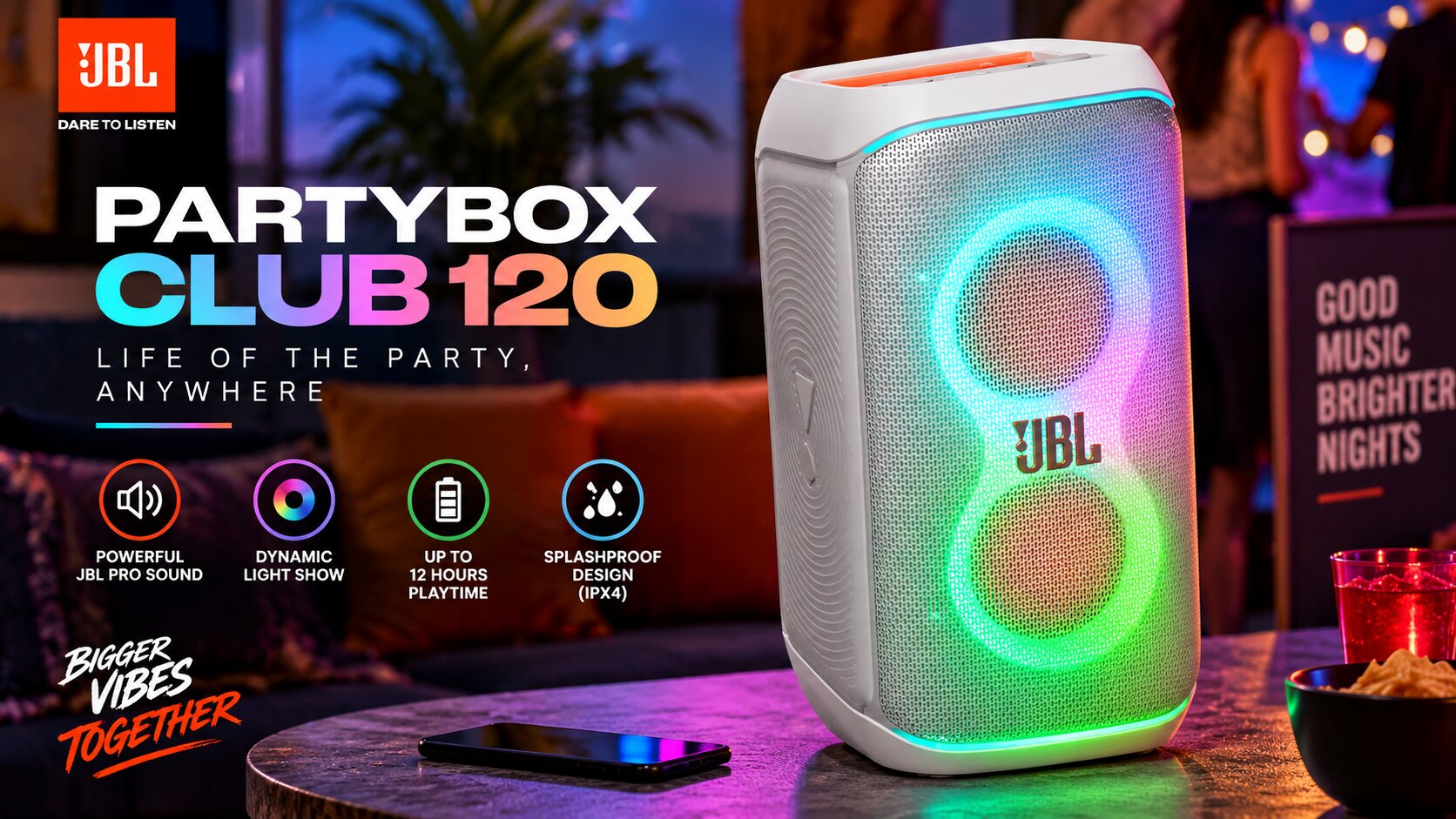
The JBL PartyBox Club 120 is a different type of product.
It is not trying to be a discreet living-room speaker.
It is a party system.
RTINGS describes it as a mid-range party speaker with customizable RGB lighting, Bass Boost, microphone and instrument inputs, IPX4 splash resistance and a swappable battery.
Sound quality
The default tuning is bass-heavy.
That makes it particularly suitable for house, hip-hop, dance and other bass-driven genres.
At the same time, RTINGS reports a relatively balanced midrange, allowing vocals and lead instruments to remain reasonably clear.
Loudness
The Club 120 is substantially louder than compact portable speakers.
RTINGS currently places it among its loud Bluetooth speaker recommendations and notes that it can provide enough output for a yard party.
Karaoke
This is one of its most practical advantages.
Microphone and instrument inputs turn it into something closer to a casual entertainment system than an ordinary Bluetooth speaker.
Battery
RTINGS reports more than ten hours of continuous outdoor playback in its testing, while the speaker’s swappable battery design allows users to extend runtime with an additional battery.
Portability
Despite its handles, this is not a light travel speaker.
Its bulk is the price of the output and party-focused hardware.
Who should buy it?
- outdoor party hosts
- users who need very high volume
- people who want battery-powered party audio
- buyers who find larger SOUNDBOKS models too cumbersome
Who should skip it?
- you want a small travel speaker
- you need Wi-Fi
- you need extensive karaoke inputs
- you mostly listen indoors at moderate volume
Skip it if:
What you get for the money
The Club 120 gives you loudness, bass, lighting, karaoke capability and battery operation.
10. SOUNDBOKS Mix
Best for: High-volume outdoor listening
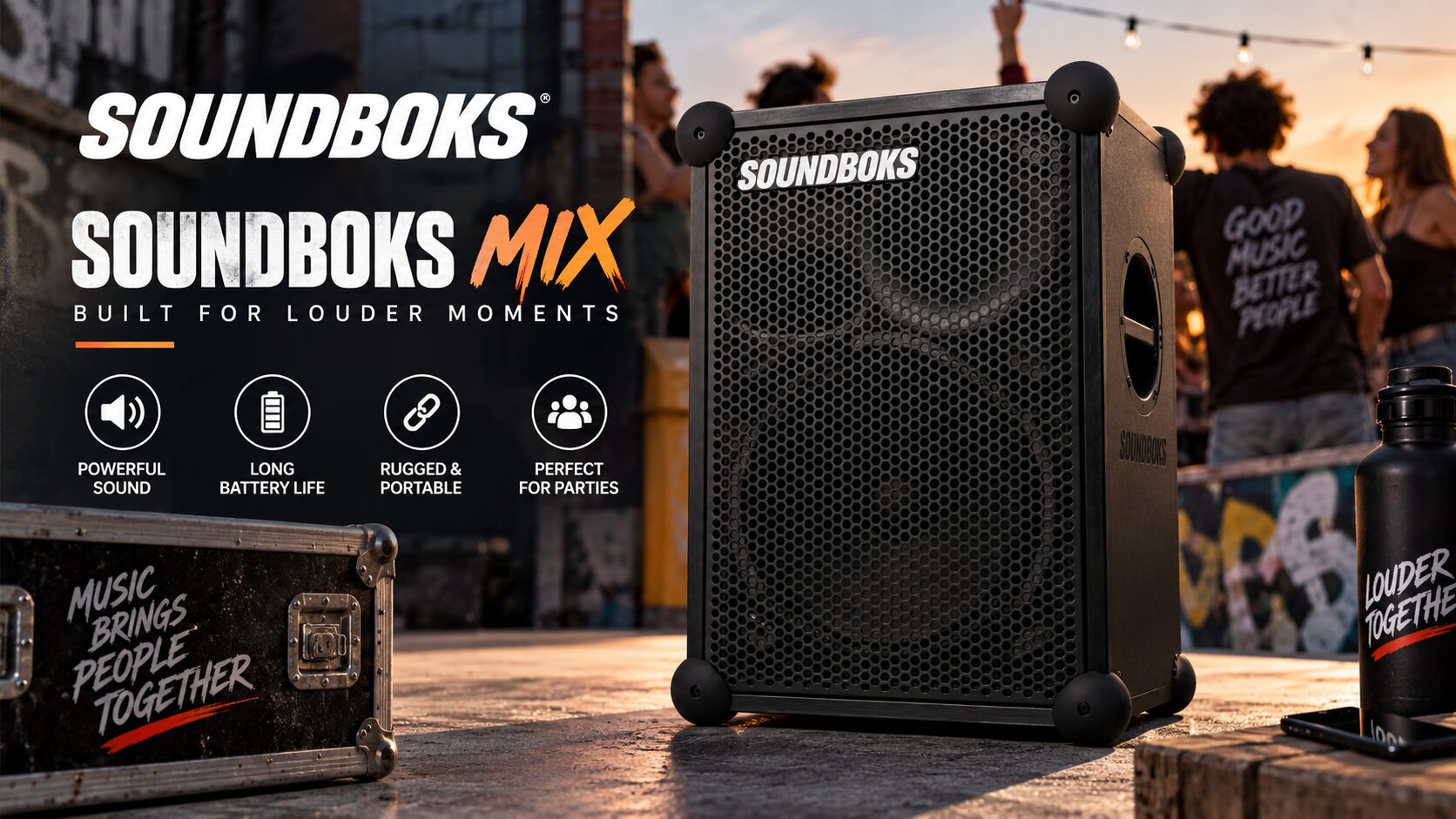
The SOUNDBOKS Mix is designed for buyers who want much more output than a conventional portable Bluetooth speaker can provide.
RTINGS’ current comparison places it in the same broad category as other rugged battery-powered party speakers and reports a measured battery life of around 18 hours. It is smaller and lighter than the SOUNDBOKS Gen. 3, making it easier to carry to casual outdoor events.
Loudness
This is the Mix’s defining characteristic.
RTINGS currently lists it among its loud Bluetooth speakers, with maximum output at just over 110 dB SPL in its testing.
That puts it far outside the role of a small personal speaker.
Bass
The Mix has a bass-heavy presentation suitable for dance and electronic music.
However, its smaller size means it cannot reproduce bass as deeply as larger party speakers.
This is an important technical point.
You can increase bass electronically, but EQ cannot completely overcome the physical limitations of a smaller driver and enclosure.
Portability
Compared with the larger SOUNDBOKS Gen. 3, the Mix is more practical when the speaker needs to be carried over a longer distance.
RTINGS specifically describes the Mix as the better choice for casual outdoor gatherings where carrying the speaker on foot matters.
Inputs
This is one area where the Mix is less versatile than larger party systems.
The Gen. 3 supports additional XLR connections for microphones and instruments, while the Mix has fewer physical inputs.
Who should buy it?
- Will it stay in one room?
- Do I need Wi-Fi?
- Do I want multi-room audio?
- Do I use AirPlay?
- Do I want voice control?
- Do I need room correction?
- Do I want stereo pairing?
Who should skip it?
- a small kitchen speaker
- a travel speaker
- a bathroom speaker
- something to attach to a backpack
- occasional background music
Skip it if:
What you get for the money
The Mix is essentially a compromise between large-speaker output and somewhat easier portability.
Best Bluetooth Speakers for Bass and Sound Quality
The search term best Bluetooth speakers for bass and sound quality combines two requirements that are sometimes in conflict.
Heavy bass can make a speaker sound exciting, but excessive bass can mask vocals and instruments.
The strongest bass-focused speakers in this group are the JBL Boombox 4, JBL PartyBox Club 120 and SOUNDBOKS Mix.
The Boombox 4 is the more conventional large portable option.
The PartyBox Club 120 is better suited to parties and karaoke.
The SOUNDBOKS Mix is designed around very high output.
The MEGABOOM 4 is a more portable compromise, but its smaller enclosure limits deep-bass reproduction. RTINGS specifically identifies its lack of substantial low bass as one of its limitations.
The Sonos Era 300 takes a different approach. It offers a wider, immersive presentation and room correction, but its low-bass performance is not its strongest characteristic.
So if “sound quality” means natural vocals and broad musical presentation, the answer may be different from a buyer whose only concern is bass impact.
Best Bluetooth Speakers for Home
The best Bluetooth speakers for home should be evaluated differently from outdoor models.
Ask:
The Sonos Era 300 is particularly strong for buyers interested in premium home audio and immersive music. Its Trueplay room correction and Dolby Atmos Music support give it capabilities that conventional portable speakers do not target.
The Bose Lifestyle Ultra Speaker is more focused on smart-home convenience, voice control and broad wireless connectivity.
The LG Sound Suite M7 belongs in an even more specialized category because it functions as part of LG’s home-theater architecture rather than as a conventional standalone portable speaker.
Best Outdoor Bluetooth Speakers
Outdoor listening creates several technical challenges.
There are no walls to reinforce the sound.
Ambient noise competes with the music.
People may stand or sit at different angles.
Weather can also become a factor.
For this reason, outdoor speakers benefit from:
High output: enough acoustic energy to remain audible outside.
Good directivity: consistent sound over a wider area.
Battery power: freedom from electrical outlets.
Durability: resistance to dust, splashes and, where appropriate, immersion.
Useful carrying design: because the speaker may need to be transported regularly.
The EPICBOOM and MEGABOOM 4 are particularly attractive for portable outdoor use, while the Boombox 4, PartyBox Club 120 and SOUNDBOKS Mix make more sense when output becomes a major priority.
Best Portable Bluetooth Speakers
Portability has several levels.
Ultra-portable
The Anker Soundcore Select 4 Go fits this category.
Its small size is the main attraction.
Everyday portable
The MEGABOOM 4 and EPICBOOM sit here.
They are larger but still practical to carry.
Large portable
The Boombox 4 and Kilburn III fall into this category.
They can be moved easily enough, but they are no longer pocket-friendly.
Portable party speakers
The PartyBox Club 120 and SOUNDBOKS Mix are technically portable but should be considered mobile party systems.
This distinction is useful because “portable” can otherwise become an almost meaningless marketing term.
Best Small Bluetooth Speakers
If your search is best small Bluetooth speakers, size should be treated as the primary constraint.
Small speakers can offer excellent clarity for voices and casual music.
What they generally cannot do is reproduce the deepest bass at high volume.
The Anker Soundcore Select 4 Go is a good example.
RTINGS found that its small drivers cannot reproduce much low bass, but its midrange remains mostly balanced. It also offers a nine-band EQ and stereo pairing.
That is a sensible design trade-off.
Trying to make a tiny speaker behave like a large party system usually produces distortion or exaggerated upper bass rather than genuinely deep low-end performance.
Best Cheap Bluetooth Speakers
For people searching for cheap and best Bluetooth speakers, value should be judged by intended use.
A budget speaker that does exactly what you need can be a better purchase than a much more expensive model loaded with features you never use.
The Select 4 Go is a good example of this principle.
If you need:
there is little reason to pay for the output of a Boombox-class speaker.
But if you are planning outdoor parties, spending more on output may be cheaper in the long run than replacing an underpowered compact model.
Best Wireless Bluetooth Speakers: Bluetooth vs Wi-Fi
Bluetooth and Wi-Fi should not be treated as competing versions of the same technology.
Bluetooth is ideal for direct connections.
You take your phone, connect it to the speaker and play music.
Wi-Fi can provide more extensive home-audio functionality.
The Sonos Era 300 illustrates this clearly. It supports Bluetooth but also uses Wi-Fi as part of its broader home-audio ecosystem, with AirPlay 2 and other network-based functionality.
The Bose Lifestyle Ultra Speaker similarly combines Bluetooth with Wi-Fi, AirPlay and Chromecast.
For travel, Bluetooth is usually enough.
For a permanent home system, Wi-Fi can become much more valuable.
Bluetooth Codecs, LE Audio and Auracast
Bluetooth technology has moved beyond simply connecting a phone to a speaker.
Newer Bluetooth implementations can support technologies such as LE Audio and Auracast.
The JBL Boombox 4, for example, adds Bluetooth LE Audio and Auracast compatibility.
Marshall’s Kilburn III also supports LC3/Auracast, although RTINGS notes that compatibility can still vary depending on the devices involved.
The important point for buyers is this:
Do not choose a speaker solely because its Bluetooth version number is newer.
Actual compatibility, codec support, speaker hardware and software implementation all matter.
Does Wattage Determine Sound Quality?
No.
Wattage is one of the most commonly misunderstood speaker specifications.
Two speakers with different amplifier power ratings can produce very different results.
Why?
Because sound depends on:
- driver efficiency
- enclosure design
- DSP
- frequency response
- distortion
- driver excursion
- acoustic tuning
- maximum SPL
- cabinet volume
A higher wattage number does not automatically mean better sound.
When comparing speakers, independent measurements of loudness, frequency response and distortion are more useful than wattage alone.
Bass Boost vs Real Deep Bass
This distinction deserves special attention.
A manufacturer can use DSP to increase the energy in certain bass frequencies.
That can make a small speaker sound fuller.
But there is a limit.
If the driver cannot physically reproduce a very low frequency at useful volume, adding more EQ cannot turn it into a subwoofer.
The MEGABOOM 4 demonstrates this well. Its bass tuning adds warmth and energy, but independent testing still finds limited deep-bass reproduction because of its physical size.
The SOUNDBOKS Mix also illustrates the same principle from another direction. It has a bass-heavy profile and very high output, but its smaller size compared with the larger SOUNDBOKS Gen. 3 limits how deep its bass can go.
IP Ratings Explained
Outdoor buyers should understand IP ratings before buying.
IP54
The first number relates to protection against solid particles such as dust.
The second number relates to water.
IP54 therefore indicates dust protection and protection against water splashes.
The Marshall Kilburn III uses an IP54 rating.
IP67
IP67 provides a higher level of protection.
The device is dust-tight and designed to withstand temporary immersion under the applicable test conditions.
The Ultimate Ears EPICBOOM and MEGABOOM 4 are examples of portable speakers designed around this type of protection.
IPX4
IPX4 focuses on water splashes without specifying a dust-protection rating.
The JBL PartyBox Club 120 is rated IPX4.
A higher rating does not automatically mean better sound.
It simply gives the speaker a different level of environmental protection.
Battery Life: Why Advertised Numbers Can Mislead
Battery life is highly dependent on usage.
Listening at moderate volume consumes less power than running a speaker at maximum output.
Bass-heavy EQ settings can also affect consumption.
The Marshall Kilburn III provides a useful example. RTINGS measured a little over 23 hours despite the manufacturer’s substantially higher advertised figure.
The SOUNDBOKS Mix, meanwhile, produced around 18 hours in RTINGS’ comparison testing.
These measurements should not be treated as guarantees for every listener.
Instead, they show why battery claims should always be interpreted alongside test conditions.
How We Would Test These Speakers
A professional speaker test should use the same methodology across products.
1. Frequency response
Measure how the speaker reproduces frequencies from low bass through treble.
This reveals whether the speaker is:
- bass-heavy
- neutral
- warm
- bright
- mid-focused
2. Bass extension
Measure how low the speaker can reproduce meaningful output.
This separates genuine low bass from simple upper-bass emphasis.
3. Maximum SPL
Measure maximum acoustic output.
This is especially important for outdoor and party speakers.
4. Compression
Increase volume and measure whether the speaker reduces its dynamic output.
Compression can make drums lose impact and music sound flatter.
5. Directivity
Measure how sound changes as the listener moves around the speaker.
This is particularly useful for cylindrical 360-degree speakers.
6. Distortion
Measure harmonic distortion at different frequencies and volume levels.
Low distortion generally means cleaner reproduction.
7. Latency
Test Bluetooth latency with both iOS and Android devices.
Low latency matters when watching videos.
RTINGS, for example, reports low iOS latency for the MEGABOOM 4 but higher Android latency, illustrating why device compatibility can matter.
8. Battery
Run the speaker continuously under controlled conditions.
Record:
- starting volume
- EQ
- connection type
- elapsed time
- shutdown point
9. Connectivity
Test:
- initial pairing
- reconnection
- range
- multipoint
- stereo pairing
- app functionality
- firmware updates
10. Physical design
Evaluate:
- handles
- loops
- controls
- charging ports
- battery access
- grille construction
- rubber feet
- carrying comfort
This approach gives a much more useful picture than reading the specification sheet alone.
What We Learned From the Comparison
The biggest lesson is that there is no single definition of a good Bluetooth speaker.
The JBL Boombox 4 is good because it can deliver substantial bass and high output.
The MEGABOOM 4 is good because it offers portability and excellent sound consistency around the speaker.
The Select 4 Go is good because it solves the problem of needing a very small and inexpensive speaker.
The Sonos Era 300 is good because it approaches the problem from a premium home-audio perspective.
The PartyBox Club 120 is good because it turns a Bluetooth speaker into a party and karaoke system.
The SOUNDBOKS Mix is good because it provides unusually high output in a battery-powered format.
These are different definitions of “good.”
That is why simple overall rankings can sometimes be less useful than category-specific recommendations.
10 Speakers Compared: Which Type of Buyer Does Each One Fit?
The detailed product visuals and shopping links are placed directly within each review section below for easier comparison.
Best Bluetooth Speakers: Category Breakdown
Best for Bass
JBL Boombox 4
Its larger format and bass-focused design make it the more natural choice for buyers who want deep, powerful low-end from a battery-powered speaker.
Best for Large Outdoor Parties
SOUNDBOKS Mix
Its very high measured maximum output and battery-powered design make it particularly suited to larger outdoor listening environments.
Best for Portable Outdoor Listening
Ultimate Ears MEGABOOM 4
Its 360-degree directivity and portable design make it easier to use in environments where listeners are positioned around the speaker.
Best Small Budget Choice
Anker Soundcore Select 4 Go
Its small size, low price positioning, water/dust protection and carrying loop are the main reasons to choose it.
Best Premium Home Choice
Sonos Era 300
Its room correction, wide presentation and Dolby Atmos Music support give it a distinctly home-focused role.
Best for Smart Home Features
Bose Lifestyle Ultra Speaker
Its voice control, Wi-Fi, Bluetooth, AirPlay and Chromecast support make it a strong fit for a permanent smart-home setup.
Best for Karaoke
JBL PartyBox Club 120
The microphone and instrument inputs give it capabilities that ordinary portable Bluetooth speakers don’t provide.
Best Warm-Sounding Portable Model
Marshall Kilburn III
Its warm tuning, carrying handle, long measured battery life and wide listening consistency make it particularly interesting for users who prefer a fuller sound character.
Buying Guide: What Should You Actually Buy? Best Bluetooth Speakers
Before you spend money, answer these questions.
1. Where will the speaker normally live?
If the answer is “my living room,” look at home-focused products.
If the answer is “my backpack,” portability should dominate the decision.
2. How much bass do you really need?
If bass is a priority, move toward larger speakers.
If you mostly listen to podcasts, acoustic music or casual playlists, extreme bass may not justify the extra size.
3. Do you need waterproofing?
If the speaker will regularly go outside, check the actual IP rating.
4. How loud do you need it?
A bedroom and a garden party require completely different output levels.
5. Do you want Wi-Fi?
For a permanent home system, Wi-Fi can be valuable.
For a portable speaker, Bluetooth is often all you need.
6. Do you want stereo?
Check whether the speaker is stereo on its own or needs a second unit.
7. Will you use an app?
EQ, presets, stereo pairing and firmware updates can make the companion app an important part of the ownership experience.
8. Do you need microphones?
If you want karaoke, don’t buy an ordinary portable speaker and expect it to become a party system later.
9. How far will you carry it?
This is one of the most overlooked questions.
A 10 kg speaker may be perfectly portable for moving from your car to the garden.
It is not necessarily portable for a long walk.
10. How long do you plan to keep it?
A replaceable battery can be valuable if you intend to use the speaker heavily for many years.
Research & Authority Sources
Key claims in this guide are informed by independent testing and official manufacturer/standards documentation. These links are provided for readers who want to inspect the underlying information.
- RTINGS — JBL Boombox 4 Review
- RTINGS — Ultimate Ears EPICBOOM Review
- RTINGS — Ultimate Ears MEGABOOM 4 Review
- RTINGS — Anker Soundcore Select 4 Go Review
- RTINGS — Sonos Era 300 Review
- RTINGS — Marshall Kilburn III Review
- RTINGS — JBL PartyBox Club 120 Review
- RTINGS — Loudest Bluetooth Speakers
- LG — Sound Suite M7
- Bose — Lifestyle Ultra Speaker
- Marshall — Kilburn III
- SOUNDBOKS — Mix
- Sonos — Era 300
- Ultimate Ears — MEGABOOM 4
- Bluetooth SIG — LE Audio
- Bluetooth SIG — Auracast
Final Verdict
The best Bluetooth speakers in 2026 cover several very different categories, and that is why the smartest buying decision starts with the intended use rather than the product’s popularity.
The JBL Boombox 4 is the logical choice for buyers who want substantial bass, high output and battery-powered outdoor listening. Its detachable battery and newer wireless features also make it a more modern version of the large portable-speaker concept.
The Ultimate Ears EPICBOOM is more focused on rugged outdoor use and broad sound coverage, while the MEGABOOM 4 is easier to carry and particularly strong when consistent sound around the speaker matters.
The Anker Soundcore Select 4 Go occupies a completely different space. It is not designed to compete with large speakers on bass or loudness. Its purpose is to provide a very small, inexpensive and durable option.
The Sonos Era 300 and Bose Lifestyle Ultra Speaker demonstrate why premium home speakers should be judged differently from portable models. Both prioritize home connectivity and features that make sense when a speaker stays in one room.
The Marshall Kilburn III sits between home and outdoor use, with a warm sound profile, long measured battery life and a portable form factor.
The JBL PartyBox Club 120 is the better fit when the objective is a party rather than background listening. Its bass-heavy sound, high output, lighting and microphone/instrument inputs give it a very different purpose.
The SOUNDBOKS Mix pushes further toward high-volume outdoor entertainment, offering much more output than ordinary portable speakers while remaining easier to transport than the larger SOUNDBOKS models.
And the LG Sound Suite M7 should be considered in the context of LG’s home-theater system rather than as a conventional standalone portable Bluetooth speaker.
The most useful conclusion is therefore simple:
Buy according to the listening environment, not the specification sheet alone.
If you need deep bass, enclosure size matters.
If you need portability, weight matters.
If you need outdoor performance, directivity and durability matter.
If you want home audio, Wi-Fi and room correction may matter more.
If you want parties, loudness and inputs become important.
And if you simply need something small to carry around, paying for a giant party speaker may be money spent in the wrong place.
Frequently Asked Questions
What are the best Bluetooth speakers to buy in 2026?
There is no single model that fits every listener. The JBL Boombox 4 is suited to high-output portable listening, the MEGABOOM 4 to everyday portability, the Anker Select 4 Go to small-budget use, the Sonos Era 300 to premium home audio and the JBL PartyBox Club 120 to parties and karaoke.
Which Bluetooth speaker is best for bass?
Large speakers generally have an advantage in deep-bass reproduction. In this group, the JBL Boombox 4, JBL PartyBox Club 120 and SOUNDBOKS Mix are the most appropriate choices for bass-focused listening.
What are the best Bluetooth speakers for home?
The Sonos Era 300 and Bose Lifestyle Ultra Speaker are designed primarily for home use. The Sonos emphasizes immersive audio and room correction, while Bose emphasizes smart-home connectivity and voice control.
What is the best outdoor Bluetooth speaker?
For portable outdoor listening, the Ultimate Ears EPICBOOM and MEGABOOM 4 are strong choices. For larger outdoor parties, the JBL Boombox 4 and SOUNDBOKS Mix provide substantially more output.
What is the best small Bluetooth speaker?
The Anker Soundcore Select 4 Go is the most compact and budget-focused option in this comparison. Its major trade-off is limited bass.
Are expensive Bluetooth speakers worth it?
They can be if you need their additional capabilities. Premium models may provide better home integration, room correction, wider sound presentation or advanced connectivity. If you only need occasional portable listening, a less expensive model may make more sense.
Does a bigger speaker always sound better?
No. Bigger speakers generally have greater potential for bass and loudness, but sound quality also depends on driver design, DSP, tuning, distortion and directivity.
Does wattage determine sound quality?
No. Wattage alone does not tell you how loud or how good a speaker will sound. Driver efficiency, enclosure design, DSP and distortion are also important.
What is the difference between bass and deep bass?
Bass can refer to a broad range of low frequencies. Deep bass refers to the lower end of that range. A speaker can emphasize upper bass and sound powerful without reproducing very low frequencies particularly well.
Is IP67 better than IPX4?
IP67 provides a higher level of protection against dust and water than IPX4. However, the ratings describe environmental protection, not sound quality.
Is Bluetooth better than Wi-Fi?
They serve different purposes. Bluetooth is convenient for direct playback, while Wi-Fi can offer more advanced home-audio and multi-room features.
Does Bluetooth version determine sound quality?
No. Codec support, implementation, speaker hardware, DSP and acoustic design all matter.
How important is battery life?
It depends on how you use the speaker. Someone taking a speaker camping may care about battery life much more than someone keeping an AC-powered home speaker in a living room.
Can two Bluetooth speakers be paired?
Many models support stereo or party pairing, but the exact functionality depends on the manufacturer and model.
Is 360-degree sound better?
It can be more useful for groups because listeners around the speaker can hear a more consistent presentation. A forward-facing speaker may be preferable when the audience sits directly in front.
Is the JBL Boombox 4 good for outdoor use?
Yes. Its battery-powered design, high output and rugged construction make it suitable for outdoor listening. RTINGS currently categorizes it among portable, loud, outdoor and waterproof Bluetooth speakers.
Is the MEGABOOM 4 good for bass?
It produces warm, bass-forward sound for its size, but it cannot reproduce very deep bass like larger speakers.
Is the Sonos Era 300 good for bass?
It has useful bass but is not designed as a deep-bass party speaker. Its stronger characteristics are wide sound, room correction and immersive music support.
Is the Marshall Kilburn III waterproof?
It has an IP54 rating, which provides protection against dust and water splashes. It is not equivalent to an IP67 waterproof speaker.
Is the Bose Lifestyle Ultra Speaker portable?
No. It is designed as an AC-powered home speaker without water or dust resistance.
Is the JBL PartyBox Club 120 good for karaoke?
Yes. Its microphone and instrument inputs make it particularly useful for karaoke and casual performances.
Is the SOUNDBOKS Mix loud enough for a large outdoor gathering?
It is designed for high-volume use. RTINGS’ testing places its maximum output at just over 110 dB SPL, although actual results vary with distance and environment.
What should I look for before buying a Bluetooth speaker?
Start with where you will use it. Then consider bass, loudness, portability, battery, water resistance, connectivity, directivity, app support and whether you need features such as stereo pairing or microphone inputs.
Should I buy a speaker based on its advertised battery life?
Not by itself. Manufacturer battery figures are usually based on specific test conditions. Independent measured results can give you a better idea of how products compare under controlled testing.
Are small Bluetooth speakers good for music?
Yes, especially for casual listening, podcasts and background music. Their main limitation is physical: small drivers and enclosures generally cannot reproduce deep bass or very high output like larger speakers.
Which is better for a party: a Bluetooth speaker or a party speaker?
For a small gathering, a conventional portable Bluetooth speaker can be enough. For larger parties, a dedicated party speaker such as the JBL PartyBox Club 120 or SOUNDBOKS Mix provides much more output and additional entertainment features.

How affiliate links work on this page
Some product links on this page are affiliate links. If you click an affiliate link and make a qualifying purchase, AhemBeauty may receive a commission at no additional cost to you. Our affiliate relationships do not determine the editorial analysis, technical explanations or product comparisons presented in this guide. We aim to keep commercial links clearly identified and to distinguish independent testing references from manufacturer specifications.
For updates, product guides and additional editorial content, visit the AhemBeauty Facebook page.