
MEN’S GROOMING • SKIN HEALTH • EVERYDAY ROUTINES
Healthy skin starts with simple daily habits, the right essentials and better protection from everyday damage.
You wash your face in the shower, shave when you need to, and get on with your day. Then one morning, you notice dry patches around your nose, a few stubborn spots on your forehead, or fine lines that weren’t quite so visible a year ago.
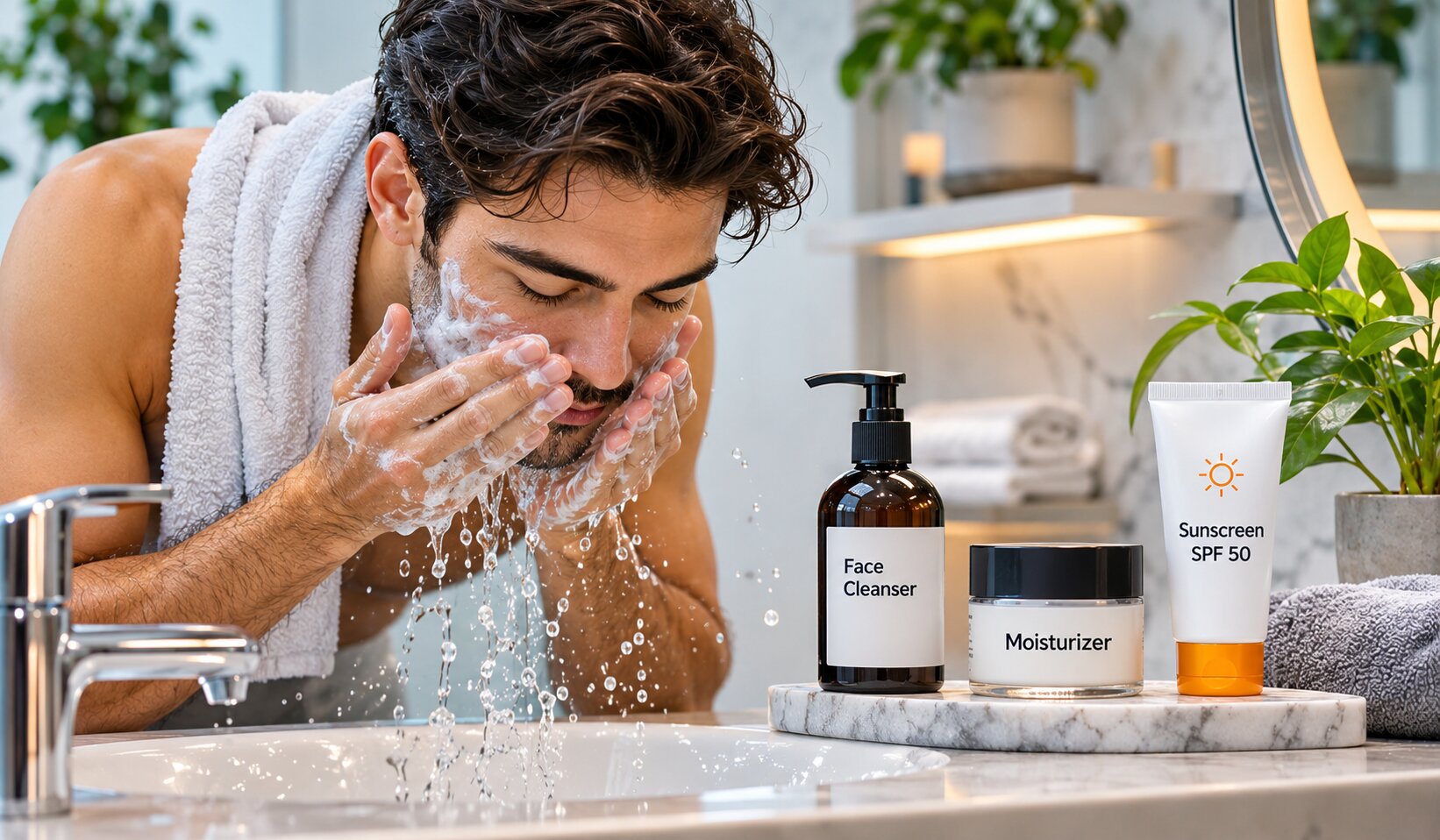
Men’s skincare often gets overlooked because many people still think looking after your skin is mainly a women’s concern. That’s an outdated idea. Your skin deals with sunlight, pollution, sweat, shaving and changing weather every day. It deserves some attention, regardless of gender.
The good news? You don’t need a bathroom full of expensive products. A few well-chosen essentials can help keep your skin comfortable, healthy and protected.
Why Men Need to Take Care of Their Skin
Skincare isn’t simply about looking younger. Your skin protects your body from environmental irritants, helps regulate temperature and acts as a barrier against outside threats.
According to the American Academy of Dermatology (AAD), men have some distinct skin characteristics, but the basic principles of an effective skincare routine remain the same.
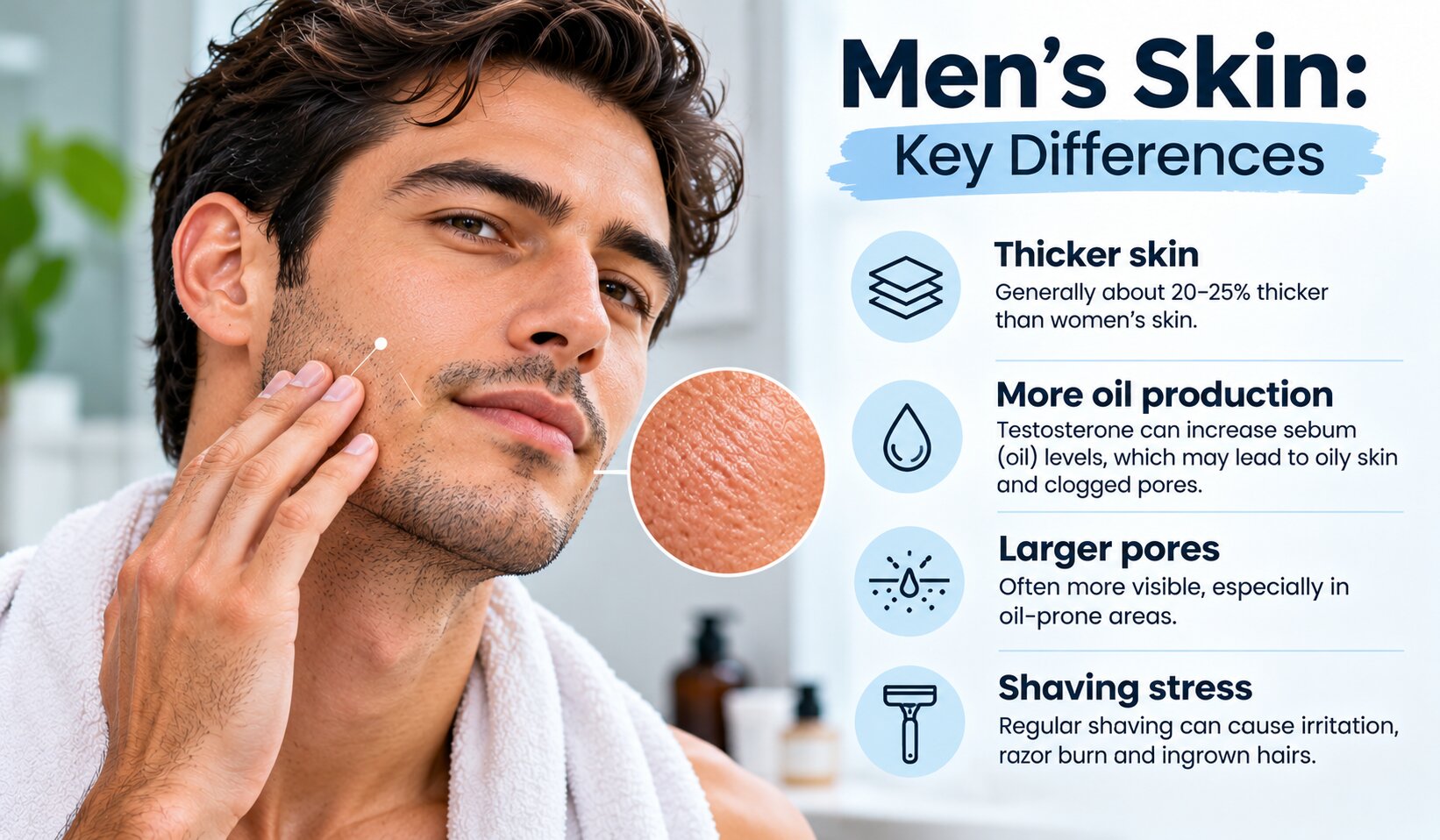
Men’s Skin Has Some Biological Differences
Men’s skin is generally thicker than women’s skin. Testosterone also influences oil production, which can contribute to oily skin, clogged pores and acne.
Men may have more visible pores and facial hair, while regular shaving introduces another source of friction and irritation.
There are differences in collagen and skin aging patterns too. However, genetics, age, hormones and sun exposure all influence how an individual’s skin changes.
These differences may affect which products feel comfortable, but they don’t require an entirely separate approach to skincare.
Daily Exposure Takes Its Toll
Think about a normal working day. You leave home, commute through traffic, spend time outdoors, sweat, sit in air-conditioned rooms and perhaps exercise in the evening.
Your skin experiences all of it.
UV radiation can damage skin even when the weather feels cool. Pollution and airborne particles can contribute to irritation, while sweat and excess oil can contribute to clogged pores.
Climate matters, too. Humid summers may make oily skin feel worse, while cold winters and dry indoor air can leave skin tight and flaky.
A gentle cleansing routine and suitable moisturizer help manage these everyday conditions.
Shaving Can Leave Your Skin Irritated
Shaving removes facial hair, but it also creates friction and can disturb the skin’s outer barrier.
Shaving against the direction of hair growth, using a blunt blade or repeatedly passing over the same area can cause razor burn, redness and ingrown hairs.
The NHS explains that people with coarse or curly hair may be more likely to develop ingrown hairs because cut hairs can grow back into the skin.
This is why skincare after shaving matters. Better shaving technique and a gentle moisturizer can help reduce irritation.
Early Aging and Sun Damage Add Up
Fine lines, uneven skin tone, dark spots and rough texture don’t appear overnight.
UV radiation contributes to collagen damage and premature skin aging. According to the Skin Cancer Foundation, regular sunscreen use helps reduce sun damage associated with wrinkles, age spots and other visible changes.
An anti-aging routine doesn’t need to start with expensive serums or complicated treatments.
Daily sun protection is one of the most useful long-term habits you can build.
Acne, Blackheads and Other Skin Problems Affect Men Too
Acne doesn’t automatically disappear after your teenage years. Adult men can experience breakouts, blackheads, excess oil and clogged pores.
Other common concerns include:
- Dryness and flaking around the nose and cheeks.
- Dandruff affecting the scalp, beard or eyebrows.
- Ingrown hairs along the beard line.
- Fungal skin infections, particularly in warm, sweaty areas.
- Irritation caused by shaving or fragranced products.
A cleanser may help remove excess oil, but it won’t treat every skin condition. Persistent symptoms may need medical attention.
Men Shouldn’t Overlook Skin Cancer Prevention
Sun protection deserves particular attention. Men sometimes spend long periods outdoors without applying sunscreen, especially when working, exercising or traveling.
Repeated UV exposure increases the risk of skin damage and skin cancer. The AAD recommends broad-spectrum, water-resistant sunscreen with SPF 30 or higher.
Men over 50 also deserve particular attention here. The AAD identifies this age group as having a higher risk of melanoma than the general population.
Check your skin regularly for new or changing spots. A mole that changes shape or color, bleeds, itches or develops an unusual appearance should be assessed by a healthcare professional.
Healthy Skin Can Improve Everyday Confidence
You don’t need perfectly smooth skin to look well-groomed.
Reducing visible dryness, controlling excess shine and managing shaving irritation can make you feel more comfortable with your appearance.
Think of skincare as part of men’s grooming. It’s basic maintenance, not a competition to look younger or follow every new beauty trend. For more everyday grooming ideas, see our guide to how to be a handsome guy.
Know Your Skin Type Before Buying Anything
Buying products without understanding your skin is an easy way to waste money.
A moisturizer that works for someone with dry skin may feel too heavy on an oily face. An acne-focused cleanser might leave sensitive skin uncomfortable.
Try this simple test at home.
The 30-Minute Wash-and-Wait Test
- Wash your face using a gentle cleanser and lukewarm water.
- Pat it dry with a clean towel.
- Don’t apply moisturizer, serum or other products.
- Wait approximately 30 minutes.
- Observe how your skin feels and looks.
This isn’t a medical diagnosis, but it gives you a useful starting point.
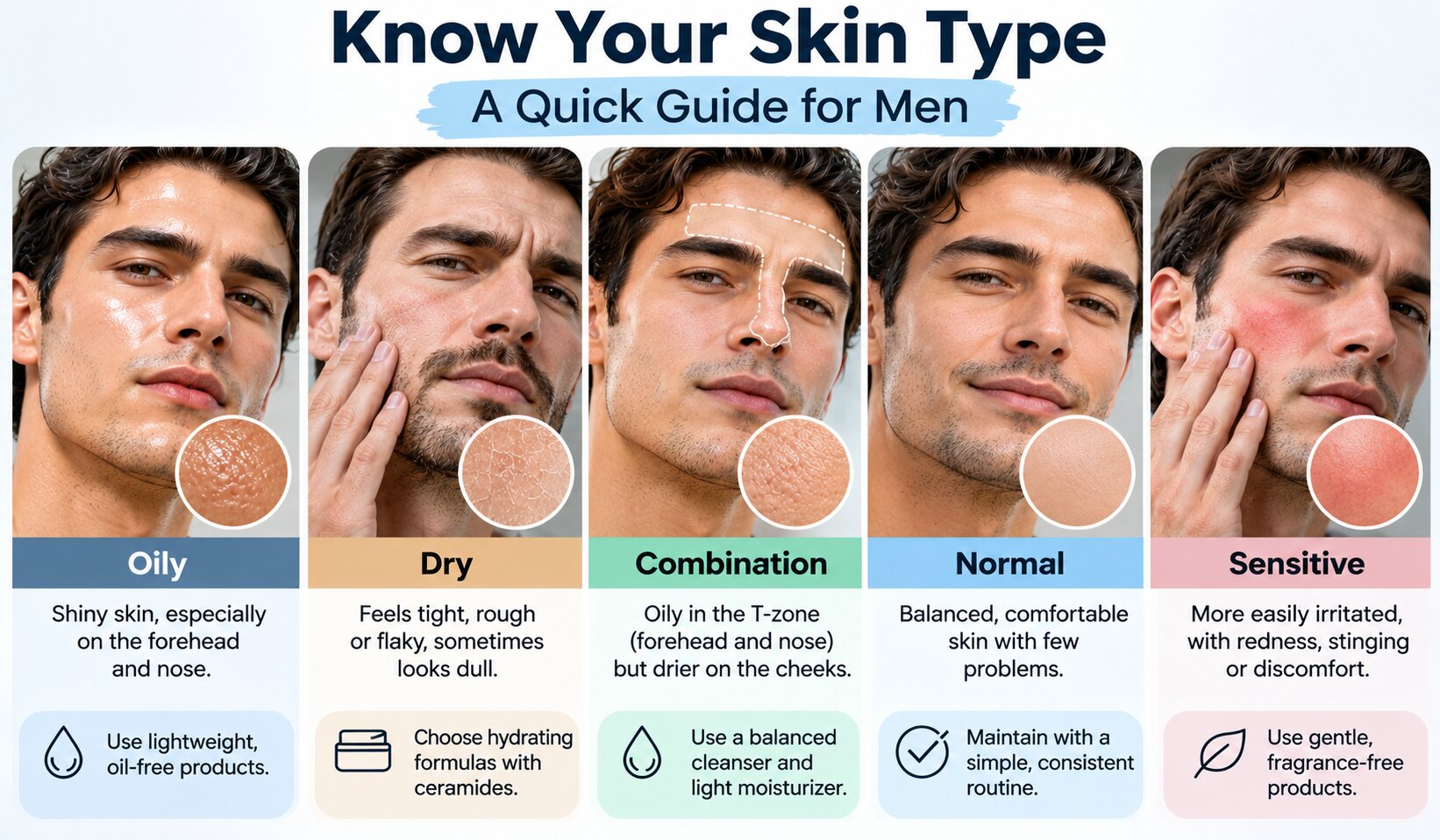
| Skin type | Signs | What to look for |
|---|---|---|
| Oily | Shiny appearance, especially around the forehead and nose; frequent clogged pores | Lightweight, oil-free, non-comedogenic products |
| Dry | Tightness, rough patches, flaking | Cream moisturizers, ceramides and hyaluronic acid |
| Combination | Oily forehead and nose but drier cheeks | Lightweight moisturizer and gentle cleanser |
| Normal | Comfortable, balanced skin with little excess oil or dryness | Basic daily skincare products |
| Sensitive | Stinging, redness, burning or irritation after products | Fragrance-free, gentle formulas |
Your skin type can change with age, climate, hormones and medication. Reassess it when your usual products suddenly stop feeling comfortable.
The Basic Daily Skincare Routine for Men
A practical men’s skincare routine needs two short sessions: one in the morning and another at night.
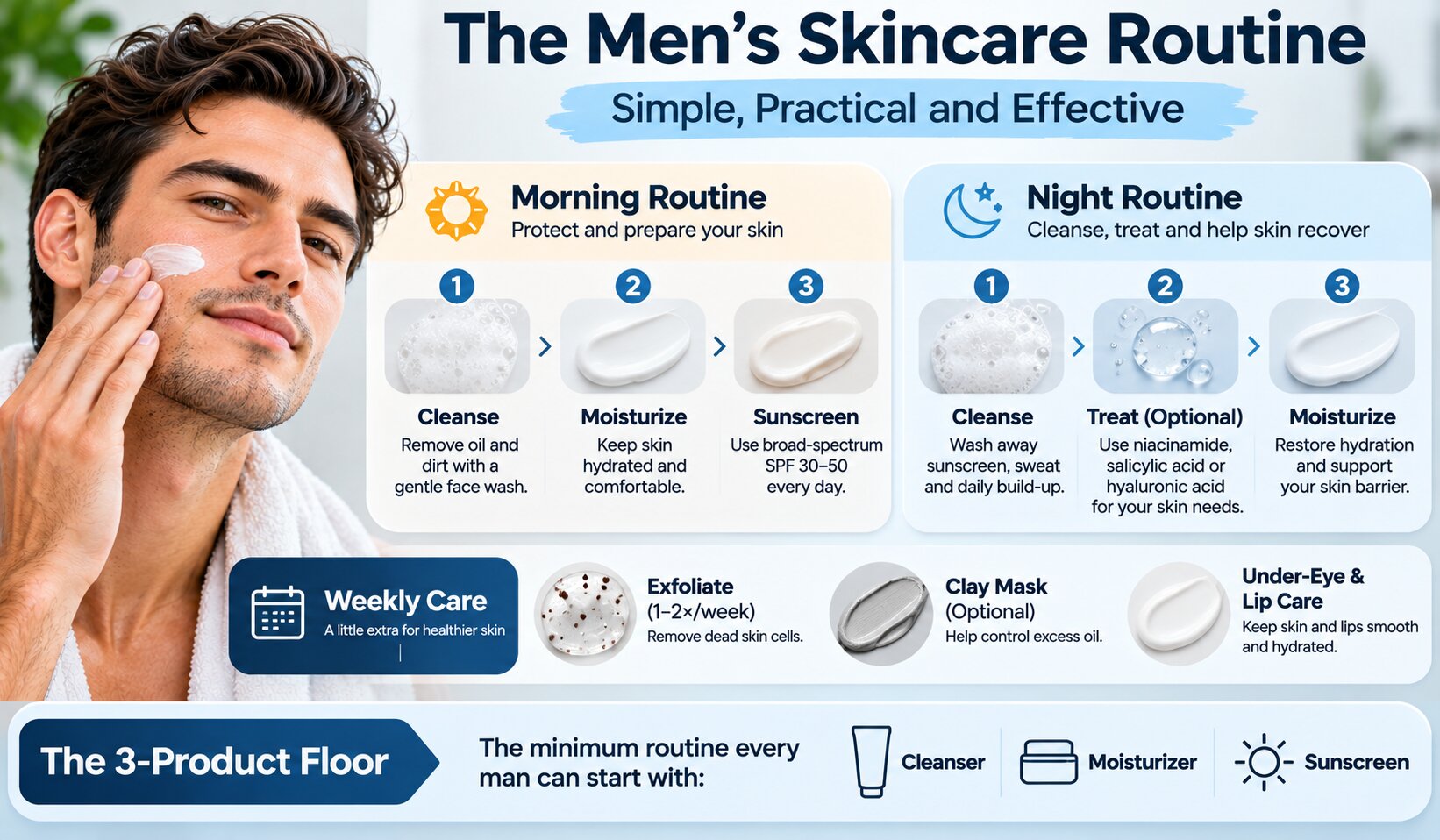
Morning: Clean, Moisturize and Protect
1. Start with a gentle cleanser
Wash your face with a mild facial cleanser. Use lukewarm water and your fingertips rather than scrubbing with a rough towel.
A good face wash for men should remove excess oil and dirt without leaving your skin feeling tight.
If your skin is particularly dry, rinsing with water in the morning may be sufficient. Cleanse properly at night.
2. Toner is optional
A toner isn’t essential for healthy skin. Some formulas contain ingredients that help with oiliness or hydration, but you can skip this step.
If you use one, avoid harsh, alcohol-heavy formulas that leave your face feeling stripped.
3. Apply moisturizer
Use a suitable moisturizer after cleansing. Apply it while your skin is slightly damp to help retain moisture.
The best moisturizer for men depends on skin type. Oily skin usually prefers a light lotion or gel, while dry skin may benefit from a richer cream.
4. Finish with sunscreen
This is the step worth making a daily habit.
Choose broad-spectrum SPF 30–50 sunscreen that protects against UVA and UVB rays. Apply it to your face, ears, neck and other exposed areas.
The AAD recommends approximately one teaspoon for the face, with additional sunscreen for the neck and other exposed areas. Apply it before going outdoors and reapply approximately every two hours when outside, or sooner after swimming or heavy sweating.
Night: Remove the Day and Let Skin Recover
1. Cleanse again
Remove sunscreen, sweat, excess oil and accumulated dirt. A gentle cleanser is usually enough.
2. Add one treatment if needed
Choose an ingredient based on your actual concern:
- Niacinamide may help with excess oil, uneven tone and the appearance of pores.
- Salicylic acid can help unclog pores and manage blackheads.
- Hyaluronic acid attracts water and helps improve skin hydration.
Start with one treatment rather than combining several active ingredients immediately.
3. Moisturize
Finish with a moisturizer that supports your skin barrier. This is particularly useful after shaving or using an acne treatment that can cause dryness.
Weekly Care: A Little Extra Attention
Daily care handles the essentials. Weekly care can address specific concerns.
- Exfoliation: Start once a week. Increase to twice weekly only if your skin tolerates it. Avoid aggressive scrubbing.
- Clay mask: Optional for oily skin. It may temporarily absorb excess surface oil.
- Lip balm: Apply regularly if your lips become dry. Choose SPF protection for daytime outdoor use.
- Under-eye care: A basic moisturizer may be enough. A separate eye cream is optional.
Adjust Your Routine to Your Skin Type
The best skincare routine for men is one that suits their skin rather than one copied from somebody else’s bathroom shelf.
Skincare Routine for Men With Oily Skin
If your face becomes shiny a few hours after washing, focus on controlling excess oil without stripping the skin.
Look for a gentle cleanser, lightweight moisturizer and non-comedogenic sunscreen.
Niacinamide may help improve the appearance of oily skin, while salicylic acid can be useful for blackheads and clogged pores.
Avoid washing your face repeatedly throughout the day. Excessive cleansing can irritate your skin without solving the underlying oil production.
Skincare Routine for Men With Dry Skin
Dry skin needs moisture and protection.
Choose a gentle cleanser and a cream-based moisturizer containing ceramides, glycerin or hyaluronic acid.
Avoid very hot showers and harsh exfoliating products. Apply moisturizer immediately after washing while your skin is slightly damp.
If dryness continues despite regular moisturizing, consider speaking to a dermatologist.
Skincare Routine for Men With Combination Skin
Your forehead and nose may become oily, while your cheeks feel dry.
Use a balanced cleanser and lightweight moisturizer across your face. If necessary, apply a richer moisturizer only to dry areas.
There’s no need to buy separate products for every part of your face unless your skin genuinely needs them.
Skincare Routine for Men With Sensitive Skin
Sensitive skin needs a gentler approach.
Choose fragrance-free products with straightforward ingredient lists. Avoid introducing several new products together.
Patch test a new product on a small area, following its instructions. A practical approach is to test it on a discreet area for several days before applying it across your face. Stop if you develop irritation.
Fragrance-free is generally a better choice than simply labeled unscented, as unscented products can still contain masking fragrances.
Skincare After Shaving: Reduce Razor Burn and Ingrown Hairs
Shaving is one of the common reasons men experience facial irritation.
The solution often starts before you pick up a razor.

Before shaving: Wet your face with warm water or shave after a warm shower. Apply a moisturizing shaving cream or gel.
During shaving: Follow the direction of hair growth. Use light pressure and avoid repeatedly passing over the same area. Rinse the blade after each stroke.
Choose your blade carefully: If you frequently experience razor bumps, try a single- or double-blade razor or an electric shaver. Replace dull blades regularly. For more grooming options, see our guide to the best beard trimmers for men and our roundup of body groomers for men.
After shaving: Rinse with cool water and apply a gentle moisturizer or fragrance-free aftershave balm.
Alcohol-based aftershaves may sting and dry out already irritated skin. A soothing balm is usually a better choice for men who experience razor burn.
The NHS also recommends avoiding very close shaving. Leaving approximately 1 mm of stubble may help reduce ingrown hairs.
Lifestyle Habits That Actually Affect Your Skin
Products are only one part of how to take care of men’s skin at home. Everyday habits matter, too.
Sleep is a good place to start. Poor sleep can affect how your skin looks and feels, so aim for a regular sleep schedule and enough rest.
Drink enough water throughout the day. Hydration supports overall health, although drinking extra water won’t automatically cure dry skin. A balanced diet with vegetables, fruit, protein and healthy fats supports general health as well.
Smoking contributes to premature skin aging and can impair normal skin repair, according to Mayo Clinic. Reducing tobacco exposure is therefore useful for your skin and overall health.
Stress may worsen certain inflammatory skin conditions, including acne. Regular exercise can help manage stress and support general health. After sweating, wash your face gently and change out of damp clothing. If your routine includes regular training, our guide to gym shorts for men may also be useful.
One overlooked habit is touching your face throughout the day. Hands transfer oil and dirt, and picking at spots can increase inflammation. Keep pillowcases clean, too, particularly if you use hair products or have oily skin.
Skincare for Men Over 30, 40 and 50
Your routine doesn’t need to become complicated as you get older. However, your skin may need different support.
For skincare for men over 30, consistent sun protection and moisturizing are useful habits. Fine lines, uneven tone and dryness may become more noticeable.
For men over 40, consider whether your skin has become drier or more sensitive. A moisturizer containing ceramides can help support the skin barrier. Vitamin C may be worth considering if uneven tone or sun-related pigmentation is a concern.
For skincare for men over 50, dryness and changes in skin texture may need more attention. Continue sun protection and keep an eye on new or changing spots. The AAD recommends regular skin checks, particularly as skin cancer risk increases with age.
One principle applies at every age: a more expensive routine doesn’t automatically produce better results.
Common Skincare Mistakes Men Should Avoid
A lot of everyday skin problems come from repeated habits rather than a lack of expensive products.
Watch out for these mistakes:
- Using body soap on your face: Some body soaps are too harsh for facial skin and can leave it dry. The AAD recommends a mild facial cleanser.
- Skipping sunscreen: Cloudy weather doesn’t eliminate UV exposure.
- Popping pimples: Picking can increase inflammation and raise the risk of scarring.
- Over-exfoliating: Too much exfoliation can irritate the skin barrier.
- Buying too many products: Introducing multiple active ingredients makes it difficult to identify what causes a reaction.
- Ignoring persistent problems: Recurring acne, unexplained rashes and unusual skin changes may need professional assessment.
What Beginners Can Ignore
You can skip complicated 10-step routines, expensive anti-aging treatments, multiple toners and products bought simply because they’re trending.
You don’t need a separate product for every small area of your face.
Start with what your skin actually needs. That’s a better use of your time and money.
How to Choose Men’s Skincare Products
Skincare labels can feel like a chemistry lesson. You can make better choices by understanding a few common ingredients.
| Ingredient | What it does | Best suited for |
|---|---|---|
| Niacinamide | Helps regulate visible oiliness and supports the skin barrier | Oily, combination and uneven-looking skin |
| Hyaluronic acid | Helps attract and retain moisture | Dry and dehydrated skin |
| Salicylic acid | Helps unclog pores and remove dead skin cells | Oily and acne-prone skin |
| Vitamin C | Antioxidant that helps protect against environmental oxidative stress and improve uneven tone | Dull or uneven-looking skin |
| Ceramides | Help maintain the skin’s protective barrier | Dry and sensitive skin |
What Should You Avoid?
There isn’t one universal list of harmful skincare ingredients. However, some product features deserve caution.
Heavy fragrance can irritate sensitive skin. Alcohol-heavy formulas may be drying, depending on the type and concentration of alcohol. Rough physical scrubs can also cause irritation when used aggressively.
Always read the label and choose products that suit your skin type.
Do a Patch Test Before Using Something New
Apply a small amount of the product to a discreet area, following the manufacturer’s instructions. Repeat as directed over several days and watch for redness, itching, burning or swelling.
A patch test reduces the chance of an unpleasant reaction, although it cannot guarantee that a product will never irritate your face.
Expensive Doesn’t Mean Better
A basic skincare routine can work without a luxury price tag. Focus on the formula, your skin’s response and whether you’ll use the product consistently.
At AhemBeauty, we believe good men’s grooming starts with practical choices and honest product information. Explore our [AhemBeauty product link] for skincare essentials selected around everyday needs.
When Should You See a Dermatologist?
Home skincare can help with many everyday concerns, but it isn’t a substitute for medical treatment.
Consider seeing a dermatologist if you experience:
- Persistent or painful acne.
- Acne that leaves scars or dark marks.
- Repeated rashes, redness or itching.
- Severe dryness that doesn’t improve with moisturizer.
- Frequent ingrown hairs or suspected skin infections.
- New or changing moles, unusual growths or spots that bleed.
Mayo Clinic advises seeking medical assessment for unusual moles or other skin growths. Don’t rely on a cosmetic product to treat something that needs a diagnosis.
A dermatologist can identify the cause of the problem and recommend treatment based on your skin.
REAL-LIFE ROUTINE
A Realistic Tuesday: What This Looks Like in Everyday Life
Consider a fictional composite example of a 34-year-old man who works in an office. He leaves home at 8 a.m., commutes through traffic, spends most of his day in an air-conditioned room and shaves before work.
By evening, his forehead feels oily, his cheeks feel slightly dry and his neck sometimes develops razor bumps.
He doesn’t need an elaborate routine.
In the morning, he washes his face, applies moisturizer and uses sunscreen before leaving home. After shaving, he switches to a gentler balm instead of an alcohol-heavy aftershave.
At night, he cleanses again and applies moisturizer. Once his skin has adjusted, he may introduce a suitable treatment for the occasional clogged pore.
The entire routine takes a few minutes. More importantly, it fits his actual schedule.
This is what practical men’s skincare should look like: a few sensible habits repeated consistently.
Routine at a Glance: Your Daily Skincare Checklist
| When | Step | What to use |
|---|---|---|
| Morning | Cleanse | Gentle facial cleanser |
| Morning | Moisturize | Skin-type-appropriate moisturizer |
| Morning | Protect | Broad-spectrum SPF 30–50 |
| Evening | Cleanse | Gentle facial cleanser |
| Evening | Treat (optional) | One suitable active ingredient |
| Evening | Moisturize | Moisturizer |
| Weekly | Exfoliate (optional) | Gentle exfoliant, once or twice if tolerated |
The 3-Product Floor remains your starting point. Treatments and weekly extras are optional additions based on your skin’s needs.
Frequently Asked Questions About Men’s Skincare
Is skincare only for women?
No. Skincare is for everyone, regardless of gender. Men’s skin may differ in thickness, oil production and facial hair, but it still needs cleansing, moisture and sun protection. A basic routine helps manage dryness, excess oil, shaving irritation and UV exposure. Looking after your skin is ordinary personal care, not a gender-specific activity.
How many products does a man need to start?
Three products are enough for most beginners: a gentle facial cleanser, a suitable moisturizer and broad-spectrum sunscreen with SPF 30 or higher. These cover the basic needs of cleansing, hydration and sun protection. You can introduce a serum or acne treatment later if you have a specific concern that needs attention.
Do men need sunscreen every day, including indoors or on cloudy days?
Yes, sunscreen is recommended when you’re outdoors during daylight, including on cloudy days, because UV rays can pass through clouds. Indoors, it may be useful if you spend substantial time beside windows or receive direct sunlight. Choose broad-spectrum SPF 30 or higher for everyday outdoor protection.
Can men use women’s skincare products?
Yes. Most skincare products are not restricted by gender. A cleanser, moisturizer or serum can work for anyone if its ingredients suit their skin type and concerns. Pay attention to the formula rather than the packaging. A product marketed toward women can be perfectly suitable for a man with oily, dry or sensitive skin.
How long does it take to see skincare results?
Some improvements in hydration and skin comfort may appear within days. Changes in acne, uneven tone and texture usually take longer. Give a consistent routine around four to eight weeks to assess early results, although certain concerns may need several months or professional treatment. Avoid changing products every few days.
Do men need a different skincare routine than women?
Not necessarily. The basic steps are the same: cleanse, moisturize and protect your skin from the sun. Hormones, facial hair, shaving habits and individual skin type may influence which products work best. Choose products based on your skin’s needs instead of assuming that a gender-specific label guarantees better results.
The Bottom Line: Start With Three Products
Men’s skincare doesn’t need to become another complicated responsibility. It’s a simple way to look after your skin, reduce avoidable irritation and protect yourself against daily environmental damage.
Start with The 3-Product Floor: cleanser, moisturizer and sunscreen. Use them consistently, learn how your skin responds and add treatments only when there’s a clear reason.
If you’ve been putting skincare off, tomorrow is a good day to start. Your skin doesn’t need a complicated routine. It needs regular care.

ABOUT THE AUTHOR
Shahin Shuvro
Shahin Shuvro writes for AhemBeauty on men’s grooming, personal care and practical lifestyle choices. His editorial approach puts clear explanations and useful everyday advice first, helping readers make informed decisions without unnecessary complexity.
Sources
- American Academy of Dermatology (AAD) – Skin Care Tips for Men.
- American Academy of Dermatology (AAD) – How to Apply Sunscreen.
- Skin Cancer Foundation – Sunscreen and Your Skin.
- NHS – Ingrown Hairs: Symptoms, Treatment and Prevention.
- Mayo Clinic – Skin Care: 5 Tips for Healthy Skin.