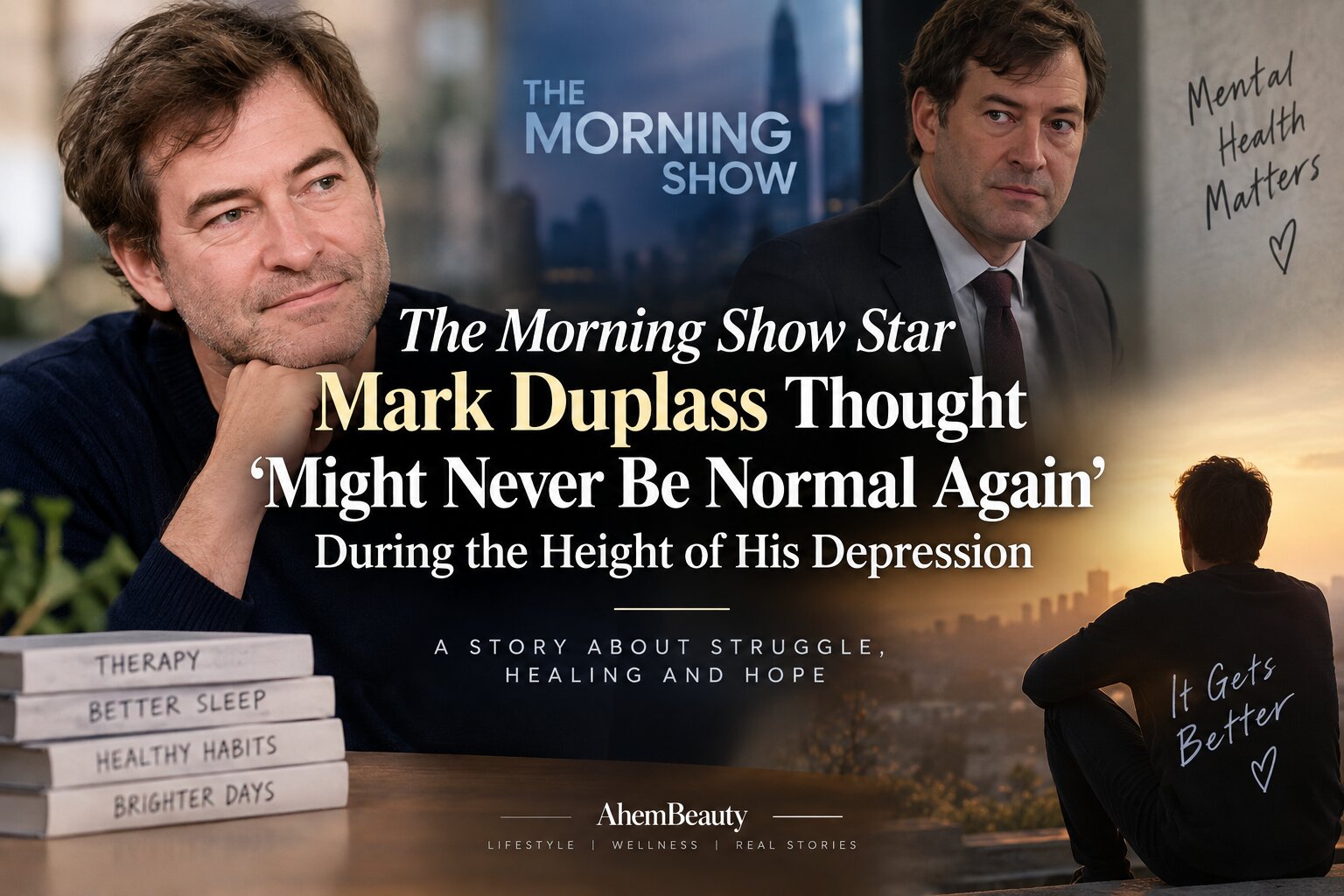
Mark Duplass knows what it is like to look fine when things feel anything but fine.
The actor, writer and producer, best known to many viewers as Charles “Chip” Black on Apple TV+’s The Morning Show, has spent much of his life dealing with anxiety and depression. During the hardest period of that struggle, he says he reached a point where he genuinely wondered whether he would ever feel like himself again.
Duplass recalled thinking that during a breaking point in his late 20s.
In a June 18, 2025 interview with ABC News’ Good Morning America, Duplass talked about the panic attacks he experienced as a teenager, the period when his mental health became overwhelming, and the treatment and daily routines that later became part of how he manages it.
- Duplass says his anxiety and panic attacks began during his teenage years.
- By his late 20s, he reached a point where he feared he might never feel “normal” again.
- He has described therapy and medication as important parts of his care, alongside sleep, exercise and healthy eating.
- He has also spoken about telling colleagues when he was struggling while working on The Morning Show.
His story is interesting because the difficult period did not happen outside of his professional life. He was still working, creating and building a career while dealing with something that was becoming increasingly hard to manage.
That is one of the details that can get lost when celebrity mental-health stories are reduced to a headline. A successful career does not tell you how someone is doing when the cameras are gone.

Mark Duplass Says His Anxiety Struggles Started in His Teens
Duplass says his mental-health difficulties began when he was a teenager. Panic attacks were part of that early experience, and he initially tried to push through them rather than knowing how to deal with what was happening.
That approach eventually stopped working.
By his late 20s, Duplass said he had reached a breaking point. He described having no real skills for managing the situation and began to wonder whether the way he felt at that moment might be permanent.
That fear is one of the more recognizable parts of his account. Depression can change the way people think about the future. When low mood, exhaustion, loss of interest or hopelessness continue, it can become difficult to imagine a version of life that feels different.
For Duplass, the concern was not simply that he was having a bad period. He wondered whether he had somehow lost the version of himself he remembered.
The National Institute of Mental Health lists persistent sadness or emptiness, hopelessness, loss of interest, fatigue, sleep problems and difficulty concentrating among common symptoms of depression. It also notes that symptoms can interfere with everyday responsibilities and relationships.
That does not mean every difficult period is depression. It does explain why a prolonged episode can feel much larger than ordinary sadness.
The most useful detail here is the gap between what other people could see and what Duplass was experiencing. He was still an actor, writer and producer with work to do. His public life did not stop simply because his private life had become difficult.
The Photo That Made Him Talk More Openly
Duplass first discussed his depression and anxiety publicly in a candid Instagram post in October 2023.
The post included a smiling photograph of himself in a tuxedo. It looked, at first glance, like an ordinary celebrity photograph. Duplass said he saw something else when he looked at it.
He wrote that he could see “the fear and sadness behind the smile.”
That post brought a response he had not expected. In his later Good Morning America interview, Duplass said that the reaction from people, particularly men, made him think more seriously about the continuing stigma around men’s mental health.

There is a simple reason that this part of his story connects with people. Mental-health problems do not always change someone’s appearance.
A person can still answer emails, go to work, attend meetings, look after a family and smile for a camera. None of those things rules out the possibility that they are struggling.
Duplass was not saying that every smiling photograph hides depression. He was explaining what he personally saw when he looked back at his own picture.
Therapy and Medication Became Part of His Care
Duplass says therapy and medication became important parts of how he manages his depression and anxiety.
That is worth separating from the lifestyle advice that often surrounds celebrity mental-health stories. Duplass did not describe exercise or better sleep as a replacement for clinical care. He described several things that sit alongside treatment.
The National Institute of Mental Health says depression treatment commonly involves psychotherapy, medication or both, depending on the person’s needs and medical situation. Finding the right approach can take time, and medication decisions should be made with a healthcare professional.
That makes Duplass’s account more useful than a simple “this routine cured me” story. He is talking about something he continues to manage rather than claiming that one decision permanently solved it.
NIMH notes that psychotherapy and medication are common treatments for depression. It also emphasizes that treatment should be tailored to the individual and that people should work with a healthcare professional when starting, changing or stopping medication.
Sleep, Exercise and Healthy Food Are Part of His Routine
Duplass has also talked about the less dramatic side of managing his mental health.
He told Good Morning America that getting out of bed in the morning, getting around eight to nine hours of sleep, exercising and eating well are part of the routine he relies on.
None of that sounds especially unusual. That is probably why this section of his story is easy to overlook.
When someone is feeling well, sleeping enough or going for a workout can feel routine. During a difficult depressive episode, even basic tasks can become harder to start and maintain.
That is where lifestyle habits can have a practical role. They are not a magic solution. They are things that can support a broader treatment plan.
The CDC says regular physical activity can improve sleep and reduce symptoms of anxiety and depression. NIMH also recommends regular exercise, healthy eating and adequate sleep as part of general mental-health self-care when symptoms are mild, while advising professional help when symptoms persist or become severe.

There is an important distinction here. A healthy routine can support mental health, but telling someone with significant depression to “just exercise” misses the reality of the condition.
Duplass’s own account is more balanced because therapy and medication remain part of the picture.
Why Playing Chip on The Morning Show Feels Personal
There is also an unusual connection between Duplass’s real-life experience and his character on The Morning Show.
Apple TV Press identifies Duplass as Charles “Chip” Black, the show’s stressed and overwhelmed executive producer.
Duplass has said that playing Chip feels like portraying a version of himself without the mental-health tools he has developed over the years.
That does not make Chip a fictionalized version of Duplass’s diagnosis, and Duplass has not suggested that the character is literally him.
What makes the comparison interesting is the pressure. Chip is constantly reacting to professional problems, deadlines and uncertainty. Duplass understands what it is like to work under pressure while also having to manage what is happening internally.
In his interview, he described playing Chip as fun partly because the character is more stressed than he is now.
That is a revealing contrast. The actor who once feared he might never feel normal again now has enough distance from that period to joke about a fictional character being more stressed than he is.
He Was Also Worried About What Mental Health Could Mean for His Career
Being open about depression can be difficult even when someone has a supportive circle around them. For an actor, there can be another concern: whether employers will see the disclosure as a professional risk.
Duplass said he had thought about that possibility. He wondered whether a future employer might worry about hiring him if there was a chance he could arrive at work on a particularly difficult mental-health day.
That concern is understandable, especially in an industry where work can depend heavily on reputation, relationships and the ability to perform under pressure.
Duplass’s experience was different from the outcome he feared. He said that being open ultimately strengthened some of his relationships and helped him professionally in ways he had not expected.
That is his experience, rather than a promise about what disclosure will mean for everyone else. People have different workplaces, different levels of privacy and different support systems.
Still, his story shows why the decision to speak honestly about mental health can be complicated. It is not simply a matter of “being brave enough to talk.” Sometimes there are real professional calculations involved.
What Happened When He Told The Morning Show Team
Duplass also said he was dealing with mental-health problems while working on Season 2 of The Morning Show.
Instead of trying to hide the situation completely, he told people on the production that he was struggling.
He said they were supportive and accommodating.
That small detail says something useful about workplace mental health. A person does not stop being a professional because they are having a difficult period. They may simply need a little room to manage something that other people cannot see.
For someone working in film or television, where schedules can be demanding and expectations are high, that kind of support can make a practical difference.
It also gives Duplass’s story a less glamorous, more everyday dimension. The important conversation was not happening on a red carpet. It was happening between a worker and the people around him when he was struggling.
Why “I Might Never Be Normal Again” Is the Line That Stays With You
Duplass’s most memorable comment is not about medication, exercise or his acting career.
It is the fear that his worst period might become permanent.
That sentence captures something that can happen during severe depression: the present starts to look like the future.
When someone is exhausted, disconnected from things they once enjoyed and struggling to complete ordinary tasks, it can be difficult to remember that emotional states change.
Duplass later described the “fog” he felt during that period as something that could make a person believe their life was ruined. His message to people currently struggling was that the fog can lift.
That is not a guarantee that depression will never return. It is a reminder that a difficult period does not automatically define the rest of someone’s life.
The interesting part of Duplass’s routine is not that sleep, exercise and healthy food are good ideas. Most people already know that. What stands out is that he describes them alongside therapy and medication, as things he keeps doing to manage his mental health rather than as a quick fix.
That is a more realistic picture of long-term mental-health care. Sometimes progress is less about one dramatic breakthrough and more about knowing what helps, using those tools consistently and being willing to ask for support when things become difficult again.
What His Story Says About Men’s Mental Health
Duplass said the response from other men to his 2023 Instagram post changed the way he thought about the subject.
He had expected the post to be a personal comment. Instead, men began telling him that they recognized the feeling.
That response is relevant because depression does not always present itself in the way people expect. NIMH lists irritability, anger, withdrawal, fatigue, loss of interest and difficulty meeting responsibilities among possible signs, alongside more familiar symptoms such as persistent sadness and hopelessness.
That means someone may describe themselves as constantly tired, angry or disconnected rather than saying, “I think I’m depressed.”
Duplass’s decision to speak publicly does not diagnose anyone else. It simply gives people another example of what mental-health struggles can look like in an adult who is still working and functioning publicly.
When Depression Is More Than a Rough Patch
Everyone has periods of sadness, stress and exhaustion. Those feelings alone do not mean someone has depression.
The difference is often found in persistence, severity and the effect symptoms have on everyday life.
NIMH says that, for a diagnosis of major depression, symptoms are present most of the day, nearly every day, for at least two weeks, with depressed mood or loss of interest or pleasure being one of the symptoms. A healthcare professional can also consider whether a medical condition or medication may be causing similar symptoms.
Common symptoms can include persistent sadness or emptiness, hopelessness, loss of interest, low energy, sleep changes, appetite changes and difficulty concentrating.
If these symptoms continue or begin interfering with work, relationships or ordinary responsibilities, talking with a healthcare professional is more useful than trying to diagnose the problem from a celebrity story.
Treatment can include psychotherapy, medication or both. The right approach depends on the individual.
If someone is experiencing thoughts of suicide or self-harm, immediate professional or emergency support is needed. In the United States, people can call or text 988 for the Suicide & Crisis Lifeline. People in other countries should use their local emergency or crisis-support services.
Mark Duplass’s Story Does Not End With a Perfect Recovery Story
That may be what makes the story more believable.
Duplass is not describing a life in which anxiety and depression disappeared forever. He is describing a life in which he learned more about what he needs to stay well and what happens when those things are missing.
There is no dramatic wellness transformation to sell here.
There is therapy. There is medication. There is sleep. There is exercise. There is food. There is work. There are conversations with people he trusts.
And there are still difficult days.
That version of mental-health management is less glamorous than the usual celebrity self-care story, but it is also much easier to understand.
Duplass once thought that the way he felt in his late 20s might be permanent. Years later, he can talk about that period openly and use the experience to encourage other people to seek help.
He cannot promise another person that their recovery will look exactly like his.
What his story can show is something much simpler: the worst period of your life does not necessarily become the rest of your life.
For someone sitting in the middle of depression, that may be difficult to believe.
Duplass knows that feeling because he once had it himself.
Sources & Further Reading
- ABC News / Good Morning America — Mark Duplass opens up about his battle with depression
- National Institute of Mental Health — Depression
- National Institute of Mental Health — Psychotherapies
- National Institute of Mental Health — Mental Health Medications
- Centers for Disease Control and Prevention — Benefits of Physical Activity
- Apple TV Press — The Morning Show Cast & Crew
Frequently Asked Questions
“`What did Mark Duplass say about his depression?
Mark Duplass has spoken about living with anxiety and depression for much of his life. He said his mental-health challenges began in his teens with panic attacks and reached a breaking point in his late 20s, when he feared he might never feel “normal” again.
When did Mark Duplass publicly discuss his mental health?
Duplass publicly discussed his anxiety and depression in a candid Instagram post in October 2023. He later discussed the experience in detail in a June 2025 interview with ABC News’ Good Morning America.
What role does Mark Duplass play in The Morning Show?
Mark Duplass plays Charles “Chip” Black, an executive producer on The Morning Show. Apple TV Press describes Chip as the show’s stressed and overwhelmed executive producer.
What treatments has Mark Duplass discussed?
Duplass has discussed therapy and medication as important parts of his mental-health care. He has also talked about sleep, exercise, healthy eating and maintaining daily routines.
Can exercise and healthy habits replace depression treatment?
No. Healthy habits such as regular physical activity, adequate sleep and balanced eating can support overall health and may help with some symptoms, but they should not automatically be treated as replacements for professional depression treatment. NIMH says depression treatment commonly involves psychotherapy, medication or both, depending on the individual.
When should someone seek professional help for depression?
Someone should consider speaking with a healthcare professional when symptoms such as persistent low mood, loss of interest, low energy, sleep or appetite changes, difficulty concentrating or hopelessness continue and interfere with everyday life. A professional can assess the symptoms and discuss appropriate treatment options.
Does Mark Duplass’s treatment mean the same approach will work for everyone?
No. Duplass is describing his personal experience. Depression and anxiety vary between individuals, and treatment decisions should be based on a person’s symptoms, medical situation and preferences with guidance from an appropriate healthcare professional.
Why is Mark Duplass’s story relevant to men’s mental health?
Duplass said the response from other men to his 2023 post made him realize that conversations about men’s mental health remained important. His experience also illustrates how someone can maintain a public career while privately dealing with anxiety, depression or panic attacks.