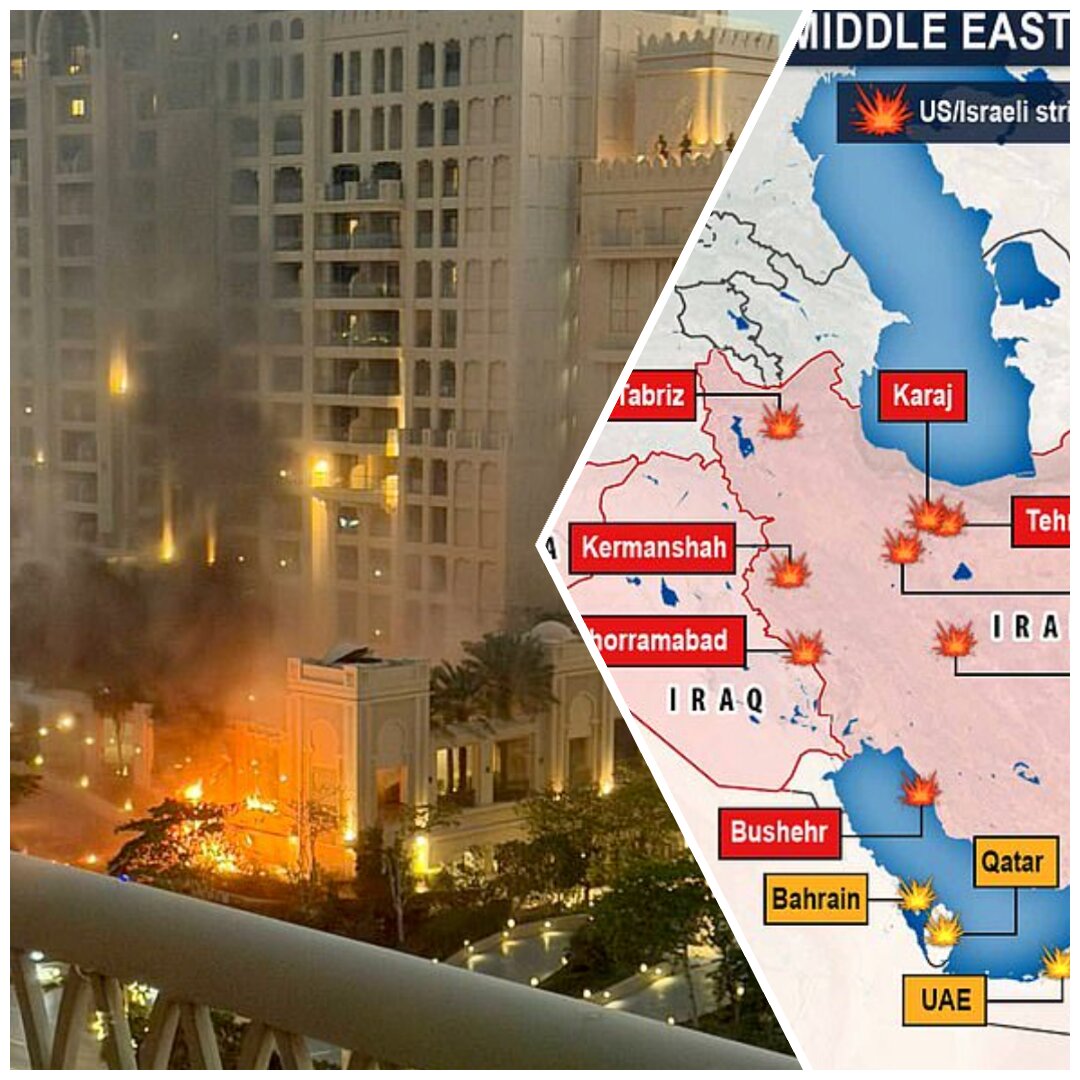
U.S. and Israel Launch Major Military Strikes on Iran as Explosions Shake Tehran and Other Cities
In a sharp escalation of tensions, the United States and Israel carried out coordinated strikes on targets inside Iran, with blasts reported in Tehran and other areas. Officials described the action as “pre-emptive,” while Iranian leaders condemned the attack and signaled retaliation could follow.
📌 What happened
Early Saturday, Israeli officials said their forces carried out a “pre-emptive strike” against multiple targets inside Iran. Residents and reporters described loud explosions, and smoke was seen rising in parts of Tehran. The reports suggested a wide set of locations were hit, not only in the capital but also in other provinces.
Soon after Israel’s announcement, the United States confirmed it was involved as well. American leaders said the campaign was aimed at reducing threats tied to Iran’s missile capabilities and broader regional military posture. U.S. officials framed the strikes as defensive and time-sensitive, arguing that waiting would increase risk to U.S. forces and allies.
- Morning: Israel announces strikes on targets inside Iran.
- Shortly after: U.S. confirms participation in the operation.
- Same day: Iran condemns the attacks and warns of a response.
- Region-wide: Airspace and security alerts affect daily life and travel.
🏛️ What leaders are saying
Israeli leaders said the strikes were necessary to protect the country from what they described as a direct and expanding threat. Israel raised national readiness and urged civilians to follow safety instructions, including staying close to protected areas.
The U.S. president said American forces joined what he described as major combat operations designed to limit Iran’s ability to threaten U.S. interests and partners. The stated focus included missile infrastructure and related military capabilities. American officials acknowledged the situation could be dangerous, but argued the operation was needed for national security.
🧑🤝🧑 Civilian impact
Reports from Iranian emergency responders and state-linked outlets indicated significant casualties and damage, though exact numbers and locations were still being verified. Videos and photos shared online showed smoke, damaged buildings, and people running for cover. In several areas, families described confusion and fear as sirens and alerts spread.
Because access for international reporters can be limited during fast-moving conflicts, some early claims may change as more evidence emerges. What is clear is that the strikes have created immediate danger for civilians, including those far from military sites, especially when air defenses, secondary blasts, or falling debris are involved.
⚠️ Iran’s response and the risk of escalation
Iranian officials condemned the strikes and warned that retaliation could target U.S. and Israeli interests in the region. As alerts spread, reports suggested incoming drones or missiles were launched toward Israel and possibly toward U.S. positions in nearby areas. The scope of Iran’s response, and whether it grows into a wider campaign, remained unclear.
Security analysts have long warned that direct attacks between these states can trigger rapid escalation. Even limited retaliatory strikes can pull in more actors, increase pressure on air defenses, and raise the chance of miscalculation. That risk can expand quickly when multiple forces operate in the same airspace and when officials face domestic pressure to respond.