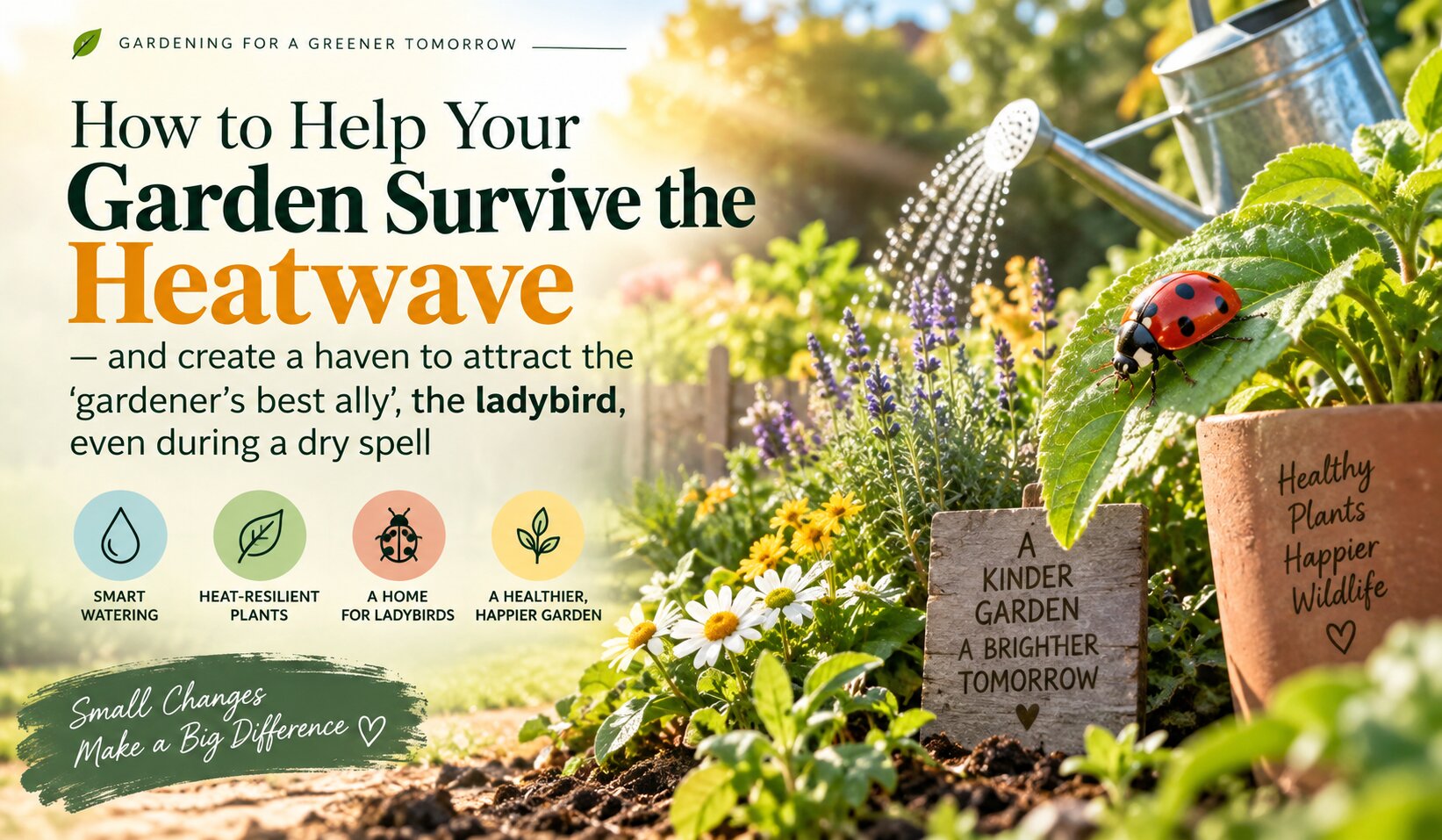
A heatwave can transform a thriving garden into a stressful landscape of wilted leaves, dry soil, fading flowers, and struggling vegetables. When temperatures remain high and rainfall becomes scarce, even established plants can begin to show signs of heat stress. Containers dry out rapidly, lawns turn brown, and delicate flowers may lose their colour within hours.
But a hot, dry spell does not have to mean the end of a healthy garden. With the right watering techniques, soil protection, plant choices, and wildlife-friendly habits, gardeners can help their outdoor spaces survive extreme heat while creating a welcoming environment for one of nature’s most useful pest controllers: the ladybird.
Often called the gardener’s best ally, ladybirds are valuable predators of aphids and other soft-bodied garden pests. Instead of relying heavily on chemical insecticides, gardeners can encourage these beneficial insects by creating the right combination of food, shelter, water, and plant diversity.
The key is to think beyond simply keeping plants alive. A heat-resilient garden should also support biodiversity, conserve water, and provide a safe habitat for beneficial insects.
Key Takeaway
A heat-resilient garden needs more than frequent watering. Deep watering, mulch, shade protection, suitable plant choices, and wildlife-friendly gardening can help plants survive hot weather while creating a safe habitat for ladybirds and other beneficial insects.
- Why Heatwaves Are Difficult for Gardens
- Water Your Garden at the Right Time
- Protect the Soil With Mulch
- Give Container Plants Extra Attention
- Do Not Overwater a Struggling Plant
- Choose Plants That Can Handle Dry Conditions
- Why Ladybirds Are So Valuable in a Garden
- How to Attract Ladybirds During a Dry Spell
- Should You Buy and Release Ladybirds?
- Heatwave Garden Safety Precautions
- A Simple Heatwave Garden Action Plan
- Final Thoughts
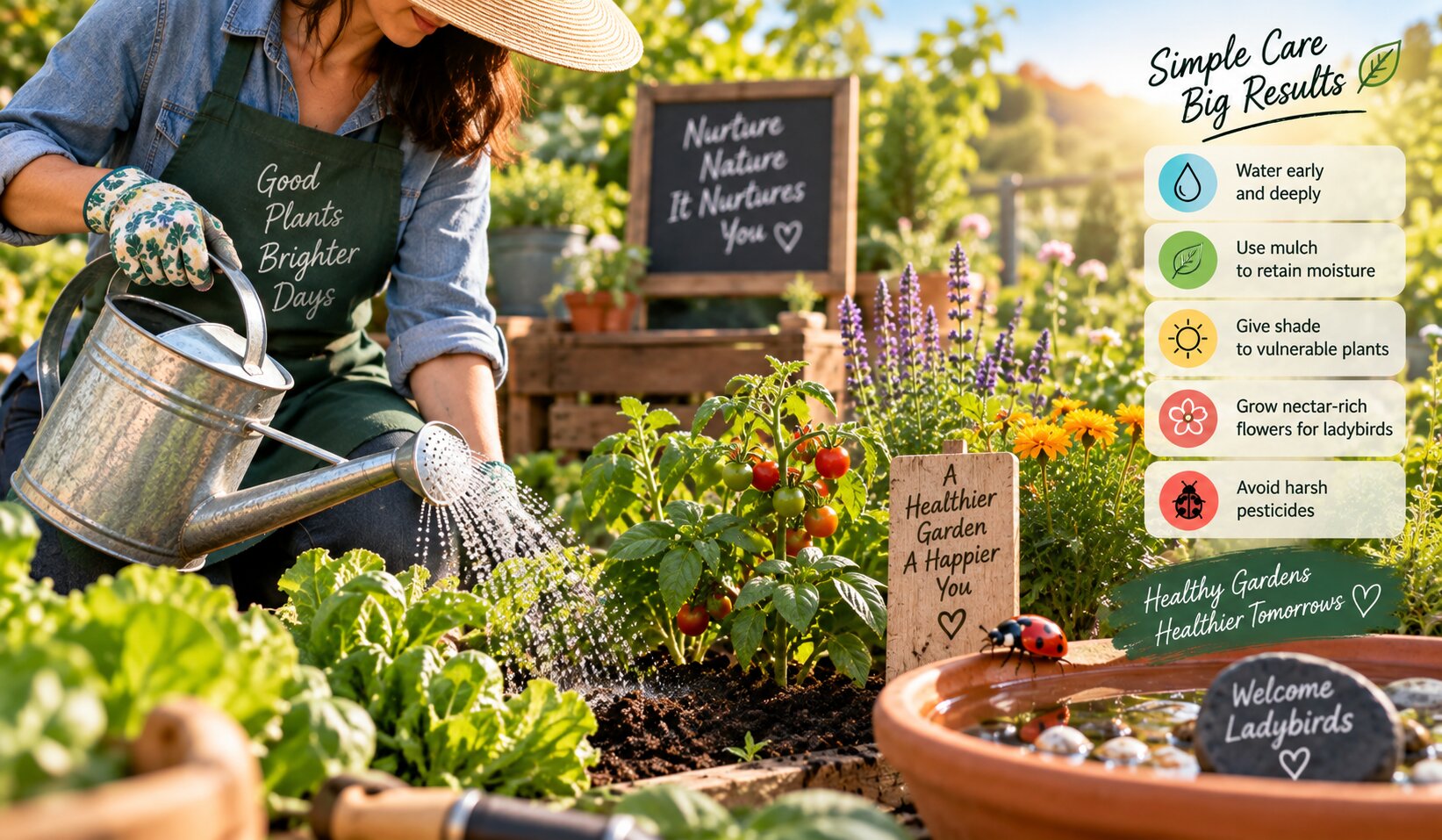 Smart watering, soil protection and wildlife-friendly gardening can help outdoor spaces survive extreme heat.
Why Heatwaves Are Difficult for Gardens
Plants lose water through a natural process called transpiration. During hot weather, water evaporates more quickly from the soil and leaves, forcing plants to draw moisture from their roots at a faster rate.
If the roots cannot absorb water quickly enough, plants may begin to wilt. Leaves can curl, flower buds may drop, and young plants can suffer permanent damage. Heat can also make the soil hard and compacted, reducing its ability to absorb water when rain finally arrives.
Container plants are particularly vulnerable because pots contain a limited amount of soil. They can become extremely hot, and their roots have less access to moisture than plants growing directly in the ground.
According to gardening experts, the most important response during a heatwave is not to water everything indiscriminately. Instead, gardeners should prioritise plants that are most vulnerable, including newly planted trees, vegetables, seedlings, hanging baskets, and container-grown flowers.
The Royal Horticultural Society recommends directing water toward the roots rather than spraying the leaves, while prioritising containers, vegetables, and newly planted specimens during drought conditions.
Water Your Garden at the Right Time
One of the simplest ways to reduce water loss is to choose the correct time of day.
The best time to water is generally early in the morning, when temperatures are lower and evaporation is limited. Watering in the morning also gives plants time to absorb moisture before the strongest heat arrives.
If morning watering is not possible, late evening can be another suitable option. However, avoid leaving foliage wet overnight in areas where fungal diseases are common. Whenever possible, direct the water toward the soil rather than spraying the entire plant.
Watering during the hottest part of the afternoon is usually less efficient because much of the moisture can evaporate before it reaches the root zone.
Water Deeply Rather Than Frequently
A light sprinkle may make the soil surface look wet, but it often does little to hydrate the deeper roots. During dry weather, it is usually more effective to water slowly and deeply, allowing moisture to penetrate into the soil.
A deep watering encourages roots to grow further down, where the soil may remain cooler and retain moisture for longer. Frequent shallow watering, on the other hand, can encourage shallow root systems that become more vulnerable during drought.
To check whether watering is necessary, insert a finger into the soil or examine the soil several centimetres below the surface. If it is still damp, additional watering may not be needed.
However, different plants have different requirements. Succulents, Mediterranean herbs, established drought-tolerant shrubs, vegetables, and young trees should not all be treated in the same way.
Smart Watering Reminder
Watering should be based on the plant’s needs, soil moisture, weather conditions and root development. A slow, deep watering is often more beneficial than repeated shallow sprinkling, but overwatering can be just as damaging as underwatering.
Protect the Soil With Mulch
Mulching is one of the most effective ways to help a garden survive hot and dry conditions.
A layer of organic mulch placed over the soil can reduce evaporation, keep the root zone cooler, suppress weeds, and gradually improve soil structure as it breaks down. Suitable options may include compost, shredded leaves, bark, straw, untreated grass clippings, or well-rotted organic matter.
A mulch layer of approximately 5–7 centimetres can be useful in many garden beds, although the ideal depth depends on the material and the plants being grown.
Before applying mulch, water the soil thoroughly if it is very dry. Spread the material evenly around plants, but avoid piling it directly against stems, trunks, or crowns. Excess mulch touching plant stems can trap moisture and create conditions that encourage rot or disease.
Mulch is particularly useful around vegetables, young shrubs, fruit trees, and ornamental plants. It can also reduce competition from weeds, which consume valuable moisture during dry weather.
Recent gardening guidance continues to highlight mulch as a practical way to retain soil moisture, moderate soil temperature, and reduce watering demand during hot periods.
Benefits of Garden Mulch
- Reduces evaporation from the soil.
- Helps keep the root zone cooler.
- Suppresses weeds that compete for moisture.
- Improves soil structure as organic materials break down.
- Protects the soil surface from drying and cracking.
- Can reduce the frequency of watering during hot weather.
Give Container Plants Extra Attention
Potted plants often suffer first during a heatwave. Their soil volume is limited, and dark-coloured containers can absorb significant heat, causing the roots to become stressed.
To protect container plants:
- Move sensitive pots into partial shade.
- Group containers together to reduce moisture loss.
- Place pots near a wall or structure that provides afternoon shade.
- Use a layer of mulch on the surface of the compost.
- Check containers more frequently than garden beds.
- Make sure drainage holes remain clear.
- Avoid placing pots on surfaces that become extremely hot.
- Use larger containers where possible because they generally retain moisture longer.
Grouping pots can create a slightly cooler and more humid microenvironment. If a plant is too heavy to move, temporary shade cloth, a garden umbrella, or a breathable covering may help reduce exposure during the hottest hours.
Do not place plants in complete darkness or block all airflow. The goal is to reduce intense heat, not eliminate light and ventilation.
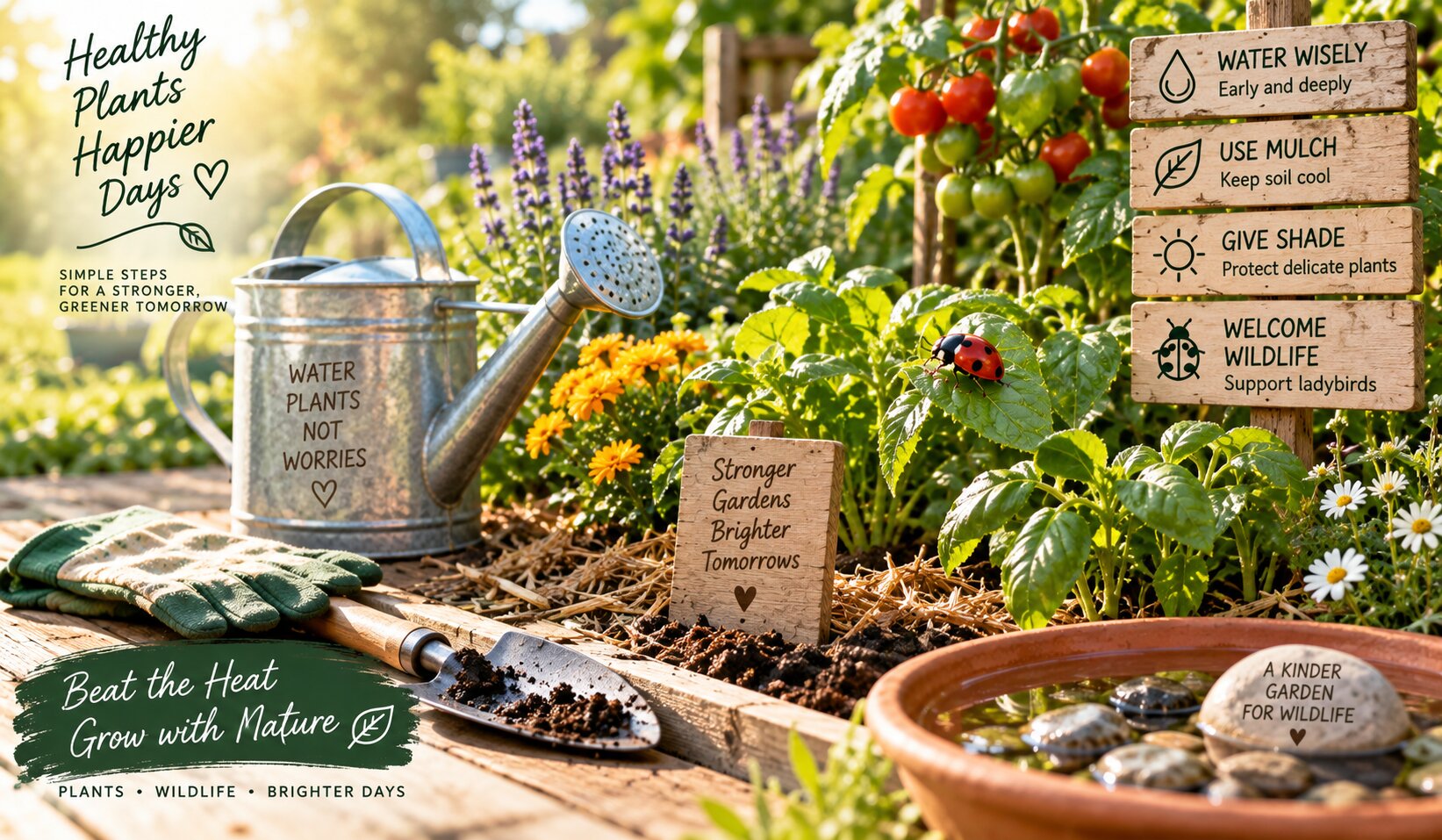 Container plants need extra attention because their limited soil can dry out quickly during a heatwave.
Do Not Overwater a Struggling Plant
A wilted plant does not always mean that it needs unlimited water. Wilting can result from heat stress, root damage, waterlogged soil, disease, or transplant shock.
Overwatering a plant that is already stressed can reduce oxygen around the roots and encourage root rot. Before watering, check the soil moisture and observe the plant’s condition.
Water slowly around the root zone rather than flooding the entire bed. If the soil has become extremely dry and water runs off the surface, apply water gradually in stages. This allows the soil to absorb moisture instead of allowing it to flow away.
Avoid sudden heavy pruning during a heatwave unless damaged or diseased growth must be removed. Leaves provide shade and help protect the plant’s internal tissues. Removing too much foliage during extreme heat can increase stress.
Important Precaution
Do not assume that every wilted plant needs more water. Always check the soil first. Both underwatering and overwatering can cause visible stress, so watering decisions should be based on soil moisture, plant type and the surrounding conditions.
Choose Plants That Can Handle Dry Conditions
Long-term heatwave preparation begins before the temperature rises. Choosing plants that are suited to the local climate, soil, and available sunlight can significantly reduce water demand.
Depending on the region, drought-tolerant plants may include lavender, rosemary, thyme, sage, yarrow, coneflower, sedum, ornamental grasses, black-eyed Susan, and other species adapted to dry conditions.
However, “drought-tolerant” does not mean “never needs water.” Newly planted specimens require regular watering while their roots become established. Even drought-resistant plants may need additional support during prolonged heat.
A smart garden design groups plants according to their water needs. Plants that require frequent watering should not be mixed randomly with species that prefer dry soil.
Gardeners can also consider:
- Native plants adapted to local weather.
- Deep-rooted perennial plants.
- Plants with silvery or waxy leaves.
- Species with small or narrow leaves.
- Ground-cover plants that shade the soil.
- Trees and shrubs that create natural shade.
- Heat-tolerant herbs and flowering plants.
The aim is not to create a garden that uses no water, but one that uses water intelligently.
Why Ladybirds Are So Valuable in a Garden
Ladybirds are among the most recognisable beneficial insects. Their bright colours and rounded bodies make them popular with gardeners, but their real value lies in their role as natural pest controllers.
Many ladybird species feed on aphids, scale insects, and other small pests that damage ornamental plants, vegetables, and fruit crops. Ladybird larvae are also important predators, although they look very different from adults and are sometimes mistakenly removed because of their unusual appearance.
The Royal Horticultural Society notes that many ladybirds are predatory and help control aphids and scale insects, while some species feed on mildew or plant material.
A garden with a healthy population of ladybirds may experience less pressure from certain pests. However, ladybirds are not a complete replacement for garden management. Their numbers depend on weather, food availability, habitat, and the presence of other organisms.
The best strategy is to create conditions that encourage local ladybirds to arrive and remain naturally.
Do Not Remove Ladybird Larvae
Ladybird larvae can look very different from adult ladybirds. They may appear dark, spiky or unusual, but many are active predators of aphids. Before removing unfamiliar insects from your plants, try to identify them first.
How to Attract Ladybirds During a Dry Spell
Although many ladybirds are best known for eating aphids, adult ladybirds may also use nectar, pollen, and other food sources, particularly when prey is scarce.
1. Grow Nectar and Pollen-Rich Plants
Plants with small, open flowers are often useful because they provide easier access to nectar and pollen. Suitable options may include:
- Dill
- Fennel
- Yarrow
- Angelica
- Parsley
- Coriander
- Marigolds
- Calendula
- Alyssum
- Cosmos
- Dandelions
- Tansy
- Goldenrod
Flat-topped flowers and plants in the carrot family can be especially valuable for a range of beneficial insects. Growing several species that flower at different times can provide a more consistent food supply throughout the season.
Choose plants that suit your climate and soil rather than planting a species that cannot survive local heat conditions.
2. Allow Some Aphids to Remain
This may sound counterintuitive, but a garden completely free of insects may not be attractive to predatory insects either.
Ladybirds need prey. If a few aphids appear on a non-essential plant, it may be better to monitor the situation rather than immediately spraying the entire garden.
Some gardeners use sacrificial plants, such as nasturtiums or selected broad beans, to attract aphids away from more valuable crops. These plants can provide a food source for ladybirds and other beneficial predators.
This does not mean allowing a serious infestation to spread. The goal is to maintain a balanced ecosystem rather than eradicate every insect.
3. Avoid Broad-Spectrum Pesticides
Chemical insecticides can kill beneficial insects as well as unwanted pests. Broad-spectrum products may harm ladybirds, their larvae, bees, hoverflies, lacewings, and other organisms that contribute to natural pest control.
Before using any pesticide, identify the pest and assess whether treatment is genuinely necessary. In some cases, a strong jet of water, hand removal, pruning of heavily infested leaves, or a targeted treatment may be sufficient.
If treatment is unavoidable, avoid spraying flowering plants when pollinators are active and follow the product label carefully. Never assume that a product labelled “natural” is automatically harmless to beneficial insects.
A pesticide-free or low-chemical garden is generally more supportive of biodiversity and natural pest control.
Use Pesticides Carefully
Products described as natural or organic are not automatically harmless to insects. Some can still affect ladybirds, bees and other beneficial species. Identify the pest first and use the least harmful effective method whenever possible.
4. Provide Shelter
Ladybirds need places to hide, rest, overwinter, and lay eggs. A perfectly tidy garden may offer fewer safe spaces than a slightly more natural one.
Consider leaving some leaf litter, hollow stems, small piles of twigs, or areas of undisturbed vegetation. You can also install an insect hotel, although its effectiveness depends on design, location, and maintenance.
Avoid clearing every fallen leaf and cutting back every stem immediately. Some beneficial insects use dead plant material as shelter during colder or less favourable periods.
A mixed garden containing shrubs, ground cover, taller plants, and low-growing flowers can create several layers of habitat.
5. Offer Safe Water
During a dry spell, insects may struggle to find moisture. A shallow water source can help, but it must be designed carefully to prevent drowning.
Use a shallow dish filled with clean water and add pebbles, stones, or small pieces of wood so insects can land safely and drink without falling into deep water.
Place the dish in a shaded or partially shaded location and change the water regularly to prevent stagnation and mosquito breeding.
Do not use deep bowls or open containers that can trap small insects. A simple, shallow drinking station is safer and more useful.
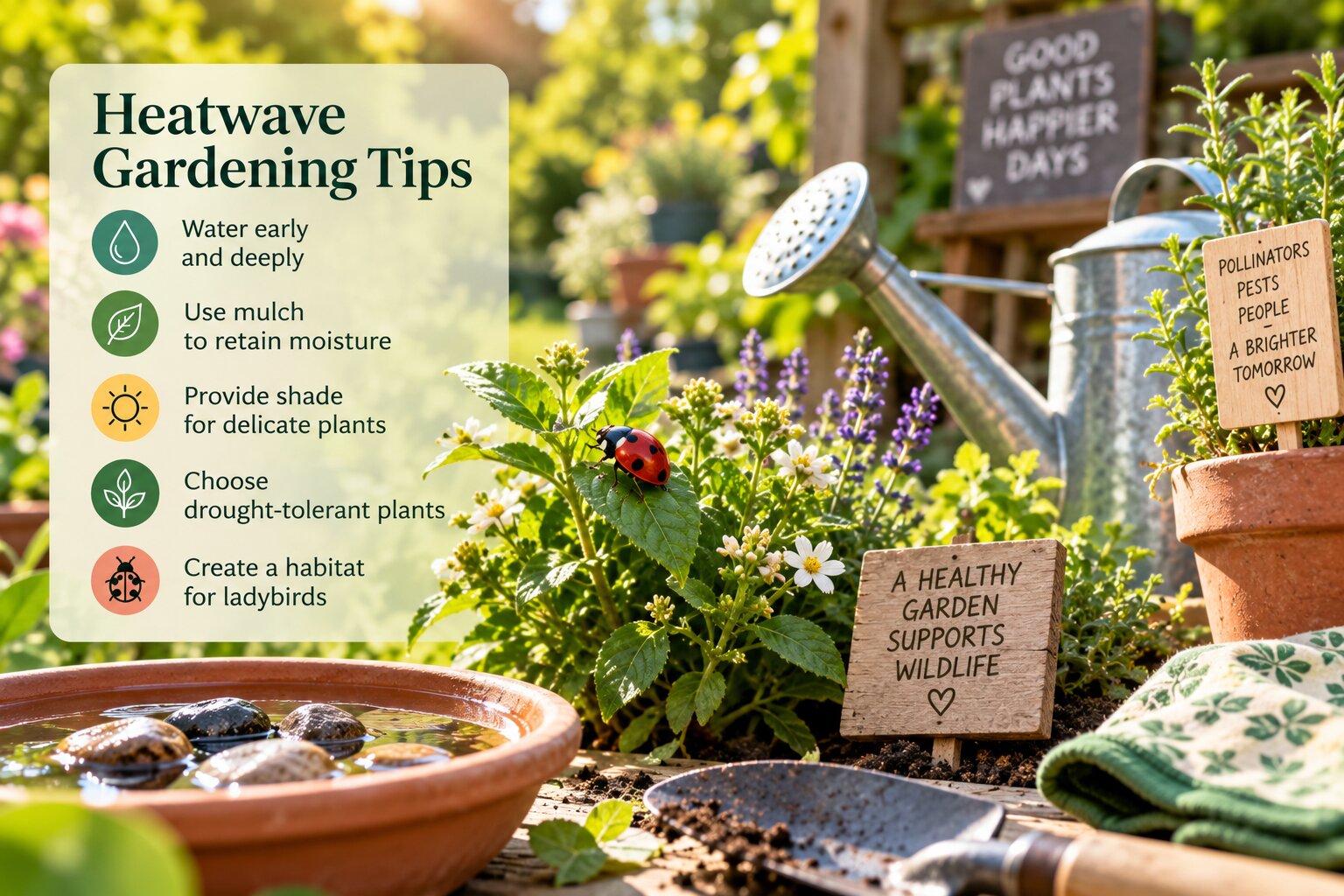 Flowers, shelter and safe water can help create a garden that supports ladybirds and other beneficial insects.
Should You Buy and Release Ladybirds?
Garden centres and online retailers sometimes sell live ladybirds for biological pest control. However, releasing commercially collected ladybirds is not always the best option for a home garden.
Purchased ladybirds may come from outside the local area, may fail to remain in the garden, or may introduce disease and ecological concerns. Some released insects simply disperse in search of food and shelter.
Encouraging local ladybirds through habitat creation is generally a more sustainable approach. Planting suitable flowers, avoiding unnecessary pesticides, preserving shelter, and maintaining a diverse garden can help beneficial insects establish naturally.
If biological control is being considered for a greenhouse or commercial growing environment, gardeners should seek advice from a reputable local horticultural or biological-control provider.
Heatwave Garden Safety Precautions
Gardening during extreme heat can also be physically risky. Work during the cooler parts of the day, wear breathable clothing, use sunscreen, and drink enough water.
Keep the following precautions in mind:
- Avoid heavy digging during extremely hot, dry conditions.
- Do not mow lawns too short during a heatwave.
- Use gloves when handling dry or thorny plants.
- Avoid lifting heavy watering cans repeatedly.
- Check that hoses and tools are not left in direct sun.
- Keep children and pets away from open water containers.
- Do not use greywater containing bleach, strong cleaning chemicals, or harsh detergents on edible crops.
- Be careful around hot paving, metal containers, and greenhouse surfaces.
- Stop working if you feel dizzy, weak, nauseated, or unusually tired.
The National Trust advises gardeners to avoid unnecessary digging during hot and dry weather because it can disturb soil structure, increase moisture loss, and damage plant roots.
A Simple Heatwave Garden Action Plan
A practical routine can make heatwave care more manageable.
Early Morning
- Check plants for signs of wilting or heat stress.
- Water priority plants at the roots.
- Inspect containers and hanging baskets.
- Harvest vegetables and herbs before the day becomes too hot.
- Check shallow insect water stations.
During the Day
- Avoid unnecessary pruning and digging.
- Move vulnerable pots into shade.
- Protect young seedlings with temporary shade.
- Avoid walking repeatedly over dry soil.
- Observe pests before deciding whether treatment is needed.
Evening
- Check soil moisture again.
- Water plants that genuinely need it.
- Remove severely damaged leaves if necessary.
- Refill safe wildlife water sources.
- Inspect mulch and add more if the soil is exposed.
Final Thoughts
A garden’s ability to survive a heatwave depends on preparation, observation, and consistency. Deep watering, soil mulching, shade protection, sensible plant selection, and careful container management can help reduce heat stress and conserve water.
At the same time, a wildlife-friendly garden can become a natural support system. By planting nectar-rich flowers, preserving shelter, avoiding unnecessary pesticides, and allowing a balanced population of harmless insects, gardeners can create a welcoming habitat for ladybirds and other beneficial species.
The goal is not to create a perfectly controlled garden where every leaf looks untouched. A healthier approach is to build a resilient ecosystem—one that can cope with heat, conserve resources, support wildlife, and continue producing beauty even during a difficult dry spell.
A garden that welcomes ladybirds is not only more environmentally responsible. It may also become more balanced, productive, and enjoyable over time.
Frequently Asked Questions
What is the best time to water plants during a heatwave?
The best time is generally early morning because temperatures are lower and evaporation is reduced. Late evening may also work, but watering the soil rather than the foliage can help reduce the risk of fungal problems.
Does mulch really help plants during hot weather?
Yes. Organic mulch helps reduce evaporation, keep the root zone cooler, suppress weeds and improve soil quality as it decomposes. Mulch should be kept away from direct contact with plant stems and tree trunks.
How can I attract ladybirds to my garden?
Grow nectar-rich flowers, maintain plant diversity, provide safe shelter, avoid unnecessary pesticides and offer a shallow water source with stones or pebbles. A small natural aphid population can also provide food for predatory ladybirds.
Should I release purchased ladybirds into my garden?
It is usually better to encourage local ladybirds naturally through suitable plants, shelter and reduced pesticide use. Purchased insects may disperse, fail to establish or create ecological concerns depending on the species and source.
Should lawns be watered every day during a heatwave?
Not necessarily. Established lawns can often tolerate some browning during dry weather. Raising the mower height and avoiding excessive mowing can help grass retain moisture and protect its roots.
Editorial Source Note
The gardening guidance in this report is based on established horticultural recommendations concerning heatwave gardening, water conservation, mulching, drought-tolerant planting, beneficial insects and natural pest control. Gardening practices should always be adapted to local climate, soil type, plant species and regional water restrictions.