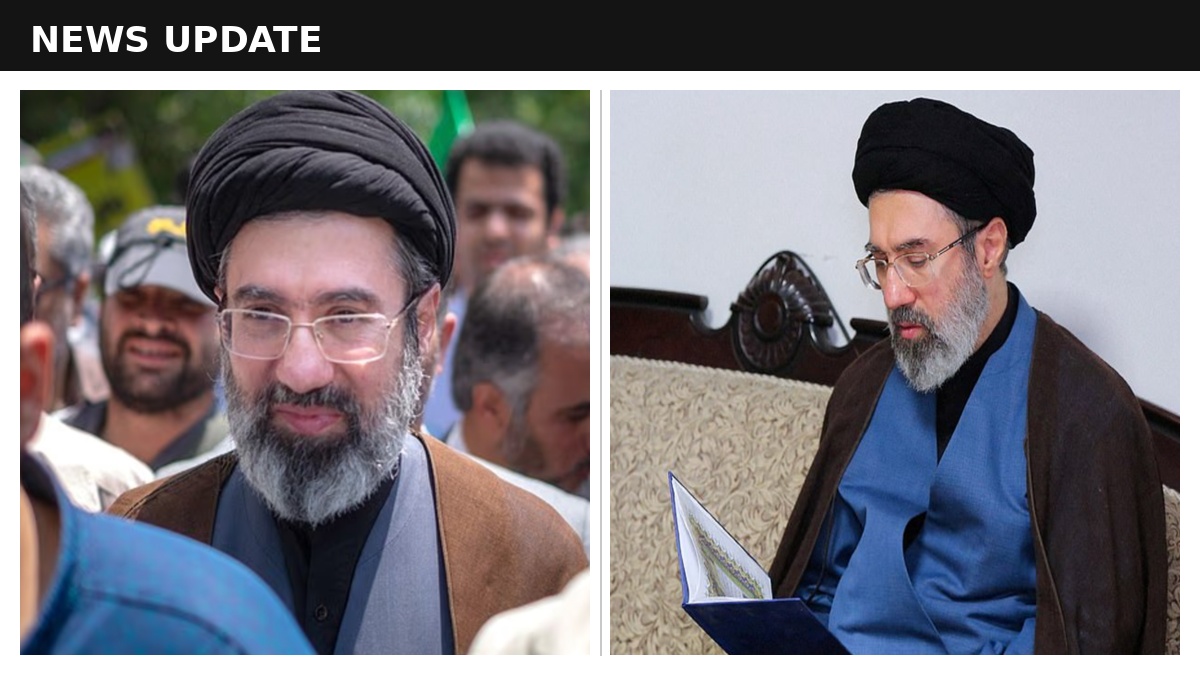
Mojtaba Khamenei becomes Iran’s new supreme leader as war escalates and Tehran says it is not seeking a ceasefire
A dramatic leadership change in Iran, fresh missile retaliation over Tel Aviv, and new political tension between Donald Trump and Keir Starmer have pushed the Middle East crisis into a more dangerous phase.
The Middle East conflict has taken a dramatic new turn after Iran officially named Mojtaba Khamenei as the country’s new Supreme Leader. The announcement came just days after his father, Ayatollah Ali Khamenei, was killed in a major airstrike during the ongoing war involving Iran, Israel, and the United States.
Mojtaba Khamenei named Iran’s new leader
Iran’s Assembly of Experts, the powerful clerical body responsible for choosing the country’s supreme leader, elected Mojtaba Khamenei to replace his father. The decision came about a week after Ayatollah Ali Khamenei died in a strike that targeted Iranian leadership in Tehran.
Ali Khamenei had ruled Iran for decades and held the country’s highest religious and political authority. His death sent shockwaves through the region and forced a rapid transition at the top of the Iranian system.
Mojtaba Khamenei has long been seen as an influential figure behind the scenes, with strong ties to Iran’s security structure and clerical establishment. His promotion now signals continuity rather than moderation. Instead of stepping back, Tehran appears ready to harden its position as pressure grows from Israel and the United States.
Iranian officials also made it clear that the country is not seeking a ceasefire. That statement matters because it suggests the leadership change is not opening the door to quick diplomacy. It suggests the opposite: Iran intends to keep fighting while trying to show strength at home and abroad.
Iranian military command suffers more losses
The leadership announcement came as fresh strikes continued across Iran. Reports from the latest wave of attacks said the head of Iran’s Military Office had been killed, adding another major name to the list of senior figures lost during this fast-moving conflict.
That matters because the war is no longer only about damaged facilities or symbolic targets. It is now cutting directly into the country’s command structure. Every such loss puts more pressure on Tehran to respond in a visible way, especially now that a new supreme leader has taken office and needs to project control.
At the same time, the continued targeting of military leadership shows how high the stakes have become. These are the kinds of developments that can quickly deepen retaliation cycles and reduce the room for quiet negotiation.
Why this matters: When top officials are killed during a conflict, governments often feel pushed to answer with stronger military action. That can make a limited conflict feel much closer to a wider regional war.
Missiles hit Israeli skies as explosions are heard over Tel Aviv
Iran answered with another wave of missile retaliation aimed at Israel. According to reports from the ground, at least ten explosions were heard over Tel Aviv as air defense systems moved to intercept incoming missiles. Residents were told to take shelter as warning systems sounded across the city.
These scenes have become a powerful symbol of how quickly the crisis is escalating. What was once framed as a contained exchange is now looking more like an extended confrontation with repeated strikes, repeated alerts, and repeated pressure on civilians.
For ordinary people watching the story unfold, the speed of the escalation is striking. One day brings news of leadership changes in Tehran. The next brings explosions over a major Israeli city. That rhythm keeps the region on edge and leaves little space for confidence that tensions will cool soon.
In moments like this, many readers also turn to comfort and home-life stories to balance heavy news coverage. Lifestyle pieces such as best pillows for sleeping for comfort and support often perform well because audiences look for calm, useful reading between major international updates.
Trump and Starmer speak after sharp public swipe
The political pressure is not limited to the battlefield. U.S. President Donald Trump held a phone call with British Prime Minister Keir Starmer after publicly criticizing Britain’s posture toward the war.
Trump complained that the United States did not need countries that “join wars after we’ve already won,” a remark widely seen as a swipe at allied timing and commitment. The comment added a fresh layer of tension to Western coordination at a moment when unity would normally be expected.
Even so, the phone conversation suggests both sides understand the seriousness of the situation. When conflict intensifies in the Middle East, the politics around it often spread quickly across Washington, London, and other capitals. Strategic disagreements can shape not only military policy but also diplomatic options in the days ahead.
This is one reason why readers often stay on-site longer when world news articles are connected smartly with evergreen content. A balanced internal reading path, from breaking developments to practical guides such as best mini projectors for bedroom movies, can improve session depth without distracting from the seriousness of the report.
A wider war now feels like a real possibility
The conflict between Iran, Israel, and the United States has been intensifying for weeks. Airstrikes, missile launches, and growing political pressure have transformed the story from a tense regional standoff into a crisis with global consequences.
Iran has already shown that it is willing to answer attacks with visible retaliation. Israel has shown that it is willing to strike deeply and repeatedly. The United States, meanwhile, continues to influence the conflict both through direct policy and through the pressure it places on its allies and adversaries.
The appointment of Mojtaba Khamenei may make diplomacy even harder. A new leader coming in during wartime rarely wants to appear weak. That political reality can make compromise more difficult, especially when the public message from Tehran is that no ceasefire is being sought.
News readers do not always stay with one topic for long, so placing smart internal links in natural positions helps guide them through a broader editorial journey. For example, after reading a heavy international update, some may move to a practical consumer feature like best gym shorts for men, while others may prefer a lifestyle-focused comparison such as best push-up bras for lift and all-day comfort.
Global concern is rising fast
International observers are now watching for signs that the conflict could spread beyond its current front lines. Any expansion involving more regional actors could affect energy markets, travel security, diplomacy, and military planning far beyond the Middle East.
Oil markets have already shown sensitivity to instability in the region, and more countries may issue updated travel guidance if attacks continue. The diplomatic picture also remains fragile. Public rhetoric is getting sharper at the same time military action is becoming more visible.
That combination can be dangerous. When battlefield developments and political messaging rise together, the chances of miscalculation often rise too. At the moment, that is one of the biggest concerns hanging over the region.
What to watch next
- How Mojtaba Khamenei defines his authority in the first days of his leadership
- Whether Iran launches more missile retaliation after the latest strikes
- Whether Israel expands its targeting beyond the current pattern of attacks
- Whether U.S. allies publicly close ranks or continue signaling differences
- Whether any diplomatic channel opens despite Tehran’s insistence that it is not seeking a ceasefire