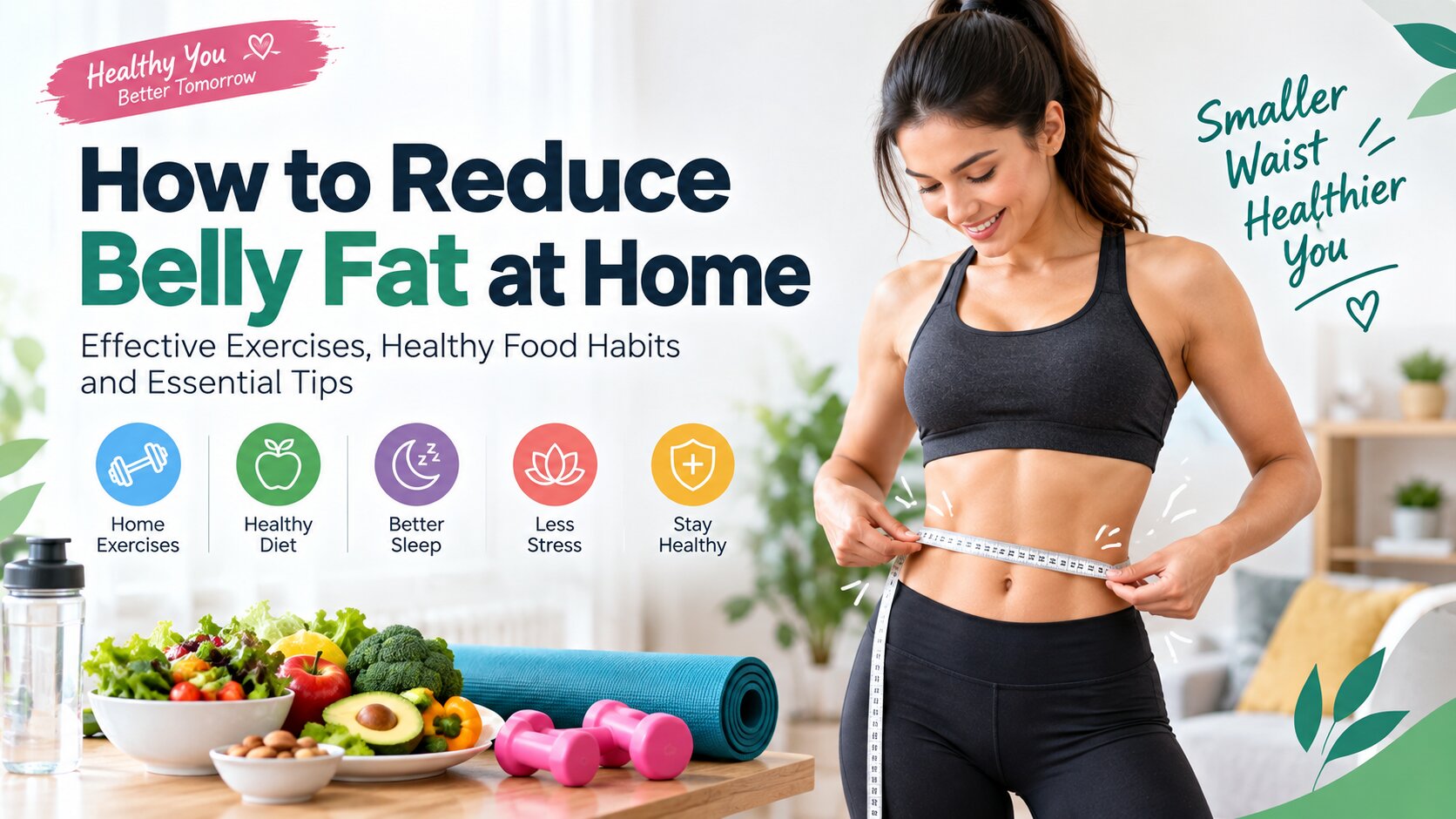
Belly fat is one of the most common fitness concerns among adults. Although many people want a slimmer stomach for appearance-related reasons, excess abdominal fat can also be linked to serious health risks. The most effective approach is not a quick-fix drink or hundreds of crunches, but a combination of regular exercise, balanced food habits, adequate sleep, stress management, and long-term consistency.
The good news is that many useful exercises can be performed at home without expensive gym equipment. A structured home routine can improve cardiovascular fitness, strengthen the core, build lean muscle, and support gradual overall fat loss.
However, it is important to understand one key fact: belly fat cannot usually be removed through abdominal exercises alone. A slimmer waist generally comes from reducing overall body fat while strengthening the muscles around the abdomen.

Can You Lose Belly Fat Only by Exercising Your Stomach?
One of the most common misconceptions about fitness is the idea of “spot reduction.” This refers to the belief that exercising a specific body part will directly burn fat from that same area.
For example, crunches, sit-ups, and leg raises can strengthen the abdominal muscles, but they do not necessarily remove the layer of fat covering those muscles. Core exercises are valuable for stability, posture, balance, and muscle strength, but they should be combined with cardiovascular exercise and appropriate eating habits.
The body loses fat according to several factors, including overall calorie balance, genetics, hormones, age, activity level, and body composition. A person may strengthen their abdominal muscles without seeing a dramatic reduction in waist size if their overall body-fat percentage remains unchanged.
The Most Effective Combination
A practical fat-loss routine should include moderate-intensity cardio, strength training, core exercises, balanced meals, adequate sleep, and regular daily movement. Adults are generally advised to aim for at least 150 minutes of moderate-intensity aerobic activity each week, along with muscle-strengthening activity on at least two days.
Understanding the Different Types of Belly Fat
Abdominal fat is commonly divided into two categories: subcutaneous fat and visceral fat. Understanding the difference is important because not all belly fat carries the same health implications.
Subcutaneous Fat
Subcutaneous fat is located directly beneath the skin. It is the softer fat that can usually be pinched with the fingers. While excessive subcutaneous fat can affect body shape and mobility, it is generally less metabolically active than visceral fat.
Visceral Fat
Visceral fat is stored deeper inside the abdomen, around internal organs. Excess visceral fat has been associated with a higher risk of insulin resistance, high blood pressure, abnormal cholesterol, fatty liver disease, cardiovascular problems, and type 2 diabetes.
This is why waist circumference can be a useful health indicator alongside body weight and body mass index. A person can have a relatively normal body weight but still carry a higher amount of abdominal fat.
Waist Measurement Matters
Waist circumference is only one health indicator and should not be used as a diagnosis. Risk thresholds can vary according to sex, age, ethnicity, and medical guidelines. If you are concerned about abdominal fat, blood pressure, blood sugar, or metabolic health, consult a healthcare professional.
Best Home Exercises to Help Reduce Belly Fat
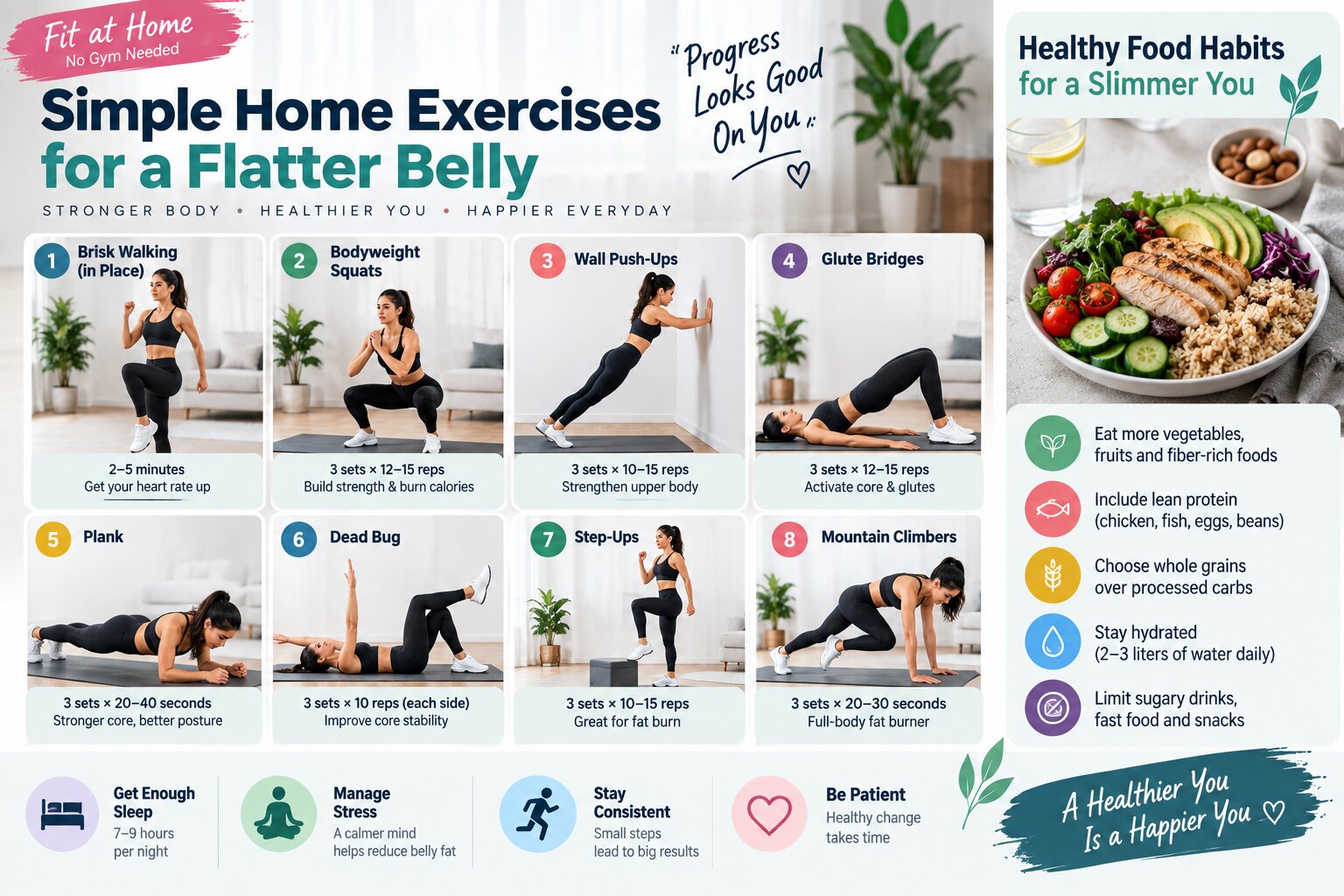
The following exercises can be performed at home with little or no equipment. They do not directly “melt” belly fat, but they can increase energy expenditure, improve fitness, strengthen muscles, and support a healthier body composition.
1 Brisk Walking
Brisk walking is one of the simplest and most sustainable forms of cardio. It is low-impact, accessible to most people, and easier to maintain than intense workouts.
Start with 20–30 minutes of brisk walking five days a week. As your fitness improves, gradually increase the duration to 40–60 minutes if appropriate.
You can walk outdoors, on a treadmill, around your home, on a rooftop, or in a nearby park. During brisk walking, you should be able to speak in short sentences while noticing that your breathing and heart rate have increased.
2 Marching in Place
Marching in place is a useful indoor cardio exercise, especially when weather, safety, or limited space makes outdoor walking difficult.
Stand upright and alternately lift your knees while moving your arms naturally. Begin slowly and gradually increase your pace.
Try marching for 30 seconds, resting for 30 seconds, and repeating the pattern for 5–10 minutes. As your stamina improves, work toward 15–20 minutes.
3 Bodyweight Squats
Squats primarily target the thighs, hips, and glutes, but they also engage the core for stability. Because squats use several large muscle groups, they can be a useful part of a full-body fitness routine.
How to perform a basic squat:
- Stand with your feet approximately shoulder-width apart.
- Keep your chest lifted and your back in a neutral position.
- Push your hips backward as if sitting on a chair.
- Bend your knees while keeping them aligned with your feet.
- Lower only as far as comfortable.
- Push through your feet to return to standing.
Begin with 2–3 sets of 10–15 repetitions. If regular squats feel difficult, use a sturdy chair behind you for support.
4 Wall Push-Ups
Strength training helps maintain lean muscle during fat loss. Wall push-ups are a beginner-friendly alternative to floor push-ups and can strengthen the chest, shoulders, arms, and core.
How to perform wall push-ups:
- Stand facing a wall.
- Place your palms against the wall at shoulder height.
- Step backward slightly.
- Bend your elbows and bring your chest toward the wall.
- Push back to the starting position.
Complete 2–3 sets of 10–15 repetitions. As you become stronger, you can progress to incline push-ups using a sturdy table or countertop.
5 Glute Bridges
Glute bridges strengthen the glutes, hips, lower back, and core. They can also support better posture and improve pelvic stability.
How to perform a glute bridge:
- Lie on your back with your knees bent.
- Keep your feet flat on the floor.
- Place your arms beside your body.
- Gently tighten your abdominal muscles.
- Lift your hips until your body forms a comfortable straight line from your shoulders to your knees.
- Pause briefly and lower slowly.
Try 2–3 sets of 12–15 repetitions. Avoid over-arching your lower back or forcing the movement if it causes pain.
6 Plank
The plank is a core-strengthening exercise that engages the abdominal muscles, shoulders, back, and hips. It can improve stability, but it should not be viewed as a direct belly-fat-burning exercise.
How to perform a beginner plank:
- Place your forearms on the floor.
- Extend your legs behind you.
- Keep your body in a straight line.
- Engage your core without dropping your hips.
- Breathe normally and avoid holding your breath.
Start with 10–20 seconds and repeat 2–4 times. If a full plank is too difficult, keep your knees on the floor.
7 Dead Bug
The dead bug is a controlled core exercise that helps improve abdominal stability without placing excessive pressure on the spine.
How to perform the dead bug:
- Lie on your back with your arms extended toward the ceiling.
- Bend your knees to approximately 90 degrees.
- Slowly lower one arm and the opposite leg toward the floor.
- Return to the starting position.
- Alternate sides while keeping the movement controlled.
Perform 2–3 sets of 8–12 repetitions per side. Keep your lower back comfortably supported and avoid rushing.
8 Low-Impact Step-Ups
Step-ups can be performed using a stable, low platform or the bottom step of a staircase. They increase the heart rate while strengthening the legs and glutes.
Place one foot on a stable step, push through that foot to step up, bring the other foot up, and then step down carefully. Alternate the leading leg.
Begin with 5–10 minutes at a comfortable pace. Make sure the surface is stable and non-slip. Avoid using a high step if you are a beginner or have balance difficulties.
A Simple 30-Minute Home Workout Plan
Beginners can start with the following routine three to five days per week, depending on their fitness level and recovery needs.
Warm-Up: 5 Minutes
- Gentle marching
- Shoulder rolls
- Arm circles
- Slow side steps
- Ankle movements
Main Workout: Approximately 20 Minutes
Complete two or three rounds of the following:
- Marching in place: 2 minutes
- Bodyweight squats: 12 repetitions
- Wall push-ups: 12 repetitions
- Glute bridges: 15 repetitions
- Plank: 15–20 seconds
- Dead bug: 8 repetitions per side
- Rest: 60–90 seconds between rounds
Cool-Down: 5 Minutes
- Slow walking
- Gentle hamstring stretch
- Calf stretch
- Chest and shoulder stretch
- Controlled breathing
On separate days, include brisk walking, cycling, dancing, swimming, or another enjoyable cardio activity. Adults are generally encouraged to aim for at least 150 minutes of moderate-intensity aerobic activity each week and muscle-strengthening exercises on two or more days.
Food Habits That Can Help Reduce Belly Fat
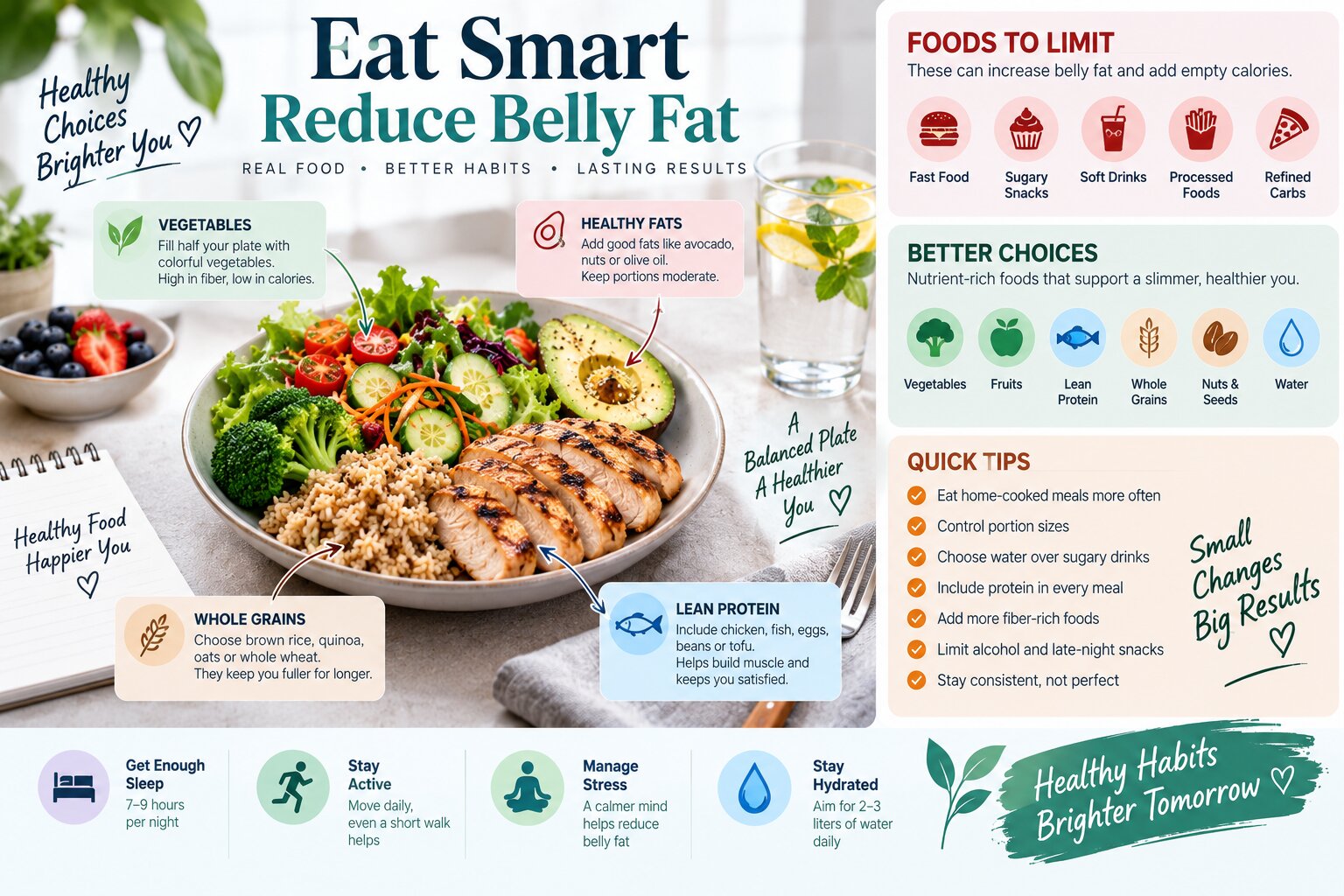
Exercise is important, but food habits play a major role in overall fat loss. The goal is not to starve yourself or eliminate entire food groups. Instead, focus on nutritious foods, reasonable portions, and reducing excess calories from sugary drinks and highly processed foods.
Reduce Sugary Drinks
Limit soft drinks, sweetened tea, packaged fruit drinks, energy drinks, flavored coffee, and heavily sweetened milk beverages. Choose water, unsweetened tea, or plain coffee more often.
Include Protein
Add protein sources such as eggs, fish, chicken, lean meat, lentils, chickpeas, beans, plain yogurt, tofu, nuts, and seeds in suitable portions.
Eat More Fiber
Vegetables, fruits, legumes, oats, whole grains, and other fiber-rich foods can support digestion and help you feel fuller after meals.
Control Portions
Even nutritious foods can contribute to excess calorie intake when portions are too large. Pay attention to serving sizes and eat slowly.
Choose Whole Foods
Include vegetables, fruits, fish, eggs, beans, whole grains, and minimally processed foods more frequently than highly processed snacks.
Drink Enough Water
Stay hydrated throughout the day. Water can be a useful alternative to sugary drinks, but it should not be viewed as a fat-burning treatment.
Use a Balanced Plate Method
A simple way to structure meals is to fill approximately half the plate with vegetables, one-quarter with a protein source, and one-quarter with rice, potatoes, whole grains, or another carbohydrate source.
This method can be adapted to familiar meals, including rice, fish, lentils, vegetables, eggs, and chicken. There is no requirement to completely stop eating rice or carbohydrates to reduce belly fat. Portion size, food quality, and total calorie intake matter more than eliminating one food group.
Limit Highly Processed Foods
Try to reduce frequent consumption of foods that are high in added sugar, salt, unhealthy fats, or calories but low in essential nutrients. These may include deep-fried snacks, pastries, biscuits, fast food, processed meats, sugary desserts, chips, and frequent takeaway meals.
These foods do not need to be permanently banned. Occasional treats can fit into a balanced lifestyle, but they should not dominate your daily eating pattern.
Avoid Extreme Diets
Very restrictive diets may cause fatigue, nutrient deficiencies, muscle loss, binge eating, and weight regain. A sustainable eating plan should be realistic enough to follow for months and years—not just for a few days or weeks.
Sleep, Stress, and Belly Fat
Belly fat is not influenced by food and exercise alone. Sleep and stress can affect appetite, energy levels, food choices, and daily activity.
Poor sleep may increase cravings for high-calorie foods and make exercise feel more difficult. Chronic stress can also contribute to emotional eating and irregular eating patterns.
Healthy Lifestyle Habits to Practice
- Maintain a consistent sleep schedule.
- Aim for adequate sleep each night.
- Reduce screen use before bedtime.
- Practice deep breathing, meditation, or gentle stretching.
- Take short walking breaks during stressful days.
- Avoid using food as the primary response to emotional stress.
- Move regularly instead of sitting for long uninterrupted periods.
Improving sleep and stress management will not instantly remove belly fat, but these habits can make a healthy routine easier to maintain.
How Long Does It Take to Reduce Belly Fat?
There is no universal timeline for reducing belly fat. Results depend on starting weight, genetics, age, hormones, activity level, food intake, sleep, and consistency.
Some people may notice improved energy, stamina, and strength within a few weeks. Visible changes in waist size can take longer. Sustainable fat loss is generally more beneficial than rapid weight loss because it is easier to maintain and less likely to cause muscle loss or rebound weight gain.
Instead of checking the mirror every day, track progress through several indicators:
- Waist circumference
- Strength improvements
- Walking duration
- Energy levels
- Clothing fit
- Exercise consistency
- Resting heart rate, if you track it
If you measure your waist, do so under similar conditions, preferably at the same time of day. Avoid measuring immediately after a large meal.
Common Mistakes to Avoid
1. Doing Only Crunches
Crunches can strengthen the core, but they do not replace cardio, strength training, or dietary changes.
2. Exercising Too Intensely Too Soon
Starting with excessive workouts can lead to soreness, injury, burnout, and loss of motivation. Increase exercise volume gradually.
3. Skipping Meals
Skipping meals may lead to intense hunger later and encourage overeating. A structured eating pattern is often easier to maintain.
4. Depending on Detox Drinks
Lemon water, green tea, ginger tea, and similar beverages can be part of a healthy routine, but they do not directly melt belly fat. Fat loss depends mainly on overall energy balance and long-term habits.
5. Wearing Waist Trainers
Waist trainers may temporarily compress the abdomen, but they do not permanently remove abdominal fat. Tight garments may also make breathing and movement uncomfortable.
6. Expecting Overnight Results
Belly fat usually develops over time and generally requires time and consistency to reduce. Claims promising a flat stomach in a few days should be treated with skepticism.
Important Exercise Precautions
Before starting a new workout program, consider your current fitness level, age, mobility, and health condition. Begin with low-impact movements if you have been inactive for a long time.
Speak with a qualified healthcare professional before beginning a new exercise routine if you have:
- Heart disease
- Uncontrolled high blood pressure
- Diabetes
- Severe obesity
- Joint problems
- Chronic back pain
- Respiratory disease
- A recent surgery
- Pregnancy or recent childbirth
- A history of dizziness or fainting during exercise
During exercise, stop and seek medical advice if you experience chest pain, severe shortness of breath, fainting, unusual heart palpitations, or sudden intense pain.
Use supportive footwear, exercise on a non-slip surface, warm up before intense movement, and maintain proper form. If an exercise causes pain rather than ordinary muscle effort, stop and modify the movement.
Final Takeaway
Reducing belly fat at home is possible, but it requires a realistic and consistent approach. No single abdominal exercise, detox drink, or special food can selectively remove fat from the stomach.
The most effective strategy combines brisk walking or another form of cardio with strength training, core exercises, portion control, protein-rich foods, vegetables, whole grains, adequate sleep, and stress management.
Start with manageable changes rather than attempting an extreme transformation. Walking regularly, replacing sugary drinks with water, adding vegetables to meals, and performing strength exercises several times a week can support better body composition and long-term health.
The goal should not be to achieve an unrealistic “perfect” stomach. A healthier goal is to build a stronger body, improve fitness, gradually reduce excess abdominal fat, and develop habits that can be maintained for life.
Medical disclaimer: This article is intended for general educational purposes and does not replace personalized medical advice, diagnosis, or treatment. Exercise and dietary needs vary from person to person. Consult a qualified healthcare professional before making major changes to your exercise or eating routine, especially if you have an existing medical condition.