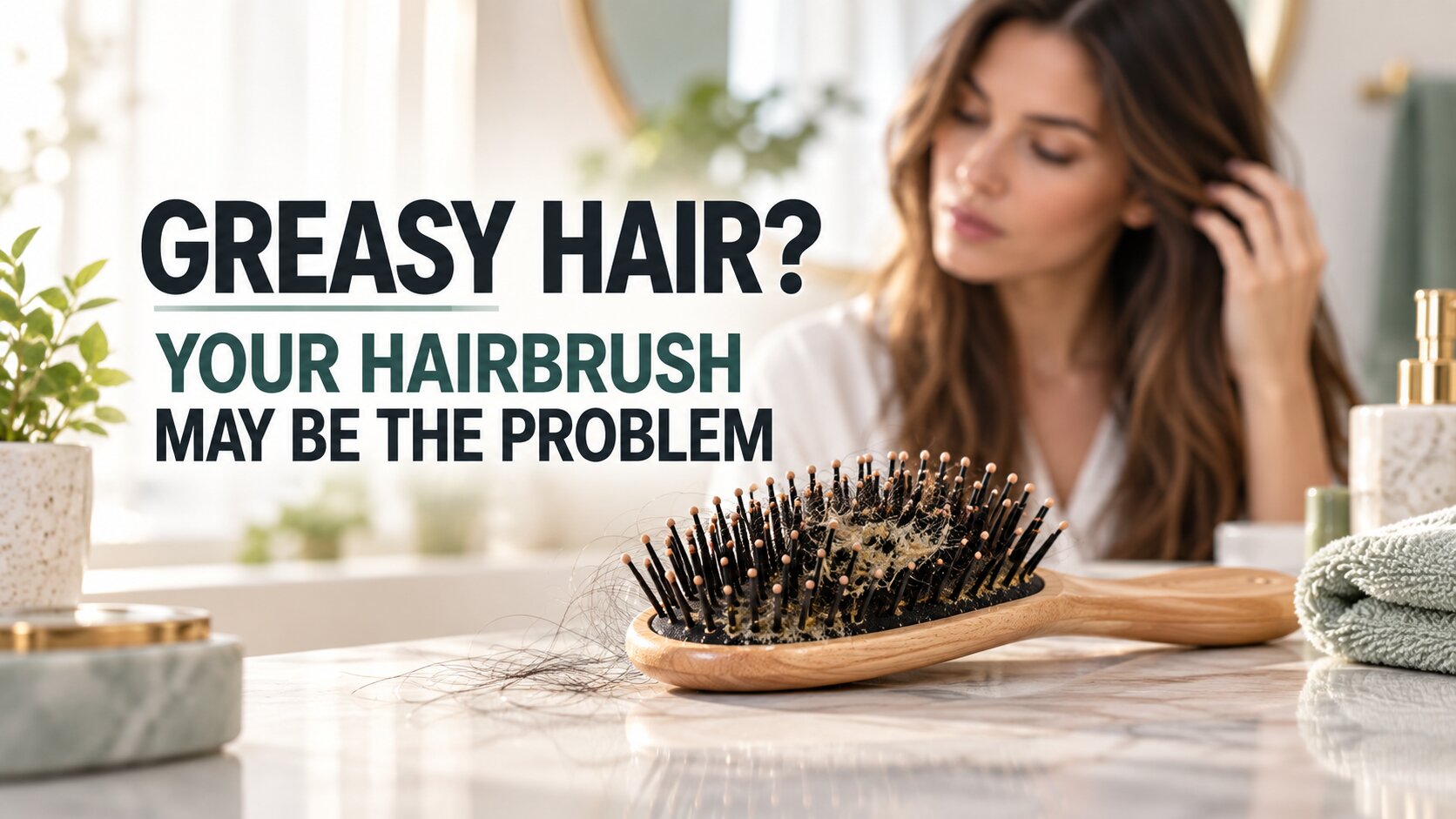
There is a particular kind of bad hair day that feels difficult to explain. You wash your hair, dry it carefully and expect it to look fresh. Yet within hours, the roots appear oily, the lengths seem flat, and the hair has lost the movement and shine it had after washing.
Sometimes the cause is obvious: humid weather, sweat, heavy styling products or a naturally oily scalp. But there is another everyday item that deserves attention: your hairbrush.
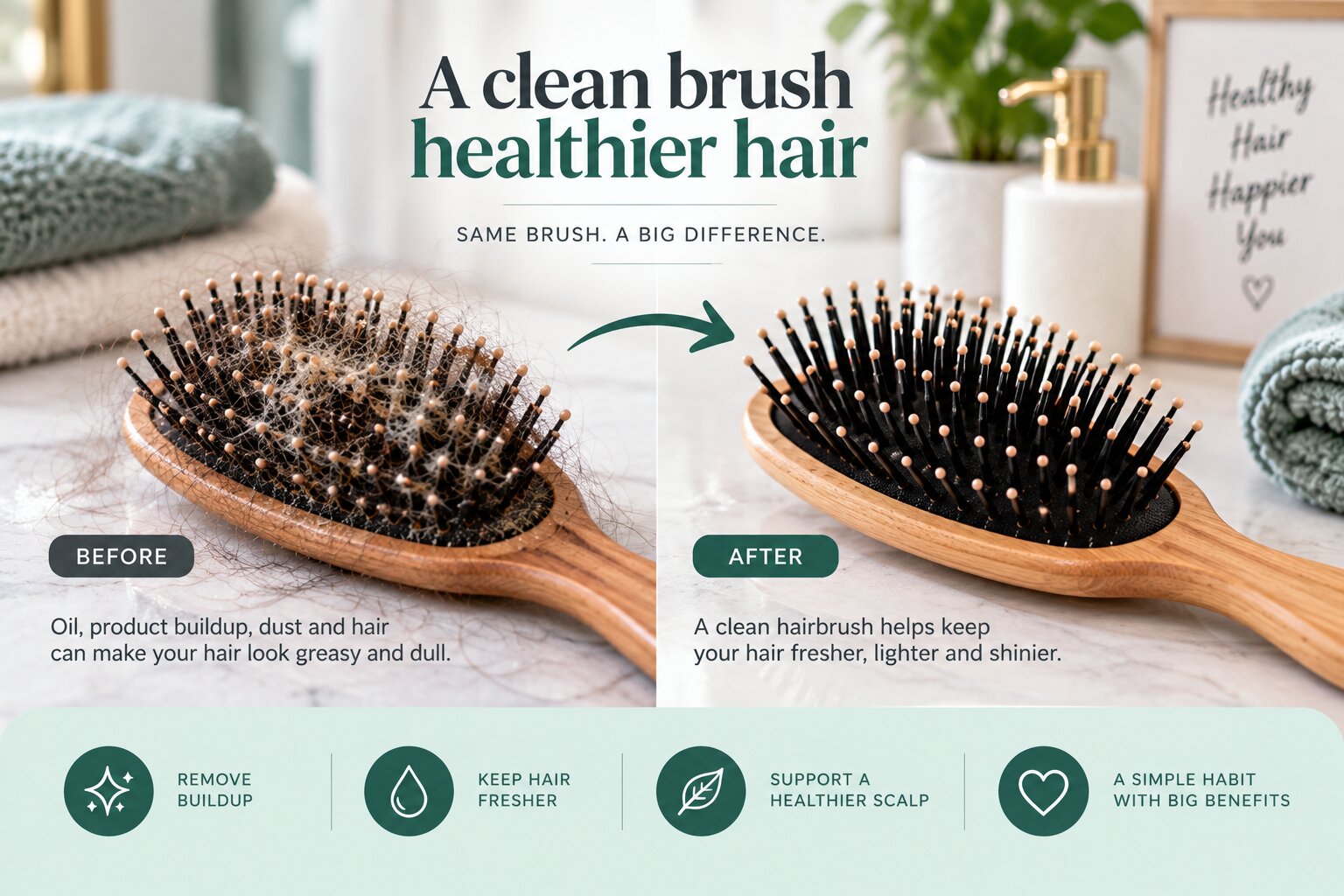
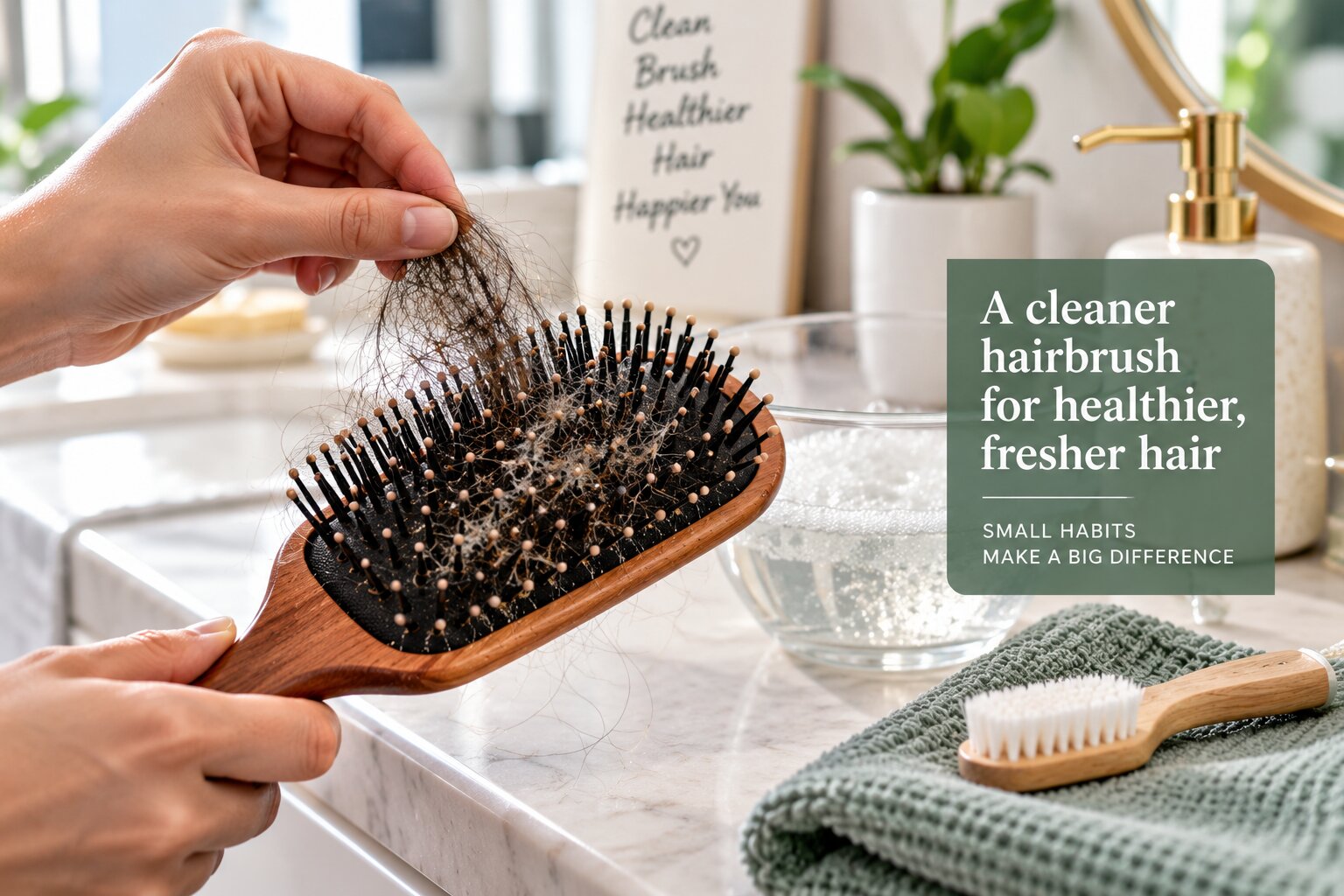
A brush that collects loose hair, sebum, dead skin cells, dust and product residue can transfer some of that buildup back onto clean hair. Over time, this may contribute to hair looking greasy or dull sooner than expected. It can also make a clean hair-care routine less effective.
That does not mean every dirty brush causes oily hair, or that replacing a brush will solve sudden greasiness. Hair oil is produced by the scalp’s sebaceous glands, and genetics, hormones, hair texture, product use and washing habits all influence how quickly it becomes noticeable.
A dirty hairbrush does not usually create more scalp oil. It can, however, redistribute existing oil, dust and product residue through the hair, making freshly washed strands look greasy, heavy or dull.
Why Your Hairbrush May Be Making Your Hair Look Greasy
Every time you brush your hair, the bristles come into contact with more than hair strands. They may collect natural scalp oil, loose skin flakes, dust, lint, sweat and traces of styling products.
The grey or whitish fuzz sometimes visible around the base of a brush is often a mixture of these materials. When the brush is used repeatedly without cleaning, the buildup can be distributed through the hair again.
Natural scalp oil
Sebum can collect around the bristles and spread through the hair during brushing.
Product residue
Serums, oils, leave-in conditioners, waxes and dry shampoo can leave buildup behind.
Dust and lint
Environmental particles can stick to oil and styling products trapped between bristles.
Shed hair and skin flakes
Loose hair and microscopic skin debris can accumulate at the base of a frequently used brush.
This is particularly noticeable when:
- You have an oily scalp or fine, straight hair.
- You use leave-in conditioners, serums, oils, waxes or styling creams.
- You apply dry shampoo frequently.
- You brush immediately after applying styling products.
- You share brushes with other people.
- You store your brush uncovered in a dusty or humid area.
- You rarely remove shed hair from the bristles.
A dirty brush does not automatically mean poor personal hygiene. It simply means that a grooming tool is collecting material from its environment and from your scalp. However, regularly cleaning it helps prevent that material from accumulating and being redistributed.
Can a hairbrush actually increase scalp oil production?
There is an important distinction here. A brush does not normally make the scalp’s sebaceous glands produce more oil simply because it is dirty.
However, brushing can spread existing oil from the roots toward the lengths. Vigorous or repeated brushing may also make hair appear greasier by distributing sebum more widely. If you brush your hair many times a day, the roots may look less oily while the lengths become heavier.
So, the problem may not be that your brush is creating oil. It may be helping move oil, residue and debris back through hair that you have just washed.
How Often Should You Clean Your Hairbrush?
There is no single schedule that suits every brush, but a practical routine is easy to follow.
A practical cleaning schedule
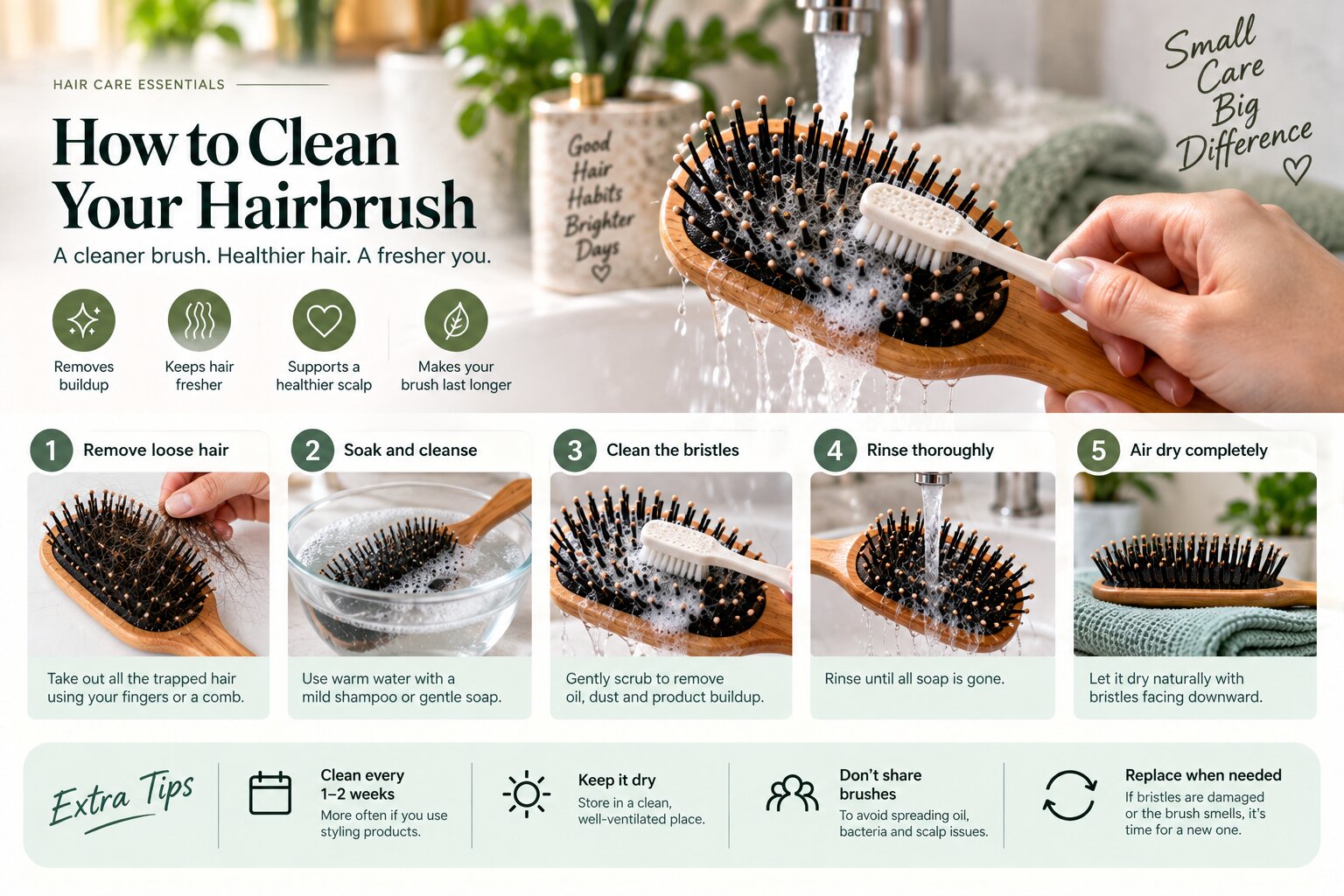
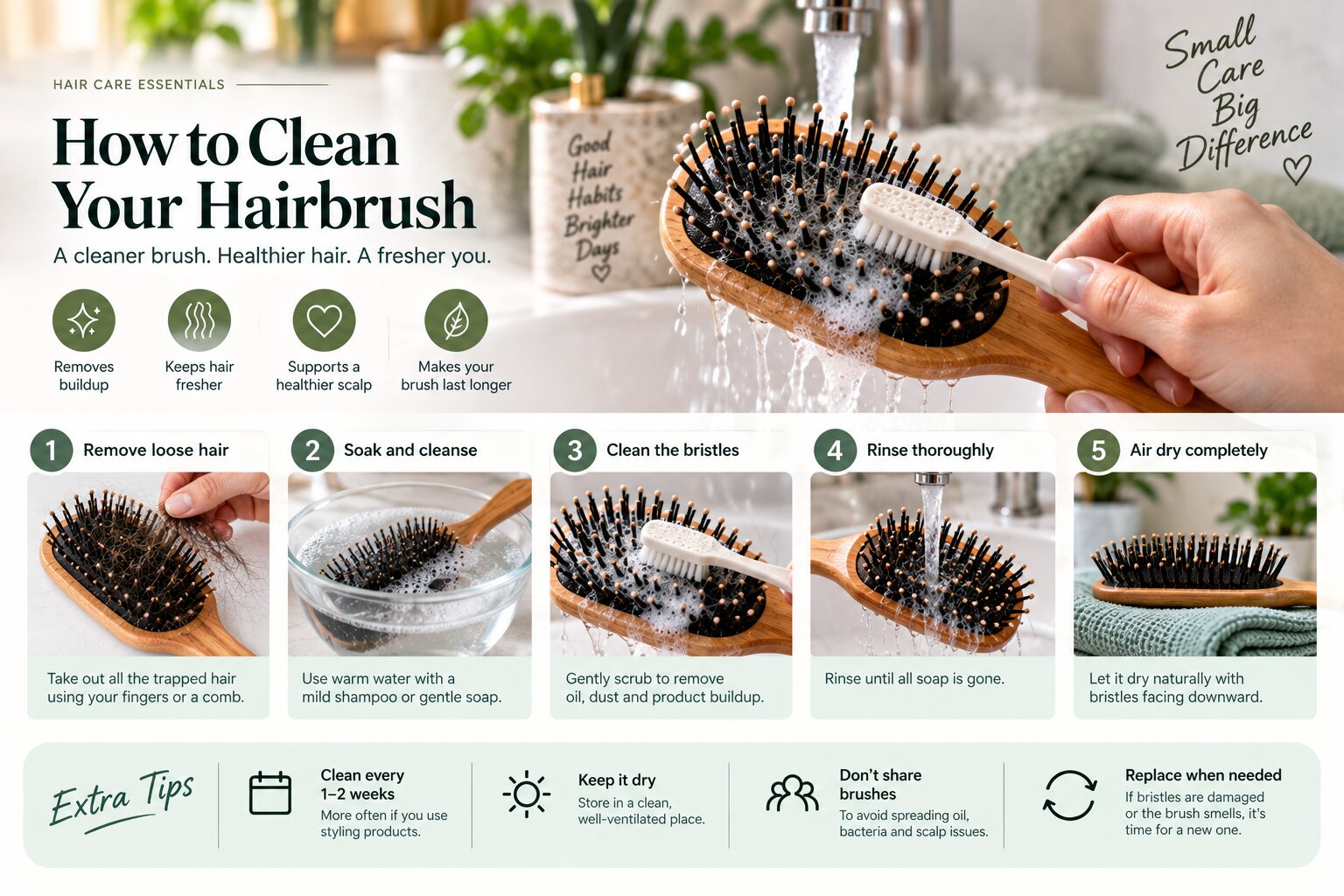
After every use: Remove loose hair trapped in the bristles.
About once a week: Clean a frequently used brush, especially if you have an oily scalp, use styling products or notice visible buildup.
Every one to two weeks: This is a reasonable deep-cleaning interval for many regularly used brushes. People who use products heavily or have a particularly oily scalp may need to clean them more often.
Less frequently used brushes may need cleaning only about once a month.
How to Clean Your Hairbrush Properly
The cleaning method depends on the material. A plastic brush can usually tolerate more water than a wooden brush or one with natural bristles.
What about wooden brushes and natural bristles?
Wooden brushes or brushes with natural bristles need a gentler approach. Avoid soaking them for long periods unless the manufacturer specifically says it is safe. Excess water can damage wood, weaken adhesive or affect the brush’s structure.
Instead, use a lightly damp cloth or a small amount of diluted cleanser to clean the bristles and base. Dry the brush thoroughly before storing it.
Do not put a damp brush into a drawer or closed container. Moisture can encourage unpleasant odours and may contribute to microbial growth.
Signs Your Brush Needs Cleaning—or Replacing
Your hairbrush may need attention if you notice:
- A visible layer of grey, white or yellowish buildup.
- An oily or musty smell.
- Product residue around the bristle base.
- Hair that looks greasy immediately after brushing.
- Bristles that pull or snag.
- Broken, sharp or bent bristles.
- A cracked cushion or deteriorating brush base.
A brush does not have to be discarded simply because it is old. A well-maintained brush can last for years. But if the bristles are damaged, the cushion is breaking down or the brush repeatedly catches and pulls your hair, replacement is sensible.
A damaged brush can contribute to friction, breakage and scalp discomfort. Check the brush regularly rather than relying only on its age.
Your Shampoo Routine May Matter More Than Your Brush
A clean brush is helpful, but it cannot compensate for a washing routine that does not suit your scalp.
One of the most common mistakes is following a fixed rule such as “never wash your hair every day” or “wash only once a week.” Hair and scalp needs vary considerably.
Dermatologists generally recommend washing according to how quickly hair becomes dirty or oily. People with straight hair and an oily scalp may need to shampoo daily, while people with dry, curly, thick or textured hair may need to wash less frequently.
Should you wash oily hair every day?
For some people, yes. Daily washing can be appropriate when the scalp becomes oily quickly, particularly if the person exercises frequently, sweats heavily or uses several styling products.
For others, especially those with coarse, curly or chemically treated hair, daily shampooing may leave the lengths dry or fragile. The solution is to focus cleansing on the scalp while protecting the hair lengths with suitable conditioning.
Can you “train” your scalp to produce less oil?
The popular idea that washing less frequently permanently retrains the scalp to produce less oil is not well supported. Sebum production is influenced mainly by factors such as genetics and hormones.
Washing less may change how often oil is removed, but it does not reliably reset the sebaceous glands. If your scalp becomes greasy, itchy or flaky, forcing yourself to wait longer between washes may not be the best solution.
How to shampoo properly
A useful routine is:
- Wet the scalp and hair thoroughly.
- Apply shampoo mainly to the scalp and roots.
- Massage gently with your fingertips rather than scratching with your nails.
- Rinse thoroughly.
- Apply conditioner mainly to the mid-lengths and ends if your hair is fine or straight.
- Rinse again, ensuring no heavy residue remains.
Applying shampoo mainly to the scalp helps remove excess oil, dead skin and product buildup without unnecessarily drying the lengths. If your hair feels coated even after washing, occasional use of a clarifying shampoo may help remove stubborn product residue.
However, overusing strong clarifying products or aggressive scalp scrubs can cause dryness and irritation. Choose products according to your hair type and use them only as needed.
Could Your Hair Products Be Causing the Greasy, Lank Look?
Sometimes the issue is not the hairbrush or the scalp alone. It is what is being applied to the hair.
Heavy oils, thick creams, waxes, silicone-rich styling products, leave-in conditioners and frequent dry shampoo use can create a coating that makes hair look flat or oily. This is especially common when products intended for dry or thick hair are applied heavily to fine hair.
A one-week product check
Review your routine for a week and ask yourself:
- Are you applying hair oil directly to the roots?
- Are you using more serum than necessary?
- Are you applying conditioner too close to the scalp?
- Are you layering dry shampoo over several days without washing?
- Are you using a rich mask when your hair needs only a lightweight conditioner?
- Are you rinsing shampoo and conditioner completely?
Dry shampoo can temporarily absorb oil and improve the appearance of roots, but it does not replace regular cleansing. If it is used repeatedly without washing, residue can accumulate on the scalp and hair.
Food Habits and Hair Health: What Actually Helps?
Diet is often blamed—or praised—too quickly in discussions about greasy hair. There is no established food that reliably switches off scalp oil production. Eating a particular fruit, drinking more water or avoiding one specific ingredient is unlikely to resolve an oily scalp on its own.
However, overall nutrition matters for hair quality, growth and resilience. Hair is made largely of keratin, a protein, and the body needs adequate nutrients to support normal hair production.
Food habits that support healthy hair
A balanced diet can help support normal hair growth and overall hair quality. Focus on variety rather than miracle foods or high-dose supplements.
Protein and iron matter—but supplements are not a shortcut
Severe protein restriction or inadequate food intake can affect hair health and contribute to shedding. This is different from directly causing greasy hair, but it is important when someone is experiencing several hair concerns at once.
Low iron levels can be associated with certain types of hair shedding, particularly in people who are deficient. However, iron supplements should not be taken routinely without a reason. Excess iron can be harmful, and supplementation is best guided by a healthcare professional when deficiency is suspected.
Biotin supplements are heavily marketed for hair growth, but biotin deficiency is uncommon, and taking extra biotin does not automatically improve hair in people who already get enough. High-dose supplements may also interfere with certain laboratory tests.
The sensible approach is to eat a varied diet, avoid crash dieting and seek medical advice if you have persistent shedding, fatigue, unexplained weight changes or other symptoms that may suggest a nutritional issue.
Everyday Precautions That Can Keep Hair Fresher
Small habits can make a noticeable difference to how quickly hair looks greasy.
- Keep your hands out of your hair. Frequent touching transfers oil and product residue from the hands to the hair.
- Clean pillowcases regularly. Fabric can collect sweat, skin oil and hair products. Changing pillowcases regularly is a useful general hygiene habit.
- Avoid brushing aggressively. Gentle brushing helps reduce unnecessary friction and breakage. It is not necessary to brush repeatedly throughout the day.
- Do not share brushes casually. Sharing grooming tools can transfer oil, skin flakes and microorganisms, especially if someone has a scalp infection or sores.
- Clean styling tools too. Hair straighteners, curling tools and combs can collect product residue. Follow the manufacturer’s cleaning instructions.
- Choose the right brush. A detangling brush, wide-tooth comb, soft-bristle brush or vented brush may suit different hair types.
- Handle wet hair gently. Wet hair is more fragile. Use a wide-tooth comb when appropriate and avoid rough towel-drying.
When Greasy Hair May Be a Scalp Problem
Occasional oiliness is usually a normal cosmetic concern. But a sudden or persistent change deserves more attention if it comes with other symptoms.
When to speak to a dermatologist
Seek professional advice if you experience:
- Persistent itching or burning.
- Redness, soreness or swelling.
- Heavy or recurring dandruff.
- Thick, greasy or unusual scales.
- A strong, persistent scalp odour.
- Painful bumps, sores or crusting.
- Noticeable hair shedding or patchy hair loss.
- Greasiness that continues despite a suitable washing routine.
Conditions such as seborrhoeic dermatitis, psoriasis, contact irritation and certain infections can affect the scalp and may require specific treatment. Persistent oiliness with flaking or inflammation should not automatically be treated as a simple hygiene issue.
The Bottom Line
Your hairbrush may be contributing to greasy, lank or dull-looking hair—especially if it is visibly coated with oil, dust and product residue. Cleaning it regularly, removing shed hair after use and replacing damaged brushes are simple steps that can improve your overall hair-care routine.
But the brush is only one part of the picture. Scalp oil production, washing frequency, product buildup, hair texture, hormones, stress and general health can all influence how your hair looks.
The most effective approach is to keep the scalp clean without over-washing the lengths, choose products that suit your hair type, handle hair gently and maintain a balanced diet. If greasiness arrives suddenly or is accompanied by itching, inflammation or hair loss, the right answer may involve treating an underlying scalp condition rather than buying another brush.
A cleaner brush is a good start. A routine built around your scalp’s actual needs is what makes the bigger difference.
Frequently Asked Questions
Yes, a dirty brush can contribute to a greasy appearance by transferring existing scalp oil, dust, dead skin and styling-product residue back onto the hair. It does not usually cause the scalp to produce more oil.
Remove loose hair after every use and deep-clean a regularly used brush about once every one to two weeks. If you have an oily scalp or use many styling products, you may need to clean it more frequently.
Daily shampooing can be suitable for people with an oily scalp, straight hair or frequent product use. People with dry, curly, thick or textured hair may need to wash less often to avoid drying the lengths.
No specific food is proven to switch off scalp oil production. A balanced diet supports overall hair health, but persistent oiliness is usually influenced by scalp biology, genetics, hormones, products and hair-care habits.
Seek professional advice if greasy hair is accompanied by persistent itching, redness, heavy dandruff, sores, unusual scaling, strong odour, noticeable shedding or patchy hair loss.
Hair-care guidance from the American Academy of Dermatology and general hair-care hygiene guidance reviewed alongside expert recommendations from Good Housekeeping’s Beauty Lab. This article is for general information and is not a medical diagnosis.